中日关系

Search documents
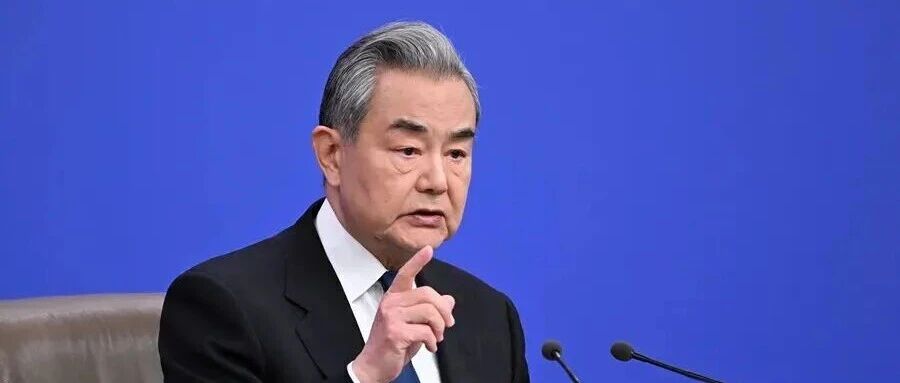
王毅四问日本
21世纪经济报道· 2026-03-08 03:29
Group 1 - The core viewpoint of the article emphasizes China's stance on Taiwan and Japan's involvement, asserting that Taiwan is a domestic issue for China and questioning Japan's right to intervene [1] - Wang Yi highlights the historical context of Japan's militarism and its implications for regional security, urging vigilance among China and other Asian countries regarding Japan's intentions [1] - The article references the 80th anniversary of the Tokyo Trials, framing it as a significant moment for historical justice and a reminder that China will not allow any revisionism regarding colonialism and invasion [1]

王毅四问日本
财联社· 2026-03-08 03:28
Core Viewpoint - The article emphasizes China's stance on Taiwan and Japan's involvement in the matter, highlighting the historical context of Japan's militarism and the importance of historical justice [1]. Group 1: China-Japan Relations - Wang Yi asserts that Taiwan is an internal matter for China, questioning Japan's right to intervene [1]. - Concerns are raised about Japan's potential to invoke collective self-defense, which could undermine its pacifist constitution [1]. - The historical reference to Japan's militarism serves as a warning to China and other Asian nations regarding Japan's future intentions [1]. Group 2: Historical Context - The year marks the 80th anniversary of the Tokyo Trials, which are framed as a judgment of human conscience and historical justice [1]. - The article stresses that China and its 1.4 billion people will not allow any attempts to justify colonialism or revise the narrative of invasion [1].

回应中美关系、伊朗局势等热点问题,人大首场发布会重点来了
21世纪经济报道· 2026-03-04 09:00
Core Points - The 14th National People's Congress (NPC) will open on March 5 and close on March 12, with a total of 8 days and 11 agenda items [4][3] - The government work report and the 15th Five-Year Plan draft will be reviewed during the session [11][7] - The NPC aims to boost domestic consumption and support the private economy as part of its strategic focus [12][13] Agenda Summary - The session will review the government work report and the draft of the 15th Five-Year Plan [7] - It will also examine the execution of the 2025 national economic and social development plan and the draft for 2026 [7] - The budget execution for 2025 and the draft budget for 2026 will be scrutinized [7] - The session will consider several legislative proposals, including the Ecological Environment Code and the National Development Planning Law [11][16][17] Economic Focus - The NPC will emphasize expanding domestic demand and enhancing consumer confidence [12] - There will be a focus on increasing the supply of quality consumer goods and services [12] - The government plans to implement laws related to social assistance, medical security, and childcare services to support the population [12] Private Economy - The NPC reaffirms its commitment to policies that support the private economy, emphasizing the importance of the Private Economy Promotion Law [13] - The government believes that the implementation of this law will enhance confidence and motivation among private enterprises [13] International Relations - The NPC will address international relations, emphasizing mutual respect and cooperation, particularly in the context of U.S.-China relations [21] - The importance of maintaining peace and stability in the Middle East will also be highlighted, with calls for dialogue regarding the situation in Iran [22] - The NPC will discuss the significance of cooperation with European countries, highlighting mutual benefits in economic relations [24]

中方回应高市早苗最新涉华言论
Xin Lang Cai Jing· 2026-02-24 00:49
Group 1 - The core viewpoint of the article emphasizes the importance of Japan reflecting on its commitments to maintain the political foundation of Sino-Japanese relations following the election of Fumio Kishida as Japan's Prime Minister [1][3] - The Chinese side has reiterated its position that genuine communication should be based on mutual respect and adherence to agreements, urging Japan to retract statements related to Taiwan and uphold the four political documents governing Sino-Japanese relations [3] Group 2 - The article highlights that the new Japanese Prime Minister, Fumio Kishida, aims to advance a strategic mutually beneficial relationship with China while acknowledging existing unresolved issues and challenges [3] - The Chinese Foreign Ministry calls for Japan to demonstrate sincerity through actions that align with its commitments to foster a stable and constructive Sino-Japanese relationship [3]
王毅就中日关系重申严正立场:日本如果再赌一次,只能败得更快,输得更惨!
Yang Shi Xin Wen· 2026-02-15 01:18
Core Viewpoint - The Chinese Foreign Minister Wang Yi emphasized that China plays a crucial role in maintaining peace in the Asia-Pacific region, countering claims of increasing tensions and highlighting Japan's recent provocative statements regarding Taiwan as a significant concern for regional stability [1][2]. Group 1: China's Role in Regional Peace - Wang Yi stated that despite some local conflicts, such as the recent skirmish at the Cambodia-Thailand border, Asia remains largely peaceful, with China acting as a pillar of stability [1]. - He asserted that China will continue to contribute constructively to regional peace and stability as a major global peace force [1]. Group 2: Concerns Regarding Japan - Wang Yi criticized the Japanese Prime Minister's remarks about Taiwan, interpreting them as a revival of militarism and a challenge to China's sovereignty [2]. - He drew historical parallels, warning that Japan's invocation of "crisis survival situations" echoes its past aggressive actions, urging vigilance against the resurgence of extreme right-wing ideologies in Japan [2]. - Wang Yi called for peace-loving nations to caution Japan against reverting to militaristic policies, suggesting that such a path would lead to self-destruction [2].
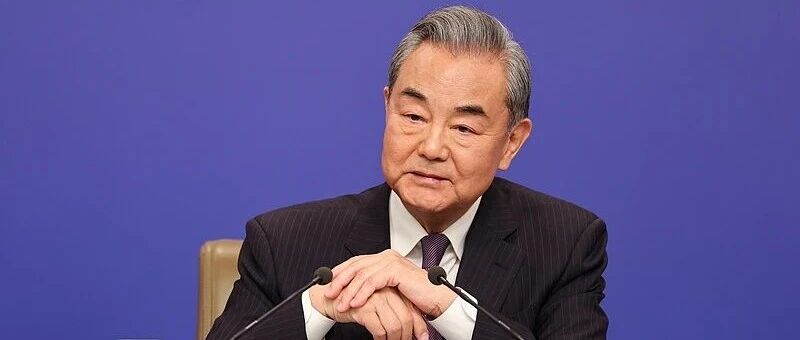
王毅就中日关系重申严正立场
财联社· 2026-02-14 13:52
Core Viewpoint - The article emphasizes China's role as a stabilizing force in the Asia-Pacific region, countering claims of rising tensions and highlighting Japan's recent provocative statements regarding Taiwan as a threat to regional peace [1][2]. Group 1: China's Position on Regional Stability - Wang Yi asserts that the Asia-Pacific region remains generally peaceful, despite isolated conflicts, and credits China for its role in maintaining stability [1]. - The article mentions that China is committed to continuing its constructive role in ensuring peace and stability in the region [1]. Group 2: Japan's Provocative Statements - Wang Yi criticizes the Japanese Prime Minister's remarks about Taiwan, interpreting them as a revival of militaristic ambitions and a challenge to China's sovereignty [2]. - The article draws historical parallels, suggesting that Japan's rhetoric echoes its past justifications for aggression, warning that failure to learn from history could lead to disastrous consequences [2]. Group 3: Historical Context - A comparison is made between Japan and Germany's post-war handling of their respective histories, highlighting Japan's continued veneration of war criminals as a root cause of current tensions [1]. - The article calls for vigilance from both the Japanese public and the international community against the resurgence of extreme right-wing ideologies in Japan [2].
王毅就中日关系重申严正立场
第一财经· 2026-02-14 13:31
Core Viewpoint - The article discusses the remarks made by Wang Yi, China's Foreign Minister, at the Munich Security Conference, emphasizing China's role as a stabilizing force in Asia and expressing concerns over Japan's recent statements regarding Taiwan, which are seen as a challenge to China's sovereignty [3][4]. Group 1: China's Role in Regional Stability - Wang Yi asserts that Asia remains largely peaceful compared to other regions, despite recent localized conflicts, such as the one at the Cambodia-Thailand border, which were resolved quickly with China's involvement [3]. - He positions China as a key player in maintaining peace and stability in Asia, highlighting its constructive role in regional affairs [3]. Group 2: Concerns Over Japan's Statements - Wang Yi criticizes the Japanese Prime Minister's comments regarding Taiwan, interpreting them as a revival of militarism and a challenge to China's sovereignty, marking a significant shift in Japan's post-war stance [4]. - He draws a historical parallel between Japan's current rhetoric and its past aggressive actions, warning that such attitudes could lead to dangerous consequences if not addressed [4]. Group 3: Historical Context and Warnings - The article contrasts Japan's post-war handling of its militaristic past with Germany's approach, noting Japan's continued veneration of war criminals, which Wang Yi argues is a root cause of current tensions [4]. - Wang Yi calls for vigilance among peace-loving nations and warns Japan against being swayed by extreme right forces, suggesting that a return to militarism would lead to self-destruction [4].

外交部长王毅就中日关系重申严正立场
Xin Lang Cai Jing· 2026-02-14 13:28
Group 1 - The core viewpoint emphasizes Japan's historical aggression towards Taiwan and warns against the resurgence of militarism in Japan, as highlighted by remarks from Chinese Foreign Minister Wang Yi at the Munich Security Conference [1] - Wang Yi's speech indicates that Japan's current leadership is echoing past justifications for military actions, drawing parallels to historical events such as the attack on Pearl Harbor [1] - The message urges Japanese citizens to be wary of extreme right-wing forces and warns other peace-loving nations to caution Japan against reverting to militaristic policies, suggesting that such a path would lead to self-destruction [1]
日方扣押中国渔船,中方通报最新进展
Huan Qiu Shi Bao· 2026-02-13 23:01
Group 1 - The Chinese consulate in Fukuoka is assisting in the safe return of Chinese crew members following the detention of a Chinese fishing vessel by Japan [1] - The Japanese Fisheries Agency reported the release of the detained Chinese captain after a guarantee payment was submitted [1] - This incident marks the first foreign fishing vessel detention by the Japanese Fisheries Agency in 2023 and the first detention of a Chinese fishing vessel since 2022 [1] Group 2 - The Japanese Fisheries Agency has a history of conducting inspections and detaining vessels under the pretext of "illegal fishing," with a total of 24 foreign fishing vessels detained over the next decade, including 6 from mainland China [1] - The detention of the Chinese fishing vessel has raised concerns amid ongoing tensions in Sino-Japanese relations, particularly following controversial statements by Japanese Prime Minister Suga Yoshihide regarding Taiwan [1] - The Chinese government emphasizes the importance of Chinese fishermen operating within legal frameworks while advocating for the protection of their rights and safety [2]
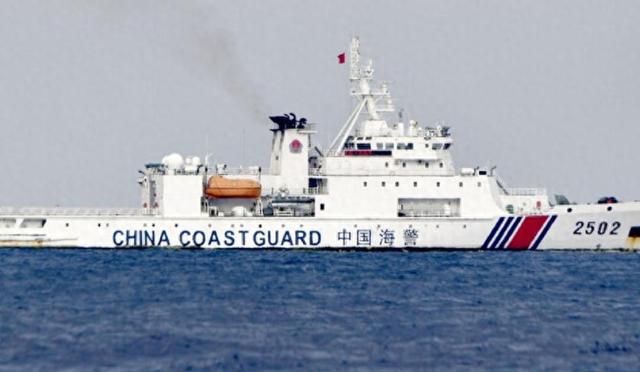
“日本政府被曝要求渔船避免前往钓鱼岛海域:别去,会被抓”
Xin Lang Cai Jing· 2026-02-13 15:18
Core Viewpoint - The Japanese government is advising fishermen to avoid fishing near the Diaoyu Islands to prevent escalating tensions with China following remarks by Prime Minister Kishi Nobuo regarding Taiwan, which have strained Sino-Japanese relations [1][5]. Group 1: Government Actions - The Japan Coast Guard has requested fishermen from Okinawa to refrain from fishing in the waters surrounding the Diaoyu Islands to avoid provoking China [1]. - A fishing cooperative in Okinawa, consisting of about 10 to 15 fishing vessels, has not operated in the area since the Coast Guard's request last year [1]. - The Japan Coast Guard maintains necessary communication with fishermen to ensure safety amid rising tensions [1]. Group 2: Tensions and Incidents - Chinese Coast Guard vessels have been spotted near the Diaoyu Islands for 91 consecutive days, with reports indicating that some are armed [3]. - A Chinese fishing vessel was forcibly detained by Japan's Fisheries Agency, leading to the arrest of its captain, who has since been released [3]. - The Japanese government has shifted its stance, previously turning a blind eye to fishermen approaching the Diaoyu Islands, now expressing concerns over potential detentions by Chinese authorities [7]. Group 3: Historical Context - The Diaoyu Islands have been a point of contention since the late 19th century, with Japan historically engaging in fishing activities in the area [7]. - Data shows a significant decline in Japanese fishing activities in the region, from at least 164 trips in 1978 to only 18 in 2024 and projected 8 in 2025 [7]. - The Chinese government asserts that the Diaoyu Islands are an inherent part of its territory and has rejected Japan's protests regarding Chinese Coast Guard patrols in the area [7].