中美能源博弈

Search documents
中方两艘油轮掉头,美国发布紧急撤离令,盯上中国能源命脉?
Sou Hu Cai Jing· 2026-01-15 07:50
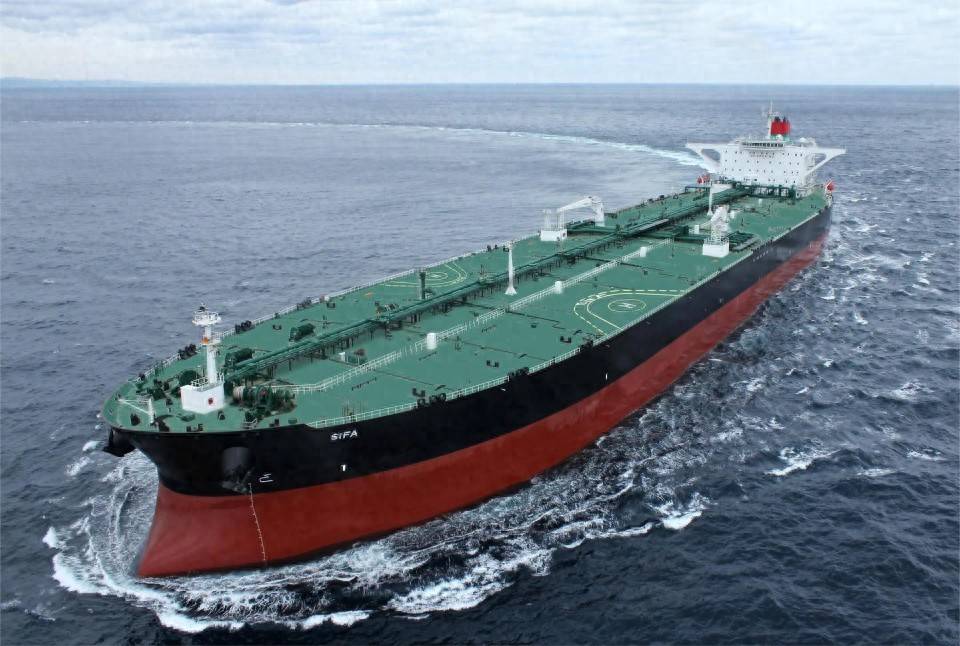
Group 1 - The U.S. State Department issued an emergency evacuation order, and President Trump warned Iran of consequences for crossing red lines, indicating potential military action [1] - Two Chinese oil tankers, originally heading to Venezuela, abruptly changed course towards Asia, highlighting U.S. focus on China's energy supply chain [1][5] - The geopolitical dynamics involving the Middle East, energy security, and U.S.-China strategic competition are becoming increasingly complex, affecting interests in Japan, Europe, and within the U.S. [1] Group 2 - The U.S. has maintained a high-pressure strategy against Iran since the 1979 Islamic Revolution, employing military, economic, and diplomatic means to compel compliance [3] - Trump's administration has intensified this approach by imposing a 25% tariff on Iran's trade partners, specifically targeting China and India, aiming to leverage economic pressure on global energy supply chains [3] - The U.S. strategy of pressuring energy-exporting countries has significant implications for China, as it complicates the cost and risk of U.S. actions against the world's second-largest economy [3] Group 3 - The oil-for-loan agreement between China and Venezuela was intended to stabilize trade, but U.S. pressure led to the Chinese tankers turning back, indicating a direct challenge to China's energy strategy [5] - Trump's potential military options may include targeted strikes or cyberattacks rather than full-scale military engagement, aiming to demonstrate U.S. power while avoiding prolonged conflict [5] - The dual objectives of U.S. actions are to deter Iran and undermine China's energy security, posing a significant challenge for China in maintaining its energy supply chains [5] Group 4 - China's energy imports are heavily reliant on the Middle East and Latin America, and the incident with the Venezuelan oil tankers illustrates U.S. capability to exert pressure at critical junctures [7] - This situation could lead to increased oil price volatility, import pressures, and rising costs for Chinese businesses and consumers [7] - China is leveraging multilateral cooperation and contractual agreements to mitigate risks associated with U.S. actions, emphasizing the need for a diversified energy supply chain [8] Group 5 - Trump's actions may demonstrate short-term deterrence, but the long-term effectiveness of his strategies against Iran and China remains uncertain [10] - The interdependence between the U.S. and China in energy, finance, and strategy means that unilateral actions carry high costs, creating tension between political intentions and global realities [10] - For China, maintaining supply chain security and enhancing strategic reserves and international cooperation are critical responses to external pressures [10]

明抢5000万桶石油后,特朗普转头才发现: 中国连一桶都不肯买了
Sou Hu Cai Jing· 2026-01-13 06:47
Core Viewpoint - The article discusses the implications of the U.S. administration's recent executive order declaring a national emergency to take control of Venezuela's oil revenues, highlighting the geopolitical and economic stakes involved in the U.S.-China energy rivalry. Group 1: U.S. Actions and Intentions - The U.S. Treasury Secretary announced the lifting of some sanctions on Venezuela, but with strict conditions regarding oil pricing, buyers, and fund allocation, effectively indicating a takeover of resource management rather than a genuine easing of sanctions [1][3]. - The U.S. has reportedly secured 50 million barrels of Venezuelan crude oil, believing that China, as a major oil importer, would comply with U.S. pricing and conditions [3][5]. Group 2: China's Response and Strategic Position - Chinese buyers have shown no interest in purchasing the Venezuelan oil, with reports suggesting they may not buy any at all, indicating a significant shift in the dynamics of the oil market [3][9]. - The article emphasizes that the high sulfur content and refining difficulty of Venezuelan oil make it less attractive, especially when U.S. intervention raises costs and risks, leading to a loss of competitive advantage for this oil [9][12]. - China's oil supply landscape has changed dramatically, with Russia becoming a dominant supplier, and other countries like Saudi Arabia and Iraq also vying for market share, giving China more options and reducing reliance on Venezuelan oil [11][12]. Group 3: Strategic Reserves and Market Dynamics - By November 2025, China's strategic oil reserves are projected to reach between 1.2 billion to 1.3 billion barrels, sufficient to sustain over 180 days of consumption, which diminishes the impact of U.S. resource threats [17][18]. - The article notes that the political risks associated with U.S. control over Venezuelan oil deter Chinese companies from engaging in transactions that could expose them to legal and financial repercussions [18][20]. Group 4: Broader Implications of the Energy Rivalry - The ongoing energy competition is framed as a struggle not just for oil prices and supply, but for broader geopolitical influence, with the U.S. strategy of weaponizing resources against China proving ineffective [20]. - The article concludes that the U.S. may find itself in a precarious position if it does not adjust its pricing or political conditions, as the 50 million barrels could become undesirable, while China continues to strengthen its position in the global energy market [20].
美国挥舞制裁大棒,剑指中国百年能源大计,光伏绞杀如何绝地反击
Sou Hu Cai Jing· 2025-09-25 07:42
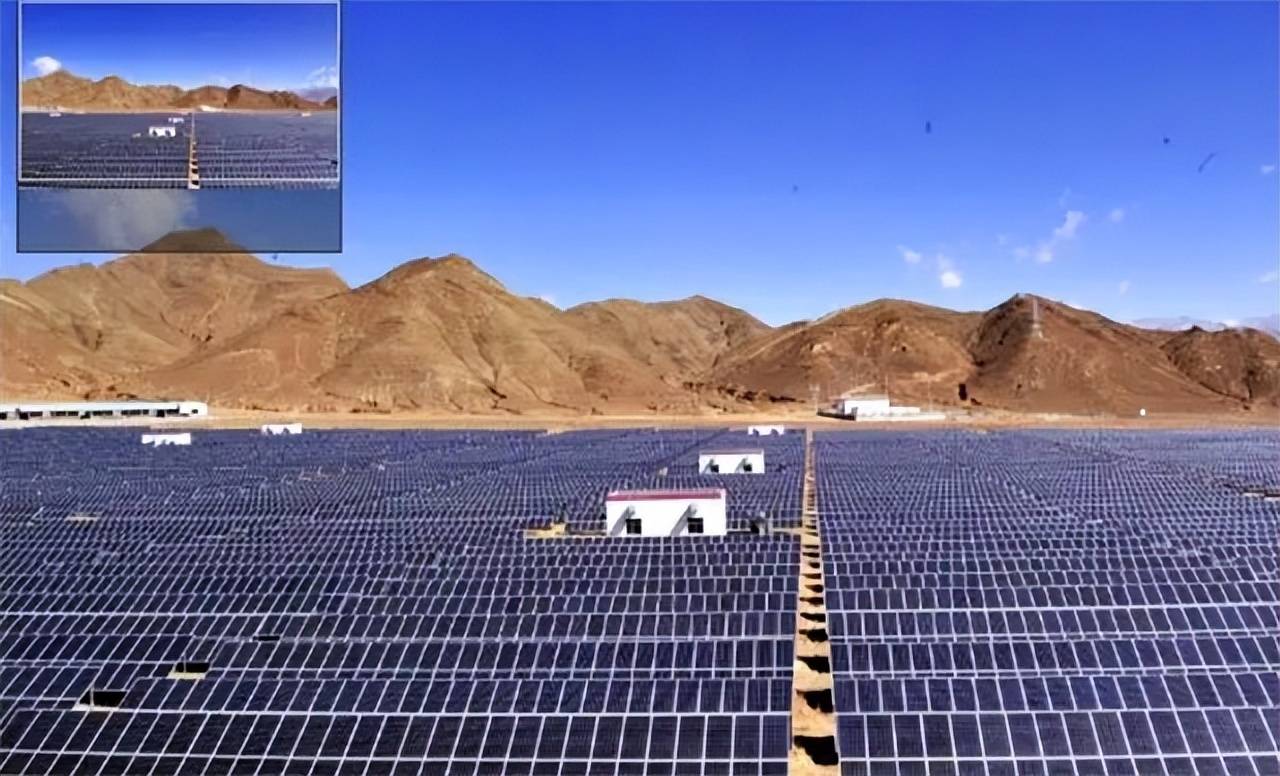
Core Insights - The article highlights the rise of China's photovoltaic (PV) industry, showcasing its transformation from near collapse to global leadership in solar energy [1][3]. Industry Overview - In 2022, 17 out of the top 20 global PV companies were Chinese, illustrating China's dominant position in the solar energy sector [3]. - The history of China's PV industry is marked by significant challenges and competition, particularly in the context of the US-China energy rivalry [5]. Historical Context - The US initiated its PV industry in the 1970s, while China only began its journey in 2000 when a scholar named Shi Zhengrong returned to China to start a solar technology company [7]. - In 2002, the first 10 MW production line was launched by a Chinese company, which was equivalent to the total solar cell production of China in the previous four years [9]. Market Challenges - The early years of the Chinese PV industry faced a supply-demand mismatch, with 90% of silicon materials imported and 90% of products exported [11]. - The 2008 financial crisis severely impacted the industry, leading to a drastic drop in polysilicon prices and significant financial losses for companies like Suntech [11]. - The US imposed punitive tariffs on Chinese PV products in 2011, resulting in numerous company bankruptcies [11][12]. Industry Resilience - In response to crises, Chinese companies innovated and reduced costs, with GCL Group lowering polysilicon costs to $25 per kg and LONGi Green Energy achieving significant efficiency improvements in solar cells [13]. - By 2021, China achieved grid parity for solar energy, reducing its reliance on subsidies and solidifying its global leadership despite US sanctions on Xinjiang solar products [15]. Current Landscape - The article concludes that after two decades of competition and challenges, China's PV industry has emerged stronger and is now leading the global market [15].