
马瑞原油

Search documents
地缘局势未明,中枢上移难改
Dong Zheng Qi Huo· 2026-03-31 06:46
Report Industry Investment Rating - BU: Oscillating [1] - FU/LU: Bullish [1] Core Viewpoints of the Report - The significant collapse of the asphalt cracking spread and the extreme compression of production profits have led to a substantial shrinkage in domestic supply. Although the inventory is still at a high level, concerns about the continuous tightening of short - term supply are difficult to alleviate. With the gradual start of road demand in the north in the second quarter, the absolute price of asphalt is unlikely to decline significantly, and the slow repair of the cracking spread is more worthy of attention [2][79] - The fuel oil market has higher elasticity than the asphalt market. It is still in an oscillation period dominated by geopolitical games. The short - term risk is still the instability of supply, but in the long term, it will return to fundamental pricing. In the most optimistic scenario, the supply tension is expected to ease in late April. In the benchmark scenario, the supply gap will gradually converge, the cracking spread will weaken, and the high - low sulfur spread will gradually return to a reasonable level. Overall, no significant price correction is expected in the second quarter [3][79][80] Summary According to the Directory 1. Asphalt: Cracking Spread Collapse, Significant Supply Contraction - **Cost Increase and Profit Squeeze**: The US intervention in Venezuelan crude oil sales has led to a significant reduction in the discount of Merey crude oil, pushing up the production cost of local refineries. The closure of the Strait of Hormuz in March caused international oil prices to soar, while the increase in asphalt prices was far less than that of crude oil, resulting in a rapid decline in the cracking spread and production profits. The problem of raw material shortage is expected to persist in the second quarter [11][14][15] - **Substantial Supply Contraction and Limited Inventory Pressure**: In mid - March, major refineries reduced production or stopped shipping due to concerns about raw material shortages and increased losses. The output in March and April decreased significantly year - on - year. Overseas supply also shrank significantly. Although the current asphalt inventory is high, the short - term supply shortage makes the near - month price easy to rise and difficult to fall [21] - **Upcoming Demand and Price Support**: The second quarter is the recovery period of asphalt demand. Although the demand growth rate in the second quarter of 2026 may be lower than that in 2025, the early allocation of special bonds may support the improvement of demand. The key to the absolute price of asphalt lies in when the raw material shortage can be resolved, and the gradual return of the cracking spread is a more certain long - term trend [26][27] 2. Fuel Oil: Low - Sulfur Remains Relatively Strong, Focus on the Long - Term Return of Cracking Spread - **Disruption of Persian Gulf Fuel Oil Supply and Strong Cracking Spread**: The closure of the Strait of Hormuz on February 28 cut off the only shipping route for Persian Gulf product exports, causing a supply gap of about 250,000 tons of high - sulfur fuel oil, accounting for about 20% of global demand. The supply of low - sulfur fuel oil from key refineries has also been affected [36][37][38] - **Differentiated Trends of High - and Low - Sulfur, Low - Sulfur Gaining the Upper Hand**: At the beginning of the geopolitical conflict, high - sulfur prices rose more strongly. However, as diesel prices soared, the relative relationship between high - and low - sulfur reversed, and the high - low sulfur spread began to widen. The term structure of fuel oil also showed different trends for high - and low - sulfur [45][46][48] - **Differentiated Supply and Demand in Ports, Stable Inventory in Singapore**: The fuel oil market fluctuations vary in different regions. The supply in the Middle East has been severely affected, while Singapore has shown more resilience due to the inflow of Russian goods. The demand has also been redistributed among ports. Although Singapore has buffered the supply impact, the low - sulfur blending pool has not been substantially alleviated [58][59][69] - **The Strait of Hormuz is the Key, Don't Be Over - Optimistic about Resumed Navigation**: The current situation has not been substantially alleviated. In the most optimistic scenario, supply relief in Singapore may occur in late April, and the price correction may occur at the end of the second quarter. In the benchmark scenario, the supply gap will gradually converge, and the high - low sulfur spread will gradually return to a reasonable level. In the pessimistic scenario, fuel oil prices will continue to soar [70][75][77] 3. Summary and Outlook - The marginal changes in the supply side are the key factors affecting the asphalt and fuel oil markets in the second quarter. The main price ranges of BU, FU, and LU in the second quarter are expected to be [3800,4800], [4000,5000], and [4500,6500] yuan/ton respectively, and the high - low sulfur spread in Singapore is expected to be in the range of [100,200] US dollars/ton. If the geopolitical situation does not change significantly, opportunities to buy the asphalt cracking spread and the high - low sulfur spread at low prices can be considered. If the seasonal rigid demand for asphalt recovers strongly, the opportunity for the BU - FU spread to widen can also be considered [79][80]
沥青季报 2026/3/19:强成本、紧供应、弱需求的三重奏
Zi Jin Tian Feng Qi Huo· 2026-03-24 11:27
1. Report Industry Investment Rating - The report gives a neutral - to - bullish rating for asphalt in terms of the core view, crack spread, and supply; a bullish rating for the basis; a neutral rating for demand and inventory [5]. 2. Core View of the Report - The core view of the report is that the geopolitical conflict between the US and Iran has pushed up crude oil prices, increasing asphalt production costs and significantly reducing asphalt production profits. Some local refineries are facing raw material shortages. The domestic refinery operating rate has significantly decreased, and as a by - product, asphalt production has decreased. With the upcoming warmer weather, the seasonal peak demand season for asphalt is approaching. Attention should be paid to the positive spread opportunity of BU 06 - 09, and the logic of the widening of the BU crack spread and the BU - FU spread [5]. 3. Summary by Relevant Catalogs 3.1. Market Review - At the beginning of the year, due to the contraction of Merey oil supply and low refinery operating rates in China, the price stabilized at 3,200 yuan/ton. In the middle of the month, it oscillated and declined with a slight correction in crude oil. At the end of the month, BU2603 closed at 3,424 yuan/ton, with a weekly increase of 5.81%. During the Spring Festival, demand almost stagnated, and the price oscillated weakly with crude oil. After the festival, demand recovered slowly, and the price was in a narrow range of 3,300 - 3,450 yuan/ton. The escalation of the Middle East geopolitical conflict pushed up oil prices, strengthening the cost - side support for asphalt. On March 16, 2026, when the US attacked Iran's Kharg Island, the BU main contract soared by 10.76% in a single day, breaking through 4,500 yuan/ton and reaching the largest increase in nearly two years, with trading volume surging by over 1.12 million lots [8]. 3.2. Cost Side - **Raw Materials**: Suitable heavy crude oils for asphalt production are mainly from Venezuela, Canada, and the Middle East. Merey crude oil is very important, with a yield of 50% - 60%. In 2025, it accounted for over 50% of the raw materials for domestic asphalt production. Currently, the Merey oil discount has strengthened, and refineries have stopped purchasing. The shipping in the Strait of Hormuz is blocked, increasing the cost of substituting Middle Eastern heavy - residue oil. The import of diluted asphalt has remained at a low level. Since April, some refineries may face raw material shortages and will prioritize the production of refined oil, reducing asphalt output [10][11][18]. - **Profit**: The escalation of the US - Iran conflict has led to high - level and wide - range fluctuations in oil prices, significantly increasing asphalt production costs. The increase in asphalt product prices is not as obvious as that in costs. The asphalt production profits of different types of refineries have declined to varying degrees. The asphalt operating rate fluctuated between 21% - 27% in the first quarter and may continue to remain low before the blockade of the Strait of Hormuz is lifted [39]. 3.3. Fundamental Aspects - **Supply**: In the first quarter, asphalt production declined. If raw material supply continues to be affected, the impact will persist. In April, the asphalt production plan of local refineries is about 740,000 tons, a decrease of 170,000 tons compared with the March plan. The production of some local refineries is expected to tighten, and some have stopped production. The production of major refineries has also decreased by 50%. The import price of asphalt has soared, and the import volume is at a low level. The future import price and volume depend on the navigation progress in the Strait of Hormuz, crude oil price trends, and the recovery rhythm of domestic demand [42][48][51]. - **Demand**: Currently, the downstream demand is general. The road construction operating rate in the north is only 23%, far lower than the historical average. In the south, demand is slowly being released due to the rainy season and capital rhythm. The social inventory is 1.28 million tons, a 2.61% increase month - on - month, and remains at a high level. The first peak demand season in 2026 is expected to be from early April to mid - June [56]. - **Inventory**: Before the Spring Festival, both social and refinery inventories accumulated slightly. After the festival, the refinery inventory is at an inflection point, with a 5% month - on - month decrease. The social inventory is still accumulating, but the inventory of leading asphalt traders is sufficient [78]. 3.4. Price Aspects - **Price**: Driven by the strong crude oil, the national asphalt spot price is oscillating at a high level. The price difference has widened due to different regional supply elasticities. It is expected that the asphalt price will remain high in the short term [91]. - **Basis**: The futures price has led the increase, while the spot price has followed sluggishly. The basis is deeply discounted, and there is a large room for future repair. With the increase in construction in the north in April and the end of the rainy season in the south, the basis is expected to converge from a deep discount to a moderate discount [95]. - **BU Future Strategies**: Attention should be paid to the positive spread opportunity of BU 06 - 09, the logic of the widening of the BU crack spread, and the logic of the widening of the BU - FU spread [101][102]. - **Trading Volume and Open Interest**: The total asphalt futures warehouse receipts are 97,880 tons, with a cumulative increase of 46,650 tons (+96.6%) in the past month. The top 20 positions are net long, and the increase in long positions is greater than that in short positions. The trading is mainly driven by speculative funds [112].
现货大体持稳,供需两弱格局延续
Hua Tai Qi Huo· 2026-02-11 05:29
1. Report Industry Investment Rating - Unilateral: Neutral [2] 2. Core View of the Report - The spot market of asphalt is generally stable, and the pattern of weak supply and demand continues. Near the Spring Festival, the spot market of asphalt has weak supply and demand, and the overall trading atmosphere is rather dull. The energy and chemical sectors, including asphalt, may be repeatedly disturbed by news due to the unresolved geopolitical risks in the Middle East. Domestic refineries are preparing for raw material switching after March, and there is no absolute bottleneck in raw material substitution, but cost increase is inevitable. If the Middle East situation deteriorates, the supply of substitute raw materials will face greater threats, and there are still upward risks in the market [1] 3. Summary by Relevant Catalog Market Analysis - On February 10, the closing price of the main BU2603 contract of asphalt futures in the afternoon session was 3,343 yuan/ton, with a decline of 0 yuan/ton or 0% compared to the previous day's settlement price. The position was 57,736 lots, a decrease of 9,679 lots compared to the previous period, and the trading volume was 82,908 lots, a decrease of 39,924 lots compared to the previous period [1] - The spot settlement prices of heavy - traffic asphalt from Zhuochuang Information are as follows: Northeast: 3,506 - 3,600 yuan/ton; Shandong: 3,180 - 3,240 yuan/ton; South China: 3,290 - 3,350 yuan/ton; East China: 3,250 - 3,280 yuan/ton. The spot price of asphalt in Shandong decreased, and that in Sichuan and Chongqing increased, while the spot prices in other regions were generally stable [1][2] Strategy - Unilateral: Neutral. Pay attention to the development of the Iranian situation and maintain a light position before the Spring Festival. No strategies are provided for inter - period, cross - variety, spot - futures, and options [2]
沥青产业周报:假期临近,交易热度逐渐下降-20260208
Nan Hua Qi Huo· 2026-02-08 15:09
1. Report Industry Investment Rating No information provided in the report. 2. Core Viewpoints of the Report - In the future week, asphalt prices will mainly fluctuate with the cost - end crude oil. The main factor influencing crude oil is geopolitics, but small - scale geopolitical frictions cannot reverse the weak fundamentals and oversupply situation of crude oil. [1] - Due to the continuous slump in domestic diesel prices and the large inventory pressure of refined oil in some Shandong refineries, the suppression of asphalt by full - storage may lead to a smooth decline in prices when the rigid demand after the Spring Festival fails to meet expectations. [1] - As the holiday approaches, the trading enthusiasm of asphalt may gradually fade, and investors need to pay attention to position risk control before the festival. [1] 3. Summary by Relevant Catalogs 3.1 Core Contradictions and Strategy Recommendations 3.1.1 Core Contradictions - As the holiday approaches, the spot - end has "celebrated the New Year in advance", and the demand has dropped to zero. The previous continuous premium increase in the futures market has not been fully followed by the spot market. [1] - The increase in the discount quotation of Ma Rui crude oil has led some Shandong refineries to switch to other heavy - oil resources. The so - called raw material shortage is not the key factor restricting the refinery's operating rate, but it does have a certain impact on the long - term cost valuation. [1] 3.1.2 Trading - Type Strategy Recommendations - The update of the basis, calendar spread, and hedging arbitrage strategy recommendations is suspended due to compliance requirements. The update of the recent strategy review is also suspended. [10] 3.1.3 Industrial Customer Operation Recommendations - **Price Range Forecast**: The price range forecast for the asphalt main contract in the coming month is 2800 - 3150 yuan/ton, with a current 20 - day rolling volatility of 25.63% and a 3 - year historical percentile of 54.76%. [10] - **Risk Management Strategies**: - **Inventory Management**: For enterprises with high finished - product inventory, they can short asphalt futures to lock in profits and sell call options to reduce capital costs. [10] - **Procurement Management**: For enterprises with low regular inventory and hoping to purchase according to orders, they can buy asphalt futures to lock in procurement costs in advance and sell put options to collect premiums. [10] 3.2 This Week's Important Information and Next Week's Attention Events 3.2.1 This Week's Important Information - **Positive Information**: Geopolitical disturbances in the Middle East have increased the upward elasticity of crude oil prices, and the discount quotation of Ma Rui crude oil has risen. [11][13] - **Negative Information**: No specific negative information was provided in the text. - **Spot Transaction Information**: This week, asphalt prices in Shandong decreased by 10 yuan/ton, while prices in other regions increased by 5 - 115 yuan/ton. The cost of crude oil and the futures market were favorable, and there was some rush - work demand in the south. However, in the north, the rigid demand stagnated, and the overall sales volume decreased. [15][16] 3.2.2 Next Week's Important Events to Watch - Geopolitical situation changes, including the latest shipping and arrival logistics of Venezuelan and Iranian crude oil, the export and shipment of Russian crude oil, the possibility of the end of the Russia - Ukraine conflict, and the changes in floating storage inventory at sea. [17][22] - The progress and results of the subsequent US - Iran negotiations. [22] - The end of the asphalt consumption peak season, with demand under pressure. [17] - The US may cause the geopolitical premium of crude oil to decline by urging Ukraine to resolve the battlefield issue. [17] - The US may issue more threats of imposing tariffs under the pretext of national security. [17] 3.3 Disk Interpretation 3.3.1 Price - Volume and Capital Interpretation - **Unilateral Trend and Capital Movement**: This week, the asphalt futures price showed a volatile trend, and market sentiment was cautious. The net short - position of key asphalt seats has decreased, indicating that some institutions are more optimistic about the future market. The market may continue to fluctuate in the short term. [18] - **Basis Structure**: This week, the asphalt basis structure weakened, with the futures market at a premium. Frequent geopolitical disturbances supported market activity through low - price contract resources despite weak demand. [21] - **Calendar Spread Structure**: The absolute price of asphalt jumped due to geopolitical factors, but the calendar spread structure remained in a weak C - structure, which is in line with the characteristics of the approaching off - season. [39] 3.4 Valuation and Profit Analysis 3.4.1 Upstream and Downstream Profit Tracking in the Industry Chain - **Coking Material Market**: As of February 5th (compared with January 29th), the price of Shandong coking materials increased by 50 yuan/ton to 3650 yuan/ton. The trading atmosphere in the refined oil market was positive, and the replenishment enthusiasm of middle - and lower - stream users was high, leading to a slight rebound in coking material prices. [43] - **Asphalt Market**: The mainstream transaction price of Shandong heavy - traffic asphalt decreased by 10 yuan/ton to 3220 - 3280 yuan/ton. Although the previous strong crude oil price supported the asphalt futures market, the weak demand led to few spot transactions. In the short term, the off - season demand and the planned resumption of production of some refineries may lead to a further decline in asphalt prices. [43] 3.4.2 Import - Export Profit Tracking - **South Korea Market**: The CIF price of South Korean asphalt in East China is 395 - 405 US dollars/ton, and the RMB duty - paid price is 3180 - 3260 yuan/ton. Although the price of South Korean asphalt in February increased compared with January, it still has a price advantage, and the import volume in January and February remained high. [52] - **Singapore, Malaysia, and Thailand Markets**: The CIF price of Singaporean asphalt in South China is 490 - 510 US dollars/ton, and the RMB duty - paid price is 3870 - 4030 yuan/ton; the CIF price of Thai asphalt in South China is 465 - 475 US dollars/ton, and the RMB duty - paid price is 3680 - 3760 yuan/ton. The price increase in the Singapore market was driven by crude oil and fuel oil, but the trading atmosphere has cooled down due to the decrease in rush - work demand. [52] 3.5 Supply - Demand and Inventory Deduction 3.5.1 Supply - Side and Deduction - **Domestic Production**: In 2025, China's asphalt production was 28.47 million tons, a year - on - year increase of 12%. Among them, the production of PetroChina refineries increased by 33% year - on - year, Sinopec's decreased by 12% year - on - year, CNOOC's increased by 13% year - on - year, and local refineries' increased by 19% year - on - year. [55] - **Import**: The import volume of South Korean and other regions' asphalt remained at a relatively high level, and the price of some brands' March shipments continued to rise. [52] 3.5.2 Demand - Side and Deduction - Most regions' demand has decreased due to temperature and the approaching holiday, and the operating rate of modified asphalt plants has continued to decline. [80] 3.5.3 Inventory - Side and Deduction - Some social warehouses in the Northeast, Northwest, and North China continued to store winter - storage resources; the inventory in the South China and Southwest regions decreased steadily due to some rush - work demand; the inventory in the Yangtze River Delta and Central China regions fluctuated little. [97] 3.5.4 Supply - Demand Balance Sheet The report provides the asphalt monthly supply - demand balance sheet from January to December 2025, including data on production, imports, exports, apparent consumption, actual demand, and inventory changes. [119] 3.5.5 Weather Outlook In the next 10 days (February 8 - 17th), most of the regions in Huanghuai, Jianghuai, Jianghan, southern China, and the eastern part of the southwestern region will experience precipitation, which is higher than the same period in previous years. [120]
春节前沥青或震荡趋稳 节后有望走高
Xin Lang Cai Jing· 2026-02-06 03:08
Core Viewpoint - The domestic asphalt market is entering a critical window as the 2026 Spring Festival approaches, characterized by a "strong cost support and weak supply-demand" situation, with prices expected to continue rising post-holiday as supply-demand gradually improves and raw material support remains in place [3][5][16]. Supply Side - As of February 4, the average operating load of domestic asphalt plants is 28.08%, reflecting a 1.89 percentage point decrease week-on-week, indicating reduced production activity as the holiday approaches [3][17]. - February production is expected to decrease due to lower operational rates, although some refineries like Lanzhou Petrochemical and CNOOC Zhanjiang plan to resume operations, providing some stability to supply [6][17]. - There are expectations of tightening raw material supply, with potential shortages anticipated in the longer term, which may affect refinery production rates [9][20]. Demand Side - The demand for asphalt is currently weak, particularly in northern regions where construction has halted due to low temperatures, and in southern regions where cold weather has slowed down construction progress [3][14]. - The market demand is primarily supported by social inventory and speculative trading, with a general lack of enthusiasm among traders for stocking up [6][17]. Price Outlook - Pre-holiday, the asphalt market is expected to maintain a stable price trend, with short-term fluctuations influenced by crude oil price volatility, but overall price increases will be limited due to weak demand [6][17]. - Post-holiday, as logistics resume and downstream enterprises restart operations, the asphalt market is anticipated to gradually recover, supported by infrastructure policies and potential increases in construction demand [7][18]. - The average price of asphalt is projected to be around 3,350 yuan/ton in February and may rise to 3,480 yuan/ton in March [10][20].


沥青价格重心或继续上移
Qi Huo Ri Bao· 2026-01-30 01:01
Group 1 - The core driving force behind the recent rise in asphalt prices is the geopolitical event of the U.S. raid on Venezuela, which has raised concerns about oil supply [1] - Venezuela's oil, particularly from the Maracaibo Lake region and the Orinoco heavy oil belt, is crucial for U.S. refineries that primarily process medium crude oil, making it an important supplement to shale oil [1] - In 2025, China's total asphalt production was 28.7 million tons, a year-on-year increase of 9.1%, with refineries using or blending with Maracaibo crude producing approximately 15.13 million tons, up 13.7% year-on-year [1] Group 2 - The domestic refinery raw material issues are still under negotiation, and the changes in heavy oil premium will be a key variable moving forward [2] - Currently, during the winter storage season, refineries in Hebei and Shandong have launched winter storage contracts for January to March, with initial prices ranging from 2,920 to 3,000 yuan per ton [4] - The geopolitical disturbances continue to support crude oil prices, which have raised asphalt costs by approximately 400 yuan per ton [5]
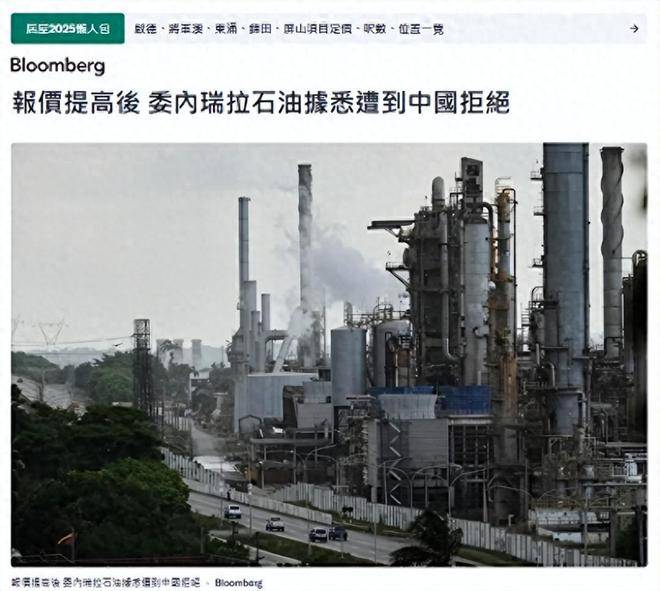
特朗普抢5000万桶委石油,却发现中方一桶也不买:2艘油轮已返航
Sou Hu Cai Jing· 2026-01-14 12:29
Group 1 - The article discusses Trump's plan to buy Venezuelan oil at $22 per barrel and sell it at $80 to $84, highlighting the impracticality of this approach given the production costs and the current geopolitical climate [1][12] - U.S. oil companies have expressed reluctance to invest in Venezuela due to the need for significant long-term capital and a stable political environment, which is currently undermined by U.S. sanctions [1][12] - The article emphasizes that the U.S. strategy resembles old colonial practices, aiming to control resource-rich countries while facing modern challenges that render such tactics ineffective [3][13] Group 2 - China's refusal to comply with U.S. demands regarding Venezuelan oil purchases signals a rejection of unilateral U.S. rules and a commitment to maintaining direct trade with Venezuela [4][7] - Shipping data indicates that Chinese supertankers, initially bound for Venezuela, turned back to Asia after weeks of waiting, reflecting a strategic decision to avoid potential conflicts with U.S. forces [7][8] - The diversification of China's energy supply sources, including increased imports from Canada and alternatives from the Middle East and Russia, reduces reliance on Venezuelan oil [10][12] Group 3 - The article highlights the deepening energy competition between China and the U.S. in Latin America, with U.S. attempts to control Venezuelan oil seen as a strategy to limit China's energy partnerships in the region [13][15] - The geopolitical risks associated with the "oil-for-debt" model between China and Venezuela are underscored, as U.S. actions threaten Venezuela's ability to fulfill its debt obligations to China [15] - Trump's approach to Venezuelan oil is portrayed as a strategic failure, failing to constrain China's energy access while exposing U.S. capital's distrust in domestic policies [15]

明抢5000万桶石油后,特朗普转头才发现: 中国连一桶都不肯买了
Sou Hu Cai Jing· 2026-01-13 06:47
Core Viewpoint - The article discusses the implications of the U.S. administration's recent executive order declaring a national emergency to take control of Venezuela's oil revenues, highlighting the geopolitical and economic stakes involved in the U.S.-China energy rivalry. Group 1: U.S. Actions and Intentions - The U.S. Treasury Secretary announced the lifting of some sanctions on Venezuela, but with strict conditions regarding oil pricing, buyers, and fund allocation, effectively indicating a takeover of resource management rather than a genuine easing of sanctions [1][3]. - The U.S. has reportedly secured 50 million barrels of Venezuelan crude oil, believing that China, as a major oil importer, would comply with U.S. pricing and conditions [3][5]. Group 2: China's Response and Strategic Position - Chinese buyers have shown no interest in purchasing the Venezuelan oil, with reports suggesting they may not buy any at all, indicating a significant shift in the dynamics of the oil market [3][9]. - The article emphasizes that the high sulfur content and refining difficulty of Venezuelan oil make it less attractive, especially when U.S. intervention raises costs and risks, leading to a loss of competitive advantage for this oil [9][12]. - China's oil supply landscape has changed dramatically, with Russia becoming a dominant supplier, and other countries like Saudi Arabia and Iraq also vying for market share, giving China more options and reducing reliance on Venezuelan oil [11][12]. Group 3: Strategic Reserves and Market Dynamics - By November 2025, China's strategic oil reserves are projected to reach between 1.2 billion to 1.3 billion barrels, sufficient to sustain over 180 days of consumption, which diminishes the impact of U.S. resource threats [17][18]. - The article notes that the political risks associated with U.S. control over Venezuelan oil deter Chinese companies from engaging in transactions that could expose them to legal and financial repercussions [18][20]. Group 4: Broader Implications of the Energy Rivalry - The ongoing energy competition is framed as a struggle not just for oil prices and supply, but for broader geopolitical influence, with the U.S. strategy of weaponizing resources against China proving ineffective [20]. - The article concludes that the U.S. may find itself in a precarious position if it does not adjust its pricing or political conditions, as the 50 million barrels could become undesirable, while China continues to strengthen its position in the global energy market [20].

抢委内瑞拉5000万桶石油后,特朗普才发现:中国连一桶都不愿买了
Sou Hu Cai Jing· 2026-01-13 05:43
Core Viewpoint - The announcement by Trump regarding Venezuela's oil transfer to the U.S. was met with immediate rejection from Chinese buyers, highlighting the complexities of international oil trade and geopolitical tensions [1][5][20]. Group 1: U.S. Actions and Venezuela's Oil Situation - The U.S. has increased military pressure on Venezuela, leading to the interception of oil tankers and a significant drop in oil exports, from a daily production of 1.1 million barrels to an export of only 500,000 barrels [2]. - The U.S. government is negotiating with Venezuela's interim authorities to take control of the oil industry, prioritizing sales to the U.S. and cutting ties with China, Russia, and Iran [5][20]. - Trump's announcement of acquiring 30 to 50 million barrels of Venezuelan oil was intended to showcase U.S. control over the situation [5]. Group 2: China's Response and Market Dynamics - Chinese buyers rejected the Venezuelan oil offer, particularly after a price increase of $2, with the Chinese government firmly opposing U.S. intervention in sovereign resources [1][7][20]. - China's oil imports from Venezuela have drastically decreased, with only 3 shipments remaining in December 2025, down from 6 to 10 shipments per month [12]. - China has diversified its oil import channels, with imports from Saudi Arabia, Iran, and Russia, making Venezuelan oil less critical, accounting for less than 1% of total imports [14]. Group 3: Energy Security and Strategic Positioning - China has established a robust energy security framework, including legal provisions for strategic oil reserves, which supports its position as a rational market participant rather than a passive buyer [16][22]. - The refusal to purchase Venezuelan oil signals China's confidence and strength in the global energy market, emphasizing the need for stable and mutually beneficial partnerships [24][26]. - The ongoing geopolitical struggle reflects a shift in energy dynamics, where China is no longer seen as a weak player but as a significant force capable of making independent decisions [24][26].
沥青:传统淡季迎冲高行情
Zhong Guo Hua Gong Bao· 2026-01-13 03:24
Core Viewpoint - The asphalt market is experiencing a price surge due to international supply disruptions, but this is expected to be temporary as demand remains weak and inventory levels are high [1][4]. Group 1: Price Movements - In late December 2025, the average ex-factory price of 70 asphalt in Shandong was 2900 yuan per ton, which rose to a peak of 3150 yuan by January 5, 2026, marking a significant increase [2]. - The futures market also reflected this trend, with the asphalt 2602 contract rising by 4.4% within a week [2]. - The price fluctuations are linked to a significant reduction in Venezuelan crude oil exports, which have decreased sharply, impacting regional raw material availability [2][3]. Group 2: Supply and Demand Dynamics - The asphalt market is currently constrained by weak demand and high inventory levels, with a reported asphalt production of 553,000 tons in the last week before New Year's, a 14% increase week-on-week [4]. - The operating rate for modified asphalt production was only 20%, continuing a four-week decline, while Shandong's refineries reported a 19% increase in shipments to 148,600 tons [4]. - Social and factory inventories reached 666,000 tons, up 4% week-on-week, indicating a weak fundamental structure in the off-season [4]. Group 3: Future Outlook - Domestic asphalt consumption is projected to reach 30.78 million tons in 2025, an increase of 1.88 million tons or 6.49% year-on-year [5]. - However, the real estate market is expected to slow down, and infrastructure investments will focus more on quality and efficiency, leading to a decline in overall asphalt demand [5]. - The total asphalt supply for the year is estimated at 31.43 million tons, with a supply-demand gap of approximately 880,000 tons, indicating a trend of oversupply [5][6].