
中试熟化

Search documents
基础研究投入强度12%,上海代表“把脉”建言贯通科创与产业
第一财经· 2026-02-05 04:48
Core Viewpoint - Shanghai is focusing on deep integration of technological innovation and industrial innovation to enhance its role as an international innovation center, emphasizing the importance of transforming scientific achievements into industrial applications [2][11]. Group 1: Technological Innovation and Industrial Integration - The latest "2025 Shanghai Technology Progress Report" indicates that Shanghai's basic research investment intensity is expected to be around 12%, with local scientists contributing to 30.6% of national publications in top journals [2][11]. - The Shanghai government aims to promote the deep integration of technological and industrial innovation as a key task, which includes accelerating the application of major scientific achievements and fostering intelligent, green, and integrated industrial development [2][13]. Group 2: Suggestions for Enhancing Innovation - Liu Xuanyong suggests that there is a mismatch between academic research and industry needs, advocating for a model that prioritizes industry demand in talent cultivation and promotes project-based teaching reforms [4][5]. - Recommendations include strengthening the construction of pilot testing platforms and encouraging collaboration between universities and leading enterprises to establish high-level joint laboratories [5][6]. Group 3: Challenges in Technology Transfer - There is a significant gap between academic works and marketable products, with many innovative results remaining in the form of papers rather than being developed into reliable, replicable solutions [7]. - The need for specialized platforms and talent to facilitate the engineering and marketization of cutting-edge academic results is highlighted, as many innovations are stalled at the prototype stage [7][8]. Group 4: Role of Incubators - Incubators are seen as crucial in linking innovation chains and industry chains, fostering high-tech enterprises and specialized companies by facilitating interactions among various stakeholders [8][9]. - Suggestions for improving incubators include enhancing the training of personnel, providing access to cutting-edge training resources, and creating a supportive environment for high-level talent in the technology service industry [9]. Group 5: Shanghai's Innovation Performance - Shanghai ranks first in comprehensive technology innovation levels nationally, with significant increases in technology contract transaction amounts and high-value invention patents per capita [11][12]. - The city is committed to enhancing its innovation capabilities, with plans to deepen the reform of technology achievement rights and support the development of high-quality incubators and verification platforms [13].

基础研究投入强度12%,上海代表“把脉”建言贯通科创与产业
Di Yi Cai Jing· 2026-02-04 14:17
Core Viewpoint - Shanghai is focusing on deepening the integration of scientific and technological innovation with industrial innovation, as highlighted in the recent discussions at the Shanghai Two Sessions [1][8]. Group 1: Investment in Research and Development - Shanghai's basic research investment intensity is expected to be around 12%, with scientists publishing 30.6% of national papers in top journals like "Cell," "Nature," and "Science" [1]. - The total R&D expenditure intensity in Shanghai is projected to be approximately 4.5%, with a significant increase in technology contract transaction volume, reaching 649.68 billion yuan, a year-on-year growth of 24.9% [6][7]. Group 2: Challenges in Technology Transfer - There exists a mismatch between the academic pursuit of cutting-edge research and the practical technological needs of enterprises, leading to a "double-blind" configuration in innovation supply and demand [2]. - The transition from "works" to "samples" and from "samples" to "products" faces significant engineering and market challenges, necessitating specialized platforms and talent for effective commercialization [3]. Group 3: Recommendations for Improvement - Suggestions include promoting industry-education integration to enhance the deep fusion of technological and industrial innovation, with a focus on reshaping talent cultivation mechanisms and establishing collaborative research platforms [2]. - Establishing specialized plans for concept verification and product pilot testing in the AI sector is recommended to support the systematic engineering development of promising research outcomes [4]. Group 4: Role of Incubators - Incubators are seen as crucial in linking innovation chains and industry chains, fostering high-tech enterprises and specialized companies by facilitating deep interactions among various stakeholders [4][5]. - The need for skilled professionals in incubators who understand both technology and business is emphasized, along with the importance of enhancing training and recognition for incubator personnel [5]. Group 5: Future Directions - The Shanghai government aims to deepen the reform of technology achievement empowerment, enhance the service capabilities of high-quality incubators, and implement the "AI+" initiative to accelerate the intelligent transformation of key industries [9].
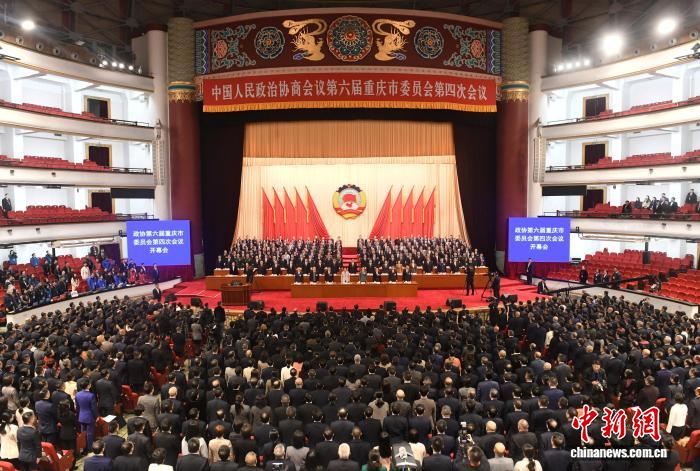
重庆市政协委员建议成渝共建“数智中试走廊”,为新质生产力转化“提速”
Zhong Guo Xin Wen Wang· 2026-01-28 06:31
Core Viewpoint - The proposal to establish a "Digital Intelligent Pilot Corridor" in the Chengdu-Chongqing region aims to accelerate the transformation of new productive forces by integrating digital and physical resources, addressing the challenges in the technology transfer process from laboratory to market [1][2]. Group 1: Background and Importance - "Pilot testing" is defined as the process of scaling up experimental research results before large-scale industrial production, serving as a crucial bridge for technology from the lab to the market [2]. - The Chengdu-Chongqing region has made progress in establishing over 70 pilot testing platforms and concept verification centers, but still faces challenges in platform capability, regional collaboration, and resource support [2]. Group 2: Recommendations for Development - The first recommendation is to implement a "Digital Empowerment" initiative by creating a public virtual base for pilot testing, which includes a city-level industrial simulation cloud platform to support SMEs in reducing physical validation losses through digital twin technology [3]. - The second recommendation emphasizes the need for a "Co-construction and Sharing" mechanism, which involves mapping resources and utilizing big data to match supply and demand for pilot testing equipment between the two regions [3]. - The third recommendation focuses on building a "Funding + Talent" support system, proposing the establishment of a "Chengdu-Chongqing Pilot Testing Special Fund" and promoting a "Chief Pilot Officer" talent system to enhance the workforce in engineering technology applications [5].
看车规级固态电池如何突破“死亡之谷”
Ren Min Wang· 2025-05-28 01:32
Core Viewpoint - The development and testing of solid-state batteries at the Wuhan Economic Development Zone's Future Technology Innovation Research Institute signify a major advancement in battery technology, which is crucial for the growth of the electric vehicle industry [1][2]. Group 1: Solid-State Battery Development - A team at the Wuhan Economic Development Zone is conducting tests on a car-grade solid-state battery, demonstrating its safety and performance under extreme conditions [1]. - The solid-state battery can operate effectively within a temperature range of -40°C to 120°C, indicating significant advancements in fast-charging capabilities [1]. - The research team, with an average age of under 30, is on the verge of industrial-scale production of solid-state batteries after extensive technical iterations and testing [1]. Group 2: Innovation and Industrialization Efforts - The Future Technology Innovation Research Institute was established in June 2022, focusing on key technology areas and facilitating the industrialization of innovative projects [2]. - The solid-state lithium/sodium battery project led by Professor Guo's team is one of the first projects to enter the institute's pilot testing base, marking a significant step towards commercialization [2]. - The institute has built 14 pilot production lines and incubated 10 companies, with several achieving significant valuations and funding, including a company that has received seed unicorn status [2]. Group 3: Comprehensive Innovation Ecosystem - The institute aims to create a comprehensive service system for technology transfer, encompassing research and development, concept validation, pilot testing, incubation, and industrial implementation [3]. - The focus is on smart manufacturing, new materials, and new energy, with a strategy that integrates pilot testing and incubation to bridge the gap between innovation and market application [3].