超前孵化

Search documents
瞭望 | 关键核心技术攻关织网破局
Xin Hua She· 2026-02-24 09:01
Core Insights - The article emphasizes the transformation in China's approach to tackling key core technologies, shifting from a linear model of research to a networked collaborative model that focuses on real industrial needs and practical applications [1][4][6]. Group 1: Innovation Ecosystem - Various innovation entities, including universities, research institutions, enterprises, and government, are collaborating through knowledge sharing and capability complementarity to achieve a seamless connection from basic research to industrialization [1][4]. - The new collaborative model, termed "networked collaboration," is essential for overcoming "bottleneck" technologies and building a self-controlled industrial chain [4][6]. Group 2: Case Studies of Collaborative Efforts - The Qin Chuan Machine Tool Group in Shaanxi has formed a collaborative attack consortium with Xi'an Jiaotong University and other partners to address the challenges in high-end manufacturing, demonstrating a successful cross-entity approach to technology breakthroughs [2][3]. - The establishment of the New Power System Joint R&D Center by State Grid and Xi'an Jiaotong University exemplifies the shift from isolated efforts to integrated research, focusing on real-world energy needs [6][7]. Group 3: Advancements in Technology - Significant advancements have been made in high-end CNC machine tools, with successful applications of temperature control systems and error compensation algorithms, enhancing China's capabilities in high-end manufacturing [3][4]. - The development of a megawatt-level commercial floating wind power system marks a significant milestone in high-altitude wind energy applications, showcasing the potential of innovative technologies [9][11]. Group 4: Investment and Resource Allocation - Early-stage investments in emerging technologies, such as high-altitude wind energy, are crucial for fostering innovation and addressing future industrial needs [9][10]. - The concept of "superior incubation" and "deep incubation" is gaining traction, focusing on supporting technologies from their nascent stages to ensure successful commercialization [11][12]. Group 5: Systematic Approach to Innovation - The transition from merely replicating existing technologies to fostering original innovations is highlighted as a key strategy for advancing core technology breakthroughs [9][12]. - A systematic approach to technology development is being adopted, emphasizing proactive engagement with future industry needs rather than reactive responses to current demands [12].

基础研究投入强度12%,上海代表“把脉”建言贯通科创与产业
Di Yi Cai Jing· 2026-02-04 14:17
Core Viewpoint - Shanghai is focusing on deepening the integration of scientific and technological innovation with industrial innovation, as highlighted in the recent discussions at the Shanghai Two Sessions [1][8]. Group 1: Investment in Research and Development - Shanghai's basic research investment intensity is expected to be around 12%, with scientists publishing 30.6% of national papers in top journals like "Cell," "Nature," and "Science" [1]. - The total R&D expenditure intensity in Shanghai is projected to be approximately 4.5%, with a significant increase in technology contract transaction volume, reaching 649.68 billion yuan, a year-on-year growth of 24.9% [6][7]. Group 2: Challenges in Technology Transfer - There exists a mismatch between the academic pursuit of cutting-edge research and the practical technological needs of enterprises, leading to a "double-blind" configuration in innovation supply and demand [2]. - The transition from "works" to "samples" and from "samples" to "products" faces significant engineering and market challenges, necessitating specialized platforms and talent for effective commercialization [3]. Group 3: Recommendations for Improvement - Suggestions include promoting industry-education integration to enhance the deep fusion of technological and industrial innovation, with a focus on reshaping talent cultivation mechanisms and establishing collaborative research platforms [2]. - Establishing specialized plans for concept verification and product pilot testing in the AI sector is recommended to support the systematic engineering development of promising research outcomes [4]. Group 4: Role of Incubators - Incubators are seen as crucial in linking innovation chains and industry chains, fostering high-tech enterprises and specialized companies by facilitating deep interactions among various stakeholders [4][5]. - The need for skilled professionals in incubators who understand both technology and business is emphasized, along with the importance of enhancing training and recognition for incubator personnel [5]. Group 5: Future Directions - The Shanghai government aims to deepen the reform of technology achievement empowerment, enhance the service capabilities of high-quality incubators, and implement the "AI+" initiative to accelerate the intelligent transformation of key industries [9].
北京孵化“裂变燎原”
Bei Jing Ri Bao Ke Hu Duan· 2025-09-08 01:52
Group 1 - The core viewpoint of the articles emphasizes the transformation and upgrading of incubators as key carriers for nurturing innovation and converting technological achievements, particularly in Beijing, which is reshaping China's innovation and entrepreneurship ecosystem [1][4][6] - The emergence of AI computing clusters is likened to skyscrapers in the AI era, serving as essential infrastructure for the development of intelligent technologies, with companies like Jiliu Technology leading this trend [2][5] - The unique incubation model and supportive philosophy of organizations like Qiji Chuangtan have made them important "watchtowers" for early-stage hard technology ventures, providing substantial support and resources to startups [3][6] Group 2 - Beijing has taken the lead in launching benchmark incubators, with innovative models like Qiji Chuangtan and Nest Lab reshaping the technology enterprise incubation landscape [4][6] - The concept of "superior incubation" is being explored, focusing on creating projects from scratch rather than merely selecting existing ones, which is crucial for addressing pressing needs in fields like AI and biomedicine [5][6] - Over the past three years, 25 benchmark incubators in Beijing have served over 2,000 enterprises, resulting in the cultivation of more than 650 high-tech and unicorn companies, highlighting their role as a core engine for new productivity and industrial competitiveness [8]
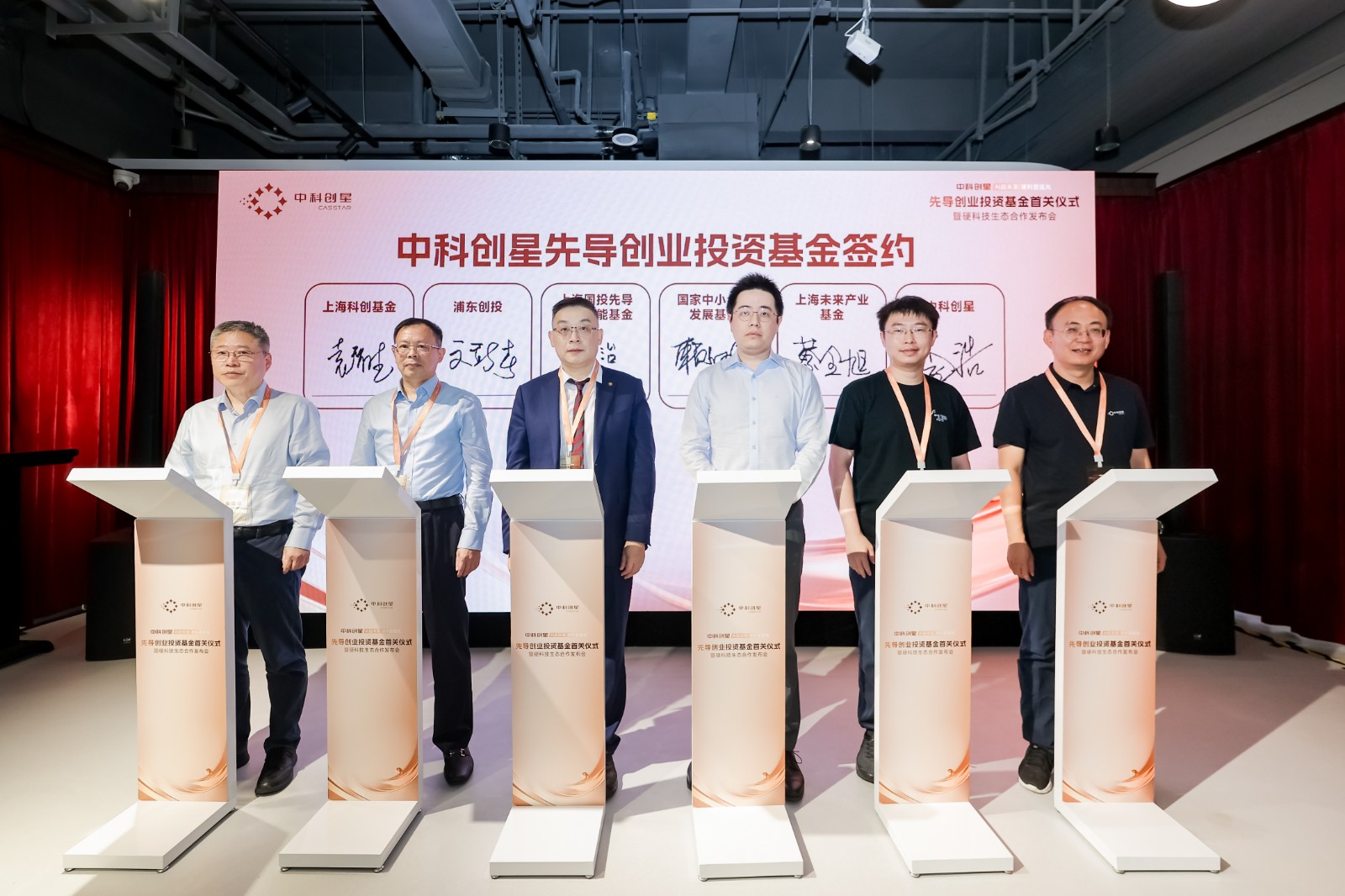
26.17亿元!中科创星先导创业投资基金首关,70%资金将投向早期硬科技项目
Zheng Quan Shi Bao Wang· 2025-07-16 14:49
Core Viewpoint - Zhongke Chuangxing Technology Investment Co., Ltd. has successfully raised 2.617 billion yuan for its inaugural venture capital fund focused on "hard technology" projects, particularly in the "artificial intelligence+" sector [1][3][4]. Group 1: Fund Overview - The Zhongke Chuangxing Pioneer Venture Capital Fund is the first hard technology fund established in the Yangtze River Delta, with 70% of its capital allocated to early-stage hard technology projects [3][4]. - The fund has an 8-year duration and aims to close its fundraising by the end of the year, with 70% of the funds targeting early-stage innovations and 30% for growth-stage projects [4]. Group 2: Investment Focus - The fund will primarily invest in hard technology projects that have knowledge, social, and economic value, with a strong emphasis on artificial intelligence and related fields such as photonics, quantum computing, and controlled nuclear fusion [5]. - Zhongke Chuangxing has a total management scale of 13.8 billion yuan and has invested in over 530 hard technology companies with critical core technologies [5]. Group 3: Incubator Development - Zhongke Chuangxing has established a high-quality incubator in Shanghai, focusing on "advanced incubation" and "deep incubation" to support the application of original innovations and the cultivation of cutting-edge technologies [6]. - The incubator aims to intervene at the early stages of technology development, supporting scientists in principle design and concept validation, while also participating in team building, product development, and commercial operations [6]. Group 4: Project Progress - The incubator has successfully advanced seven projects into "advanced incubation" or "deep incubation" stages, including collaborations with Fudan University on two-dimensional semiconductor technology [7]. - The Shanghai Science and Technology Commission has recognized Zhongke Chuangxing's rapid development and innovative incubation models, highlighting its potential for significant growth [7].

挖掘“中水区”前沿科技,上海“超前孵化”打通任督二脉|上海高质量孵化器调研
Di Yi Cai Jing· 2025-07-10 13:02
Core Insights - Shanghai is focusing on emerging industries and cutting-edge fields such as large models, optoelectronic quantum technology, intelligent sensing, humanoid robots, and synthetic biology, having established 12 high-quality incubators that have nurtured 36 high-tech enterprises, 18 specialized small and medium-sized enterprises, and 36 companies valued over 100 million yuan [1][2][5] Group 1: Incubator Development - The high-quality incubators in Shanghai have a high proportion of private (including mixed) ownership, accounting for 75%, with operational teams focusing on new technologies and models, even engaging in "advanced incubation" [2][5] - The total area of the 12 high-quality incubators exceeds 120,000 square meters, with over 300 enterprises currently incubated [5] - From January to May, the revenue of the incubators reached approximately 65 million yuan, a year-on-year increase of 15%, with professional service income accounting for 51% of total revenue, double the average level of the city's innovation carriers [5] Group 2: Research and Development Investment - In 2024, Shanghai's basic research investment is expected to account for about 11% of total R&D expenditure, surpassing the national average of 6.91% [3] - Shanghai scientists published 158 papers in top international journals last year, accounting for 30% of the total in mainland China, with an increase to 101 papers in the first half of this year, representing 31.6% of the total [3] Group 3: Advanced Incubation Model - The advanced incubation model focuses on niche fields and involves continuous deep innovation technology incubation and industry cultivation, providing specialized vertical incubation services [7] - Advanced incubation can take two forms: validating the technical and market feasibility of research results before the establishment of a company, and selecting promising projects based on market demand and industry trends [7][9] - The model aims to enhance the commercialization rate of scientific and technological achievements by addressing the challenges faced by scientists in entrepreneurship [7][9] Group 4: Successful Case Studies - The project involving the world's most integrated two-dimensional semiconductor processor, developed by a team from Fudan University, has successfully initiated engineering verification in Shanghai [8][9] - The project has received early-stage investments and support for team formation, demonstrating the effectiveness of the advanced incubation model [9][10]