
中试验证平台

Search documents
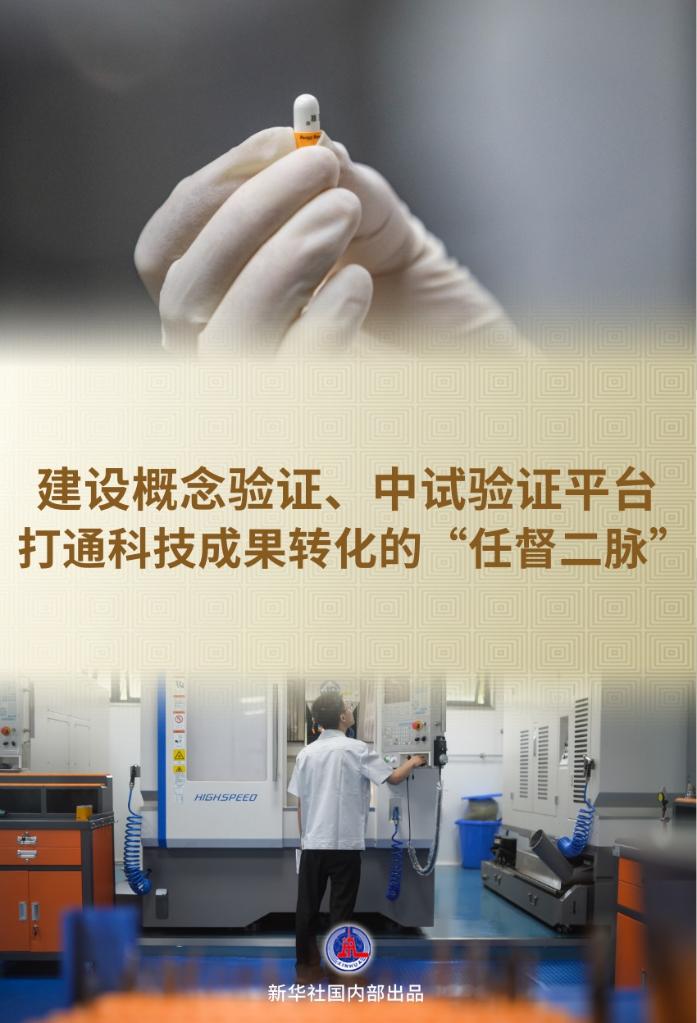
建设概念验证、中试验证平台:打通科技成果转化的“任督二脉”
Xin Hua She· 2025-11-20 05:15
Core Viewpoint - The "14th Five-Year Plan" emphasizes the construction of concept verification and pilot testing platforms to accelerate the efficient transformation and application of major scientific and technological achievements, facilitating the transition of innovation results from "shelves" to "market" [1] Group 1: Concept and Pilot Testing - Concept verification involves validating technological feasibility and assessing commercial value and market potential, acting as a "filter" for marketable research outcomes [2] - Pilot testing serves as a transitional experiment from prototype to production, focusing on process compatibility, batch stability, and cost-effectiveness, considered the "last mile" of technology transfer [2] Group 2: Impact on Technology Transfer - Establishing concept verification and pilot testing platforms is crucial for technology transfer, significantly reducing risks and promoting industrialization and collaboration between academia and industry [2][3] - Statistics indicate that the industrialization success rate for technology that has undergone pilot testing can reach over 80%, compared to only about 30% for those that have not [3] Group 3: Current Developments - The construction of concept verification and pilot testing platforms in China has accelerated, creating a comprehensive service network for technology transfer [4] - Over 2,400 pilot testing platforms have been established nationwide, with the first batch of 241 key pilot platforms undertaking 25,000 pilot service projects [4] - Approximately 90 concept verification and pilot testing platforms have been established by national technology innovation centers, enhancing the quality of technology transfer and facilitating the commercialization of research outcomes [4]
新华鲜报·规划建议新看点丨建设概念验证、中试验证平台:打通科技成果转化的“任督二脉”
Xin Hua She· 2025-11-20 04:54
Core Viewpoint - The "14th Five-Year Plan" emphasizes the integration of technological and industrial innovation, highlighting the establishment of concept verification and pilot testing platforms to accelerate the efficient transformation and application of major scientific and technological achievements [1]. Group 1: Concept and Pilot Testing - Concept verification involves validating the feasibility of technology and assessing its commercial value and market potential, acting as a "filter" for marketable research outcomes [5]. - Pilot testing serves as a transitional experiment from prototype to production, focusing on process compatibility, batch stability, and cost-effectiveness, often referred to as the "last mile" of technology transfer [5]. Group 2: Impact on Technology Transfer - Establishing concept verification and pilot testing platforms is crucial for facilitating the transformation of scientific achievements, reducing risks, promoting industrialization, and enhancing collaboration between academia and industry [5]. - Statistics indicate that the industrialization success rate for technologies that undergo pilot testing can reach over 80%, compared to only about 30% for those that do not [6]. Group 3: Current Developments - The construction of concept verification and pilot testing platforms in China has accelerated, creating a comprehensive service network for the transformation of scientific achievements [7]. - Over 2,400 pilot testing platforms have been established nationwide, with 241 key platforms selected for cultivation by the Ministry of Industry and Information Technology, which have undertaken 25,000 pilot service projects [7].

从概念新词到产业热词 新场景引领产业新变革
Zheng Quan Ri Bao· 2025-11-18 16:26
Core Viewpoint - The article discusses the importance of "new scenarios" in driving technological innovation and industrial transformation, as highlighted by the recent government policy aimed at fostering the development and application of these scenarios [2][4][11]. Group 1: Definition and Importance of New Scenarios - New scenarios are defined as specific contexts for validating and applying new technologies, products, and business models, serving as a bridge between technology and industry [3][4]. - The cultivation and opening of new scenarios are seen as strategic choices to enhance China's market advantages and overcome technological bottlenecks [4][5]. Group 2: Challenges in Implementing New Scenarios - There is a call for the establishment of new scenarios as incubators for new models and industries, with examples showing that without foundational scenarios like mobile payments, new business models would not emerge [5][6]. - Many innovative technologies in fields such as artificial intelligence and robotics remain in pilot stages due to a lack of effective application scenarios [6][7]. Group 3: Case Studies and Government Initiatives - Hefei has developed a "super experimental field" for low-altitude economy, expanding to 22 application scenarios and establishing over 180 low-altitude takeoff and landing facilities [8]. - Guangdong has created 14 innovative application scenario testing zones, facilitating a more efficient transition from technology to commercial contracts [8][10]. Group 4: Mid-Testing Platforms and Industry Support - The establishment of mid-testing platforms is crucial for the industrialization of new technologies, addressing issues like process optimization and cost control [9][10]. - Central and private enterprises are actively participating in building mid-testing platforms, enhancing the supply of innovative solutions [10]. Group 5: Future Implications - The integration of new scenarios is reshaping the technology, industry, and capital ecosystems, indicating a significant economic and social transformation [11].
国务院国资委:国资央企将努力在更深层次融入国家技术转移体系
Xin Hua Cai Jing· 2025-09-17 06:56
Core Viewpoint - The State-owned Assets Supervision and Administration Commission (SASAC) emphasizes the integration of technological innovation and industrial innovation as a priority since the 14th Five-Year Plan, focusing on enhancing the role of central enterprises in technology innovation and addressing bottlenecks in the industrial chain [1][2][3] Group 1: Technological Breakthroughs - Central enterprises are focusing on "from 0 to 1" technological breakthroughs to solve critical industrial issues, leveraging both market and technological advantages [1] - Key core technology breakthroughs have been achieved in areas such as new materials and industrial software, effectively addressing industrial shortcomings [1] - Collaboration with universities and research institutions has been initiated to identify and solve scientific problems in production practices [1] Group 2: Results Transformation - The focus is on "from 1 to 100" results transformation, building bridges from technology to products to enhance market access for scientific achievements [2] - The establishment of 134 pilot verification platforms and 291 service projects aims to improve the efficiency of results transformation across various enterprises [2] - Formation of 23 innovation alliances facilitates collaborative efforts in research and development, sharing risks and benefits to promote the application of research outcomes [2] Group 3: Industrialization - The emphasis on "from 100 to N" industrialization involves providing high-value application scenarios and creating a "green channel" for the procurement of innovative products [3] - Over the past three years, 785 technological achievements have been industrialized in more than 6,000 enterprises, with a total contract value exceeding 200 billion [3] - Collaboration with various innovation entities has led to the establishment of 33 national industrial alliances, promoting iterative upgrades of independent innovations through large-scale applications [3] Future Directions - SASAC plans to deepen integration into the national technology transfer system, enhancing the role of central enterprises in the entire chain from supply to application of technological achievements [3]