
无人机电池

Search documents
珠海冠宇(688772.SH):2025年度净利润4.72亿元,同比上升9.70%
Ge Long Hui A P P· 2026-02-27 10:28
Core Viewpoint - Zhuhai Guanyu (688772.SH) reported a significant increase in total operating revenue and net profit for the fiscal year 2025, indicating strong market performance and effective business strategies [1] Financial Performance - The company achieved total operating revenue of 14.397 billion yuan, a year-on-year increase of 24.74% [1] - The net profit attributable to shareholders of the parent company was 472 million yuan, reflecting a year-on-year increase of 9.70% [1] - The net profit attributable to shareholders of the parent company, excluding non-recurring gains and losses, was 313 million yuan, showing a year-on-year decrease of 10.38% [1] Business Strategy and Market Position - The growth in operating revenue was primarily due to significant market expansion and an effective increase in customer share [1] - The company focused on low-voltage lithium batteries for automotive applications and drone battery businesses, leading to continuous improvement in the operational efficiency of its power-related business [1]

珠海冠宇:2025年净利润4.72亿元,同比增长9.70%
Xin Lang Cai Jing· 2026-02-27 08:31
Core Viewpoint - Zhuhai Guanyu reported a total operating revenue of 14.397 billion yuan for the fiscal year 2025, representing a year-on-year growth of 24.74%, and a net profit of 472 million yuan, with a year-on-year increase of 9.70% [1] Group 1 - The significant growth in operating revenue is attributed to effective market expansion and an increase in customer share [1] - The company has focused on low-voltage lithium batteries for automotive applications and drone battery businesses, leading to continuous improvement in the operational efficiency of its power-related business [1]
整治破解黑飞行为 警方破获多起案件
Jie Fang Ri Bao· 2025-12-15 01:48
Core Points - A shop disguised as a provider of drone battery repair services was found to be involved in illegal activities related to hacking battery management systems and flight altitude restrictions [1][2] - The operator, identified as Hu, attracted customers by offering services such as "drone battery endurance upgrades" and "battery unlocking," which exceeded normal repair services [1] - Hu acquired a drone hacking system from an illegal overseas website to offer additional services like "flight altitude unlocking" and "no-fly zone unlocking" [1] Summary by Sections Illegal Activities - The shop was discovered by the Shanghai police, who identified abnormal activities on an online shopping platform [1] - Hu's illegal services included tampering with battery data to remove safety restrictions imposed by manufacturers [1] - The police arrested Hu on October 30, seizing computers, hacking software, and unofficial drone batteries [1] Legal Consequences - Hu is facing criminal charges for providing tools and programs for unauthorized access and control of computer information systems [2] - The case is still under further investigation by law enforcement [2] Risks Associated - Police highlighted that hacked drones pose multiple risks, including potential short circuits and fires due to the loss of battery safety protections [2] - The removal of altitude and no-fly zone restrictions facilitates illegal drone flights, known as "black flying" [2]
打着无人机维修的幌子开网店提供“破解服务”,非法获利万元被抓
Bei Ke Cai Jing· 2025-12-12 04:24
Core Viewpoint - The article highlights the illegal activities surrounding a drone battery repair service that was actually involved in hacking battery management systems and flight altitude restrictions, leading to significant safety risks in drone operations [1]. Group 1: Illegal Activities - The Shanghai police have recently cracked down on five cases providing hacking services for illegal drone flights [1]. - A specific online store was found to be offering suspicious services such as "drone battery endurance upgrade" and "battery unlocking," which exceeded normal repair services [6]. - The operator of the store, identified as Hu, initially sold non-original drone batteries but later expanded to hacking services to increase profits, compromising battery safety mechanisms [6]. Group 2: Hacking Services Offered - Hu began offering additional services for unlocking flight altitude restrictions and no-fly zone access after a customer inquired about such capabilities [8]. - He acquired a hacking system from an illegal overseas website and spent weeks researching and testing it before adding these services to his online store [8]. Group 3: Legal Consequences - Hu was arrested at his store where police seized computers, hacking software, and unauthorized drone batteries [9]. - He charged between 200 to 500 yuan for his hacking services, accumulating over 10,000 yuan in illegal profits before his arrest [9]. - Hu is currently facing criminal charges for providing tools for unauthorized access and control of computer information systems [10].


三大区域外贸领跑:韧性背后的增长密码
Sou Hu Cai Jing· 2025-11-25 14:43
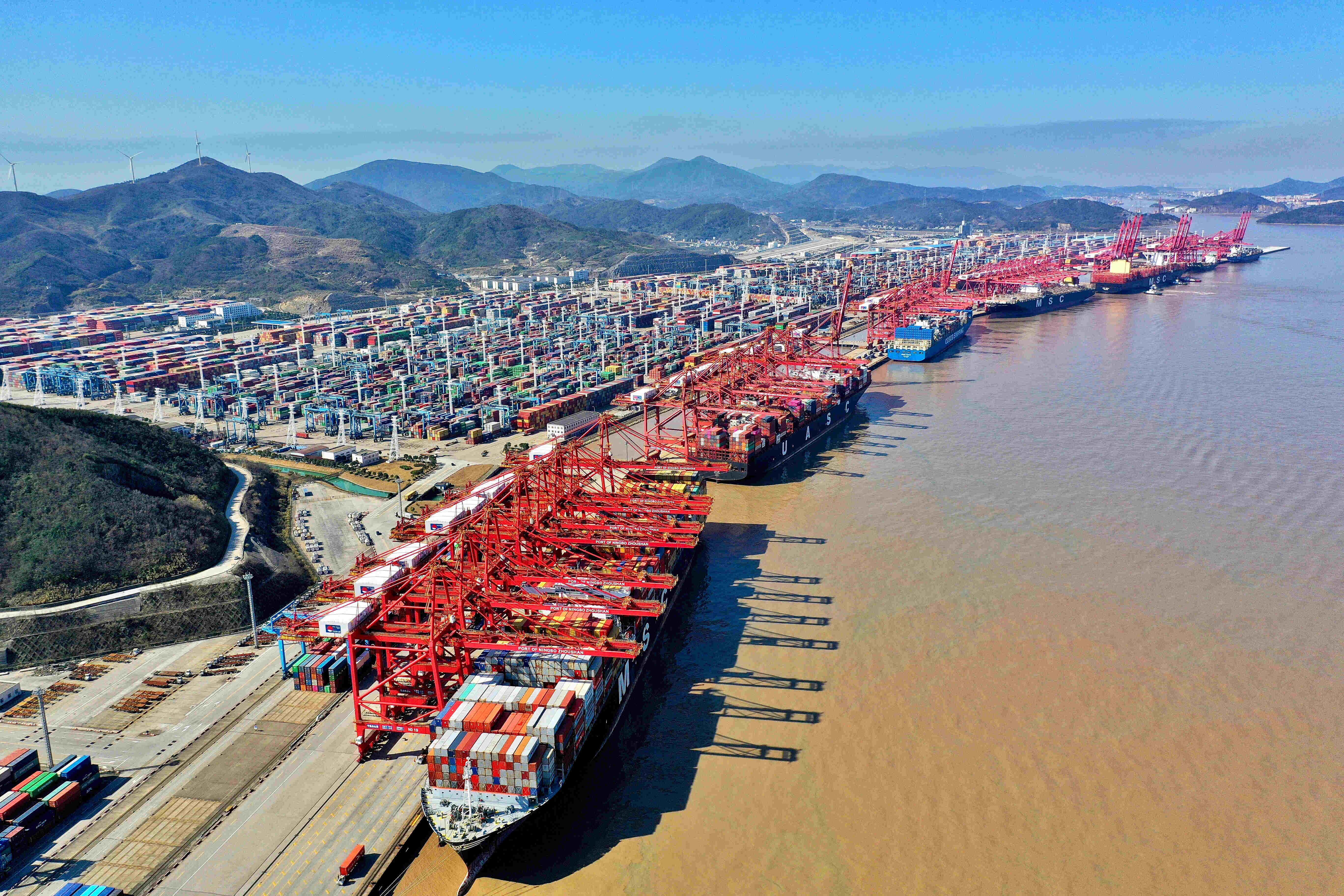
Core Insights - China's foreign trade in the Yangtze River Delta, Guangdong-Hong Kong-Macao Greater Bay Area, and Beijing-Tianjin-Hebei regions has shown strong resilience, with significant growth in exports and imports over the first ten months of the year [1][2][6] Group 1: Trade Performance - The Yangtze River Delta's import and export volume reached 14 trillion yuan, a year-on-year increase of 6% [1] - The Guangdong-Hong Kong-Macao Greater Bay Area's trade volume hit 7.52 trillion yuan, marking a historical high for the same period [1] - The Beijing-Tianjin-Hebei region's exports reached 1.2 trillion yuan, also a historical high, with continuous growth for seven months [2][6] Group 2: Sector Contributions - Private enterprises in the Yangtze River Delta accounted for 55.9% of the region's total trade, with a year-on-year increase of 9.7% in their import and export volume [1] - The Greater Bay Area's export structure has improved, with electromechanical products making up nearly 70% of exports, and significant growth in electronic components and "new three types" products [1][6] Group 3: Regional Advantages - The three regions benefit from strong industrial foundations and innovation capabilities, transitioning from cost advantages to innovation-driven growth [6] - They are deeply embedded in global supply chains, maintaining stable trade relations with over 240 countries and regions [2][6] - Institutional innovation, supported by top-level policies, has fostered a collaborative and competitive open economy [6] Group 4: Future Outlook - The future of foreign trade in these regions is expected to focus on digital trade, green trade, and comprehensive solution exports, with the Yangtze River Delta leading in digital technology and green technology integration [8] - The Greater Bay Area aims to enhance its role as a global service trade hub, while the Beijing-Tianjin-Hebei region will focus on high-end equipment and system integration exports [8]
三大区域,外贸为啥跑得快?
Ren Min Ri Bao Hai Wai Ban· 2025-11-25 00:42
Core Insights - The foreign trade performance of China's three major regions—Yangtze River Delta, Guangdong-Hong Kong-Macau Greater Bay Area, and Beijing-Tianjin-Hebei—has shown strong resilience and vitality, with significant year-on-year growth in imports and exports [1][2][4] Group 1: Trade Performance - In the first ten months of this year, the Yangtze River Delta's import and export volume reached 14 trillion yuan, a year-on-year increase of 6% [2] - The Guangdong-Hong Kong-Macau Greater Bay Area's import and export volume was 7.52 trillion yuan, marking a historical high with a year-on-year growth of 4% [3] - The Beijing-Tianjin-Hebei region's import and export volume reached 3.91 trillion yuan, with exports hitting a historical high of 1.2 trillion yuan [4] Group 2: Sector Contributions - In the Yangtze River Delta, private enterprises contributed significantly, with their import and export volume reaching 7.83 trillion yuan, a year-on-year increase of 9.7%, accounting for 55.9% of the total trade [2] - The Guangdong-Hong Kong-Macau Greater Bay Area saw nearly 70% of its exports coming from electromechanical products, with electronic components and "new three types" products growing by 19.5% and 32.2% respectively [3] - The Beijing-Tianjin-Hebei region's exports were bolstered by the automotive sector, with automotive and parts exports increasing by 1.5 percentage points, now accounting for 8.2% of the region's total exports [5] Group 3: Structural Advantages - The three regions benefit from strong industrial foundations and innovation capabilities, transitioning from traditional cost advantages to innovation-driven growth [5] - The regions are deeply integrated into global supply chains, showcasing adaptability to external demand fluctuations, which has led to stable growth despite global challenges [6] - Institutional innovations, such as the establishment of free trade zones and comprehensive bonded zones, have created a favorable business environment for international trade [7] Group 4: Future Outlook - The regions are expected to further develop a multi-layered open system, with the Yangtze River Delta focusing on digital and green technologies, the Guangdong-Hong Kong-Macau area enhancing its role in global service trade, and the Beijing-Tianjin-Hebei region concentrating on high-end equipment exports [10] - Emerging markets and new trade areas, such as digital trade and green trade, are anticipated to become new growth drivers for these regions [10]
三大区域,外贸为啥跑得快?
Ren Min Ri Bao· 2025-11-24 22:57
Core Insights - The foreign trade performance of China's three major regions—Yangtze River Delta, Guangdong-Hong Kong-Macao Greater Bay Area, and Beijing-Tianjin-Hebei—has shown strong resilience and vitality, with significant year-on-year growth in imports and exports [2][4][8] Group 1: Trade Performance - In the first ten months of this year, the Yangtze River Delta's import and export volume reached 14 trillion yuan, a year-on-year increase of 6% [2] - The Guangdong-Hong Kong-Macao Greater Bay Area's import and export volume was 7.52 trillion yuan, marking a historical high with a growth of 4% [3] - The Beijing-Tianjin-Hebei region's import and export volume reached 3.91 trillion yuan, with exports hitting a historical high of 1.2 trillion yuan [4] Group 2: Sector Performance - In the Yangtze River Delta, private enterprises contributed significantly, with their import and export volume reaching 7.83 trillion yuan, a growth of 9.7% [2] - The Guangdong-Hong Kong-Macao Greater Bay Area saw nearly 70% of its exports coming from electromechanical products, with electronic components and "new three types" products growing by 19.5% and 32.2% respectively [3] - The Beijing-Tianjin-Hebei region has leveraged its free trade zones and comprehensive bonded zones to enhance export growth, with significant increases in exports from specific areas [4] Group 3: Structural Advantages - The three regions benefit from strong industrial foundations and innovation capabilities, transitioning from traditional cost advantages to innovation-driven growth [5] - The regions are deeply integrated into global supply chains, showcasing adaptability to external demand fluctuations [6] - Institutional innovations, such as breaking down administrative barriers and optimizing resource allocation, have created a favorable business environment [7] Group 4: Future Outlook - The future of regional foreign trade is expected to expand, with digital trade and green trade emerging as new growth drivers [10] - The differentiation in regional trade development is forming a "multi-polar support" structure, enhancing the overall economic resilience [9] - The integration of high-end manufacturing and service trade is anticipated to strengthen the competitive position of these regions in the global market [10]
建设概念验证、中试验证平台:打通科技成果转化的“任督二脉”
Xin Hua She· 2025-11-20 05:15
Core Viewpoint - The "14th Five-Year Plan" emphasizes the construction of concept verification and pilot testing platforms to accelerate the efficient transformation and application of major scientific and technological achievements, facilitating the transition of innovation results from "shelves" to "market" [1] Group 1: Concept and Pilot Testing - Concept verification involves validating technological feasibility and assessing commercial value and market potential, acting as a "filter" for marketable research outcomes [2] - Pilot testing serves as a transitional experiment from prototype to production, focusing on process compatibility, batch stability, and cost-effectiveness, considered the "last mile" of technology transfer [2] Group 2: Impact on Technology Transfer - Establishing concept verification and pilot testing platforms is crucial for technology transfer, significantly reducing risks and promoting industrialization and collaboration between academia and industry [2][3] - Statistics indicate that the industrialization success rate for technology that has undergone pilot testing can reach over 80%, compared to only about 30% for those that have not [3] Group 3: Current Developments - The construction of concept verification and pilot testing platforms in China has accelerated, creating a comprehensive service network for technology transfer [4] - Over 2,400 pilot testing platforms have been established nationwide, with the first batch of 241 key pilot platforms undertaking 25,000 pilot service projects [4] - Approximately 90 concept verification and pilot testing platforms have been established by national technology innovation centers, enhancing the quality of technology transfer and facilitating the commercialization of research outcomes [4]
新华鲜报·规划建议新看点丨建设概念验证、中试验证平台:打通科技成果转化的“任督二脉”
Xin Hua She· 2025-11-20 04:54
Core Viewpoint - The "14th Five-Year Plan" emphasizes the integration of technological and industrial innovation, highlighting the establishment of concept verification and pilot testing platforms to accelerate the efficient transformation and application of major scientific and technological achievements [1]. Group 1: Concept and Pilot Testing - Concept verification involves validating the feasibility of technology and assessing its commercial value and market potential, acting as a "filter" for marketable research outcomes [5]. - Pilot testing serves as a transitional experiment from prototype to production, focusing on process compatibility, batch stability, and cost-effectiveness, often referred to as the "last mile" of technology transfer [5]. Group 2: Impact on Technology Transfer - Establishing concept verification and pilot testing platforms is crucial for facilitating the transformation of scientific achievements, reducing risks, promoting industrialization, and enhancing collaboration between academia and industry [5]. - Statistics indicate that the industrialization success rate for technologies that undergo pilot testing can reach over 80%, compared to only about 30% for those that do not [6]. Group 3: Current Developments - The construction of concept verification and pilot testing platforms in China has accelerated, creating a comprehensive service network for the transformation of scientific achievements [7]. - Over 2,400 pilot testing platforms have been established nationwide, with 241 key platforms selected for cultivation by the Ministry of Industry and Information Technology, which have undertaken 25,000 pilot service projects [7].

扬中聚力打造产创融合首选地转化地新高地
Xin Hua Ri Bao· 2025-11-04 23:37
Core Points - Changjiang Samsung Energy Technology Co., Ltd. recently listed on the Beijing Stock Exchange, raising 60 million yuan for the construction of a research and development center focused on hydrogen energy equipment and offshore engineering [1] - Yangzhong City is implementing five major technological innovation projects to build an innovation system that integrates enterprises, market orientation, and deep collaboration between industry, academia, and research [1] - Yangzhong has a number of innovative enterprises excelling in niche markets, with significant investments in research and development [2] Group 1 - Changjiang Samsung Energy Technology Co., Ltd. will allocate 60 million yuan for R&D in emerging fields [1] - Yangzhong City has launched initiatives to enhance innovation, including the "Peak Project" and "Strong and Superior Project" [1] - The city aims to create a preferred location for industry-innovation integration [1] Group 2 - Jiawang Huadian Co., Ltd. expects an annual output value of 90 million yuan, capturing 12-13% of the domestic market share [2] - Yangzhong has organized over 10 industry-academia-research activities this year, resulting in more than 60 cooperation agreements [3] - Jiangsu Daqian Kaifan Switch Co., Ltd. has invested 150 million yuan for upgrades, achieving a 104% increase in production capacity compared to 2022 [4] Group 3 - The Weiteng Group's new distribution and renewable energy base has been established with investments from both public offerings and self-funding [5] - Yangzhong provides ongoing support for listed companies, including policy support and financing roadshows [5] - By the end of September, Yangzhong's total loan balance reached 135.918 billion yuan, with technology loans at 25.145 billion yuan and green finance loans at 29.896 billion yuan [6]