
新场景

Search documents
消费增长,关键在新场景、新人群、新基建
21世纪经济报道· 2026-03-11 01:17
Core Viewpoint - The article emphasizes the transformation of China's consumption strategy from short-term stimulus to a systematic approach that integrates "new infrastructure, new scenarios, and new demographics" to create a dynamic growth ecosystem for domestic consumption [1][15]. New Scenarios: Creating New Demand through High-Quality Supply - The current challenge in China's economy is the imbalance of "strong supply and weak demand," necessitating innovative supply to lead and create new demand [3][4]. - Key potential scenarios include: - **Smart Economy**: AI is evolving from a tool to a partner, reshaping the service chain and enhancing consumer experiences through intelligent devices [3][4]. - **Low-altitude Economy**: Recognized as an emerging pillar, it expands consumption scenarios into three dimensions, enabling rapid delivery and new experiences [5]. - **Silver Economy**: Focuses on empowering the elderly to transition from being cared for to actively consuming, supported by policies that reduce their financial burdens [5]. New Demographics: Empowering Potential Consumers - The fundamental driver of consumption is the people, with policies aimed at enhancing the consumption capacity of the most constrained groups [6][7]. - For the elderly, policies like pension increases and community care networks are designed to alleviate concerns about healthcare and enable spending on quality of life [7]. - For young families, comprehensive support in education and housing is expected to boost their confidence in long-term consumption planning [7][8]. - Low-income groups and new employment forms are targeted for income growth through policies that enhance earnings and stabilize their financial situations [8][9]. New Infrastructure: Building the Digital Foundation for Consumption Growth - The realization of new scenarios and demographics relies on new infrastructure, forming a three-dimensional, intelligent consumption infrastructure system [10][11]. - **Digital and Intelligent Infrastructure**: Acts as the engine for consumption, providing the necessary computational power and data resources for AI applications [11]. - **Low-altitude Infrastructure**: Essential for the safe and efficient operation of low-altitude consumption scenarios, including logistics and tourism [12]. - **Upgrading Traditional Infrastructure**: Enhancements in logistics and energy stability are crucial for supporting regional consumption ecosystems [12][13]. Systematic Restructuring for Sustainable Consumption Growth - The article outlines a paradigm shift in consumption growth that focuses on building a self-sustaining ecosystem through the integration of new infrastructure, scenarios, and demographics [15][17]. - This approach aims to activate consumer potential not through direct financial incentives but through institutional innovation, technological empowerment, and social security [17].


郑栅洁:集成电路、航空航天、生物医药等六大新兴支柱产业相关产值到2030年有望扩大到十万亿元以上
财联社· 2026-03-06 09:18
Core Insights - The National Development and Reform Commission emphasizes the development of six emerging pillar industries and six future industries, with a projected output of nearly 6 trillion yuan by 2025, potentially doubling to over 10 trillion yuan by 2030 [1] Emerging Pillar Industries - The six emerging pillar industries include integrated circuits, aerospace, biomedicine, low-altitude economy, new energy storage, and intelligent robotics [1] - These industries are expected to significantly contribute to the national economy, with a focus on long-term growth and substantial investment [3][4] Future Industries - The six future industries consist of quantum technology, biomanufacturing, green hydrogen energy, nuclear fusion energy, brain-computer interfaces, embodied intelligence, and 6G technology [1] - These sectors are on the brink of technological breakthroughs and may evolve into the next generation of emerging pillar industries [1] Investment and Project Development - Major projects in integrated circuits, satellite internet, domestic large aircraft, and national integrated computing networks will be developed, with investment scales reaching hundreds of billions to trillions of yuan [3][4] - The government aims to create foundational "national heavy equipment" through these long-chain, large-scale projects [4] Traditional Industry Enhancement - The government plans to strengthen traditional industries, expecting to create an additional market worth over 10 trillion yuan in the next five years [4] - This initiative is seen as a crucial source of development momentum alongside high-growth industries [4] Support for High-Growth Industries - The government will focus on three key areas: long-term planning, resource assurance, and reform collaboration [4][5] - Initiatives include the establishment of national-level merger funds to address challenges in venture capital exits and support mergers and acquisitions [4] Reform and Innovation - Emphasis will be placed on both hard investments in projects and soft construction of systems and mechanisms [5] - The government plans to promote the monetization of intangible assets like software development and data processing, enhancing intellectual value [5] - A large-scale application demonstration action will be implemented in key areas, with around 100 flagship projects identified to drive industrial innovation [5]
从年味里看活力——“三新”勾勒中国春节消费图景
Xin Lang Cai Jing· 2026-02-23 16:33
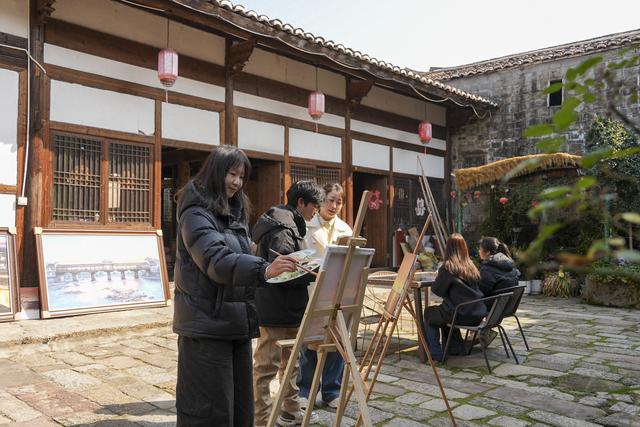
Core Insights - The article highlights the evolving landscape of consumer behavior during the 2026 Spring Festival in China, emphasizing new experiences, trends, and consumption patterns that reflect a shift towards service-oriented spending and enhanced travel experiences [1][5]. New Scenes - The concept of "traveling for the New Year" and "vacation-style celebrations" is gaining popularity, with families opting for travel experiences over traditional gatherings [1]. - In Jiangxi's Lichuan Ancient City, family outings are common, with accommodations fully booked and activities like free oil painting experiences attracting visitors [1][3]. - Young consumers are becoming the main drivers of Spring Festival spending, with unique venues like Yuefang ID MALL in Changsha seeing increased foot traffic [3]. New Trends - There is a noticeable shift from purchasing physical goods to investing in services, as consumers are willing to pay for convenience and quality [4]. - In Chongqing, private chef services are gaining traction, with families finding value in hiring professionals for meal preparation [4]. - The demand for professional cleaning services is also rising, particularly among younger households, indicating a trend towards outsourcing household tasks [4]. New Flow - The Spring Festival is becoming a global cultural event, with China welcoming international tourists through enhanced policies and services [5][7]. - In Hainan, the duty-free shopping during the festival reached 2.07 billion yuan, with 254,000 shoppers participating, showcasing the appeal of Chinese shopping experiences to foreign visitors [5]. - The introduction of visa-free policies for travelers from Canada and the UK has expanded China's "visa-free circle" to 50 countries, further promoting inbound tourism [5][7]. - The National Immigration Administration predicts an average of over 2.05 million travelers entering and exiting the country daily during the holiday, marking a 14.1% increase year-on-year [7].
马年春节假日盘点·消费篇丨从年味里看活力——“三新”勾勒中国春节消费图景
Xin Hua Wang· 2026-02-23 15:42
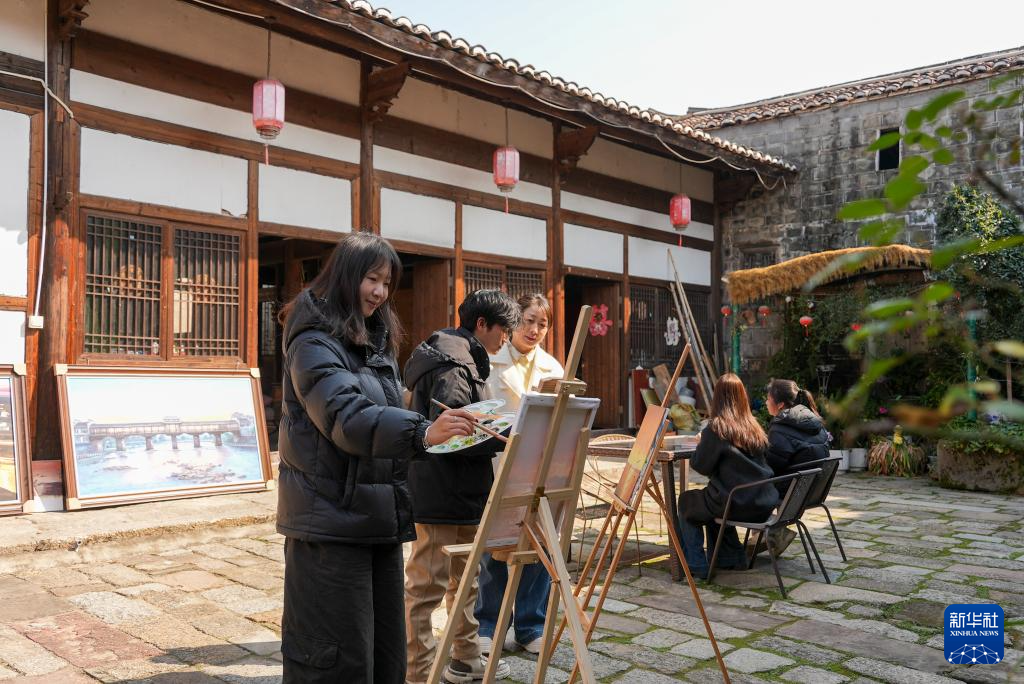
Core Insights - The article highlights the vibrant consumer landscape during the 2026 Spring Festival, emphasizing new scenes, trends, and flows in Chinese consumption [1] New Scenes - The concept of "traveling for the New Year" and "vacation-style celebrations" is gaining popularity, with families engaging in leisure activities rather than traditional visits [2] - In Fuzhou, the ancient city of Lichuan saw a surge in family tourism, with fully booked accommodations and popular art activities [2][4] - Young consumers are driving the market, with unique venues like Yuefang ID MALL in Changsha attracting significant foot traffic [4] New Trends - There is a shift from purchasing physical goods to services, reflecting an upgrade in consumer demand for convenience and quality [5] - Services such as private chef offerings and professional cleaning are becoming increasingly popular, with a notable rise in demand during the holiday season [5][6] - The pet economy is also expanding, with services like pet boarding and home feeding gaining traction among consumers [6] New Flows - The Spring Festival is becoming a global cultural event, with increased foreign tourist participation and a welcoming environment in China [6][9] - Hainan's duty-free shopping saw significant activity, with sales reaching 2.07 billion yuan and 254,000 shoppers during the holiday period [7] - The introduction of visa-free policies for certain countries is enhancing the attractiveness of China as a travel destination, with predictions of over 2.05 million daily travelers during the holiday, marking a 14.1% increase year-on-year [8][9]
菏泽发放提振新春消费“大礼包”
Da Zhong Ri Bao· 2026-02-11 02:17
Group 1 - The core idea of the articles revolves around the initiatives taken by Heze to boost consumer spending through various promotional activities and policies aimed at enhancing the local economy and attracting visitors [1][2][3] Group 2 - Heze has launched a "big gift package" for the Spring Festival, which includes discounts on movie tickets, scenic area tickets, and book purchases, aimed at promoting cultural consumption [1] - The government has issued the "2026 Heze City Consumption Promotion Implementation Plan," focusing on high-quality market development and integrating various resources to provide diverse consumer incentives [1] - The city plans to host over 800 promotional events throughout the year, ensuring continuous consumer engagement with seasonal themes and collaborations with well-known domestic IPs for large-scale events [1][2] Group 3 - The strategy includes ten major actions to enhance consumption, focusing on key areas such as goods, culture and tourism, housing, health, and agriculture, creating a comprehensive policy framework [2] - The city is implementing a "trade-in" program for consumer goods, particularly in automobiles and home appliances, to stimulate market activity and meet diverse consumer needs [2][3] Group 4 - New consumption scenarios are being developed, including digital tourism and night economy initiatives, to create engaging and immersive consumer experiences [3] - The city is actively planning promotional activities around major holidays and seasonal themes, with over 70 events already initiated to foster a festive shopping atmosphere [3] - Financial resources are being coordinated to support consumer spending, including the issuance of vouchers and collaboration with financial institutions to provide housing and service support [3]
持续激发消费潜力全力释放消费活力
Qi Lu Wan Bao· 2026-02-10 01:57
Group 1 - The core focus of Heze City is to enhance consumer spending through the "Hui Xiang Heze" consumption brand, aiming to create a "big consumption" landscape by 2025 [1] - The city plans to implement ten major actions to boost consumption, including hosting over 100 key promotional activities throughout the year, with a focus on seasonal themes [2] - A total of 12.8 billion yuan in subsidies for old-for-new exchanges has been issued, resulting in a consumption boost of 84 billion yuan [1] Group 2 - The 2026 Heze City Consumption Promotion Implementation Plan has been developed, establishing a "1+10" policy system to support consumption initiatives [2] - The city is focusing on seasonal themes for consumer activities, with events planned for spring, summer, autumn, and winter to enhance consumer experiences [2] - The strategy includes promoting the old-for-new exchange program in key sectors such as automobiles and home appliances to stimulate large-scale consumption [3] Group 3 - The city aims to integrate new business formats, models, and scenarios to expand consumption space, including the development of service consumption and online-offline integration [3] - There is an emphasis on optimizing subsidy processes and enhancing collaboration among departments to maximize the impact of consumption policies [3] - Future plans include a systematic approach to continuously stimulate consumer potential and contribute to high-quality economic development in the city [3]
86亿元,支持加码!依托资源禀赋发力 释放服务消费新增长点
Yang Shi Wang· 2026-02-07 03:02
Core Viewpoint - The Chinese government is actively promoting new consumption models and scenarios by providing financial support to pilot cities, with an initial allocation of 8.6 billion yuan to stimulate service consumption growth [1][3]. Group 1: Financial Support - The Ministry of Commerce has allocated the first batch of financial support amounting to 8.6 billion yuan to pilot cities for new consumption initiatives [1]. - This funding aims to accelerate the cultivation of new growth points in service consumption, injecting strong momentum into the sector [1]. Group 2: Pilot Initiatives - The Ministry of Commerce and the Ministry of Finance are conducting trials focused on new consumption models, referred to as the "three new" pilot projects, which include new business formats, new models, and new scenarios [3]. - The pilot projects emphasize innovation and are expected to attract social capital to focus on new growth areas, thereby enhancing the development momentum of service consumption [3]. Group 3: Collaborative Efforts - The Deputy Minister of Commerce, Yan Dong, highlighted the importance of synergizing the "three new" pilot projects with the cultivation of new growth points [5]. - There will be guidance for pilot cities to explore model incubation, demonstration leadership, and institutional innovation based on their unique resources and development characteristics [5].
商务部携多部门披露“1+N”消费体系蓝图
Sou Hu Cai Jing· 2026-02-06 12:54
Core Viewpoint - The Chinese government is implementing a comprehensive "1+N" policy framework to enhance service consumption, with an investment of 8.6 billion yuan to support new consumption pilots, aiming to improve service quality and contribute to high-quality economic development [1][4]. Group 1: Policy Framework and Financial Support - The Ministry of Commerce and the Ministry of Finance will jointly launch trials for new consumption formats, models, and scenarios in 50 major cities, which have a combined population of over 480 million and account for more than half of the national retail sales [2]. - The pilot program will focus on three main areas: innovation in service scenarios, promoting successful business models and regulatory environments, and enhancing policy coordination to eliminate institutional barriers for emerging industries [2][6]. Group 2: Service Consumption Trends - From 2020 to 2025, the average annual growth rate of per capita service consumption expenditure in China is projected to be 8.5%, with the share of service consumption in total per capita consumption reaching 46.1%, an increase of 3.5 percentage points over the past five years [3]. - There is a notable shift in consumer demand from mere availability to quality, with a rise in personalized and experiential service consumption, as evidenced by the popularity of traditional cultural experiences during the Spring Festival [3]. Group 3: Employment and Economic Impact - The new growth points in service consumption are expected to have a strong capacity to absorb employment, promoting a virtuous cycle of employment, income, and consumption [6]. - The government plans to implement over 60 measures to enhance service consumption, focusing on health care, cultural tourism, and family services to meet public demand [6]. Group 4: Expansion of Inbound Consumption - The government is set to expand inbound consumption through five major initiatives, anticipating that by 2025, the number of inbound and outbound travelers will reach 82.035 million, a year-on-year increase of 26.4% [6][7]. - The initiatives include enhancing international consumption environments, organizing promotional events, and improving tax refund services for foreign visitors [7].
以新场景新空间新增长,打造海上新广东|粤讲粤明
2 1 Shi Ji Jing Ji Bao Dao· 2026-01-27 15:53
Core Insights - The article emphasizes the strategic importance of developing the marine economy in Guangdong during the "14th Five-Year Plan" and outlines the goals for the "15th Five-Year Plan" to achieve high-quality growth in this sector [1] Group 1: New Scenarios - "New scenarios" represent a revolutionary change in marine development and utilization, defined by technological advancements, national strategies, and sustainable development needs [2] - Key examples of new scenarios include "transparent oceans" supported by big data and AI, "blue energy" from offshore wind and solar, "healthy oceans" focusing on marine biomedicine, and frontier exploration for national strategies [2] Group 2: New Spaces - The article discusses the need to systematically explore "new spaces" to support the transformation and upgrading of the marine economy [3] - This includes geographical and physical space extensions, such as advancing polar research bases and optimizing coastal and offshore development [3] - It also highlights the importance of upgrading industrial and value chain spaces to create new industry clusters in marine high-end equipment, biomedicine, and digital services [3] Group 3: New Growth - The article outlines the essential requirements for "new growth," focusing on quality over quantity, with an emphasis on technological content, added value, and green benefits [4] - It identifies a shift in growth drivers from traditional capital and resource inputs to technological innovation and high-end talent [4] - The structure of growth is also evolving, with knowledge-intensive industries becoming new pillars of the marine economy [4] Group 4: Recommendations - The article suggests promoting major platforms for open sharing to create public innovation hubs, enhancing the construction of international ports to facilitate efficient flow of marine economic elements [5] - It advocates for a nurturing program for marine technology enterprises, focusing on specialized companies in critical areas [5] - Lastly, it emphasizes the need to establish a "university-platform-laboratory" innovation ecosystem to strengthen talent and technological support in marine research [5]
以新场景新空间新增长,打造海上新广东
2 1 Shi Ji Jing Ji Bao Dao· 2026-01-27 13:11
Core Viewpoint - The article emphasizes the strategic framework for Guangdong's development during the "14th Five-Year Plan" period, focusing on the transition from "new scenarios" to "new spaces" and ultimately achieving "new growth" in the marine economy [1][2]. Group 1: New Scenarios - "New scenarios" represent a revolutionary change in marine development and utilization, defined by technological advancements, national strategies, and sustainable development needs [3]. - Key examples of "new scenarios" include the "transparent ocean" supported by integrated observation and AI, "blue energy" from offshore wind and solar, "healthy ocean" focusing on marine biomedicine, and frontier exploration for national strategies [3]. Group 2: New Spaces - The realization of "new scenarios" requires the systematic development of "new spaces," which involves geographical and physical strategic extensions, such as advancing polar exploration bases and optimizing coastal development [4]. - The focus is on creating new industrial clusters around emerging demands, including high-end marine equipment, marine biomedicine, and digital services, while also enhancing traditional marine industries [4]. Group 3: New Growth - The essence of "new growth" involves a shift from quantity expansion to quality enhancement, emphasizing technological content, added value, and green benefits [5]. - The core driving forces for growth are transitioning from traditional capital and resource inputs to innovation, high-end talent, and knowledge-based production factors [5]. - The internal structure of the marine economy is being optimized to support knowledge-intensive industries, enhancing resilience and competitiveness [5]. Group 4: Recommendations - The article suggests promoting major platforms for open sharing to create public innovation hubs, enhancing the construction and upgrading of international ports to support efficient flow of marine economic elements [6]. - It recommends implementing a nurturing program for marine technology enterprises, focusing on specialized companies in critical areas and encouraging land-based tech leaders to expand into marine sectors [6]. - Establishing a "university-platform-laboratory" innovation ecosystem is advised to strengthen talent and technological support, with a focus on marine science and energy [7].