中非影视合作

Search documents
影视合作拉紧中非文化交流纽带
Ren Min Ri Bao· 2026-02-10 08:41
Core Viewpoint - The increasing popularity of Chinese films, particularly animated films like "Boonie Bears: Back to Earth," in African markets signifies a growing cultural exchange and collaboration between China and Africa, enhancing mutual understanding and emotional connections [1][2][3]. Group 1: Film Reception and Box Office Performance - "Boonie Bears: Back to Earth" has attracted significant audiences in South Africa, with local viewers praising its high production quality and engaging storytelling [1]. - The film's box office performance has exceeded expectations, reflecting a rising acceptance and appreciation of Chinese cinema among South African audiences [1][2]. - Upcoming releases such as "Boonie Bears: Restarting the Future" and "Nanjing Photo Studio" are highly anticipated for the 2026 Spring Festival, indicating continued interest in Chinese films [2]. Group 2: Cultural Exchange Initiatives - Numerous Chinese films have been released in Africa, with "Fengshen Part II: The Battle of Xiqi" achieving record pre-sale box office figures in West Africa, marking a significant milestone for Chinese cinema in the region [2]. - Events like the "Chinese Film Night" in Johannesburg and the "Chinese Film Week" in the Democratic Republic of the Congo have fostered deeper cultural exchanges and resonated with local audiences [3][4]. Group 3: Collaborative Productions and Storytelling - Joint productions between China and African countries have emerged, such as the reality-based drama "Welcome to Maile Village," which highlights the stories of Chinese medical teams in Africa, showcasing friendship and cooperation [4][5]. - The series has been well-received in Africa, with plans for its Swahili dubbed version to air across multiple African countries, further promoting cultural ties [5]. Group 4: Expanding Film Cooperation - The Chinese short drama market is experiencing rapid growth, with adaptations performing well in African markets, such as the short drama "The Return of the God of War" achieving a high conversion rate in Nigeria [6][7]. - Translation and dubbing of Chinese dramas into various African languages have facilitated their widespread distribution across digital platforms, enhancing their reach and impact [7]. - Initiatives like the China-Africa Film Training Exchange Program aim to strengthen talent exchange and collaboration, providing African filmmakers with insights into the Chinese film industry [7][8].
影视合作拉紧中非文化交流纽带(国际视点)
Ren Min Ri Bao· 2026-02-09 00:56
Group 1 - The core viewpoint of the articles highlights the increasing popularity and acceptance of Chinese films, particularly animated films, in African countries, exemplified by the success of "Boonie Bears: Back to Earth" in South Africa [1][2] - The film "Boonie Bears: Back to Earth" has set box office records in South Africa, indicating a growing interest among local audiences for Chinese cinema [2] - Various Chinese films have been released in Africa, enriching local viewing options and fostering deeper cultural exchanges, with many viewers expressing a desire to visit China to experience its culture [2] Group 2 - The Chinese market is also opening up to African films, with events like the Beijing International Film Festival showcasing African cinema, enhancing cultural exchange [3] - Collaborative projects between Chinese and African media institutions have produced notable works, such as "Welcome to Mai Le Village," which tells stories of Chinese aid in Africa and has gained significant attention [4] - The increasing internet penetration and population in Africa present opportunities for the growth of the Chinese short drama market, with successful adaptations like "The Return of the God of War" achieving high conversion rates in Nigeria [6] Group 3 - There is a strong emphasis on talent exchange and cooperation between China and Africa, with training programs for African filmmakers in China, enhancing understanding of the Chinese film industry [7] - The development of joint productions and cultural exchanges is seen as a bridge to strengthen ties between the two regions, promoting mutual understanding and shared values [7] - The ongoing collaboration in the film industry is viewed as a significant driver for cultural exchange, with hopes for more Chinese films to be introduced to African audiences [7]
“视听中国 走进非洲”节目推介会在开普敦举行
Zhong Guo Xin Wen Wang· 2025-09-02 09:46
Core Viewpoint - The "Audio-Visual China Goes to Africa" program promotion event highlights the importance of film and television works as a window for enhancing understanding between China and Africa, showcasing various Chinese productions at the MIP Africa 2025 event in Cape Town [1][3]. Group 1: Event Overview - The MIP Africa 2025 is being held from September 1 to 3 at the Cape Town International Convention Centre, featuring a Chinese joint exhibition and the "Audio-Visual China Goes to Africa" program promotion [1]. - The event is the ninth appearance of the Chinese joint exhibition at the Africa Television Festival, which serves as a significant platform for Chinese broadcasting institutions and film enterprises to enhance international promotion [3]. Group 2: Key Presentations - The Chinese joint exhibition includes seven participating institutions showcasing a variety of works such as "The Justice Trial," "When Socrates Meets Confucius," and "Tibet: Legends Under the Starry Sky," covering genres like drama, documentary, variety shows, and animation [3]. - A special thematic exhibition area was set up to commemorate the 80th anniversary of the victory of the Chinese People's Anti-Japanese War and the World Anti-Fascist War, featuring works that reflect the Chinese people's resistance against invasion and the maintenance of world peace [3]. Group 3: Collaborative Opportunities - The event aims to foster collaboration between Chinese and African filmmakers, encouraging exchanges and partnerships in areas such as technology development, personnel training, and new media dissemination [1][3]. - The Chinese side expresses a desire to bring more "Chinese stories" to the world while also introducing more "African stories" to China [1].

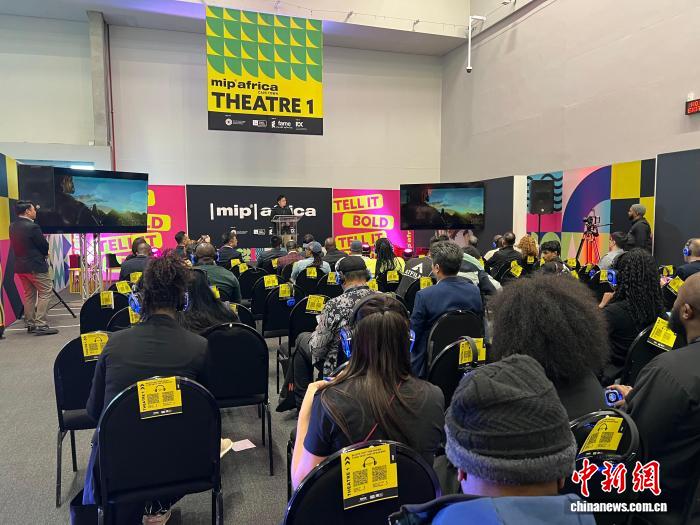
“中国联合展台”亮相非洲电视节
Xin Hua Wang· 2025-09-02 05:28
Group 1 - The 2025 Africa Television Festival opened in Cape Town, South Africa, showcasing a "China Joint Exhibition" that highlighted diverse Chinese audiovisual content and cultural exchange activities [1][2] - The "China Joint Exhibition" presented dozens of audiovisual works, including dramas, documentaries, variety shows, and animations, demonstrating the innovation and vitality of Chinese audiovisual content to professionals from Africa and around the world [1] - A special thematic screening area was set up to commemorate the 80th anniversary of the victory in the Chinese People's Anti-Japanese War and the World Anti-Fascist War, featuring notable works that reflect China's resistance against invasion and the maintenance of world peace [1] Group 2 - The Consul General of China in Cape Town emphasized the deep cultural roots and unique charm shared between China and Africa, highlighting the natural resonance in audiovisual creation and the broad prospects for cooperation [2] - The Africa Television Festival is recognized as the largest and most influential film and television content trading and cooperation event in Africa, with over 100 media companies and more than 1,500 registered participants [2] - The event was organized under the guidance of the State Council Information Office and the National Radio and Television Administration, led by the Jiangsu Provincial Radio and Television Station [2]
“‘声’入人心是我的追求”(环球热点)
Ren Min Ri Bao Hai Wai Ban· 2025-04-29 22:47
Core Viewpoint - The article highlights the experiences of a Tanzanian voice actor, Manka, who has been working in China for over a decade, emphasizing the cultural connections and the growing popularity of Chinese films and TV dramas in Tanzania through localized dubbing efforts [4][10][12]. Group 1: Voice Acting and Dubbing Process - Manka has been with SIDA Times Group for seven years, providing voiceovers in Swahili for Chinese films and animations, bridging cultural gaps between China and Tanzania [6][12]. - The dubbing process involves translating scripts from Chinese or English to Swahili, which often requires creative adjustments to ensure clarity and cultural relevance [8][9]. - Manka has developed the ability to switch between different female character voices quickly, showcasing her adaptability and skill in voice acting [9]. Group 2: Cultural Exchange and Impact - The introduction of Swahili-dubbed Chinese dramas has significantly increased viewership in Tanzania, with local audiences resonating with the relatable themes and stories [10][12]. - Manka's work has not only enhanced her understanding of Chinese culture but also provided insights into China's development strategies, particularly in poverty alleviation, which she believes can inspire African nations [13]. - The collaboration between Chinese and African media is seen as a means to foster mutual understanding and cultural exchange, with Manka expressing hope for future joint productions [13].