
《三十而已》

Search documents
影视合作拉紧中非文化交流纽带(国际视点)
Ren Min Ri Bao· 2026-02-09 00:56
Group 1 - The core viewpoint of the articles highlights the increasing popularity and acceptance of Chinese films, particularly animated films, in African countries, exemplified by the success of "Boonie Bears: Back to Earth" in South Africa [1][2] - The film "Boonie Bears: Back to Earth" has set box office records in South Africa, indicating a growing interest among local audiences for Chinese cinema [2] - Various Chinese films have been released in Africa, enriching local viewing options and fostering deeper cultural exchanges, with many viewers expressing a desire to visit China to experience its culture [2] Group 2 - The Chinese market is also opening up to African films, with events like the Beijing International Film Festival showcasing African cinema, enhancing cultural exchange [3] - Collaborative projects between Chinese and African media institutions have produced notable works, such as "Welcome to Mai Le Village," which tells stories of Chinese aid in Africa and has gained significant attention [4] - The increasing internet penetration and population in Africa present opportunities for the growth of the Chinese short drama market, with successful adaptations like "The Return of the God of War" achieving high conversion rates in Nigeria [6] Group 3 - There is a strong emphasis on talent exchange and cooperation between China and Africa, with training programs for African filmmakers in China, enhancing understanding of the Chinese film industry [7] - The development of joint productions and cultural exchanges is seen as a bridge to strengthen ties between the two regions, promoting mutual understanding and shared values [7] - The ongoing collaboration in the film industry is viewed as a significant driver for cultural exchange, with hopes for more Chinese films to be introduced to African audiences [7]
“大婆神教”谢幕:当掌握话语权的00后开始同情“小三”
3 6 Ke· 2026-02-08 09:10
Core Viewpoint - The character Qiao Hailun from the popular drama "Night is Still Young" has sparked widespread discussion online, particularly around the new term "Niu Ma Ji," reflecting the struggles of modern workers in high-pressure environments and the complexities of workplace relationships [1][12][14]. Group 1: Character Analysis - Qiao Hailun, portrayed by actress Kan Qingzi, is depicted as a hardworking employee facing extreme workplace pressures, including long hours and emotional manipulation from her superior, Li Dongming [1][12]. - The character's situation resonates with many viewers, particularly younger audiences, who empathize with her struggles in a competitive job market [12][20]. - The portrayal of Qiao Hailun challenges traditional narratives around infidelity, as viewers express sympathy for her rather than condemnation, marking a shift in societal attitudes towards such characters [15][19]. Group 2: Audience Reactions - Online discussions have shifted from moral judgments of infidelity to a focus on the shared experiences of workplace exploitation, with many viewers sharing their own similar experiences [14][15]. - The character's plight has led to a broader conversation about the pressures faced by young professionals, highlighting the difficulties of maintaining job security in a demanding work environment [14][19]. - The generational divide in audience reactions is notable, with younger viewers showing more empathy towards Qiao Hailun, while older viewers maintain traditional views on infidelity [20][24]. Group 3: Cultural Context - The emergence of the "Niu Ma Ji" character reflects a changing cultural landscape where younger audiences are re-evaluating the dynamics of marriage, relationships, and female interactions [12][28]. - This shift indicates a move away from the moralistic "Big Wife Cult" narrative towards a more nuanced understanding of the challenges faced by women in contemporary society [28][29]. - The evolving portrayal of female characters in dramas suggests a growing recognition of women's autonomy and the complexities of their choices within patriarchal structures [28][29].

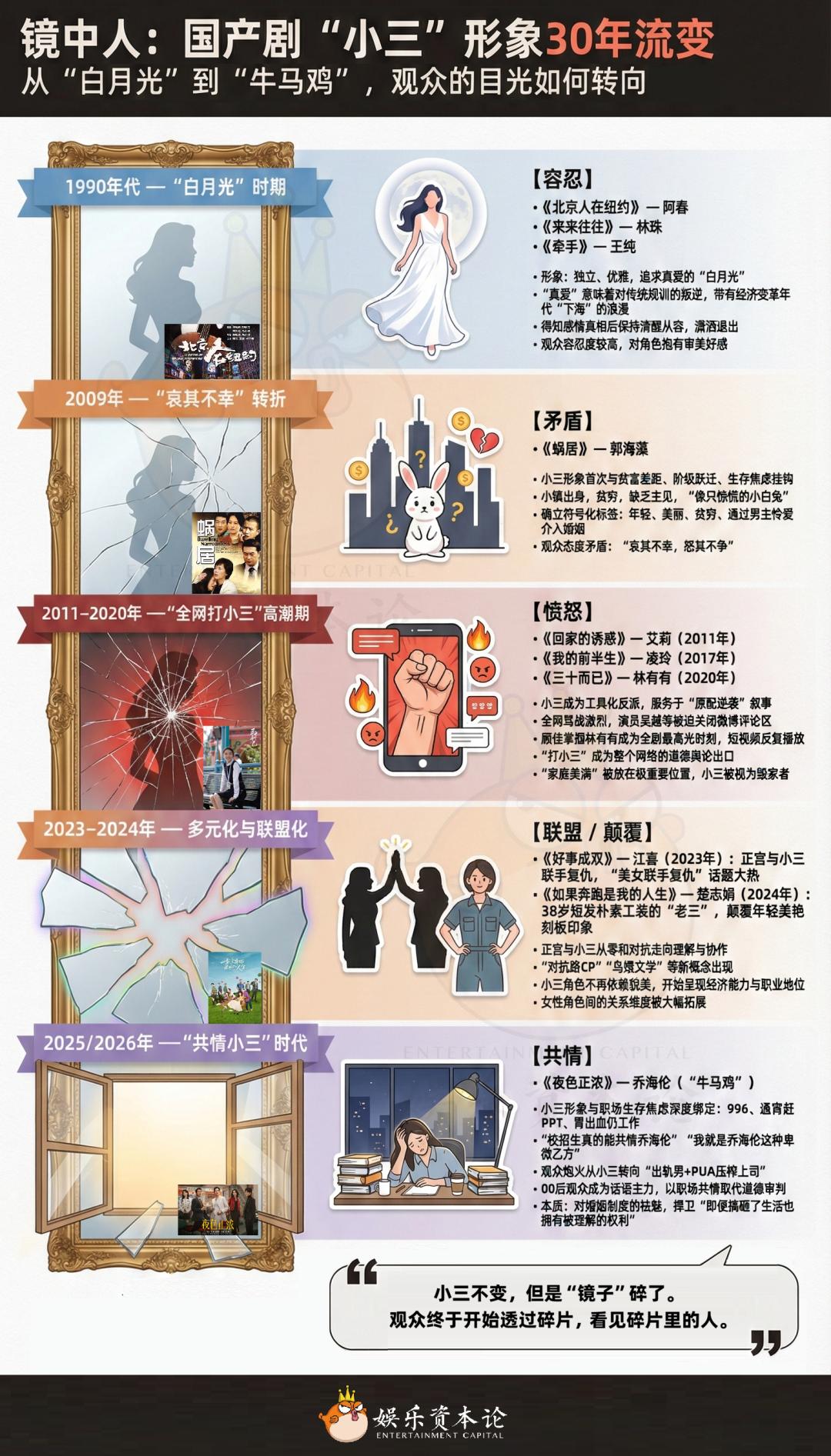
为什么我们开始爱上「坏女人」?
后浪研究所· 2025-12-18 10:51
Core Viewpoint - The article discusses the evolution of the "evil woman" trope in Korean dramas, highlighting how these characters have become central to narratives, reflecting societal issues and audience desires for complex female protagonists [4][8][49]. Group 1: Evolution of "Evil Women" in Korean Dramas - The character Bai Yazhen from the drama "Dear X" represents a new generation of "evil women," using manipulation and revenge against those who wronged her [3][11]. - Recent Korean dramas like "The Penthouse," "Eve," and "Dark Glory" have established the "evil woman" as a crucial character type, often divided into two categories: pure evil women from affluent backgrounds and those who seek revenge after being bullied [4][6]. - The portrayal of "evil women" in Korean dramas often transcends gender stereotypes, allowing for a more neutral representation of their actions and motivations [7][8]. Group 2: Comparison with Chinese Dramas - In contrast, Chinese dramas tend to depict "evil women" in a more stereotypical and gentle manner, often focusing on romantic entanglements rather than complex revenge plots [6][34]. - The "evil women" in Chinese dramas are often secondary characters, lacking the depth and agency seen in their Korean counterparts, who are frequently the main protagonists [43][57]. - Recent Chinese characters, like Xu Yan in "Let Me Shine," are portrayed as ambitious but ultimately revert to traditional narratives of love and redemption, lacking the proactive nature of Korean "evil women" [35][37]. Group 3: Audience Reception and Societal Reflection - The rise of "evil women" reflects a broader audience desire for narratives that challenge traditional female roles, allowing women to be ambitious and morally complex [44][49]. - The "evil women" trope serves as a vehicle for viewers to explore themes of power, revenge, and societal injustice, resonating with audiences who may feel powerless in their own lives [56][57]. - The article suggests that the acceptance of "evil women" in narratives indicates a shift in societal views on female ambition and morality, pushing against the constraints of traditional gender roles [48][50].
通讯|中国剧集出海:讲述世界共鸣的中国故事
Xin Hua She· 2025-12-04 15:46
Group 1 - The acceptance of Chinese dramas in overseas markets is increasing, with shows like "Mankind's Good Life" receiving positive feedback from international partners [1][2] - The Asian Television Forum showcased a significant presence of Chinese media, with 24 domestic institutions participating and a focus on international collaboration [1] - The pricing of Chinese dramas has significantly increased, with some episodes now selling for over $100,000, reflecting their growing economic and cultural value [3] Group 2 - Companies are utilizing artificial intelligence to analyze overseas audience preferences during the script development phase, enhancing the international appeal of their productions [2] - Collaborations between Chinese and Southeast Asian companies are on the rise, with projects like the Thai version of "Thirty Only" being adapted to suit local tastes while retaining core elements of the original [2] - The cultural themes in Chinese dramas, such as peace and stability, resonate universally, making them relatable to global audiences [3]

国产都市剧,为什么很少见“大男主”?
3 6 Ke· 2025-11-28 00:39
Core Viewpoint - The article discusses the emergence of a new type of male protagonist in urban dramas, particularly focusing on the character of Yu Yu in "Why He Is Still Single," who embodies an imperfect and unlikable persona, contrasting with the trend of idealized male leads in the genre [1][4][5]. Group 1: Character Analysis - The character Yu Yu is portrayed as a typical imperfect male lead, often making remarks that annoy others, which raises questions about his single status [5][7]. - Despite his flaws, audience acceptance of Yu Yu is relatively high, attributed to the show's emphasis on his shortcomings and the appeal of the actor, Hu Ge [5][7]. - The portrayal of an unlikable male lead is rare in urban dramas, where characters are usually expected to show growth and relatability [4][7]. Group 2: Market Trends - Urban dramas have historically favored perfect male leads, with recent examples showing a shift towards more idealized characters, making the portrayal of flawed protagonists a risky endeavor [7][9]. - The market for urban dramas is significant, with modern urban dramas accounting for 40.82% of the total content, indicating a strong demand for diverse character representations [7][9]. - The evolution of audience expectations has led to a decline in the acceptance of imperfect male leads, as viewers increasingly seek narratives that reflect their realities and experiences [13][14][16]. Group 3: Historical Context - Earlier urban dramas, such as "Struggle" and "Naked Marriage Era," featured more realistic and flawed male characters, reflecting the societal values of the time [9][11]. - The shift towards idealized male leads coincided with the rise of idol dramas, which set a standard for perfection in male characters [11][13]. - As societal values evolve, particularly with the awakening of female consciousness, the demand for authentic and relatable character arcs has increased, challenging the traditional narrative structures in urban dramas [13][14][16].
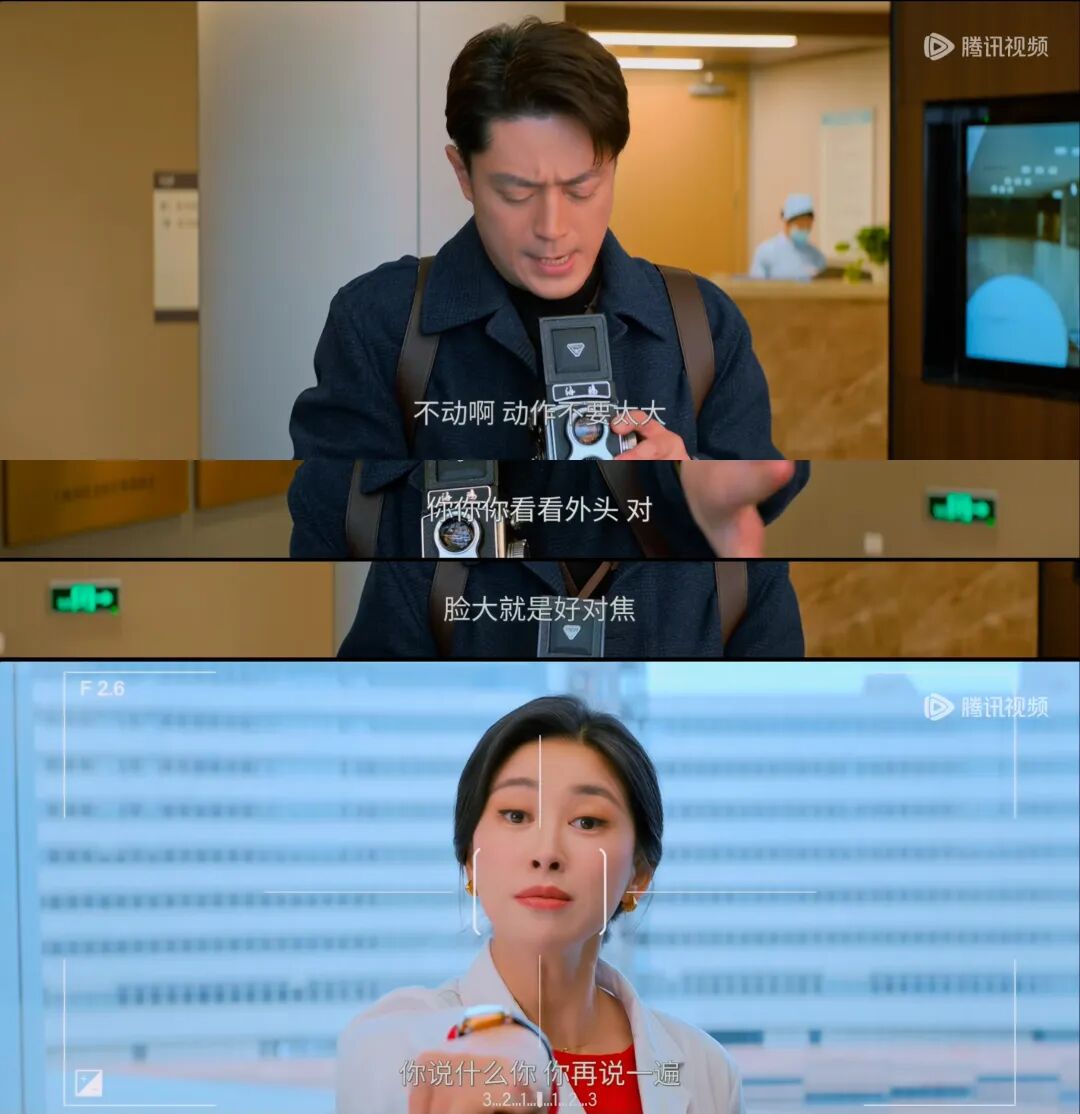
柠萌影视(09857):翻拍的泰语版《三十而已 ? 曼谷篇》将于8月28日起在Disney+、腾讯视频等跨国主流流媒体全球同步播出
Zhi Tong Cai Jing· 2025-08-19 08:53
Core Viewpoint - The company, Lingmeng Film and Television (柠萌影视), announced the release of the Thai version of its popular Chinese drama IP "Thirty Only" titled "Thirty Only: Bangkok Edition," which will premiere globally on major streaming platforms like Disney+ and Tencent Video starting August 28, 2025, marking the first overseas adaptation of this high-quality IP [1]. Group 1 - The Thai adaptation is produced by Lingmeng Film and Television and its subsidiary, Lingmeng International [1]. - The series is scripted by Kullim Pichayaro Suenthongwepata and directed by Nuy Sutthas Detchinlanara, featuring a star-studded cast from Thailand [1]. - This adaptation represents a significant step in expanding the reach of the "Thirty Only" IP into international markets [1].
柠萌影视:翻拍的泰语版《三十而已 曼谷篇》将于8月28日起在Disney+、腾讯视频等跨国主流流媒体全球同步播出
Zhi Tong Cai Jing· 2025-08-19 08:47
Core Viewpoint - The company, Ningmeng Film and Television (09857), announced the production and global release of the Thai version of its popular Chinese drama IP "Thirty Only," titled "Thirty Only: Bangkok Edition," set to premiere on August 28, 2025, on major streaming platforms like Disney+ and Tencent Video, marking the first overseas adaptation of this high-quality IP [1]. Group 1 - The Thai adaptation is produced by Ningmeng Film and Television and its subsidiary, Ningmeng International [1]. - The series is scripted by Kullim Piyaro Suentongwepata and directed by Nuy Sutthas Detchinlanara, featuring a star-studded cast from Thailand [1]. - This adaptation represents a significant step in expanding the reach of the "Thirty Only" IP into international markets [1].
直击CJ|柠川文化首席执行官:《三十而已》年内推出泰国版,第二部剧本正在开发
Xin Lang Cai Jing· 2025-07-31 08:53
Core Insights - The 22nd ChinaJoy will be held from August 1 to 4 at the Shanghai New International Expo Center [2] - Liu Xing, CEO of Ningchuan Culture and head of commercialization at Ningmeng Film and Television, announced the production of various international versions of the hit drama "Thirty Only" [2] - The Hong Kong version of "Thirty Only" will be filmed within the year, with overseas versions in Japan, Vietnam, and Indonesia also set to be produced [2] - A Korean version is currently in script development, while a Thai version is scheduled to be aired this year [2] - The script for the second season of "Thirty Only" is already in development [2]
柠萌影视(09857.HK)7月9日收盘上涨15.61%,成交11.68万港元
Jin Rong Jie· 2025-07-09 08:37
Company Overview - CMC (柠萌影视) is a leading content production company in China, focusing on high-quality drama series based on a strong copyright IP reserve [2] - Since its establishment in 2014, CMC has produced and released 13 high-quality drama series, achieving a high quality rate of approximately 71.4% [2] - The company has explored new growth channels such as content marketing, derivative licensing, and overseas distribution to maximize the commercial value of its proprietary IP [2] Financial Performance - As of December 31, 2024, CMC reported total revenue of 657 million yuan, a year-on-year decrease of 46.22% [1] - The company recorded a net loss attributable to shareholders of 189 million yuan, a year-on-year decrease of 188.54% [1] - CMC's gross profit margin stands at 16.52%, with a debt-to-asset ratio of 28.09% [1] Market Position - CMC's current price-to-earnings (P/E) ratio is -5.56, ranking 79th in the media and entertainment industry, which has an average P/E ratio of -13.52 [1] - The company has underperformed the Hang Seng Index, with a year-to-date increase of 12.14%, compared to the index's increase of 20.38% [1] - No investment ratings have been issued by institutions for CMC at this time [1]
上半年营收下滑12%、市值蒸发86亿港元,柠檬影视也“卷”微短剧
Ge Long Hui· 2025-05-16 01:58
Core Viewpoint - The production company Ningmeng Film and Television has faced a significant decline in revenue, primarily due to a drop in income from copyright drama broadcasting rights, raising concerns about its sustainability as a "hit-making machine" in a competitive and regulated short drama industry [3][28]. Financial Performance - In the first half of 2023, Ningmeng Film and Television reported revenue of 422 million yuan, a year-on-year decrease of 12.10% [5]. - The adjusted net profit for the same period was 139 million yuan, reflecting a year-on-year increase of 32.0% [5]. - Revenue from copyright broadcasting rights was 377 million yuan, down 18.57% year-on-year, accounting for 89.34% of total revenue [5][16]. Market Position and Challenges - Ningmeng Film and Television is recognized for its successful series such as "Thirty Only" and "Little Joy," but it is now facing challenges due to over-reliance on copyright dramas and increasing competition in the short drama sector [3][8]. - The company's market capitalization has significantly decreased from a peak of 11.535 billion yuan in January to approximately 2.620 billion yuan as of December 5 [3]. Revenue Structure - The company heavily relies on content licensing, with copyright drama licensing contributing the majority of its revenue, which has been declining [16][18]. - Other business segments contributed only 500,000 yuan in revenue in the first half of 2023, indicating a lack of diversification [18]. Debt and Financial Health - Ningmeng Film and Television's net debt has increased, reaching approximately 2.529 billion yuan in the first half of 2023, highlighting financial pressure amid rising production costs [22]. - The company's accounts receivable have remained high, indicating potential cash flow issues due to delayed payments from clients [19]. Strategic Directions - The company is exploring new growth avenues, including micro-short dramas and international markets, with the establishment of "Ningmeng International" for overseas content distribution [27][28]. - The success of the micro-short drama "Twenty-Nine," which achieved over 1.4 billion views for its highest single episode, reflects the company's potential in this emerging segment [28].
