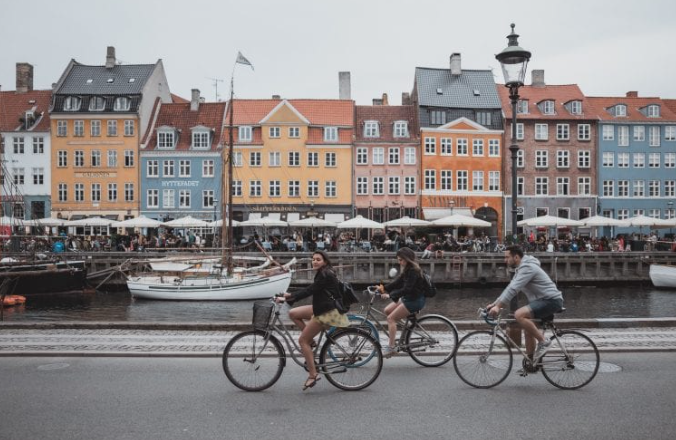
丹麦模式

Search documents
美媒:“丹麦模式”能否破解欧洲移民困境
Huan Qiu Shi Bao· 2025-11-20 22:36
Core Viewpoint - Denmark's approach to immigration policy, termed the "Danish model," combines strict immigration controls with welfare policies to counter the rise of far-right parties while maintaining electoral support from the left [1][3]. Group 1: Immigration Policy - The Danish government has shifted its immigration policy focus towards employment and education, resulting in a nearly fourfold increase in annual residence permits over the past 20 years, while the proportion of permits granted to asylum seekers and refugee families has significantly decreased [3][4]. - The "Danish model" is characterized by a combination of strict immigration policies and welfare spending, which has been effective in addressing public concerns about the economic burden of immigration [3][4]. Group 2: Political Dynamics - The current left-wing government in Denmark faces significant pressure from right-wing parties, leading to a more hardline stance on immigration to secure electoral space for progressive policies [4][5]. - The success of the "Danish model" has attracted interest from left-wing politicians in other European countries, who seek to replicate its approach to mitigate the influence of populist right-wing movements [4][5]. Group 3: Challenges and Limitations - The applicability of the "Danish model" to other countries is uncertain, as its measures may not be easily replicable in nations with larger populations and different electoral systems [6]. - The model has inherent flaws, including a complicated process for foreigners to obtain Danish citizenship and policies that may foster intolerance towards immigrants, despite promoting integration [6].

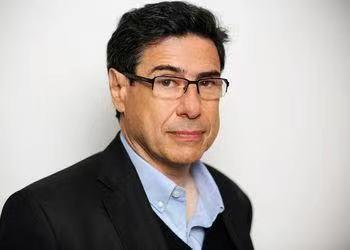
诺贝尔经济学奖获得者阿吉翁曾接受一财独家专访
Di Yi Cai Jing Zi Xun· 2025-10-13 12:58
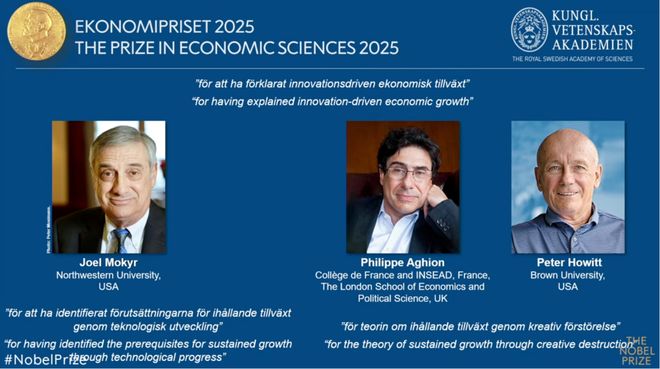
Core Insights - The 2025 Nobel Prize in Economic Sciences was awarded to Joel Mokyr, Philippe Aghion, and Peter Howitt for their contributions to understanding innovation-driven economic growth [2] - Mokyr received half of the prize for identifying prerequisites for sustained growth through technological advancement, while Aghion and Howitt shared the other half for their theory on sustained growth through creative destruction [2] Group 1: Contributions to Economic Theory - Aghion is recognized as a leading figure in economic growth theory, having reintroduced Schumpeter's paradigm of creative destruction into mainstream macroeconomic theory through the Aghion-Howitt model [2] - The concept of creative destruction suggests that large-scale innovations replace outdated technologies and production systems, leading to new economic structures [5] Group 2: Policy Recommendations - Aghion emphasized the importance of government support for employees and businesses to adapt to new economic environments, advocating for education, training, and income insurance [5][6] - He highlighted the "Danish model," where individuals losing jobs can receive nearly 90% of their salary for two years, coupled with retraining programs, contrasting it with the lack of such protections in the U.S. [5] Group 3: U.S. Economic Measures - Aghion critiqued the U.S. response to the pandemic, noting that while the Biden administration attempted to provide relief, the absence of a robust social safety net remains a significant issue [7][8] - He suggested that the pandemic may shift public opinion towards more supportive social policies in the U.S., creating opportunities for new social safety measures [8] Group 4: European Innovation Challenges - Aghion pointed out that Europe lacks leading players in the information and communication technology (ICT) sector due to insufficient investment in innovation [9] - He called for European countries to unite and promote large-scale projects, arguing that the current regulatory environment hinders investment and innovation [10]
诺贝尔经济学奖获得者阿吉翁曾说过什么?
Di Yi Cai Jing· 2025-10-13 11:37
Core Insights - The 2025 Nobel Prize in Economic Sciences was awarded to Joel Mokyr, Philippe Aghion, and Peter Howitt for their contributions to understanding innovation-driven economic growth [1] - Aghion's work, particularly the Aghion-Howitt model based on "creative destruction," has reintegrated Schumpeter's economic growth paradigm into mainstream macroeconomic theory [1] Group 1: Nobel Prize Winners - Joel Mokyr received half of the prize for identifying prerequisites for sustained growth through technological advancement [1] - Philippe Aghion and Peter Howitt jointly received the other half for their theoretical work on achieving sustained growth through creative destruction [1] - Aghion is recognized as a leading figure in economic growth theory and has been a strong candidate for the Nobel Prize for years [1] Group 2: Economic Theories and Policies - The concept of "creative destruction," originally proposed by economist Schumpeter, suggests that large-scale innovations replace outdated technologies and production systems [4] - Aghion emphasizes the importance of government support in helping employees and businesses adapt to new economic environments, particularly through education, training, and income insurance [4] - Aghion's analysis of the "Danish model" highlights how effective social protection can mitigate the negative impacts of job loss, contrasting it with the less supportive system in the U.S. [4] Group 3: U.S. Economic Measures - The Biden administration has attempted to address economic challenges through a series of relief measures, but the lack of a robust social safety net remains a significant issue [6] - Aghion notes that the U.S. needs to rethink its social system to better protect individuals from unemployment and economic crises [6] - There is a potential shift in American attitudes towards social welfare, especially following the pandemic, which may create opportunities for new social safety measures [7] Group 4: European Innovation Challenges - Aghion points out that Europe is underinvesting in innovation and needs to unite to promote large-scale projects [8] - He criticizes Europe's regulatory environment for being overly focused on preventing anti-competitive practices rather than fostering investment [8] - The current crisis has highlighted Europe's inefficiencies in innovation, indicating a need for a more proactive investment approach [8]
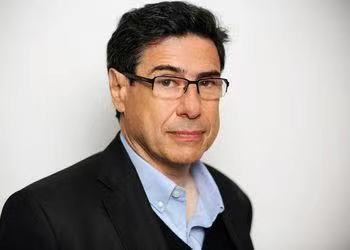
诺贝尔经济学奖获得者阿吉翁曾接受一财独家专访,他说了什么
Di Yi Cai Jing Zi Xun· 2025-10-13 10:40
Core Insights - The 2025 Nobel Prize in Economic Sciences was awarded to Joel Mokyr, Philippe Aghion, and Peter Howitt for their contributions to understanding innovation-driven economic growth [1] Group 1: Contributions of Awardees - Joel Mokyr received half of the prize for identifying prerequisites for sustained growth through technological advancement [1] - Philippe Aghion and Peter Howitt jointly received the other half for their theory on sustained growth through creative destruction [1] - Aghion is recognized as a leading figure in economic growth theory, having revitalized Schumpeter's paradigm of economic growth through the Aghion-Howitt model [1] Group 2: Economic Policy Insights - Aghion emphasized the importance of government support for employees and businesses to adapt to new economic environments, particularly through education, training, and income insurance [3] - He highlighted the "Danish model," where individuals losing jobs can receive nearly 90% of their salary for two years, coupled with retraining programs, contrasting it with the lack of such protections in the U.S. [3] - Aghion noted that while the U.S. has strong innovation capabilities, it lacks adequate social protection systems, which can lead to severe consequences for individuals losing jobs [4][5] Group 3: European Innovation Challenges - Aghion pointed out that Europe is currently underinvesting in innovation and needs to unite to promote large projects [7] - He criticized existing anti-competitive measures in Europe that hinder investment and suggested that Europe needs to shift from being a "police" to an "investor" in innovation [7] - The crisis has highlighted Europe's inefficiencies in innovation, with a significant decline in industrial capacity and innovation compared to the past [7]