
为全球

Search documents
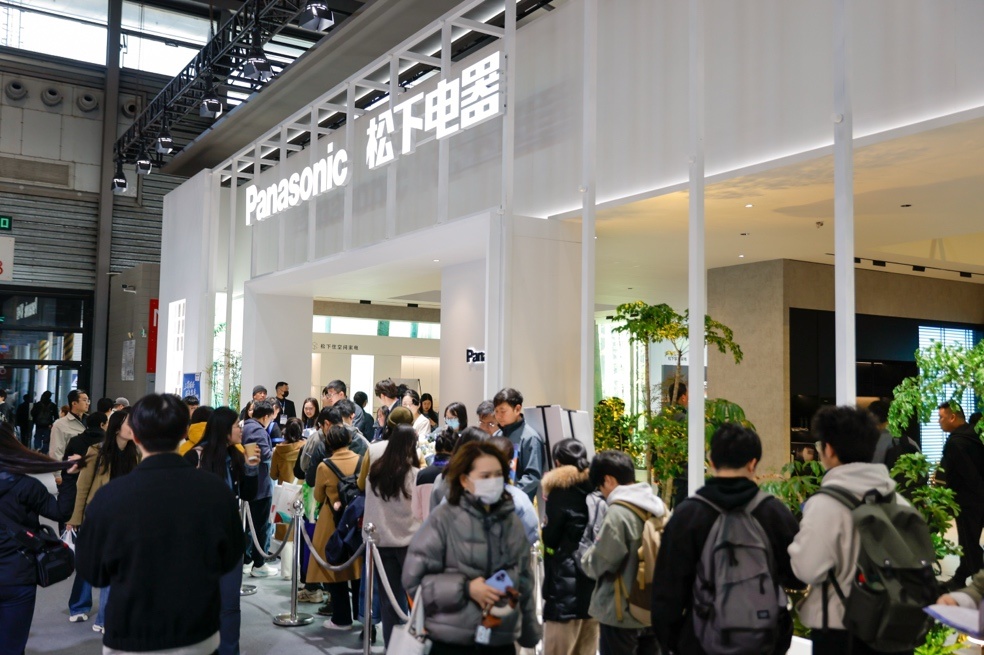
松下转型“在中国,为全球” 以中国创新引擎撬动全球怡居生态
Huan Qiu Wang· 2026-03-17 13:07
Core Insights - Panasonic is transitioning from a "For China, By China" strategy to a "For China, By Global" approach, leveraging its Northeast Asia operations as a pivotal point for global smart living business upgrades [2][10] - The company aims to enhance its global competitiveness by utilizing innovations developed in the Chinese market, which have significantly improved product development cycles and cost efficiency [5][10] Strategic Upgrade - The new organizational structure, China Northeast Asia Business (CNAB), will oversee cross-business coordination and is set to launch in April 2026 [2] - Since the establishment of the China Northeast Asia Company (CNA) in 2019, Panasonic has generated over 15 billion RMB (300 billion JPY) in operating cash flow, emphasizing local decision-making [5] Product Innovation - Panasonic's kitchen appliance sector is undergoing a comprehensive reform, with decision-making and operations being jointly managed by teams from China and Japan [5] - The company is focusing on creating integrated home appliance solutions that align with consumer needs, such as the Himalaya series and the Xtra rice cooker, which incorporate advanced technologies [9] Market Strategy - Panasonic identifies the current Chinese home appliance market as facing challenges such as declining demand and increased competition, advocating for a "three-way win" strategy among customers, channels, and enterprises [6] - The company has achieved a 106% year-on-year sales growth in direct sales categories in 2025, despite industry price wars, by prioritizing high-margin products and maintaining a stable pricing structure [8] Ecosystem Development - Panasonic is building an open commercial ecosystem centered around its "One Set Living Space" strategy, which aims to enhance consumer quality of life through integrated solutions [8] - The company is also focusing on health and environmental sustainability in its product offerings, with initiatives like the Wellness Smart Town and Wellness Smart House [9] Conclusion - Panasonic's evolution from localized operations to a global strategy reflects its commitment to integrating into China's high-quality development landscape, aiming to become a more trusted and attractive global brand [10]


(第八届进博会)日产在华设立首个合资整车进出口公司
Zhong Guo Xin Wen Wang· 2025-11-07 03:38
Core Insights - Nissan Import and Export (Guangzhou) Co., Ltd. has been established as the first joint venture vehicle import and export company by a foreign automaker in China, with an investment of 1 billion RMB from Nissan (China) Investment Co., Ltd. and Dongfeng Motor Group Co., Ltd. [1][2] - The establishment of this new company signifies a new model of joint cooperation aimed at value co-creation, expanding the successful partnership that began 22 years ago with the founding of Dongfeng Nissan [1][2] - The N7, Nissan's first pure electric sedan under the Dongfeng Nissan new energy technology framework, and the Frontier Pro PHEV, the first pickup truck designed, developed, and produced in China for global export, will be among the first models to be exported [1][2] Company Strategy - The establishment of Nissan Import and Export (Guangzhou) Co., Ltd. is a strategic move to enhance high-level open cooperation and integrate into the global economic landscape [2] - Nissan aims to leverage China's position as the largest automotive market and an innovation engine for global automotive industry transformation, focusing on electric and intelligent vehicle development [2] - The collaboration between Nissan and Dongfeng will emphasize the integration of global standards with Chinese wisdom to accelerate the "made in China, for the world" strategy [2]

直击进博会|外资车企首次在华设立合资整车进出口公司 日产加码“在中国 为全球”战略
Zhong Guo Jing Ying Bao· 2025-11-06 15:12
Core Insights - Nissan has established a new joint venture, Nissan Import and Export (Guangzhou) Co., Ltd., marking a significant step in its strategy of "In China, for the World" [1][2] - The new company aims to enhance Nissan's presence in the Chinese market and position China as a global hub for electric vehicle (EV) development and exports [2][3] Company Developments - Nissan Import and Export (Guangzhou) Co., Ltd. is the first joint venture for vehicle import and export by a foreign automaker in China, with an investment of 1 billion RMB, where Nissan holds a 60% stake and Dongfeng Motor Group holds 40% [1][2] - The establishment of this joint venture is seen as a milestone in Nissan's commitment to deepening its market presence in China and leveraging local innovation for global markets [2][3] Strategic Goals - Nissan aims to create globally competitive products by utilizing China's robust supply chain in electrification and intelligence, with a focus on local development for global markets [2][3] - The company plans to export 100,000 vehicles from China starting in 2025 as part of its "The Arc" plan [3][5] Market Performance - Nissan has faced declining sales in China over the past seven years, with sales figures dropping from 1.5469 million units in 2019 to 457,100 units in the first nine months of 2025, reflecting a significant downward trend [4][5] - The company reported a net loss of 670.8 billion yen (approximately 32.6 billion RMB) for the fiscal year 2024, with a global sales decline of 2.8% [4] Product Development - The new joint venture will focus on developing and exporting two new EV models, the Dongfeng Nissan N7 and the Frontier Pro PHEV, which are set to be the first locally developed products for overseas markets [3][6] - Nissan's strategy includes granting its Chinese team greater autonomy in product development, allowing for faster development cycles and more tailored products for the local market [5][7]