
在中国

Search documents
日产汽车以“中国速度”驱动全球新征程
Guan Cha Zhe Wang· 2026-03-26 04:42
Core Viewpoint - In 2025, Nissan has successfully transformed its strategy in China, moving from merely being a sales terminal to becoming an innovation hub and export center, achieving a sales volume of 653,000 units with a 4.5% year-on-year growth in the second half of the year [1][27]. Group 1: Strategic Transformation - The "Re:Nissan" strategy, launched in May 2025, redefined the strategic significance of the Chinese market for Nissan, emphasizing action-oriented recovery and local team empowerment [4][29]. - This strategic shift acknowledges China's complete supply chain, consumer insights, and rapid technological iteration as critical to Nissan's global transformation [6][30]. - The new approach involves breaking away from traditional decision-making structures, fostering a "China innovation, global sharing" ecosystem [6][30]. Group 2: Product Development and Innovation - Nissan's success in China is attributed to the rapid development of new energy products that align with global trends, which are then exported back to international markets [7][31]. - Key models such as the N7, N6, and Frontier Pro PHEV have been developed to meet local consumer demands, showcasing Nissan's commitment to product excellence [10][34]. - The Frontier Pro PHEV, developed entirely by the local team, marks a significant shift in Nissan's product development strategy, allowing for specifications defined in China to be exported globally [13][41]. Group 3: New Ecosystem and Global Integration - The establishment of the LCV R&D center in Zhengzhou signifies a shift from being a passive receiver of global technology to an active innovator in the global automotive landscape [18][42]. - The formation of Nissan Import and Export (Guangzhou) Co., Ltd. in November 2025 represents a tangible step in implementing the "in China, for China, to the world" strategy, enhancing export capabilities [22][46]. - This new ecosystem integrates R&D, manufacturing, and export functions, positioning China as a key hub in Nissan's global value chain [18][42]. Group 4: Future Outlook - By summer 2027, Nissan plans to launch 10 new energy models in China and expand its export business, further solidifying its commitment to the Chinese market [25][49]. - The evolving competitive landscape in the automotive industry emphasizes the importance of understanding the Chinese market for gaining a competitive edge globally [25][49]. - Nissan's strategy reflects a broader trend of the Chinese automotive industry integrating into the global framework, highlighting the significance of local innovation [25][49].


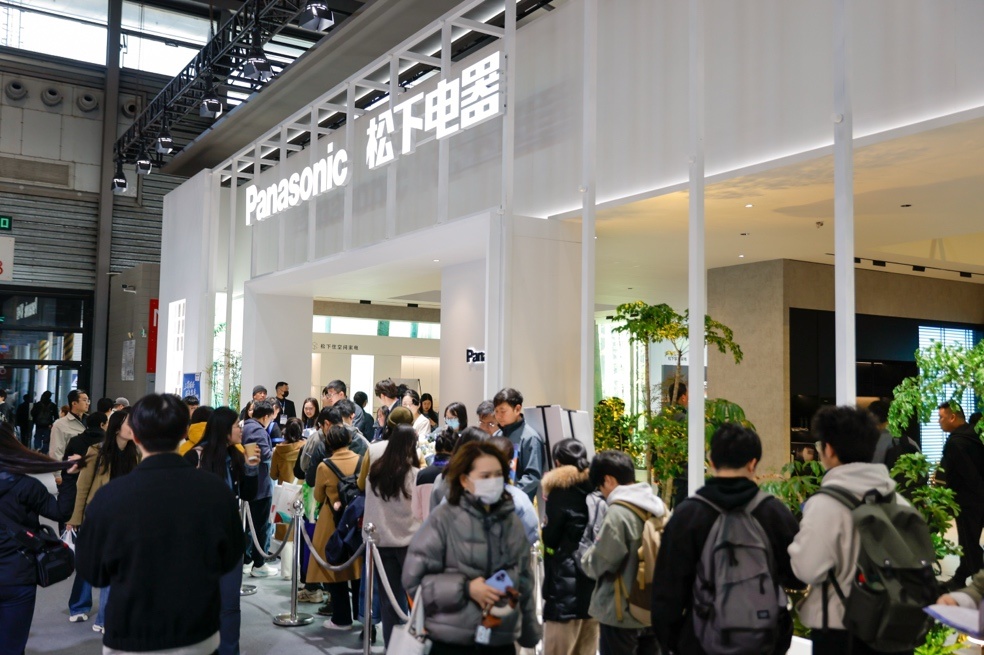
松下转型“在中国,为全球” 以中国创新引擎撬动全球怡居生态
Huan Qiu Wang· 2026-03-17 13:07
Core Insights - Panasonic is transitioning from a "For China, By China" strategy to a "For China, By Global" approach, leveraging its Northeast Asia operations as a pivotal point for global smart living business upgrades [2][10] - The company aims to enhance its global competitiveness by utilizing innovations developed in the Chinese market, which have significantly improved product development cycles and cost efficiency [5][10] Strategic Upgrade - The new organizational structure, China Northeast Asia Business (CNAB), will oversee cross-business coordination and is set to launch in April 2026 [2] - Since the establishment of the China Northeast Asia Company (CNA) in 2019, Panasonic has generated over 15 billion RMB (300 billion JPY) in operating cash flow, emphasizing local decision-making [5] Product Innovation - Panasonic's kitchen appliance sector is undergoing a comprehensive reform, with decision-making and operations being jointly managed by teams from China and Japan [5] - The company is focusing on creating integrated home appliance solutions that align with consumer needs, such as the Himalaya series and the Xtra rice cooker, which incorporate advanced technologies [9] Market Strategy - Panasonic identifies the current Chinese home appliance market as facing challenges such as declining demand and increased competition, advocating for a "three-way win" strategy among customers, channels, and enterprises [6] - The company has achieved a 106% year-on-year sales growth in direct sales categories in 2025, despite industry price wars, by prioritizing high-margin products and maintaining a stable pricing structure [8] Ecosystem Development - Panasonic is building an open commercial ecosystem centered around its "One Set Living Space" strategy, which aims to enhance consumer quality of life through integrated solutions [8] - The company is also focusing on health and environmental sustainability in its product offerings, with initiatives like the Wellness Smart Town and Wellness Smart House [9] Conclusion - Panasonic's evolution from localized operations to a global strategy reflects its commitment to integrating into China's high-quality development landscape, aiming to become a more trusted and attractive global brand [10]

独家丨大众进口车总经理邱山祥离职,周密接任
雷峰网· 2026-01-30 13:45
Group 1 - The core point of the article is the departure of Qiu Shanxiang, the general manager of Volkswagen Import Cars, primarily for personal career development reasons [2] - Qiu Shanxiang's tenure lasted just over a year, having taken the position in August 2024, and he is succeeded by Zhou Mi from within the company [2] - Volkswagen Import Cars is responsible for the sales of imported Volkswagen models in China, with the Touareg currently being the main sales model [2] Group 2 - In 2025, the sales volume of the Touareg in the domestic market was 3,624 units, representing a year-on-year decline of 43.96% [2] - The domestic import passenger car sales reached 440,000 units in the first 11 months of 2025, down 29.7% year-on-year, marking the fourth consecutive year of decline in imported car sales [4] - The peak sales of domestic imported passenger cars occurred in 2014 at 1.26 million units, followed by a downward trend, dropping below 1 million units in 2020 and further declining to 705,000 units in 2024 [5] Group 3 - Volkswagen Group's global CEO, Herbert Diess, emphasized the commitment to the "In China, for China" strategy, focusing on deepening engagement in the Chinese market and accelerating local R&D [5] - In 2026, Volkswagen Group plans to launch over 20 pure electric, plug-in hybrid, and range-extended models in China, marking the most intensive product rollout in its history in the market [5] - In 2025, Volkswagen Group achieved global sales of 8.98 million units, with over 2.69 million units delivered in the Chinese market, maintaining its position as the top foreign car manufacturer in China [5]
对话萧家乐:从「在中国、为中国」再到「爱中国」,阿迪达斯的下一个Big Thing
36氪· 2025-11-26 13:39
Core Viewpoint - Adidas aims to recover from its low point in three years, with recent quarterly performance showing a 10% year-on-year revenue increase to €947 million in Greater China, attributed to the "In China, For China" strategy [1][3]. Group 1: Localization Strategy - The localization strategy has led to nearly 95% of products sold in China being locally produced, with 60% designed in China, surpassing the global CEO's targets [1]. - The shift from "For China" to "Love China" signifies Adidas's deeper commitment to the Chinese market, emphasizing emotional connections with consumers [3]. - True localization involves integrating the brand into the daily narratives of consumers, aiming for 100% emotional resonance rather than just numerical metrics [7][10]. Group 2: Product Development and Consumer Engagement - The Shanghai Creative Center (CCS) has been pivotal in creating culturally relevant products, with over 80% of showcased items set to be commercialized [8][10]. - Adidas focuses on continuous product iteration based on consumer feedback, enhancing its connection with local users [8][10]. - The brand is shifting its marketing approach to emphasize lifestyle and enjoyment in sports, particularly targeting the growing female consumer segment through initiatives like street dance [12][14]. Group 3: Market Expansion and Future Outlook - Adidas is expanding into third- and fourth-tier cities and the children's market, with plans to open 700 new stores in collaboration with local partners [22]. - The establishment of the Adidas University Sports Community reflects a long-term commitment to youth sports in China, providing comprehensive support to university teams [19][21]. - The company maintains a strong focus on sustainability, aiming to lead in environmental indices despite broader industry cost-cutting trends [22].


大众中国CEO齐泽凯:围绕四大核心,坚定推进“在中国,为中国”战略
Zhong Guo Qi Che Bao Wang· 2025-11-25 08:26
Core Insights - The Guangzhou International Auto Show has commenced, with Volkswagen announcing its largest product offensive in history, planning to launch 21 new energy models by 2027 and expanding to 31 by 2029, highlighting its commitment to electrification and intelligent transformation in the Chinese market [1] Group 1: Strategic Focus - Volkswagen's CEO in China, Dr. Robert Cisek, emphasizes the rapid changes in consumer preferences in China, particularly in new energy vehicles, smart technology, and user experience, necessitating higher demands for technological development and product upgrades [2] - The company is committed to its "In China, For China" strategy, focusing on safety, quality, and reliability, adhering to over 8,000 engineering standards, and conducting over 300,000 kilometers of real-world testing for advanced driver assistance systems [2] Group 2: Product Development and Innovation - Volkswagen has reduced its product launch cycle by 30% through collaborations with local partners and its technology center in Hefei, aiming to enhance efficiency and lower system costs while developing autonomous driving technologies [3] - The company is developing localized multi-power platforms (CMP and CSP) to meet diverse consumer needs in China, with the CMP platform designed for A-class electric vehicles in collaboration with XPeng Motors [3] Group 3: Strategic Partnerships - Volkswagen has formed deep partnerships with local companies such as Horizon Robotics, XPeng Motors, Huawei, and CATL, achieving a 40% cost optimization while enhancing competitiveness in the rapidly changing Chinese market [4] - The company plans to offer a variety of power options by 2026, including pure electric vehicles with a range exceeding 700 kilometers, plug-in hybrids with over 100 kilometers of electric range, and range-extended electric vehicles with a total range exceeding 1,000 kilometers [4] Group 4: Long-term Vision - Volkswagen aims to differentiate itself through engineering rigor and long-term reliability, positioning itself as a trusted partner for consumers in China, with a focus on sustainable growth through local development and partnerships [5]

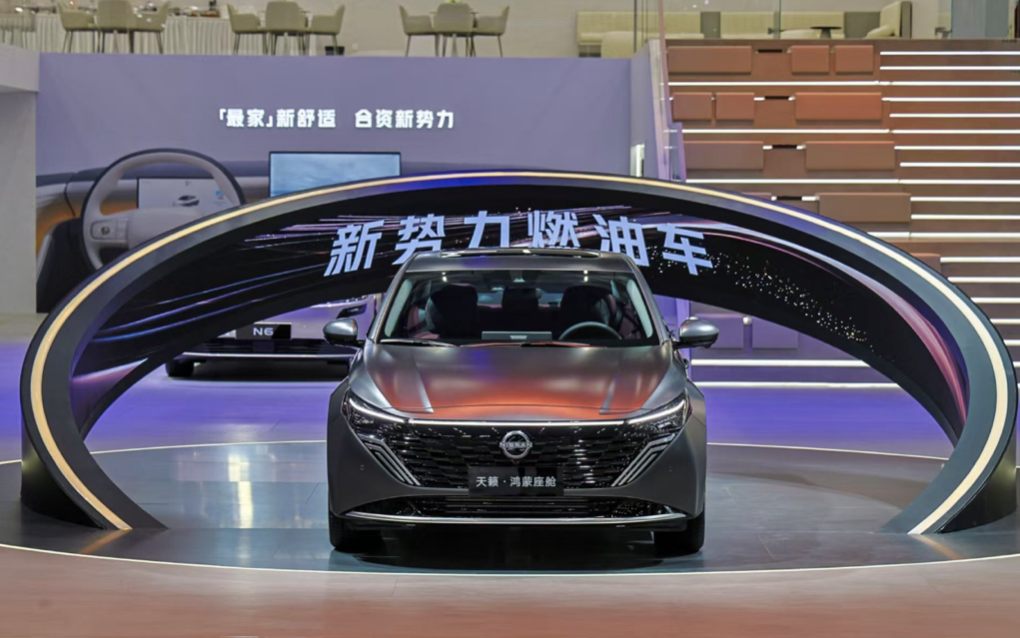
天籁·鸿蒙座舱上市,周锋:打造“燃油智能第一车”
Bei Ke Cai Jing· 2025-11-22 08:36
Core Viewpoint - Dongfeng Nissan has launched the new Tiida Hongmeng cockpit at the Guangzhou Auto Show, marking the first vehicle under its "oil-electric intelligence" strategy, with a price range of 139,900 to 167,900 yuan [1][2]. Group 1: Product Features - The new model features a variable compression turbocharged engine with a maximum power of 243 horsepower and can accelerate from 0 to 100 km/h in 6 seconds [3]. - The vehicle is equipped with the Hongmeng cockpit 5, which includes an AI-level voice assistant that supports fuzzy semantic recognition [3]. Group 2: User Service Innovations - Dongfeng Nissan has established the first dedicated sales channel model for fuel vehicles, called "Dingjiao Service," where each step from ordering to delivery and after-sales is managed by a professional team [4]. Group 3: New Energy Vehicles - The company also showcased its first pure electric vehicle, the N7, and its first plug-in hybrid sedan, the N6, at the auto show, marking Dongfeng Nissan's debut in the new energy vehicle section [5].
战略步入“交付阶段” 大众汽车“在中国、创未来”——专访大众中国董事长兼CEO贝瑞德
Xin Hua Cai Jing· 2025-11-10 12:12
Core Insights - Volkswagen Group (China) emphasizes its commitment to the Chinese market, viewing it as a "gym" for strengthening its capabilities and competitiveness [1][6] - The company is in the "delivery phase" of its "In China, For China" strategy, focusing on launching new models and enhancing consumer experience [3][4] - Volkswagen plans to introduce 20 new energy models in China next year, with a long-term goal of 50 models by 2030, including 30 fully electric vehicles [3][4] Group 1: Strategic Focus - Volkswagen Group's global board members visited China to engage with the local market and experience new products firsthand, highlighting the importance of local insights [2][6] - The company has established its largest R&D center outside Germany in Hefei, collaborating with local partners to enhance its business model [2][4] - The "In China, For China" strategy has led to a complete business model overhaul, focusing on local development and partnerships with companies like XPeng and Horizon Robotics [2][4] Group 2: Technological Advancements - Volkswagen is developing a system-on-chip (SoC) specifically for Advanced Driver Assistance Systems (ADAS), aiming for Level 3 autonomous driving capabilities [4][5] - The China Electronic Architecture (CEA) is a key component of Volkswagen's localization strategy, developed in collaboration with XPeng [4][5] - The company plans to launch Level 2 driving assistance features by 2026 and aims for Level 3 and above by 2030, enhancing its technological edge in the market [5][6] Group 3: Market Positioning - Volkswagen aims to maintain its position as the leading international car manufacturer in China, focusing on value rather than price competition [3][5] - The company recognizes the rapid growth of the Chinese automotive market, with current sales around 24 million units expected to reach 28 million by 2030 [5][6] - Volkswagen's approach emphasizes quality and safety as primary goals, avoiding excessive price competition to ensure sustainable growth [5][6] Group 4: Local Integration and Innovation - Volkswagen's deep integration into the Chinese market has led to a significant reduction in vehicle development cycles, enhancing its global competitiveness [6][7] - The company collaborates with various local firms in battery technology, ADAS, and smart cockpit development, creating a responsive innovation ecosystem [6][7] - The "In China, For China" strategy not only supports local market commitments but also strengthens Volkswagen's global competitiveness [7][8]
战略步入“交付阶段”,大众汽车“在中国、创未来”——专访大众中国董事长兼CEO贝瑞德
Zhong Guo Jin Rong Xin Xi Wang· 2025-11-10 09:37
Core Viewpoint - Volkswagen Group (China) emphasizes its commitment to the Chinese market, viewing it as a "gym" for strengthening its capabilities and adapting to local demands [1][12]. Group 1: Strategic Focus - Volkswagen Group has established a "localization blueprint" and is in the "delivery phase" of its strategy, aiming to launch new models that enhance consumer experience [3][6]. - The company plans to introduce 20 new energy models in China next year, with a total of approximately 30 models by 2027 and around 50 by 2030, including 30 fully electric vehicles [6][8]. Group 2: Technological Development - Volkswagen is developing a system-on-chip (SoC) specifically for Advanced Driver Assistance Systems (ADAS) to advance towards Level 3 autonomous driving [7]. - The China Electronic Architecture (CEA) is a core part of Volkswagen's localization strategy, developed in collaboration with local partners like XPeng Motors [7][9]. Group 3: Market Positioning - Volkswagen aims to maintain its position as the leading international car manufacturer in China, focusing on value rather than price competition [9][12]. - The company believes that future competition will center on the "value ratio," emphasizing quality and safety over aggressive market share acquisition [9][12]. Group 4: Local Integration - Volkswagen's strategy includes deep collaboration with local companies, enhancing its ability to respond to market changes and innovate [11][12]. - The development cycle for new models in China has been reduced to 24-30 months, improving efficiency and competitiveness in both the Chinese and European markets [11].

聚焦进博|在进博 听他们的中国故事
Guo Ji Jin Rong Bao· 2025-11-07 17:24
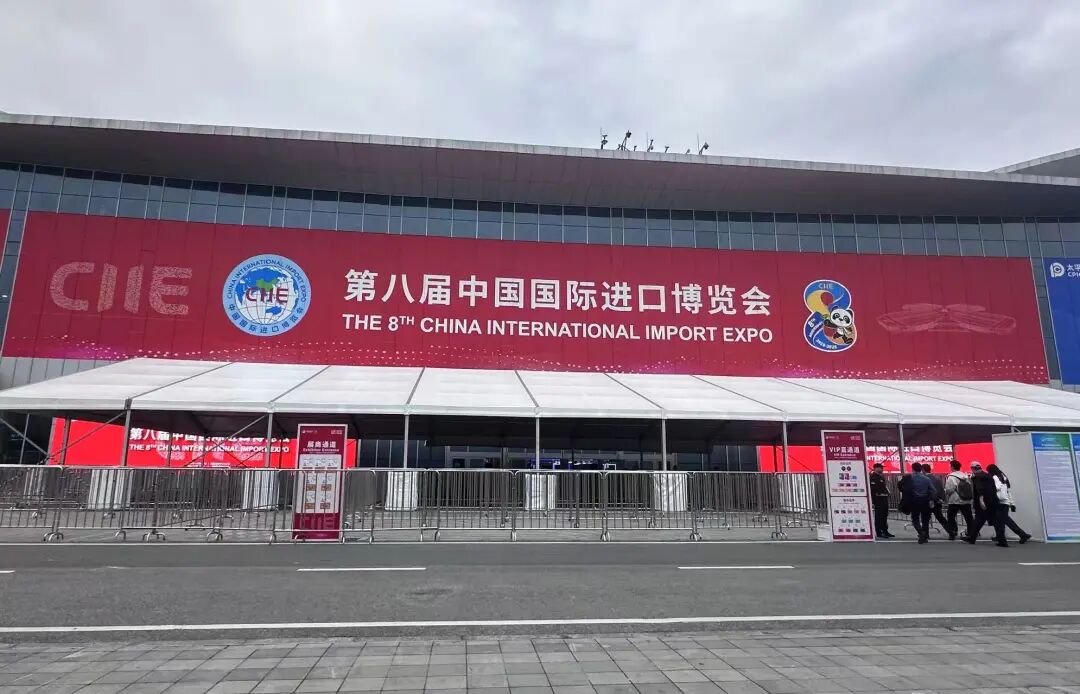
Core Insights - The 8th China International Import Expo (CIIE) is being held from November 5 to 10, attracting over 4,100 foreign enterprises from 155 countries and regions [1] Company Highlights - Lululemon has participated in CIIE for the second year, noting significant brand awareness growth and community engagement through yoga events across 43 cities in China [3][7] - Kao Group has been in China for 30 years and emphasizes a localization strategy, showcasing products tailored to Chinese consumer needs, with many new products produced locally [4] - LVMH has deepened its presence in China since entering the market in 1990, showcasing brands like Bulgari and Dior at CIIE to strengthen ties with the Chinese market [5] - Nike has been in China since 1981 and has witnessed the rise of Chinese sports, emphasizing its commitment to the market through the launch of new products and the establishment of the Nike China Creative Center in Shanghai [6][12] Market Trends - The demand for sports and wellness products is increasing in China, prompting Lululemon to expand its product categories beyond yoga to include running, training, tennis, and golf [7] - Shiseido introduced its first skincare brand specifically for Asian skin at CIIE, highlighting the importance of local partnerships in innovation [10] - L'Oréal's "BIG BANG Beauty Tech Co-Creation Program" aims to collaborate with startups to develop innovative beauty technology solutions, with 64% of its products sold in China being locally produced [11][12] Investment and Economic Impact - Thai company Tsingtao Group launched special edition products at CIIE, reflecting its growth from exhibitor to investor in China, with over 4.3 billion yuan invested in the last five years [13] - APP (China) has adopted a sustainable development model and plans to achieve approximately 89.4 billion yuan in sales by the end of 2024, actively participating in regional trade initiatives [13]
阿迪达斯亮相进博会:以顶尖产品拥抱中国机遇 2026年FIFA世界杯产品全场吸睛
Zheng Quan Ri Bao Wang· 2025-11-07 06:45
Core Insights - Adidas has showcased its commitment to the Chinese market by participating in the China International Import Expo for the fourth time, emphasizing its strategy of "In China, For China" [1][4] - The company has introduced innovative products and localized designs, aiming to meet the evolving demands of Chinese consumers while promoting high-quality development in the sports industry [1][4] Group 1: Event Participation and Strategy - Adidas highlighted its theme "Three Stripes Energy, Powering in China" at the expo, featuring a dedicated area for the FIFA World Cup and showcasing technological innovations in running shoes [1] - The global sales head of Adidas expressed the company's intention to continue collaborating with the Chinese government, athletes, consumers, and partners to leverage opportunities in China's sports sector [1][4] Group 2: Product Innovations - At the expo, Adidas unveiled the home jerseys for the German, Argentine, Spanish, and Italian national teams for the 2026 FIFA World Cup, emphasizing their design inspirations from history and culture [2] - The new jerseys incorporate Adidas' CLIMACOOL technology, designed to help players adapt to varying climate conditions during the World Cup [2] Group 3: Technological Advancements - The official match ball for the 2026 FIFA World Cup, named "Trionda," features a revolutionary four-panel structure and advanced side chip system for precise flight trajectories and real-time data collection [3] - This innovation aims to enhance the accuracy of officiating in matches, providing a smoother experience for fans [3] Group 4: Localized Design and Market Engagement - Over 60% of Adidas products sold in China are designed by local teams, reflecting the company's commitment to "China Creation" and local market needs [3] - Recent product lines, such as New Chinese Style and Future of Style, have gained popularity among domestic consumers and attracted interest from international markets, particularly in Japan and South Korea [3]