
事件驱动型熊市

Search documents
美股快速反弹,高盛:短期上涨空间有限、反而回撤风险大,年初的问题全都在
Hua Er Jie Jian Wen· 2025-05-15 08:43
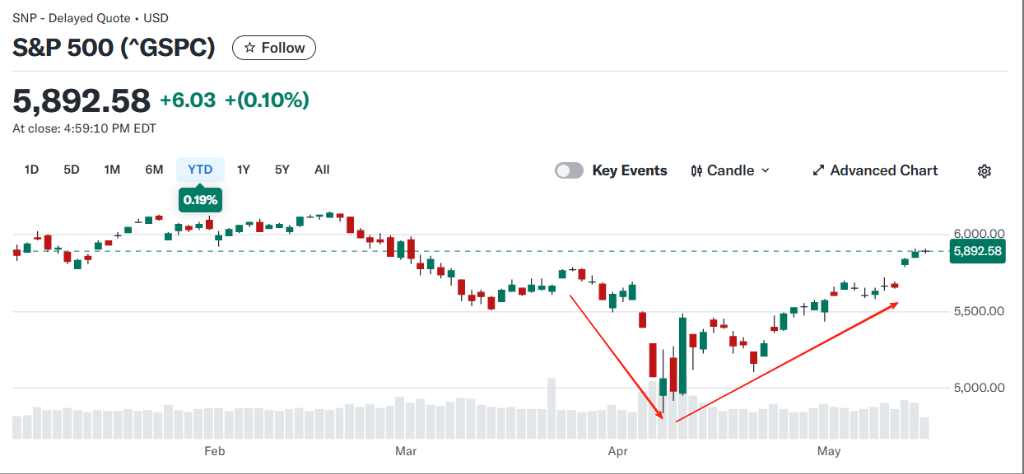
Core Insights - Despite positive signals from tariff negotiations, risks in the market remain significant, as highlighted by Goldman Sachs in their report [1][5]. Market Conditions - The effective tariff levels under the Trump administration are still considerably higher than before the announcement of "reciprocal tariffs" on April 2 [2]. - The U.S. stock market is facing risks such as high valuations, market concentration, and slowing growth, with the S&P 500 index having dropped nearly 20% and the Nasdaq down 23% in early April [2][6]. Economic Outlook - High tariffs are expected to have inflationary effects, and there is considerable uncertainty regarding their impact on growth [5]. - Goldman Sachs anticipates that the Federal Reserve may delay interest rate cuts, now projecting three rate cuts to begin in December instead of July [5]. Market Dynamics - The report indicates that the recent market rebound is characteristic of an "event-driven" bear market, which typically stabilizes after an initial drop, suggesting limited upward potential in the near term [5]. - The obstacles faced at the beginning of the year, such as high valuations and market concentration, have resurfaced, indicating persistent risks [6]. Investment Strategy - Goldman Sachs recommends a diversified investment strategy, emphasizing the importance of regional and sector allocation, especially if the U.S. dollar continues to weaken [7]. - Opportunities have shifted from U.S. tech stocks to a broader range of sectors and regions, with European banks showing signs of recovery after facing significant challenges [7].


全球股汇与黄金都在跌,“关税熊市”如何演绎
Di Yi Cai Jing· 2025-04-09 13:29
Group 1 - Recent hedge fund liquidations have led to an unusual decline in both stocks and gold, as institutions may need to sell off overvalued gold to meet margin calls for stock positions [1] - The U.S. has implemented a combination of tariffs, resulting in an overall tariff rate of 104% on Chinese goods, which has heightened recession fears and caused significant volatility in global stock markets [2][4] - Goldman Sachs indicates that the current market is in an "event-driven" bear market, with risks of evolving into a "cyclical" bear market, and suggests that further valuation adjustments are necessary before a new bull market can begin [4] Group 2 - The recent volatility in the market has prompted institutional investors to adopt a strategy of reducing positions and raising cash for potential future buying opportunities [5] - Gold prices have experienced a significant pullback, dropping over 5% to below $3,000 per ounce, as hedge fund liquidations have led to the selling of traditionally safe assets [6][7] - UBS forecasts that gold prices could reach $3,200 per ounce, and potentially $3,500 if trade-related or geopolitical risks escalate, highlighting a strong long-term outlook for gold [7][8] Group 3 - The foreign exchange market has been volatile, with most emerging market currencies depreciating against the dollar, and the offshore RMB briefly surpassing the 7.4 mark against the dollar [9] - Barclays predicts that if the RMB's effective exchange rate depreciates by about 9%, it could offset the impact of new tariffs on exports, while the central bank will manage the pace of depreciation [10]