互联网+监管

Search documents
密云区全力保障春节消费市场计量公平
Xin Lang Cai Jing· 2026-02-08 17:26
Group 1 - The core viewpoint of the article emphasizes the importance of maintaining a fair and trustworthy consumption environment during the upcoming Spring Festival by implementing comprehensive measurement supervision and inspection in the market [1][2]. - The focus of the inspection is on key areas related to people's livelihoods, utilizing the "Comprehensive Supervision E-Code Check" system and the "Measurement Verification and Supervision" platform to conduct non-site inspections of measuring instruments in various locations such as gas stations, markets, supermarkets, restaurants, and medical institutions [1]. - The system enhances regulatory precision and efficiency by automatically screening the verification status of instruments and generating alerts for overdue checks, allowing for a shift from manual monitoring to data-driven management [1]. Group 2 - In addition to strengthening regulation, the enforcement personnel prioritize service by disseminating the "Measurement Supervision Work Guidelines" and organizing specialized training to promote the "Measurement Law of the People's Republic of China" and its implementation details [2]. - Various methods, including system prompts, phone notifications, and on-site guidance, are employed to encourage businesses to apply for verification in a timely manner, thereby enhancing self-discipline in honest measurement practices [2]. - The next steps for the regulatory authority include deepening the "Internet + Regulation" model and improving the combination of online monitoring and offline coordination to solidify the effectiveness of measurement supervision during the holiday season [2].
河北省张家口市下花园区市场监管局推行医疗机构分级监管
Xin Lang Cai Jing· 2026-01-22 04:45
Core Viewpoint - The regulatory authority in Zhangjiakou, Hebei Province, is transforming medical service regulation from a "rough" approach to a "precise" one, enhancing both regulatory efficiency and industry vitality through tiered supervision, digital empowerment, and collaborative efforts [1] Group 1: Tiered Supervision - The authority has categorized medical institutions into four risk levels based on factors such as drug and device usage risks, credit records, and violation histories [1] - High-risk entities, including those involved in vaccine storage and transport, are subjected to tier-three focused supervision, while low-risk entities with good credit are minimally disturbed [1] Group 2: Digital Empowerment - The introduction of an "Internet + Regulation" model leverages a drug and device network supervision platform to integrate data and conduct non-field law enforcement [1] - Big data alerts are utilized to accurately identify illegal activities, addressing inefficiencies in traditional regulatory methods [1] Group 3: Collaborative Efforts - The authority is enhancing cooperation with health, public security, and medical insurance departments to establish mechanisms for information sharing, case transfer, and joint enforcement [1] - A comprehensive regulatory approach is being implemented to minimize disruptions to medical institutions from multiple inspections [1] Group 4: Current Achievements - The authority has completed re-evaluation of 54 medical device usage units and rectified 12 issues identified through platform alerts [1] - A joint inspection of narcotic drugs was conducted, with all identified issues mandated for correction [1]
新疆乌苏市召开市场监管领域“双随机、一公开”部门联席会议
Zhong Guo Shi Pin Wang· 2026-01-15 06:03
Core Viewpoint - The meeting in Urumqi, Xinjiang, focused on the implementation of the "Double Random, One Open" regulatory approach, emphasizing the need for inter-departmental collaboration and the use of technology to enhance regulatory efficiency and transparency [1][2]. Group 1: Meeting Overview - The meeting was attended by over 20 representatives from various departments, including the Market Supervision Bureau, Justice Bureau, and Education Bureau [1]. - The 2025 progress on cross-departmental "Double Random, One Open" regulatory work was reported, highlighting achievements in joint inspections and platform applications [1]. - Issues in departmental collaboration and credit classification application were identified, with plans for 2026's regulatory focus and task distribution discussed [1]. Group 2: Regulatory Mechanisms - The "Tower Communication Office · Scan Check" initiative was highlighted as a key practice in "Internet + Regulation," aiming to enhance the "Double Random, One Open" approach with smart technology [1]. - A mechanism was introduced where inspections are conducted only with a scan, ensuring that checks are standardized, transparent, and efficient [2]. - The meeting called for a stronger linkage among member units, emphasizing the provision of a "digital ID" for market entities to streamline verification processes [2]. Group 3: Future Directions - The meeting underscored the importance of continuing to refine responsibilities and measures to enhance the scientific, standardized, and intelligent levels of the "Double Random, One Open" regulatory work [2]. - There is a commitment to publicize and mutually recognize inspection results, implementing joint penalties as part of the regulatory framework [2]. - The focus will be on addressing common issues identified during inspections and simplifying processes to improve the business environment [2].
司法部:上半年行政检查量同比降三成,极大减轻企业迎检负担
Nan Fang Du Shi Bao· 2025-08-14 14:02
Core Viewpoint - The Ministry of Justice has effectively reduced the number of administrative inspections, leading to a significant decrease in the burden on enterprises and an increase in inspection accuracy [2][3]. Group 1: Administrative Inspection Reduction - The number of administrative inspections nationwide has decreased by over 30% compared to the same period last year, significantly alleviating the burden on enterprises [2][3]. - In Beijing, the inspection number dropped by 72%, while the problem discovery rate increased by 26%. In Ningxia, inspections decreased by 31% with a 35% increase in problem discovery [2]. Group 2: Implementation of Regulatory Measures - The Ministry of Justice has been actively promoting the implementation of the "Opinions" issued by the State Council, addressing 25 specific issues encountered by various regions and departments [3]. - A standardized format for administrative inspection documents has been introduced, along with a public platform for inspection information [3]. Group 3: Local Initiatives and Innovations - Regions like Hebei and Shandong have cleaned up unqualified administrative law enforcement personnel, while others have implemented comprehensive inspections to streamline processes [4]. - Various departments are adopting non-on-site inspection methods, such as online monitoring and video supervision, to enhance efficiency [4]. Group 4: Ensuring Effective Inspections - The importance of administrative inspections in guiding enterprises to operate legally and ensuring public safety is emphasized, with a call for effective checks without excessive frequency limitations [6][7]. - The need to balance strictness and leniency in inspections is highlighted, ensuring that necessary checks are conducted without hindering normal business operations [6][7].
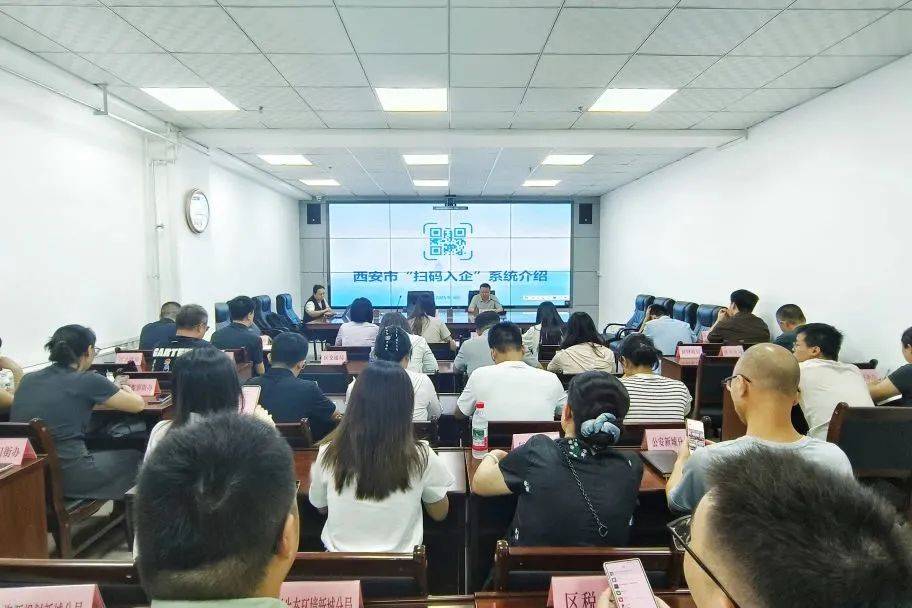
“扫码入企”培训 规范涉企行政检查优化营商环境
Sou Hu Cai Jing· 2025-08-14 00:03
Core Viewpoint - The "Scan into Enterprise" system is an innovative mechanism aimed at standardizing administrative inspections and enhancing the operational capabilities of law enforcement teams, promoting transparency and regulatory compliance in business environments [1][3]. Group 1: System Overview - The "Scan into Enterprise" system utilizes information technology to regulate administrative law enforcement actions, assigning a unique "administrative inspection code" for each inspection [3]. - Law enforcement personnel must present this code before entering a business, which includes details about the enforcement unit, inspection items, and legal basis, ensuring a traceable and transparent inspection process [3]. Group 2: Training and Implementation - A specialized training session was organized to enhance the practical skills of law enforcement teams regarding the "Scan into Enterprise" system, focusing on core processes such as online application approval, task distribution, and real-time data entry during inspections [3]. - The training employed a "full-process practical + scenario-based teaching" approach, ensuring participants comprehensively understood the system's functionalities and operational techniques [3]. Group 3: Future Directions - The new district aims to fully implement the "Scan into Enterprise" mechanism to improve law enforcement quality and efficiency, fostering a legal business environment that minimizes unnecessary disruptions while being responsive to business needs [3]. - This initiative is expected to provide a solid foundation for high-quality regional economic development through digital regulation [3].