交叉比率

Search documents
商超变革:要做减法
3 6 Ke· 2025-12-24 06:49
Core Insights - The retail industry is experiencing a stark contrast, with leading players like Pang Donglai, Aoleqi, and Sam's Club thriving, while traditional giants like Zhongbai Group are facing significant challenges, including the closure of 30 stores and an estimated loss of 180 million yuan due to these closures [1][2] Group 1: Store Management - Retail companies are advised to reduce the number of underperforming stores and focus on high-quality assets, as many stores have become financial burdens in the current market environment [3][4] - A comprehensive evaluation system for stores should be established, assessing profitability and external factors to determine which stores to close or support for improvement [4] - The process of closing stores should involve careful planning and communication with stakeholders to minimize losses and protect brand reputation [5] Group 2: Organizational Efficiency - Traditional retail companies often suffer from excessive organizational complexity, leading to inefficiencies; thus, streamlining departments and clarifying responsibilities is essential [8][9] - Reducing personnel should focus on optimizing the workforce structure, directing resources towards core business areas, and aligning compensation with performance [10] - Decision-making processes should be simplified to enhance responsiveness and efficiency, utilizing digital tools for better communication and data management [11][12] Group 3: Product Management - Retailers need to optimize their SKU structure by eliminating low-performing products and focusing on high-efficiency core items, guided by metrics like the cross-ratio [13][14] - The approach to product selection should avoid the misconception that more products equate to better sales; instead, a focus on familiar brands and essential items is recommended [13] - Regular reviews of product categories should be conducted to adapt to changing market demands and consumer preferences, ensuring a dynamic and relevant product offering [17][18] Conclusion - The principles of efficiency and focused resource allocation are critical for retail companies to navigate the current competitive landscape, emphasizing the need to eliminate redundancies and concentrate on core values [19]

好商品标尺:零售老板一定要懂“交叉比率”
3 6 Ke· 2025-08-25 10:10
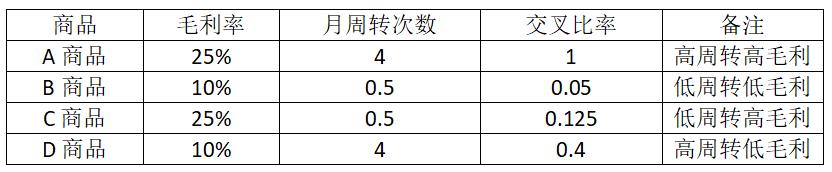
Core Insights - The retail industry is facing unprecedented challenges, including declining foot traffic, inventory buildup, and shrinking profit margins, with 62% of retail companies experiencing stagnation in growth [1] - Identifying core products and leveraging the "Cross Ratio" (CR) is essential for retailers to achieve sales and profit breakthroughs amidst these challenges [1][2] What is Cross Ratio - Cross Ratio (CR) is a tool to identify more profitable products, combining gross margin and inventory turnover to assess product profitability and capital efficiency [2][3] - CR is calculated as: CR = Gross Margin (%) × Inventory Turnover Rate [3] Significance of Cross Ratio - A higher CR indicates greater returns on inventory investment, highlighting the comprehensive value of a product [4] How to Use Cross Ratio for Product Selection - Focus on high CR products and optimize low CR products through data-driven adjustments [5] - Steps include: 1. Replace low CR products and streamline SKUs based on defined evaluation periods and benchmarks [5][6] 2. Classify products in the evaluation list to avoid blind elimination [6] 3. Monitor and replace low CR products with high CR alternatives to maintain customer flow [7] Adjusting Profitability and Turnover Rates - Strategies to enhance low CR products include optimizing display and inventory management for low turnover, high margin items, and negotiating better procurement costs for high turnover, low margin items [8][9] Comparing CR Values Across Categories - Conduct a comprehensive CR value assessment across product categories to identify advantageous segments for resource allocation and category expansion [10][11] Application of Cross Ratio in Chain Systems - Cross Ratio can help address the challenges of store differentiation and standardization by comparing CR values across stores to identify profitability gaps [12][13] - Targeted adjustments based on CR analysis can lead to significant improvements in store performance [15] Final Value of Cross Ratio - Cross Ratio aids retailers in optimizing capital allocation, enhancing store efficiency, and reducing trial-and-error costs, ultimately leading to higher profitability [20][21][22] - The core logic is that a higher CR translates to more profit generated per unit of inventory investment [20] Conclusion - In the current retail landscape of slowing growth and rising costs, data-driven decision-making through Cross Ratio is crucial for retailers to thrive and optimize operations [23][24]