人口流失县城

Search documents
黄金周看点 | 版图悄然重构——“黄金周”县域餐饮消费一线见闻
Xin Hua Cai Jing· 2025-10-08 14:28
Core Insights - The article highlights the transformation of county-level dining scenes in Jiangsu, particularly during the "Golden Week," where there is a significant surge in consumer demand for dining experiences, shifting from traditional banquet-style meals to more diverse and experiential dining options [1][2][4]. Group 1: Dining Trends - The dining landscape in county areas has evolved from being primarily a supplier of ingredients for Huaiyang cuisine to becoming vibrant centers of dining consumption [1]. - There is a notable increase in consumer demand during holidays, with restaurants experiencing overwhelming bookings, leading to a situation where securing a table becomes challenging [2]. - Consumers are moving away from traditional lavish banquet packages towards a preference for unique dining experiences that emphasize culture and specialty [4]. Group 2: Population Dynamics - The article discusses the "migrant bird" phenomenon, where a significant portion of the labor force migrates for work, resulting in a temporary influx of consumers during holidays as they return home [2][3]. - Data indicates that many counties in Jiangsu have experienced a net outflow of population over the past decade, with only a few areas showing positive growth [3]. Group 3: New Business Models - To combat seasonal downturns, many mid-sized hotels in county areas are adopting a new sales model called "cooked food takeaway," which allows them to sell freshly prepared meals directly to residents [6][7]. - This model not only helps hotels manage costs during off-peak seasons but also meets the demand for convenient and nutritious meal options among local residents [6][7]. Group 4: Consumer Preferences - There is a shift in consumer preferences towards quality experiences, with an increasing number of dining establishments offering diverse culinary options, including international cuisines and unique dining formats [5]. - The rise of experiential dining reflects a broader trend of consumers seeking quality and variety in their dining experiences, moving beyond basic needs [5].
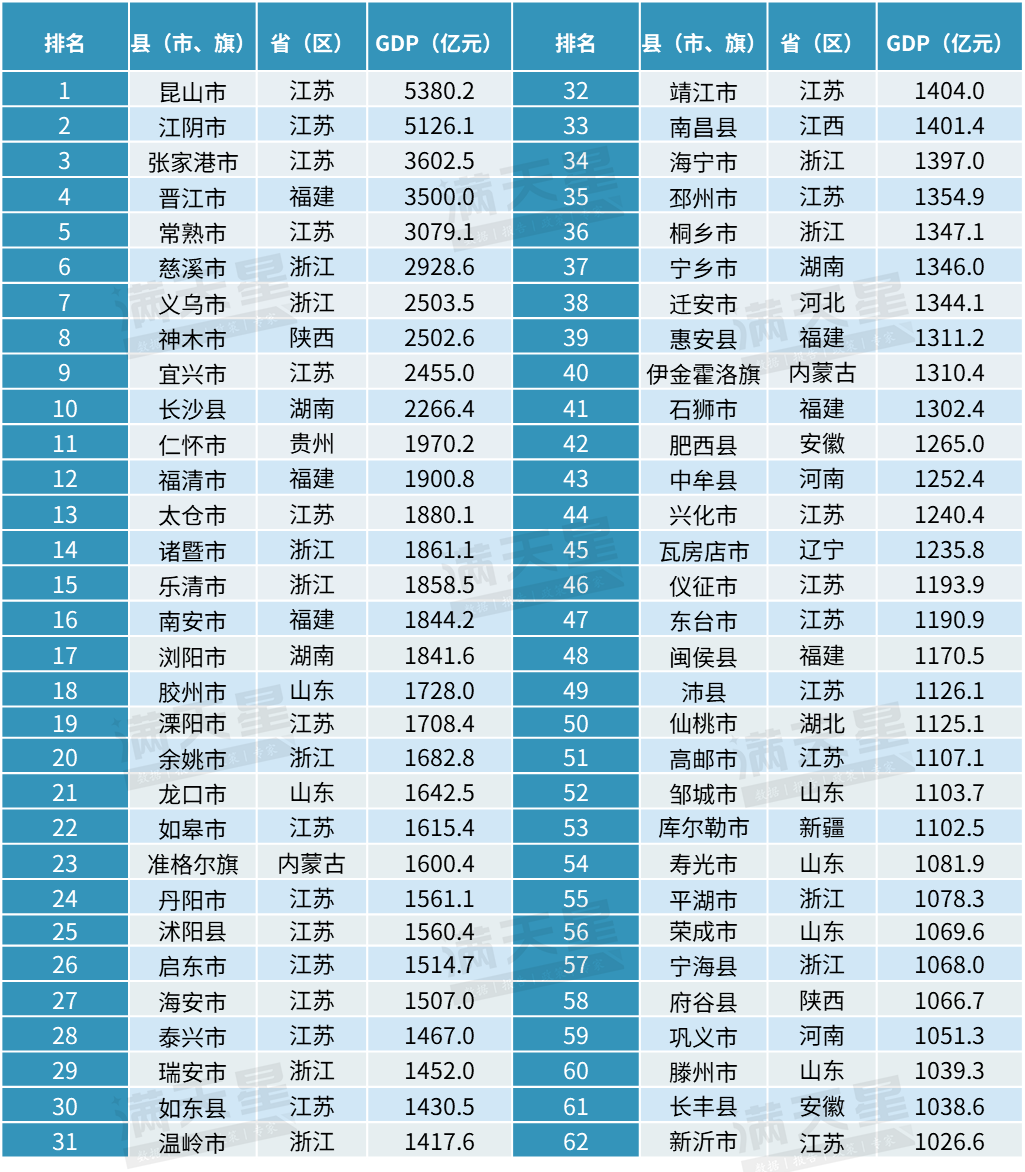
62个千亿县,谁在领跑?
Hu Xiu· 2025-04-21 09:54
Group 1 - The core viewpoint is that cities with GDP exceeding one trillion and counties with GDP exceeding one hundred billion are essential for regional economic development [2][4] - There are 62 counties in China with GDP exceeding one hundred billion, contributing 7.8% of the national GDP with only 1.3% of the land area [4][6] - The top ten counties by GDP are primarily located in the eastern coastal regions, with eight in this area and two in the central and western regions [8][9] Group 2 - The leading counties in GDP are dominated by Jiangsu and Zhejiang, which together account for about 80% of the total [9][12] - The emergence of new hundred billion counties is expected to continue, with 24 new counties added since 2020 [4][17] - The counties are categorized into three types: manufacturing strong counties, resource-rich counties, and counties surrounding major cities [22][30] Group 3 - The manufacturing strong counties are primarily found in developed coastal provinces like Jiangsu, Zhejiang, and Fujian [23][24] - Resource-rich counties are mainly located in the central and western regions, relying on natural resources for economic strength [30][32] - Counties surrounding major cities benefit from urban spillover effects and have strong economic ties to their respective metropolitan areas [27][35] Group 4 - The article highlights the challenges faced by smaller counties, with many experiencing population decline and economic difficulties [40][45] - It discusses the need for administrative reforms in small counties to address fiscal sustainability and population retention [46][48] - The potential for merging smaller counties is suggested as a solution to reduce administrative costs and improve efficiency [52][54]