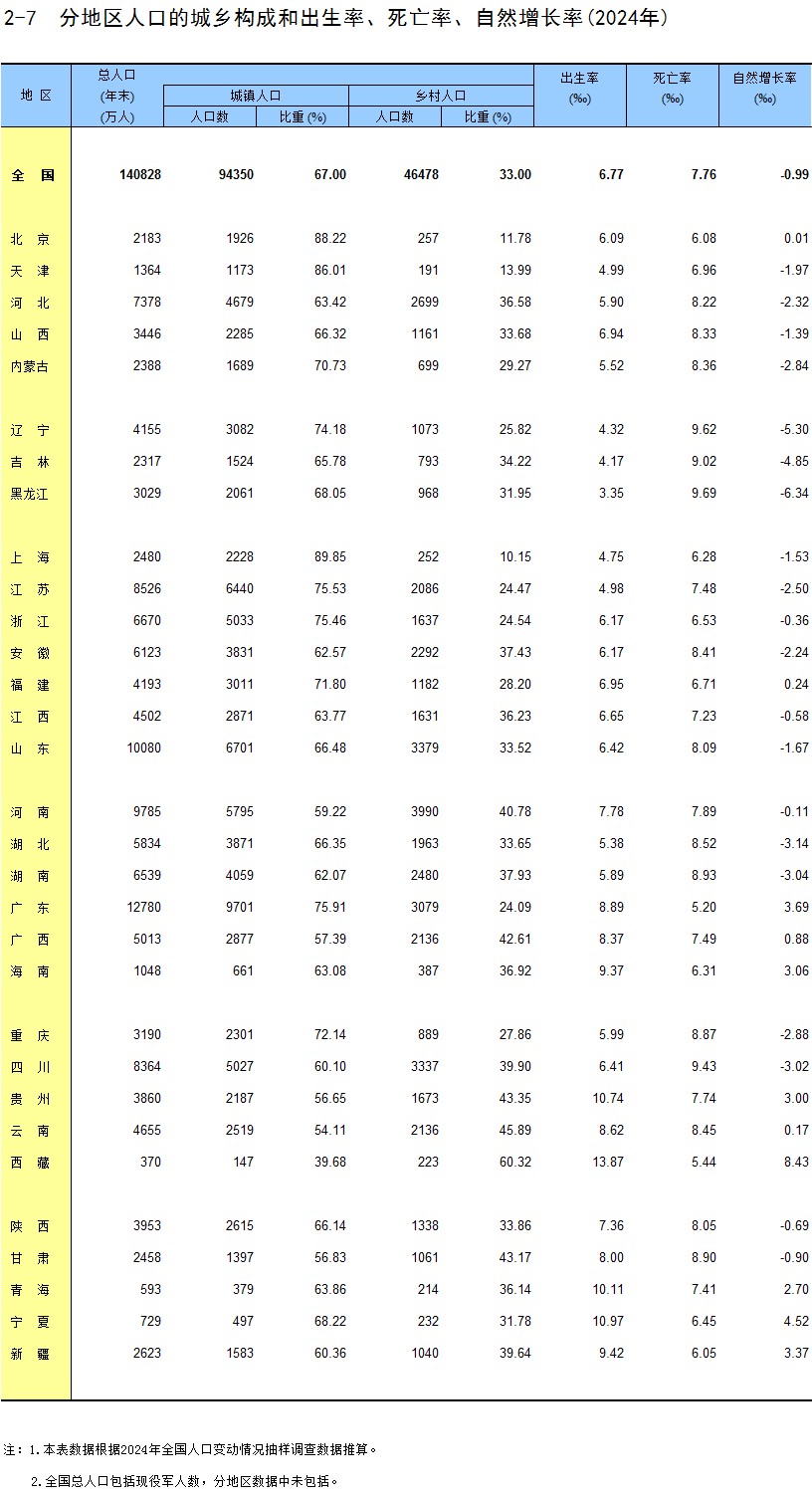
人口自然增长率

Search documents
多省份公布2025年人口数据
Di Yi Cai Jing Zi Xun· 2026-02-27 08:46
Group 1 - Multiple provinces have released their population data for the year 2025, indicating varying trends in population growth and urbanization rates [2][3] - Hainan's permanent population is projected to reach 10.55 million by the end of 2025, an increase of 70,000 from the previous year, with an urbanization rate of 64.08%, up by 1.00 percentage points [2] - Guangdong's permanent population is expected to be 128.59 million by the end of 2025, increasing by 790,000, with a birth rate of 7.82‰ and a death rate of 5.56‰, resulting in a natural growth of 29,000 and a natural growth rate of 2.26‰ [2] - Guangdong has maintained its status as the only province with over one million births for six consecutive years, influenced by traditional fertility culture and local birth incentive policies [2] Group 2 - In contrast, Guangxi's population is projected to decrease by 240,000 to 49.89 million, with a birth rate of 7.20‰ and a death rate of 8.10‰, leading to a natural growth rate of -0.90‰ [3] - Guizhou's population is expected to decline by 30,000 to 3.857 million, with a birth rate of 9.25‰ and a death rate of 7.98‰, resulting in a natural growth rate of 1.27‰ [3] - Gansu's population is also projected to decrease by 15,000 to 2.443 million, with a birth rate of 6.65‰ and a death rate of 8.94‰, leading to a natural growth rate of -2.29‰ [3] Group 3 - Guangdong continues to experience high mechanical population growth, with a net inflow of approximately 500,000 people, driven by local industrial development and talent attraction [3] - Liaoning and Hubei have also reported net population inflows, with Liaoning seeing a net inflow of 45,000 people [4] - Hubei's economy reached 6.27 trillion yuan with a growth rate of 5.5%, making it the only province in Central China to experience a net population inflow [4]


海南去年常住人口增加7万人 多省份公布2025年人口数据
Di Yi Cai Jing Zi Xun· 2026-02-27 08:26
Group 1: Population Data Overview - Multiple provinces have released their population data for 2025, indicating varying trends in population growth and demographics [1][2] - Hainan's permanent population is projected to reach 10.55 million by the end of 2025, an increase of 70,000 from the previous year, with an urbanization rate of 64.08%, up by 1.00 percentage points [1] - Guangdong's permanent population is expected to be 128.59 million, increasing by 790,000, with a birth rate of 7.82‰ and a death rate of 5.56‰, resulting in a natural growth of 290,000 and an urbanization rate of 76.58%, up by 0.67 percentage points [1] Group 2: Birth and Death Rates - Guangdong has maintained its status as the only province with over one million births for six consecutive years, reflecting a strong birth culture supported by local incentives [1] - In contrast, Guangxi, Guizhou, and Gansu have reported population declines, with Guangxi's population decreasing by 240,000 and a natural growth rate of -0.90‰ [2] - Guizhou's population decreased by 30,000, with a birth rate of 9.25‰ and a natural growth rate of 1.27‰, while Gansu's population fell by 150,000, with a birth rate of 6.65‰ and a natural growth rate of -2.29‰ [2] Group 3: Migration Trends - Guangdong continues to experience high levels of mechanical population growth, with a net inflow of approximately 500,000 people, driven by local industrial development [2] - Liaoning and Hubei have also reported net population inflows, with Liaoning seeing a net inflow of 45,000 people [2] - Hubei has become the only province in Central China to experience a net population inflow, alongside a GDP growth of 5.5% and a high-tech industry value added accounting for 23% of its GDP [3]
连续两年人口减少,重庆吸引力下降?真相是→
第一财经· 2025-11-30 04:34
Core Viewpoint - Despite a decrease in the overall population of Chongqing in recent years, the population in the main urban area continues to grow, indicating the city's strong attraction and population aggregation ability [2][4][7]. Population Trends - The total population of Chongqing was 31.90 million at the end of 2024, with the main urban area housing 21.83 million residents, accounting for 68.43% of the total population, an increase of 0.48 percentage points since 2020 [2]. - The overall population of Chongqing has shown a declining trend, with a decrease of 219,100 people by the end of 2023 and an additional decrease of 9,600 people projected for the end of 2024 [4][5]. Demographic Challenges - Population aging is a significant factor contributing to the decline, with 8.01 million individuals aged 60 and above, resulting in an aging rate of 25.11%, which is 3.1 percentage points higher than the national average [4]. - The birth rate in Chongqing has been declining, with 191,000 births in 2024, leading to a natural population growth rate of -2.88‰ [4]. Urban Area Dynamics - The main urban area of Chongqing is characterized by a multi-center, multi-level, and multi-node urban spatial structure, comprising 21 districts and counties [2]. - The population in the main urban area has been steadily increasing, with a reported 21.12 million residents in 2020, rising to 21.83 million in 2024, reflecting a growth of approximately 43,600 people [6][7]. Economic and Employment Factors - The main urban area of Chongqing has become a major destination for population inflow due to its economic development, job opportunities, and abundant public resources, similar to the trend observed in other provinces where urban centers attract population while surrounding areas decline [7].
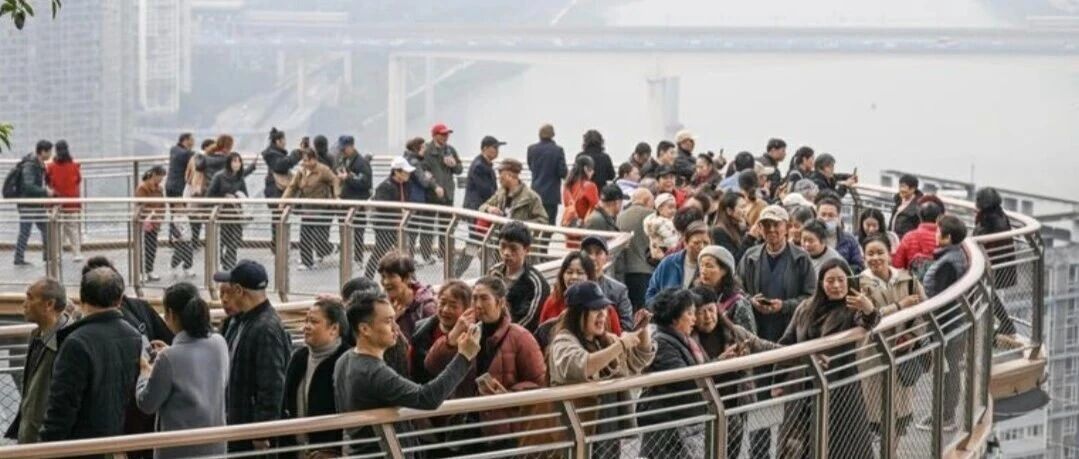
连续两年人口减少,重庆吸引力下降?真相是—>
Di Yi Cai Jing· 2025-11-29 15:28
Core Insights - The overall population growth trend in Chongqing has turned negative in recent years, contrasting with the previous growth observed until 2022 [2] - Despite the decline in total population, the main urban area of Chongqing continues to attract residents, indicating strong urban agglomeration effects [1][4] Population Trends - As of the end of 2024, Chongqing's total population is projected to be 31.90 million, with the main urban area housing 21.83 million, accounting for 68.43% of the total population [1] - The total population of Chongqing decreased by 219,100 in 2023 and is expected to decrease by another 9,600 in 2024 [2] - The aging population is a significant factor in the decline, with 8.01 million people aged 60 and above, representing an aging rate of 25.11% [2] Birth and Death Rates - In 2024, the birth rate in Chongqing is projected to be 5.99‰, with a total of 191,000 births, while the death rate is expected to be 8.87‰, with 283,000 deaths, resulting in a natural population growth rate of -2.88‰ [3] Urban Area Dynamics - The main urban area of Chongqing has shown consistent population growth, with a recorded population of 21.12 million in 2020, increasing to 21.83 million in 2024 [4] - The center city area has experienced a population increase of 0.7%, while other regions within the urban area have seen slight declines [4] Economic and Resource Factors - The main urban area of Chongqing has become a focal point for population inflow due to its economic development, job opportunities, and abundant public resources, mirroring the trend of "province reduction and capital city increase" seen in other regions [5]
31省份去年人口出生率数据公布:哪些省份生娃多?
第一财经· 2025-10-26 05:48
Core Insights - In 2024, China's total birth population reached 9.54 million, an increase of 520,000 from 2023, with a birth rate of 6.77‰, up by 0.38‰ from the previous year [3][4] - The data from the "China Statistical Yearbook 2025" reveals that 10 provinces had birth rates at or above 8‰, and 11 provinces maintained positive natural growth rates [3][4] Provincial Birth Rates - Guangdong continued to be the leading province in terms of birth population, with 1.13 million births in 2024, an increase of 100,000 from the previous year, marking its seventh consecutive year as the top birth province [4][5] - Other provinces with significant birth populations included Henan (762,000), Shandong (649,000), and Sichuan (536,000), with the top ten provinces accounting for 58.6% of the national birth population [4][5][6] Natural Growth Rates - A total of 11 provinces experienced positive natural growth rates in 2024, primarily located in the western and eastern coastal regions, including Tibet, Ningxia, Xinjiang, and Guangdong [6][7] - The overall population growth in 31 provinces showed that 8 provinces had positive growth, with Guangdong, Zhejiang, and others leading the trend [6][7] Demographic Trends - The article highlights that regions with higher birth rates often have lower urbanization rates, although exceptions exist, such as Guangdong, which has a high urbanization rate of 75.91% yet maintains a birth rate of 8.89‰ [3][4] - The demographic structure in provinces like Guangdong is influenced by a large influx of young, marriage-age individuals, contributing to higher birth rates [4][5]

31省份去年人口出生率数据公布:哪些省份生娃多?
Di Yi Cai Jing· 2025-10-26 05:41
Core Insights - In 2024, China's national birth population reached 9.54 million, an increase of 520,000 from 2023, with a birth rate of 6.77‰, up by 0.38‰ from the previous year [1] - The data from the "China Statistical Yearbook 2025" reveals that 10 provinces had birth rates at or above 8‰, and 11 provinces maintained positive natural growth rates [1] Provincial Birth Rates - In 2024, 14 provinces had birth rates higher than the national average, with 10 provinces exceeding 8‰, including Tibet, Ningxia, Guizhou, Qinghai, Xinjiang, Hainan, Guangdong, Yunnan, Guangxi, and Gansu [1] - Guangdong continued to lead as the top birth province with 1.13 million births, an increase of 100,000 from the previous year, marking its seventh consecutive year as the top province for births [2] Population Growth Analysis - The birth population in Henan was 762,000, an increase of 67,000 from the previous year, with a birth rate of 7.78‰, while Shandong had 649,000 births, an increase of 39,000 [3] - A total of 11 provinces experienced positive natural growth rates, including regions from both the western and eastern coastal areas [3] Resident Population Changes - Among 31 provinces, 8 experienced positive growth in resident population, while 3 remained stable [4] - The provinces with positive growth included Guangdong, Zhejiang, Xinjiang, Fujian, Hainan, Tibet, Anhui, and Shaanxi [4]