
人口集聚

Search documents
浙江去年常住人口增加31万人
第一财经· 2026-03-03 13:13
Core Viewpoint - The article highlights the ongoing trend of population migration towards economically developed regions in China, particularly the Yangtze River Delta and Pearl River Delta, with specific data from various provinces indicating population changes and urbanization rates [3][4]. Population Data Summary - Zhejiang Province's permanent resident population reached 67.01 million by the end of 2025, an increase of 310,000 from the previous year, with an urbanization rate of 76.4% [3]. - Among the eight provinces that have released 2025 population data, only three saw an increase: Zhejiang (+310,000), Hainan (+70,000 to 10.55 million), and Guangdong (+790,000 to 128.59 million) [4]. Migration Trends - The article notes that Zhejiang experienced a net inflow of 389,000 people from other provinces, underscoring its attractiveness for migration [3]. - Guangdong's population growth is attributed to a large influx of young migrants, with 29.62 million external migrants recorded in 2020, an increase of 8.12 million since 2010 [5]. Urbanization and City Attraction - There is a continuous trend of rural populations moving to urban areas, leading to increased urbanization rates, particularly in economically vibrant regions [7]. - Major cities in central and western China, such as Wuhan, Chengdu, and Zhengzhou, are rapidly attracting populations due to their economic development, educational opportunities, and lower living costs compared to first-tier cities [7].


钱塘高铁新城首批开工道路竣工验收
Hang Zhou Ri Bao· 2026-01-09 02:32
Core Insights - The construction of the Qiantang High-speed Railway New City has reached a significant milestone with the completion and acceptance of the first batch of road projects, including Hongtu Road, Yipeng East Road, Heng Er Road, Zong Ten Road, and Zong Nine Road [1] Infrastructure Development - Hongtu Road, approximately 1290 meters long and 32 meters wide, connects from the Toupeng Expressway to Yipeng East Second Road, serving as a crucial access route to the Qiantang High-speed Railway Station [1] - Yipeng East Road, measuring 850 meters in length and 32 meters in width, runs from Jiangdong Avenue to Hejing Road, also facilitating access to the railway station [1] - Heng Er Road, 1290 meters long and 24 meters wide, features two lanes in each direction, while Zong Ten Road, at 1140 meters long and 32 meters wide, has four lanes in each direction [1] - Zong Nine Road is 490 meters long with two lanes in each direction, contributing to the internal traffic network of the Qiantang High-speed Railway New City [1] Future Prospects - The completion of additional transportation infrastructure, such as Qinglong Road and Fenglou Road, is expected to enhance the traffic network in the Qiantang High-speed Railway New City, supporting industrial upgrades, population growth, and improvements in living standards [1]
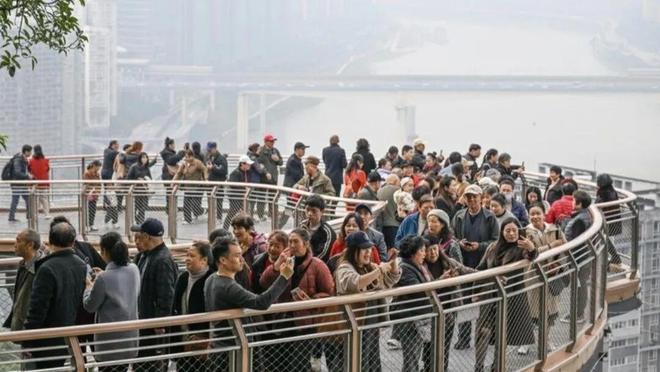
连续两年人口减少,重庆吸引力下降?真相是→
Di Yi Cai Jing Zi Xun· 2025-12-01 07:09
Core Insights - Despite a decrease in the overall population of Chongqing in recent years, the population in the main urban area continues to grow, indicating a strong urban agglomeration effect [2][5] - The total population of Chongqing is projected to be 31.90 million by the end of 2024, with the main urban area accounting for 21.83 million, representing 68.43% of the total population [2][5] - The urban planning strategy aims to accommodate a population of 36 million across three coordinated development regions, with the main urban area identified as a key zone for high-quality development [2][3] Population Trends - Chongqing's overall population growth has reversed, with a decrease of 219,100 in 2023 and an additional decrease of 9,600 projected for 2024 [3][4] - The aging population is a significant factor in the decline, with 8.01 million individuals aged 60 and above, resulting in an aging rate of 25.11%, which is 3.1 percentage points higher than the national average [4][5] - The birth rate in Chongqing has been declining, with 191,000 births in 2024 and a natural population growth rate of -2.88‰ [4][5] Urban Area Dynamics - The main urban area of Chongqing has shown a consistent increase in population, with a recorded population of 21.12 million in 2020, rising to 21.83 million in 2024, marking a growth of approximately 43,600 [5] - The center city area has experienced a population increase of 0.7%, while the surrounding regions have seen slight declines, indicating a concentration of population in the urban core [5] - The urban area has become a primary destination for population inflow from surrounding regions due to its economic development, job opportunities, and rich public resources [5]
连续两年人口减少,重庆吸引力下降?真相是—>
Di Yi Cai Jing· 2025-11-29 15:28
Core Insights - The overall population growth trend in Chongqing has turned negative in recent years, contrasting with the previous growth observed until 2022 [2] - Despite the decline in total population, the main urban area of Chongqing continues to attract residents, indicating strong urban agglomeration effects [1][4] Population Trends - As of the end of 2024, Chongqing's total population is projected to be 31.90 million, with the main urban area housing 21.83 million, accounting for 68.43% of the total population [1] - The total population of Chongqing decreased by 219,100 in 2023 and is expected to decrease by another 9,600 in 2024 [2] - The aging population is a significant factor in the decline, with 8.01 million people aged 60 and above, representing an aging rate of 25.11% [2] Birth and Death Rates - In 2024, the birth rate in Chongqing is projected to be 5.99‰, with a total of 191,000 births, while the death rate is expected to be 8.87‰, with 283,000 deaths, resulting in a natural population growth rate of -2.88‰ [3] Urban Area Dynamics - The main urban area of Chongqing has shown consistent population growth, with a recorded population of 21.12 million in 2020, increasing to 21.83 million in 2024 [4] - The center city area has experienced a population increase of 0.7%, while other regions within the urban area have seen slight declines [4] Economic and Resource Factors - The main urban area of Chongqing has become a focal point for population inflow due to its economic development, job opportunities, and abundant public resources, mirroring the trend of "province reduction and capital city increase" seen in other regions [5]
人口暴涨近500万,成都凭什么
投资界· 2025-07-10 03:21
Core Viewpoint - Chengdu has experienced significant population growth, with a 30% increase over the past five years, reaching a resident population of 21.47 million, which has elevated its urbanization rate above the national average [3][4][5]. Population Growth and Composition - Chengdu's resident population increased from 16.58 million to 21.47 million over five years, with a net increase of nearly 4.9 million [3][4]. - In 2020, Chengdu's resident population was 20.93 million, with 6.39 million being external migrants, accounting for 31% of the total population [5][6]. - The majority of incoming migrants are from within Sichuan province (77%), with notable external migration from Chongqing and Henan [5][6][7]. Reasons for Migration - The primary reasons for migration to Chengdu are employment (55%) and education (13%) [8]. - Chengdu's rich educational resources have led to an increase in university students from 972,000 in 2019 to 1.307 million by 2024, ranking fourth nationally [9]. Labor Market Dynamics - The job market in Chengdu has become increasingly competitive, with a decrease in the job-seeker ratio from 2.39 in Q1 2021 to 1.43 in Q1 2025, indicating a tightening labor market [13]. - Despite the competitive environment, Chengdu's job market remains attractive, with a significant increase in job offerings, growing from 59,400 in Q1 2021 to 1.0165 million in Q1 2025 [13]. Economic Development and Population Density - Chengdu's population density in 2024 is projected to be 1,498 people per square kilometer, significantly lower than the threshold identified for economic development [15][16]. - Scholars suggest that China's urban population density is still lagging behind developed countries, indicating potential for further growth [16]. Quality of Life and Living Conditions - Chengdu is recognized for its livability, being ranked as the top new first-tier city for 11 consecutive years and the happiest city for 16 years [19]. - The city offers a vibrant lifestyle with a mix of modern amenities and cultural experiences, making it appealing for residents [22][24]. - Rental prices in Chengdu are lower compared to first-tier cities, with newer housing options available [23]. Conclusion - Chengdu's rapid population growth, competitive job market, and high quality of life contribute to its status as a major urban center in China, attracting both internal and external migrants [3][4][19][24].

针对性提出十六项政策措施 呼和浩特诚意满满留人才
Nei Meng Gu Ri Bao· 2025-07-08 02:07
Group 1 - The core focus of Hohhot is on attracting and retaining the youth population through 16 targeted policy measures aimed at enhancing the city's demographic quality and development [1] - The city has launched a "combination punch" of population aggregation policies, building on the previous 18 measures, to address key areas of concern for the youth, including employment, housing, education, and healthcare [1] - A total of 450.75 million yuan has been allocated in entrepreneurial support loans and subsidies to 59 entities and individuals, demonstrating the city's commitment to attracting young talent [1] Group 2 - The Hohhot Housing and Urban-Rural Development Bureau has developed a new housing subsidy application system that integrates with the real-time data of the city's property registration center to enhance service efficiency [2] - Since March, 2,867 new housing subsidies have been applied for, resulting in a transaction volume of 4.3 billion yuan in new homes [3] - The city has streamlined the application process for childcare subsidies, reducing the review period from 30 days to 3 days, with a 63% issuance rate, an increase of 41.5% from the initial issuance [3] Group 3 - Hohhot is addressing structural employment issues by organizing 505 recruitment events, providing 330,000 job opportunities, and achieving employment intentions for 91,000 individuals [4] - The city has implemented a comprehensive action to clean up the labor market, ensuring full coverage of inspections on human resource service agencies and tackling issues like wage arrears [4] - The case resolution rate for wage disputes has reached 98.6%, indicating a stable employment environment [4]