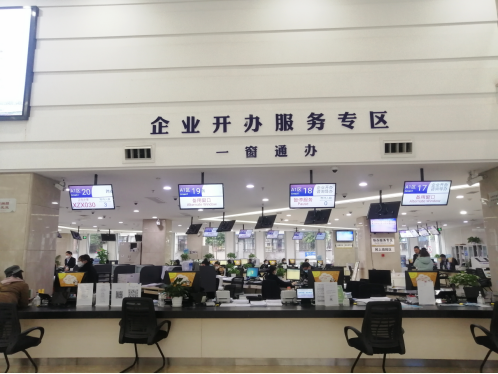
人工智能在政务服务中的应用

Search documents
辽宁深化“不见面审批”“高效办成一件事”
Xin Lang Cai Jing· 2026-01-06 20:32
Core Viewpoint - The "2026 Action Plan for Optimizing the Business Environment" has been issued by the Liaoning Provincial Data Bureau, aiming to enhance the convenience of administrative services for enterprises and the public through 24 key measures across five areas [3][4]. Group 1: Key Measures - The plan includes the implementation of seven initiatives, such as "one matter" standardized processing, "one door" centralized handling, and "one network" full online processing, to improve service efficiency [3]. - It emphasizes the standardization of administrative service items, promoting a "no difference in acceptance" principle across the province, ensuring that the same matter is handled uniformly [4]. - The plan aims to enhance offline services by integrating administrative service items into comprehensive service venues, promoting various service models like "guest halls" and "shoulder-to-shoulder" services [5]. Group 2: Digital and Smart Services - The plan promotes the "mobile office" concept, expanding the functionalities of services like "Liaoning Service" and "Liaoning Enterprise" to provide more convenient mobile services [5]. - It aims to strengthen data sharing and service integration, enhancing the user experience through applications like "one code for all" and "one code for processing" [7]. - The use of artificial intelligence in administrative services is encouraged to automate processes such as form filling and document generation, reducing manual intervention [7]. Group 3: Monitoring and Evaluation - The Liaoning Provincial Data Bureau will conduct dynamic monitoring of the operational status of administrative services, implementing a feedback loop for issue discovery and resolution [8]. - The plan includes mechanisms for evaluating service efficiency based on feedback from enterprises and grassroots personnel, aiming for continuous improvement in service delivery [8].

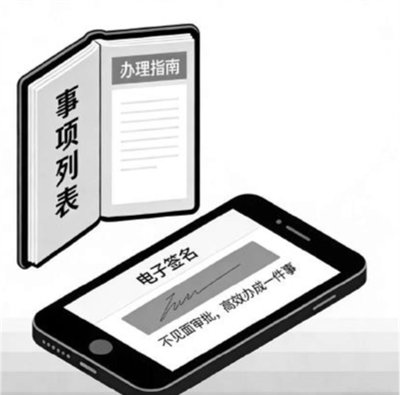
辽宁省数据局出台24项重点举措!全面提升企业群众办事便利度
Xin Lang Cai Jing· 2025-12-27 16:37
Core Viewpoint - The article discusses the "2026 Action Plan for Optimizing the Government Service Environment" issued by the Liaoning Provincial Data Bureau, which outlines 24 key measures across five areas to enhance government services and promote efficiency in administrative processes. Group 1: Key Measures for Government Service Optimization - The plan includes the implementation of seven initiatives, such as "one matter" standardized processing and "one window" comprehensive acceptance, aimed at improving the efficiency of government services [1] - It emphasizes the need for a standardized management of government service items, ensuring that all services are uniformly processed across the province [1] - The plan mandates the specification of application materials for government services, eliminating vague descriptions and preventing the use of "catch-all" documents [1] Group 2: Enhancements in Service Delivery - The initiative promotes the integration of all government service items into a unified online platform, ensuring timely archiving of electronic documents generated during the service process [2] - It aims to expand mobile service functionalities through platforms like "Liaoning Service" and "Liaoning Enterprise," providing more accessible services for citizens and businesses [3] - The plan includes measures to improve the quality and efficiency of the "immediate response" service, enhancing mechanisms for handling public inquiries and complaints [3] Group 3: Streamlining Application Processes - The action plan encourages the elimination of unnecessary application materials, allowing for data sharing and verification to reduce the burden on applicants [4] - It promotes the concept of "no application required" for certain policies and services, enabling direct access to benefits for businesses and citizens [4] - The plan also focuses on enhancing service delivery at the grassroots level, ensuring that services are available closer to communities [4] Group 4: Technological Integration and Data Utilization - The initiative includes the development of intelligent guidance services to assist applicants in navigating the process more efficiently [5] - It aims to leverage artificial intelligence to enhance online service experiences, automating the completion and verification of application forms [5] - The plan emphasizes the creation of high-quality data sets for government services, promoting open sharing and circulation of data [6] Group 5: Performance Monitoring and Feedback Mechanisms - The action plan establishes a dynamic monitoring system for evaluating the effectiveness of government services across different regions and departments [6] - It introduces a feedback mechanism to identify and rectify service issues, promoting continuous improvement in service delivery [6] - The plan encourages evaluations from both businesses and grassroots personnel to enhance service efficiency and optimize processes [6]
成都金牛区:深化“金小二事前服务”改革 进阶打造企业群众贴心“创业助理”
Zhong Guo Fa Zhan Wang· 2025-10-22 08:19
Core Viewpoint - Chengdu's Jin Niu District is enhancing entrepreneurial services by implementing proactive reforms and digital solutions, aiming to create a comprehensive "entrepreneurial assistant" model that supports businesses throughout their lifecycle [1][12]. Group 1: Service Innovations - The district has introduced the "Jin Xiao Er" service brand, transitioning from reactive assistance to proactive support, which includes a digital platform for entrepreneurs [1][3]. - An AI-driven customer service system, "AI Jin Xiao Er," provides 24/7 support, achieving a 100% response rate to common inquiries, significantly improving accessibility to policy information [3][4]. - The "Jin Niu Service" WeChat public account has launched a mini-program for real-time guidance on high-frequency matters, enhancing the clarity of compliance standards for entrepreneurs [4][10]. Group 2: Streamlined Processes - The district has reduced approval times for various business-related services, such as cutting the approval period for large events from 20 to 5 working days, thereby enhancing operational efficiency [6][7]. - A comprehensive service model has been established, integrating various business support services into a "one-stop" service center, facilitating quicker responses to entrepreneurial needs [7][8]. - The district has processed 22,206 business registrations and changes from January to September 2025, indicating a robust entrepreneurial environment [7]. Group 3: Policy Support and Outreach - Jin Niu District has developed a policy service platform that categorizes over 40 local policies and 177 related matters, ensuring entrepreneurs can easily access relevant information [8][10]. - The district has implemented a proactive outreach strategy, including live broadcasts and promotional events, to enhance awareness of available policies and services, reaching over 14,000 viewers [11][12]. - Collaborative efforts have been made to strengthen the connection between regulatory bodies and entrepreneurs, optimizing the approval process and enhancing service delivery [11]. Group 4: Future Directions - The district plans to further deepen the "Jin Xiao Er" service reforms and expand the use of AI in pre-approval services and risk management, aiming to set a new standard for efficient and supportive government services [12].