人工智能引领科研范式变革

Search documents
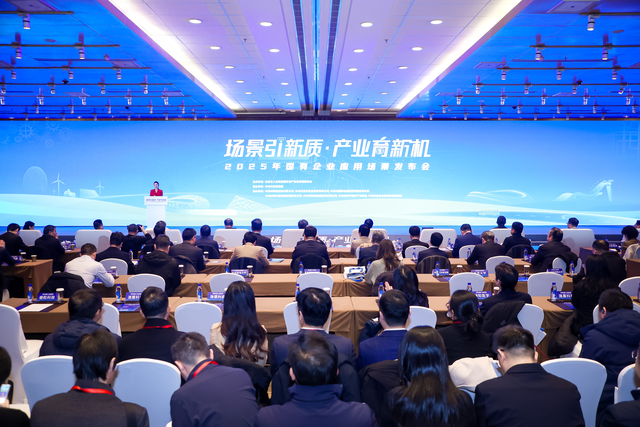
牵引关键核心技术攻关,北京国企发布三大领域百余应用场景
Bei Jing Ri Bao Ke Hu Duan· 2025-12-20 13:49
Core Insights - The Beijing State-owned Enterprises Application Scenarios Release Conference was held on December 20, focusing on three key areas: smart city construction, industrial transformation and upgrading, and cutting-edge technology [1][3] - Over 100 application scenario demand projects were released, showcasing the integration of technology and industry, and aiming to drive the upgrade of the industrial system [1][3] Group 1: Application Scenarios - Since 2021, the Beijing State-owned Assets Supervision and Administration Commission has organized five sessions of the application scenarios release conference, resulting in over 500 high-quality application scenario projects [3] - The conference released three key documents: the "2025 White Paper on Application Scenarios of State-owned Enterprises," the "2025 Collection of Cutting-edge Technological Capabilities of Municipal Enterprises," and the "2025 Collection of Cutting-edge Technological Solutions," highlighting innovative scenarios and technological products [3] - Notable demand projects include the "Rail + Photovoltaic" innovation project for Beijing's rail transit, smart park management systems, and intelligent monitoring robots for elderly care institutions, reflecting the responsibility of state-owned enterprises in social development and their proactive approach to industrial transformation [3] Group 2: AI and New Materials Initiative - The "AI + New Materials" special initiative was launched, involving collaboration among various government bodies and state-owned enterprises to leverage artificial intelligence for research and development [5] - Ten innovative projects with significant impact were signed on-site, focusing on strategic collaboration, technological breakthroughs, and the transformation of research outcomes into practical applications [5] - The initiative aims to create a competitive advantage in the new materials industry through deep integration of technological and industrial innovation [5]

四中全会精神在基层|突破想象!AI机器人成为实验室“主力军”
Xin Hua She· 2025-12-10 12:35
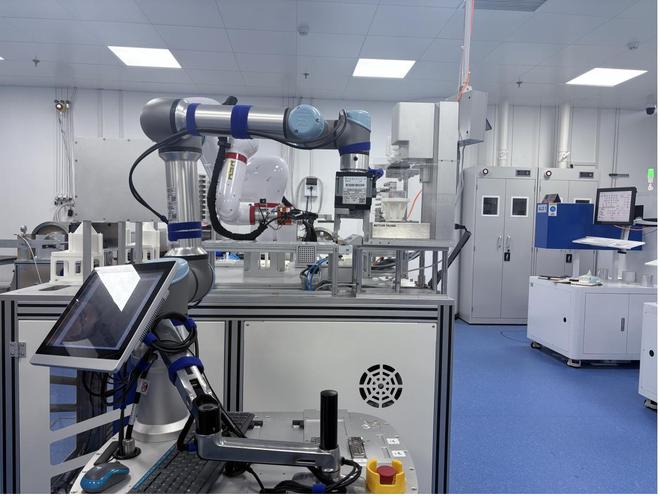
Core Insights - The article discusses the transformation of chemical research through the use of AI-powered "smart scientists" that can autonomously design and conduct experiments, significantly reducing the time and cost associated with material development [1][3][4]. Group 1: AI Integration in Research - The "smart scientists" in the Precision Intelligent Chemistry National Key Laboratory consist of 110 units that can perform tasks such as reagent configuration, sample synthesis, and performance characterization autonomously [1][3]. - These AI systems can continuously conduct experiments and analyze scientific literature, generating experimental designs based on user queries through the AICHEM cloud platform [3][4]. Group 2: Development and Capabilities - The development of the AI platform took three years, compiling over one million chemical data points from textbooks, papers, and patents, along with expert knowledge [3][4]. - The initial version, "Xiao Lai," was capable of performing 2,000 precise operations daily, equivalent to the work of five to six researchers [3][4]. Group 3: Achievements and Future Goals - "Xiao Lai" successfully identified the optimal formulation for a Mars oxygen catalyst in just six weeks, a task that would take human researchers 2,000 years to validate [4]. - The laboratory aims for complete autonomous research capabilities, allowing the AI to discover new research directions and enabling non-chemistry professionals to create new materials [6].

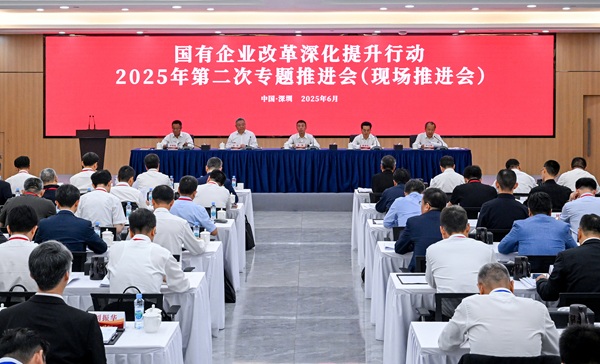
国企改革深化提升行动再部署,AI引领科研范式变革
Di Yi Cai Jing· 2025-06-19 06:03
Group 1: Core Views - The focus of this year's state-owned enterprise (SOE) reform is to achieve high-quality completion of the deepening and enhancement actions, with an average completion rate of over 80% for key reform tasks as of the end of Q1 [1][3] - The State-owned Assets Supervision and Administration Commission (SASAC) emphasizes the importance of enhancing the quality of technological innovation supply and actively promoting artificial intelligence (AI) to lead the transformation of research paradigms in SOEs [1][4] Group 2: Technological Innovation and AI - Central enterprises have established 97 original technology sources and are expected to invest over 1 trillion yuan in R&D from 2022 to 2024 [3] - The rapid evolution of next-generation AI technology is significantly changing production and lifestyle, with a focus on applying AI in research to shift from traditional research logic to data-driven, intelligent collaborative approaches [4][5] Group 3: Investment and Industry Development - In Q1, central enterprises expanded effective investment, with fixed asset investment reaching 851.3 billion yuan, and strategic emerging industry investment growing by 6.6% year-on-year [7] - The SASAC has initiated actions to rejuvenate industries and promote future industries, with companies like China Resources Group increasing investments in strategic emerging industries by 78.1% in 2024 [7] Group 4: Innovation Evaluation and Talent Incentives - The SASAC aims to enhance innovation evaluation and incentive mechanisms, focusing on multi-dimensional evaluation and long-cycle, precise incentive systems [8][9] - Companies like China Minmetals Group and China Electronics Technology Group are actively exploring long-cycle, precise innovation incentive mechanisms, resulting in significant productivity growth [9]