机器狗

Search documents
为何中国大半硬科技“独角兽”,都选了美团
投资界· 2026-03-27 08:31
Core Viewpoint - Meituan is establishing a significant technology investment landscape, highlighted by its early and substantial investment in Yushutech, which is poised for a major IPO valued at over 420 billion yuan [2][4][5]. Investment in Yushutech - Yushutech plans to raise 4.202 billion yuan, indicating an initial market value of at least 420 billion yuan, with expectations of becoming a trillion-level company [2]. - Meituan is the largest external shareholder of Yushutech, holding nearly 10% of the shares, and has been a key investor since the B++ round of financing when Yushutech was valued at only 1 billion yuan [5][6][8]. - Meituan's investment strategy includes not only financial backing but also leveraging its extensive delivery network across 2,800 cities to provide real-world testing environments for robotics [10][20]. Broader Technology Investment Landscape - Meituan has invested in a wide array of technology companies, with 28 unicorns and 7 listed tech firms, including notable investments in Zhizhu and Moer Thread, both of which have achieved market valuations exceeding 300 billion yuan [12][16]. - The company has made early investments in various sectors, including industrial, medical, and retail, with a focus on companies that have achieved significant scale [13][14]. Strategic Shift and Focus - Since its IPO in 2018, Meituan has shifted its investment focus from consumer sectors to hard technology, with over half of its investments in hard tech by 2020 [18][19]. - The company has maintained a high investment ratio in hard technology, with 64% of its investments in this area post-2022, contrasting with a general decline in tech investments among other internet giants [19]. Collaborative Approach - Meituan emphasizes collaboration with its portfolio companies, providing not just capital but also development resources and access to real-world applications, which is crucial for the commercialization of advanced technologies [20][21]. - The company has established partnerships with over 20 global universities for research collaborations, reinforcing its commitment to innovation in hard technology [21]. Future Outlook - Meituan's ongoing investments in AI and robotics, including the deployment of drones and autonomous vehicles, are part of its strategy to enhance user experience and operational efficiency [22]. - The company's technology investments are aligned with national strategies for technological self-reliance and global competitiveness, contributing to significant advancements in China's tech landscape [23].


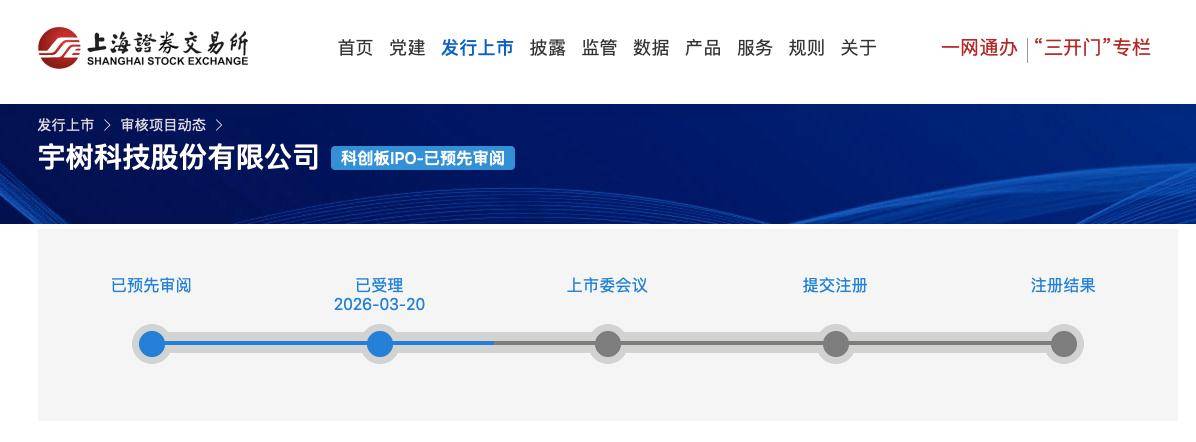
“具身机器人第一股”要来了!宇树科技IPO申请获受理,拟募资42.02亿元,宁波红杉、美团、雷军集体押注,投后估值127亿元
Sou Hu Cai Jing· 2026-03-20 10:25
Group 1 - The company plans to raise 4.202 billion yuan for various projects including intelligent robot model research and development, robot body development, new intelligent robot product development, and the construction of an intelligent robot manufacturing base [2] - From 2022 to September 2025, the company's revenue figures are 123 million yuan, 159 million yuan, 392 million yuan, and 1.167 billion yuan, with net profits of -22.1 million yuan, -11.1 million yuan, 94.5 million yuan, and 105 million yuan respectively [2] - According to a report, the company ranks first globally in terms of shipment volume and market share for humanoid robots, with expected shipments exceeding 5,500 units by 2025 [2] Group 2 - The CEO of the company emphasized the importance of applying robots in industrial settings, stating that the future of robotics lies in factories where robots can produce their own components [3] - The company is controlled by its founder, who holds 68.78% of the voting rights, making him the majority shareholder and actual controller [4] - The shareholder list includes notable investors such as Meituan, Sequoia China, and Matrix Partners, indicating a strong backing from prominent capital [4] Group 3 - The latest market valuation before the upcoming equity financing was 12 billion yuan pre-money and 12.7 billion yuan post-money [6]

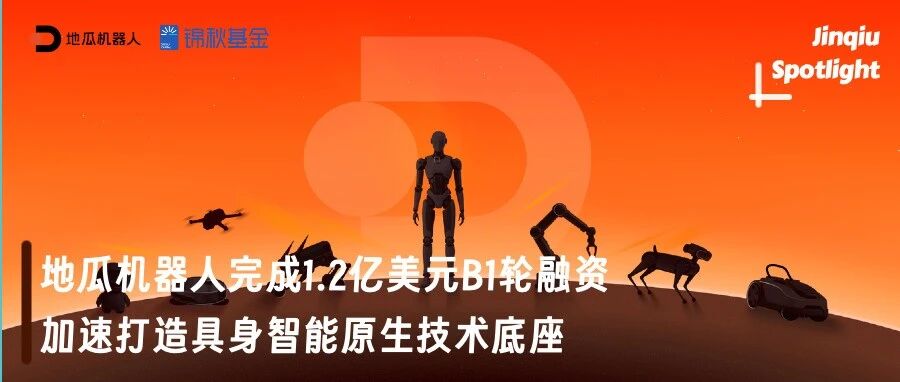
锦秋基金投资地瓜机器人B1轮,构建具身智能原生技术底座|Jinqiu Spotlight
锦秋集· 2026-03-16 04:52
Core Insights - Jinqiu Capital completed an investment in "Sweet Potato Robot" in 2025, focusing on long-term investment in groundbreaking AI startups [1] - Sweet Potato Robot announced a recent completion of $120 million in Series B1 financing on March 16, 2026 [1] Financing Overview - Following a $100 million Series A financing in 2025, the total financing for Sweet Potato Robot reached $220 million across both Series A and B rounds [3] - The latest financing attracted top-tier investors including Syns Tellation Capital, Didi, Meituan Longzhu, and various strategic investment institutions, alongside leading financial investors like Jinqiu Capital [3] - This financing will support the comprehensive development of Sweet Potato Robot's software and hardware technology, enhancing its foundational technology for embodied intelligence [3] Strategic Collaboration - Sweet Potato Robot is recognized as a leading provider of general software and hardware infrastructure for robotics, aiming to facilitate the large-scale implementation of embodied intelligence [5] - The collaboration between Sweet Potato Robot and Jinqiu Capital is based on a shared vision for breakthrough technologies and innovative business models [5][6] - The two entities have engaged in high-frequency collaboration, enhancing the hardware ecosystem within Jinqiu's portfolio [6] Industry Events - Sweet Potato Robot's CEO, along with other industry leaders, participated in the "Jinqiu Small Dining Table" event, fostering discussions on robotics and technology [8] - The "Sweet Potato Brewing House" initiative aims to create an interactive innovation ecosystem, focusing on technology scenarios and entrepreneurial challenges [8] Product Development - Sweet Potato Robot has developed a comprehensive product system covering various robotics categories, including humanoid robots, wheeled robots, and logistics AMRs, with a focus on large-scale production and innovative applications [12] - The company has collaborated with leading clients to produce benchmark products in key areas such as robotic vacuum cleaners and drones, significantly enhancing user experience [12] Technological Advancements - The robotics industry is experiencing rapid technological innovation and large-scale production, with Sweet Potato Robot aiming to become a foundational partner in this evolution [13] - The company is leveraging advanced computing architectures and foundational models to optimize its offerings for robotic applications, aiming to lower development barriers and accelerate intelligent evolution [13]
AWE上AI“隐身”了,但AI家电更有用了
第一财经· 2026-03-13 15:15
Core Viewpoint - The article discusses the evolution of AI applications in home appliances showcased at the AWE 2023, highlighting a shift from superficial AI features to deeper, more functional integrations that address user needs [3][4]. Group 1: AI Integration in Home Appliances - Last year's AWE focused on basic AI features like voice interaction, but this year, manufacturers are exploring more meaningful AI applications beyond simple functionalities [3][4]. - TCL's president emphasized that AI should enhance product capabilities rather than just serve as a trendy feature, with significant applications in improving picture quality for TVs and personalizing air conditioning settings [4][5]. - The presence of AI in products has become less conspicuous, integrating seamlessly into core functionalities rather than appearing as an add-on [4][5]. Group 2: Specific AI Applications - Air conditioning units are increasingly utilizing AI for various applications, including health monitoring and energy efficiency, with companies like Gree showcasing models that adjust operation based on user health data [5][6]. - New refrigerator models are being developed with AI capabilities to recognize food items and provide freshness reminders based on storage conditions [6]. - Haier's dryers are employing AI to identify fabric types and adjust drying temperatures, marking a significant advancement from previous models that relied solely on weight [8]. Group 3: Emerging AI Hardware and Robotics - Companies are also exploring new AI hardware categories, with products like smart conference machines and omnidirectional microphones that utilize AI for voice tracking and noise reduction [8][10]. - Robotics is becoming more integrated into daily life, with demonstrations of robots and AI companions that can interact with home devices, showcasing the potential for future applications in household settings [10].
机器人租赁是一门好生意吗?
经济观察报· 2026-03-13 09:46
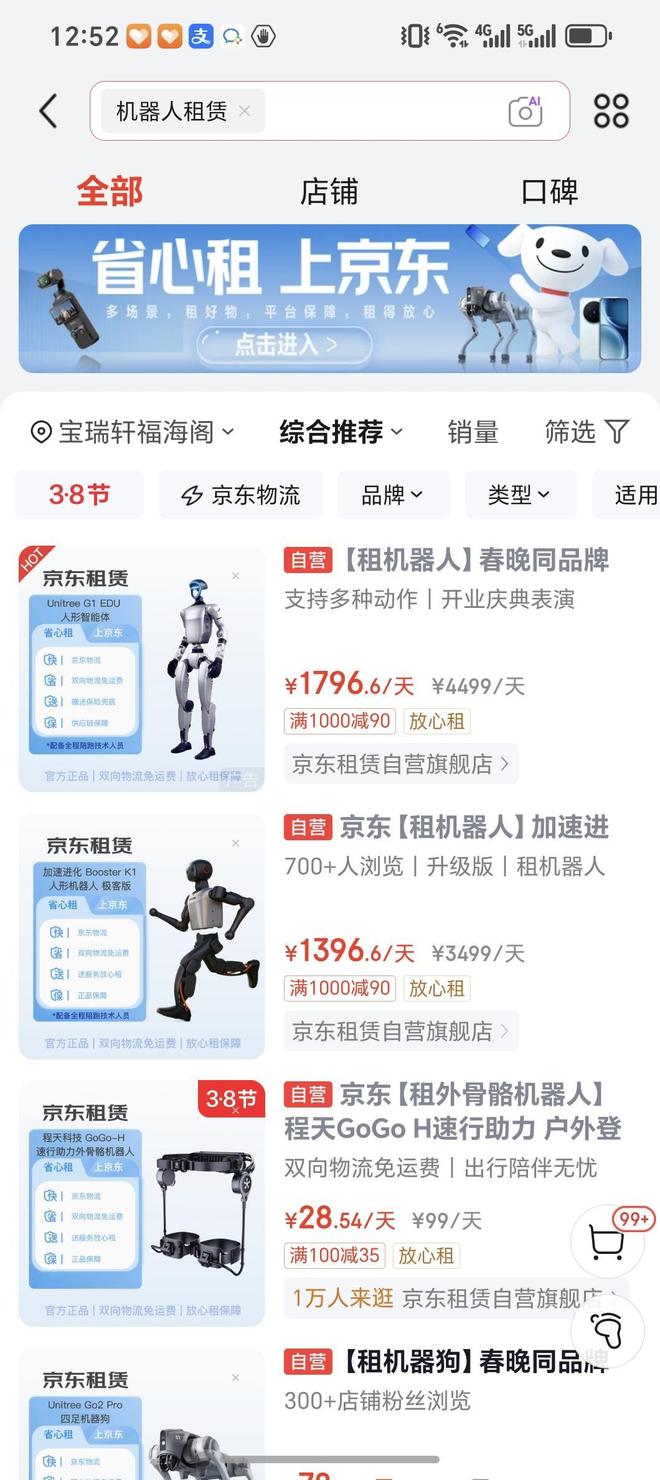
Core Insights - The article discusses the rapid growth and challenges in the humanoid robot rental industry, highlighting significant price drops and increasing competition [2][10][19] Group 1: Market Dynamics - During the Spring Festival, entertainment performances and commercial marketing accounted for 65% of the robot rental orders, indicating a seasonal demand that may not sustain post-festival [1][14] - The daily rental price for humanoid robots has dropped by 80% over the past year, with prices for certain models falling from over 10,000 yuan to around 1,796 yuan [2][9] - The number of newly registered robot rental companies increased by 48.1% in 2025, with over 1,500 new entries [2] Group 2: Company Developments - The rental platform "Qingtian Rental" was launched in December 2025, backed by several intelligent robotics companies, and has seen rapid user growth, surpassing 200,000 registered users within three weeks [5][6] - Qingtian Rental's first major test during the Spring Festival resulted in an 80% increase in GMV, with over 5,000 orders placed during the holiday [3][6] - The platform's business model relies on service fee commissions, but it currently waives these fees to promote growth [6][12] Group 3: Competitive Landscape - The competition in the robot rental market is intensifying, with multiple players entering the space and existing companies expanding their offerings [4][10] - The rental market is characterized by a high order density during peak seasons, but this may not be sustainable, leading to concerns about profitability in off-peak periods [11][19] - The industry is experiencing a significant influx of capital, with funding in the intelligent robotics sector reaching 334.73 billion yuan in the first 11 months of 2025, quadrupling from the previous year [18] Group 4: Technological Challenges - The current humanoid robots are primarily in the "small brain development" stage, lacking autonomous decision-making capabilities, which limits their application scenarios [14][15] - Experts suggest that the industry needs to focus on both technological advancements and practical applications to enhance the robots' capabilities [14][15] - The rental model is seen as a viable way to bridge the gap between current technological capabilities and market expectations, with significant growth potential as the market is still largely untapped [19][20]

深度解读春晚机器人技术水平&模型进展;人形机器人行业26年年度策略
2026-03-01 17:23
Summary of Conference Call Notes Industry Overview - The discussion revolves around the robotics industry, particularly focusing on humanoid robots and their performance during the Spring Festival Gala, which has seen significant public interest and investment potential [1][2][3]. Key Insights and Arguments 1. **Performance Comparison**: The performance of humanoid robots during the Spring Festival Gala this year exceeded expectations compared to previous years, with a notable increase in the number of participating robot manufacturers [1][2]. 2. **Technological Advancements**: The robots showcased improved hardware stability and motion capabilities, with advancements in motor performance and control algorithms leading to more fluid movements [2][3]. 3. **Real-time Calculations**: Robots demonstrated enhanced stability through real-time calculations of their center of gravity, showcasing significant improvements in force control [3][4]. 4. **Virtual Simulation Training**: The use of virtual simulation for pre-training robots has matured, allowing for higher success rates in executing complex movements in real-world scenarios [4][5]. 5. **Market Sentiment**: Despite a post-festival decline in stock prices, the overall sentiment towards the robotics sector remains optimistic, driven by technological advancements and market potential [5][6]. Company Highlights 1. **Yusu Technology**: Recognized as a leading robotics platform in China, focusing on humanoid robots and robotic dogs. Expected revenue for 2025 is projected to reach approximately 2 billion yuan, with significant profit growth anticipated [6][7]. 2. **Galaxy General**: Noted for its advancements in large model applications and virtual simulation data, leveraging synthetic data for training, which has led to successful partnerships, including one with Meituan [7][8]. 3. **Zhuimi Technology**: Engaged in various robotics applications, including household robots, with a focus on internal incubation of projects and maintaining a robust supply chain [9][10]. Market Trends and Future Outlook 1. **Investment Strategies**: The investment strategy emphasizes the importance of technological iteration and cost reduction, with a focus on new technologies that enhance efficiency and reduce costs [12][16]. 2. **Order Growth**: 2025 is expected to be a pivotal year for large-scale order fulfillment in the robotics sector, with significant contributions from government and service sectors [13][14]. 3. **Technological Challenges**: The industry faces challenges in scaling production and ensuring the reliability of new technologies, particularly in the context of labor shortages in developed countries [14][15]. 4. **Supply Chain Dynamics**: The supply chain for core components is evolving, with a focus on Tier-1 suppliers and the need for clarity in the competitive landscape [15][20]. Additional Important Points - The robotics sector is experiencing a cyclical market sentiment, with potential for recovery as technological advancements continue to unfold [11][20]. - The focus on reducing costs and improving the performance of components like motors and sensors is critical for the industry's growth [18][19]. - The integration of advanced technologies such as electronic skin and improved processing units is seen as essential for enhancing robot capabilities [19][20].
人形机器人租赁量增价跌:日租金下探至千元
Xin Lang Cai Jing· 2026-02-27 10:44
Core Insights - The humanoid robot rental market is experiencing a surge in demand during the Spring Festival season, with robots frequently appearing in shopping malls, temples, and private parties [1] - The rental prices for popular robotic models are decreasing, indicating a "volume increase and price drop" trend in the market [1] Market Trends - As of February 26, the daily rental price for popular robotic dogs has dropped to as low as 78 yuan, while humanoid robots with on-site engineer services are available for as low as 1396 yuan per day [1] - Despite the price drop, many models are marked as "hard to find," with orders extending to mid-March [1]
人形机器人租赁量增价跌:日租金下探至千元,春节档接单爆满
Nan Fang Du Shi Bao· 2026-02-27 10:27
Core Insights - The humanoid robot rental market is experiencing a surge in demand during the Spring Festival, with a nearly 70% increase in orders compared to the previous period [1] - The average daily rental price for humanoid robots has significantly decreased to a range of 1,000 to 3,000 yuan, down from nearly 10,000 yuan last year, leading to a broader adoption of robots in various applications [1][4] - The majority of rental orders during the Spring Festival were driven by festive activities, with over 54% of orders related to New Year celebrations and temple fairs [4] Market Trends - The rental market is shifting from B2B exclusive events like corporate annual meetings and large exhibitions to more accessible C-end users, indicating a democratization of robot usage [4] - Popular robot models are now available for as low as 78 yuan per day, with some humanoid robots starting at 1,396 yuan, reflecting a significant drop in rental prices [1][4] Business Model and Financials - The hardware cost of a single robot is around 100,000 yuan, necessitating high-frequency operations to recover costs [4] - A city partner of the leading rental platform reported that with an average of 10 bookings per month at an average price of 2,500 yuan, the payback period for the investment in robots is estimated to be around 6 to 8 months [4] Future Outlook - The focus for the industry moving forward will be on regular applications such as mall navigation, store traffic generation, and educational interactions, aiming to transform one-time performances into ongoing service value [5]
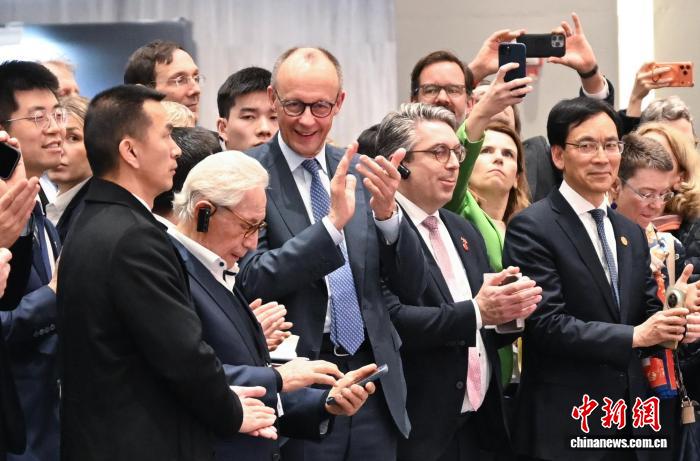
默茨为中国机器人送上掌声
Zhong Guo Xin Wen Wang· 2026-02-27 09:52
Core Insights - German Chancellor Merz praised Chinese robotics during his visit to Yushu Technology, highlighting the growing competitiveness of China's tech innovation and the urgent need for Germany to seek new economic growth drivers through enhanced cooperation with China [1][3][5]. Group 1: Visit Highlights - Merz visited Yushu Technology in Hangzhou, where he expressed admiration for the company's humanoid robots and their capabilities, including a demonstration of a robot writing the character "福" [3][5]. - The Chancellor engaged with the company's founder, Wang Xingxing, and showed interest in the technology by examining components like the rubber shoes used by humanoid robots [5][7]. - Merz enjoyed a boxing demonstration by humanoid robots and was seen smiling and nodding in approval, indicating a positive reception of the technology [5][7]. Group 2: Economic Cooperation - The visit is part of Germany's strategy to explore significant opportunities for cooperation with China, particularly in the tech sector, as Germany seeks to boost its economy [1][3]. - Merz emphasized the value of the visit in a press conference, stating that he returned with positive impressions and tasks for further collaboration, indicating a commitment to deepening economic ties between the two countries [7].
中国状告印度引发关注,全球声讨,印度为何被指责
Sou Hu Cai Jing· 2026-02-27 07:45
Group 1 - The trade dispute is primarily driven by India's "Make in India" policies, which impose various domestic requirements and tariffs to protect local industries [1][3] - Since 2021, India has introduced several incentive programs, including a ₹18,100 crore (approximately $2.2 billion) plan for advanced chemical battery storage, which mandates a certain level of domestic value addition for companies to qualify for subsidies [1][3] - The 2024 "Electric Passenger Vehicle Manufacturing Promotion Plan" exemplifies India's protectionist stance, requiring foreign manufacturers to establish local production and achieve a localization rate of 25% by the third year and 50% by the fifth year, along with a minimum price limit of $35,000 for imported vehicles [3][5] Group 2 - China's Ministry of Commerce has raised concerns that India's measures violate the WTO's national treatment principle, as they favor domestic products over imports, undermining fair competition [5][16] - India has shown a lack of willingness to negotiate, as evidenced by its silence during the 60-day consultation period initiated by China, and subsequent obstruction of the establishment of an expert panel to review the case [5][7] - The ongoing trade dispute highlights the challenges posed by the U.S. blocking appointments to the WTO appellate body, which hampers the resolution of such trade conflicts [7][9] Group 3 - India's attempts to showcase its ambitions in AI at a recent summit were marred by incidents of misrepresentation, revealing a reliance on foreign technology rather than genuine domestic innovation [9][11] - The country's industrial infrastructure is underdeveloped, with aging power grids and insufficient investment in R&D, which only accounts for 0.6% of GDP, limiting its ability to compete in high-tech sectors [11][14] - The current protectionist approach may yield short-term benefits but risks long-term sustainability, as it stifles innovation and drives away capable international firms [13][14] Group 4 - The situation serves as a cautionary tale for emerging economies, emphasizing the importance of genuine R&D investment, robust infrastructure, and adherence to international trade rules for sustainable growth [16][18] - India's reliance on protectionist policies and superficial measures to boost its manufacturing sector may ultimately lead to failure in achieving its industrial ambitions [14][16] - The need for India to focus on improving its infrastructure and nurturing talent is critical to avoid future embarrassments in international trade and technology forums [16][18]