人机交互入口

Search documents
春节“红包大战”争的是什么
Jing Ji Ri Bao· 2026-02-11 21:56
Core Viewpoint - The "red envelope war" led by major internet companies is shifting from traditional methods of mobile payment and e-commerce to a competition for AI-driven traffic entry points, aiming to enhance user engagement and ecosystem advantages [1][2]. Group 1: Company Initiatives - Tencent announced a cash distribution of 1 billion yuan for its Spring Festival activity, aiming to recreate the excitement of the WeChat red envelope phenomenon from 11 years ago [1]. - Baidu launched a 500 million yuan red envelope plan, encouraging users to engage with its "Wenxin Assistant" AI tool [1]. - Alibaba's Qianwen introduced a 3 billion yuan "Spring Festival treat plan," allowing users to redeem large red envelopes for various services [1]. Group 2: User Engagement and AI Impact - The activities have shown significant initial results, with the daily usage of the Yuanbao AI feature increasing by 30 times and user engagement time rising over 80% since the launch [2]. - Baidu's Wenxin Assistant attracted over 1 million participants on its first day, with 50 million total participants by February 1 [2]. - The Qianwen app saw over 10 million AI orders within just 9 hours of launching its Spring Festival promotion [2]. Group 3: Challenges and Future Considerations - The sustainability of user engagement remains a concern, as experts suggest that while red envelope marketing can attract new users, long-term retention depends on the quality of products and services [3]. - The influx of users during peak times has raised challenges regarding system capacity, with reports of server issues during high traffic events [3]. - Industry experts emphasize the need for differentiated applications and effective value loops to convert short-term interest into long-term user loyalty [4].



盯上你的眼,苹果、谷歌也加入“百镜混战”
2 1 Shi Ji Jing Ji Bao Dao· 2025-12-19 12:39
Group 1 - Apple has paused its Vision Pro upgrade plan to focus on developing AI smart glasses, with an entry-level model expected to debut in 2026 [2] - Google has officially announced its return to the smart glasses market, intensifying competition in the sector [2] - In the domestic market, companies like Li Auto, Alibaba, Baidu, Huawei, and Xiaomi are actively launching their own smart glasses, indicating a fierce competition among tech giants [2] Group 2 - The competition for smart glasses is driven by the desire to establish the next generation of human-computer interaction, with smart glasses seen as a key hardware component in the AI multimodal era [3] - Major companies view smart glasses as an extension of their ecosystems and a means to leverage AI capabilities, transforming brand power into market momentum [3] - Li Auto's AI glasses, Livis, have generated significant interest, with reports of high foot traffic and product shortages in stores [3] Group 3 - Consumers are attracted to smart glasses not only for compatibility with their vehicles but also for their aesthetics and quality, indicating that these products can enhance brand ecosystems and fan engagement [4] - Alibaba's Quark AI glasses have quickly gained orders due to their smooth integration with the Quark browser and AR functionalities, addressing previous limitations of traditional smart glasses [4] - The industry is in need of a new core hardware solution as smartphones reach physical innovation limits, with smart glasses positioned as a crucial interface for connecting the physical and digital worlds [4] Group 4 - The smart glasses market is expanding beyond major players, with smaller companies also seeking growth opportunities, particularly in industrial and health monitoring applications [5] - Companies like Huashengchang are focusing on developing AI glasses for industrial applications, enhancing efficiency and precision in operations [5] - Industry experts suggest that smaller firms should concentrate on core components, professional manufacturing, or niche markets to establish competitive advantages [6] Group 5 - The relationship between smart glasses and smartphones is expected to be complementary rather than one replacing the other, as both technologies will evolve together [7] - Current technological challenges such as weight, battery life, and display quality are still present, indicating that the industry is on the brink of significant growth [7] - Consumer expectations for smart glasses vary, with a significant portion believing they will be widely used, while others see limited applications [7] Group 6 - The smart glasses market is projected to grow significantly, with sales expected to reach 1.265 million units in 2024, a year-on-year increase of approximately 90.8%, and a market size of around 4.69 billion yuan [8] - By 2029, sales could reach 41.53 million units, with the market potentially exceeding 100 billion yuan, highlighting the substantial market potential driving competition [8] - The integration of AI models and user experience is seen as a critical factor in determining the future direction of the industry [8] Group 7 - As of December 19, key players in the smart glasses supply chain have shown active stock performance, with companies like Lens Technology and Doctor Glasses experiencing notable stock price increases [9]




它,能取代手机?谷歌、苹果……都出手了
Jing Ji Wang· 2025-11-05 02:15
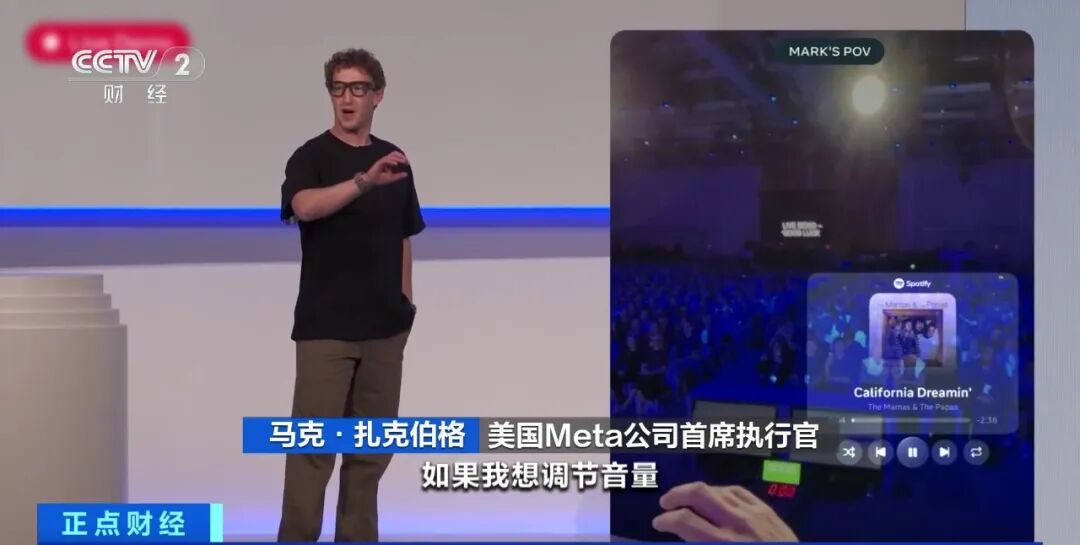
Core Insights - The AI glasses market is experiencing rapid growth, with major tech companies like Google, Apple, and Meta accelerating their investments in this sector [1] Group 1: Meta's AI Glasses - Meta has launched its first AI glasses in collaboration with a traditional eyewear brand, priced at $799, featuring real-time conversation subtitles, translation, and photo/video capabilities [2] - The glasses utilize a wristband to detect muscle signals for gesture control, enhancing user interaction [2][4] Group 2: Amazon's AI Glasses - Amazon is developing AI glasses specifically for delivery personnel, designed to project navigation information directly into their field of vision, improving safety and efficiency [5][7] Group 3: Apple's AI Glasses Strategy - Apple is shifting its focus towards AI glasses, reportedly pausing the development of a budget version of the Vision Pro headset and planning to release at least two models by 2027-2028 [8] Group 4: Google's Open Platform Approach - Google is creating an open and scalable ecosystem for AI glasses through the "Android XR" platform, collaborating with multiple manufacturers, indicating a strategic focus on the potential of AI glasses as the next human-computer interaction interface [10] Group 5: Market Trends and Projections - The AI glasses market is evolving in two main directions: as smartphone accessories to enhance functionality and as standalone devices that may eventually replace smartphones [12] - According to IDC, global AI glasses shipments are expected to reach 4.065 million units by mid-2025, marking a 64.2% year-on-year increase, with projections of over 40 million units by 2029 [14]