Livis

Search documents
保时捷营业利润暴跌超九成;理想交出2025成绩单;奔驰全新纯电MPV来了;阿维塔06T即将上市;比亚迪计划进军F1?马斯克蝉联全球首富...
Sou Hu Cai Jing· 2026-03-13 09:43
Group 1: Porsche Performance - Porsche reported a significant decline in 2025 performance, with total revenue of €36.3 billion, down 9.5% year-on-year, and operating profit of €413 million, down 92.7% [2] - The operating sales return rate fell from 14.1% to 1.1%, attributed to product strategy adjustments, company scale optimization, additional costs from battery-related businesses, and U.S. tariffs [2] - Global vehicle deliveries decreased to 279,000 units, a 10% decline year-on-year, with significant drops in key markets such as China (26% decline) and Germany (16% decline) [2] Group 2: Li Auto Performance - Li Auto reported a total vehicle delivery of 406,300 units for 2025, with Q4 deliveries reaching 109,000 units, a 17.1% increase quarter-on-quarter [4] - The company achieved annual revenue of ¥112.3 billion and a net profit of ¥1.1 billion, marking it as the only new energy vehicle company in China to achieve over ¥100 billion in revenue for three consecutive years [4] - For Q1 2026, Li Auto expects deliveries between 85,000 to 90,000 units, a year-on-year decline of 3.1% to 8.5%, with revenue projected to drop by 16.7% to 21.3% [4] Group 3: Mercedes-Benz New Launch - Mercedes-Benz unveiled the all-new electric MPV VLE, which will be produced by Fujian Benz [8] - The vehicle features two distinct styles, advanced interior technology, and a high-capacity 115 kWh battery offering a range of up to 700 km [8] - The new model includes smart driving assistance systems and aims to compete in the high-end business vehicle market [8] Group 4: BYD's F1 Ambitions - BYD is reportedly planning to enter the Formula 1 racing scene, potentially competing alongside legendary teams like Ferrari and McLaren [11] - The company may either establish a new team or acquire an existing one, with interest in purchasing the Renault-owned Alpine team to expedite its entry into F1 [13] Group 5: Global Billionaires List - Forbes reported a record 3,428 billionaires in 2023, with a total wealth of $20.1 trillion, an increase of $4 trillion from the previous year [16] - Elon Musk retained the title of the world's richest person with a net worth of approximately $839 billion, benefiting from the rising valuations of Tesla and SpaceX [16]



Li Auto Inc. Announces Unaudited Fourth Quarter and Full Year 2025 Financial Results
Globenewswire· 2026-03-12 08:30
Core Viewpoint - Li Auto Inc. reported a significant decline in both quarterly and full-year financial results for 2025, with total revenues and vehicle sales decreasing year-over-year, reflecting challenges in the new energy vehicle market and operational adjustments made during the year [2][7]. Financial Highlights for Q4 2025 - Total revenues reached RMB28.8 billion (US$4.1 billion), a decrease of 35.0% from RMB44.3 billion in Q4 2024, but an increase of 5.2% from RMB27.4 billion in Q3 2025 [4][20]. - Vehicle sales amounted to RMB27.3 billion (US$3.9 billion), down 36.1% from RMB42.6 billion in Q4 2024, but up 5.4% from RMB25.9 billion in Q3 2025 [4][20]. - Gross profit was RMB5.1 billion (US$733.7 million), a decrease of 42.8% from RMB9.0 billion in Q4 2024, but an increase of 14.8% from RMB4.5 billion in Q3 2025 [4][20]. - Net income was RMB20.2 million (US$2.9 million), compared to RMB3.5 billion in Q4 2024 and a net loss of RMB624.4 million in Q3 2025 [4][27]. Financial Highlights for Full Year 2025 - Total revenues for the year were RMB112.3 billion (US$16.1 billion), down 22.3% from RMB144.5 billion in 2024 [7][9]. - Vehicle sales totaled RMB106.7 billion (US$15.3 billion), a decrease of 23.0% from RMB138.5 billion in 2024 [7][9]. - Gross profit for the year was RMB21.0 billion (US$3.0 billion), down 29.2% from RMB29.7 billion in 2024 [7][9]. - Net income for 2025 was RMB1.1 billion (US$162.9 million), an 85.8% decrease from RMB8.0 billion in 2024 [7][9]. Operational Highlights - As of December 31, 2025, Li Auto operated 548 retail stores in 159 cities and had 3,907 supercharging stations with 21,651 charging stalls [3]. - The company launched its AI glasses, Livis, in December 2025, enhancing its product offerings beyond vehicles [11]. - Li Auto expanded its market presence by entering Egypt, Kazakhstan, and Azerbaijan in December 2025 [12]. Management Comments - The CEO highlighted improvements in organizational efficiency and sales systems, indicating a positive outlook for 2026 with the launch of new models [16]. - The CFO noted the company's strong cash position of RMB101.2 billion (US$14.5 billion) as of year-end 2025, which supports future growth initiatives [16][27].

2026春节华强北科技年货走俏AI眼镜销量暴涨80% 引全球关注
Sou Hu Cai Jing· 2026-02-25 01:15
Group 1 - The core viewpoint of the articles highlights the surge in demand for AI and smart technology products during the Chinese New Year, particularly in the Huaqiangbei market, where AI glasses saw an 80% increase in sales year-on-year, marking a significant trend in consumer preferences [2][4] - Huaqiangbei's overall sales of technology products increased by over 30% compared to regular periods, with drones and robots also experiencing a substantial 50% growth in sales [2] - The influx of foreign visitors and buyers to Huaqiangbei during the holiday period increased by nearly 100%, indicating a growing international interest in Chinese-made AI products [2] Group 2 - Domestic brands have been intensively launching AI hardware products since 2025, with companies like Li Auto, Alibaba, and Xiaomi introducing their own AI glasses, contributing to heightened competition in the market [3] - International tech giants such as Apple and Samsung are entering the AI hardware space, with Apple planning to release its first AI glasses in 2026 and Samsung set to launch new AR glasses this year, indicating an impending upgrade in market competition [3] - The trend suggests that AI wearable devices are transitioning from niche markets to mainstream consumer markets, positioning Huaqiangbei as a key player in promoting the innovation and adoption of AI smart products [4]
AI眼镜,如何叫好又叫座
Ren Min Ri Bao Hai Wai Ban· 2026-02-04 02:53
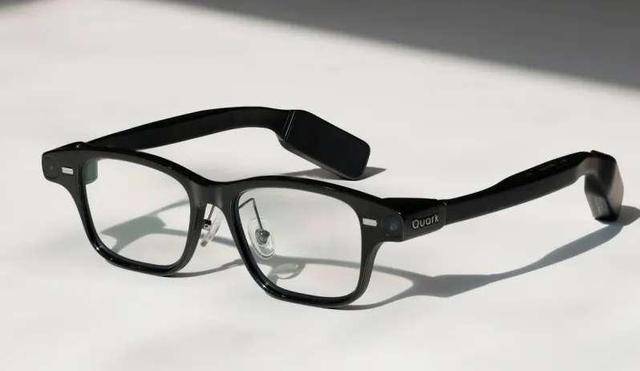
Core Insights - AI glasses are becoming a focal point in the global tech industry, with significant interest showcased at CES 2026, where the number of exhibitors and new products reached a record high, particularly with active participation from Chinese companies [1] - Domestic policies are rapidly supporting the development of AI glasses, as they have been included in national large-scale equipment updates and trade-in subsidy programs, alongside smartphones and tablets [1] - The market is witnessing accelerated growth, with various companies entering the space, including the launch of Quark AI glasses featuring Alibaba's latest Qianwen AI assistant and Li Auto's first AI glasses, Livis [1] Industry Trends - The AI glasses industry is experiencing differentiation as some manufacturers introduce more complex structures and designs, while others focus on consumer needs and usability [1] - The challenge of creating AI glasses that are lightweight, have long battery life, and strong capabilities is referred to as the "impossible triangle," complicating the development of wearable devices [2] - Different manufacturers are adopting unique solutions, with some prioritizing comfort and usability, while others are refining specific use cases such as real-time translation and meeting minutes generation [2] - The continuous advancement of key technologies and the clarification of application scenarios suggest that AI glasses may become an important gateway connecting the digital and real worlds, with ongoing competitive activity expected in this sector [2]
MoonFox Data | Li Auto's Performance Plunges, BEV Transition Faces Formidable Headwinds
Globenewswire· 2026-01-09 10:00
Core Viewpoint - Li Auto reported a net loss of RMB 625 million (approximately USD 89.286 million) in Q3 2025, marking the end of 11 consecutive profitable quarters, primarily due to a recall of 11,400 vehicles [1] Financial Performance - Vehicle sales revenue in Q3 2025 was RMB 25.9 billion (approximately USD 3.7 billion), a decline of 37.4% from RMB 41.3 billion (approximately USD 5.9 billion) in Q3 2024 [2] - Total revenue for Q3 2025 was RMB 27.4 billion (approximately USD 3.914 billion), down 36.2% from RMB 42.9 billion (approximately USD 6.129 billion) in Q3 2024, and down 9.5% quarter-over-quarter from RMB 30.2 billion (approximately USD 4.314 billion) in Q2 2025 [3] - Total deliveries were 93,211 units, reflecting a 39.0% year-over-year decrease [2] Market Challenges - Li Auto is expected to face a continued decline in Q4 2025, with projected vehicle deliveries between 100,000 to 110,000 units, representing a year-over-year decrease of 37.0% to 30.7% [5] - The company is experiencing intensified competition in the new energy vehicle market, with rivals like Tesla and NIO having established significant advantages [6][7] - Li Auto's transition to battery electric vehicles (BEVs) is lagging, and the company must enhance its production capacity and technology deployment to remain competitive [8] Production and Supply Chain Issues - New BEV models i6 and i8 have received positive market responses, with orders exceeding 100,000 units; however, supply chain challenges have limited their deliveries to only 18% of total deliveries in Q3 [9] - Li Auto is attempting to increase production capacity through a dual-supplier system but faces urgent supply chain stability issues [9] Strategic Expansion and Consumer Engagement - Despite challenges in its core vehicle business, Li Auto has begun diversifying into new lines, launching AI smart glasses, although market response has been lukewarm [10][11] - Li Auto's app user engagement remains high, indicating a strong core consumer base, which is crucial for any potential turnaround [12] Q4 Outlook - For Q4 2025, revenue is forecasted at RMB 26.5 billion (approximately USD 3.786 billion), representing a 40% year-over-year decline [14]

MoonFox Data | Li Auto's Performance Plunges, BEV Transition Faces Formidable Headwinds - Aurora Mobile (NASDAQ:JG), Li Auto (NASDAQ:LI)
Benzinga· 2026-01-09 10:00
Core Viewpoint - Li Auto reported a net loss of RMB 625 million (approximately USD 89.286 million) in Q3 2025, marking the end of 11 consecutive profitable quarters, primarily due to a recall of 11,400 vehicles [1] Financial Performance - Vehicle sales revenue in Q3 2025 was RMB 25.9 billion (approximately USD 3.7 billion), a decline of 37.4% from RMB 41.3 billion (approximately USD 5.9 billion) in Q3 2024; total deliveries were 93,211 units, down 39.0% YoY [2] - Total revenue for Q3 2025 was RMB 27.4 billion (approximately USD 3.914 billion), down 36.2% from RMB 42.9 billion (approximately USD 6.129 billion) in Q3 2024, and down 9.5% QoQ from RMB 30.2 billion (approximately USD 4.314 billion) in Q2 2025 [3] - The projected vehicle deliveries for Q4 2025 are between 100,000 to 110,000 units, representing a YoY decrease of 37.0% to 30.7% [5] Competitive Landscape - Li Auto faces intensified competition in the new energy vehicle market, particularly from brands like AITO and Deepal in the EREV segment, and Tesla and NIO in the BEV segment, which have established significant advantages [6][7] - The company must accelerate its transition to BEVs and enhance its production capacity to remain competitive [8] Production Challenges - Despite strong market response to newly launched BEV models i6 and i8, supply chain challenges have limited their deliveries to only 18% of total deliveries in Q3 [9] - Li Auto is attempting to increase production capacity through a dual-supplier system but faces urgent supply chain stability issues [9] Strategic Expansion - Li Auto has begun diversifying into new business lines, launching divisions for "Space Robotics" and "Wearable Robotics," and introduced AI smart glasses priced at RMB 1,999 (approximately USD 285.57), though market response has been lukewarm [10][11] Consumer Engagement - Despite declining deliveries, Li Auto maintains high app user engagement, indicating a strong core consumer base that could support future recovery [12] Future Outlook - For Q4 2025, revenue is forecasted at RMB 26.5 billion (approximately USD 3.786 billion), reflecting a 40% YoY decline, with ongoing challenges expected in the near term [13][14]

方正证券:场景需求始终是核心逻辑 AI眼镜或成为智能核心入口
智通财经网· 2026-01-05 08:04
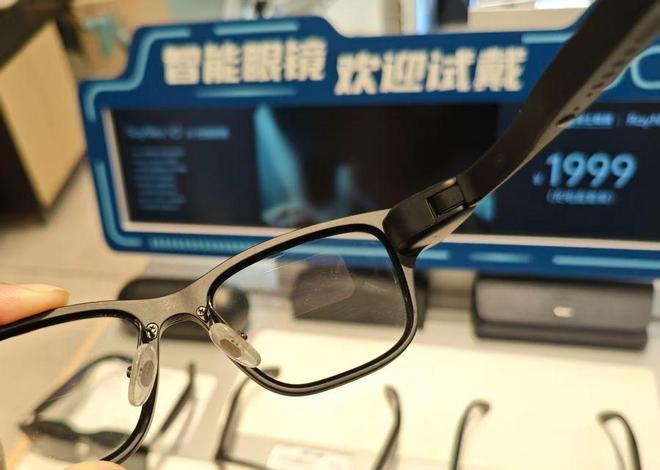
Group 1 - The core viewpoint is that AI glasses must focus on diverse user scenarios to evolve from mere tools to scene partners, enhancing communication efficiency, protection, and collaboration across various environments [1] - The launch of Li Auto's AI glasses, Livis, on December 3, 2025, targets automotive scenarios with a starting price of 1999 yuan, eligible for a 15% national subsidy, addressing key needs in driving convenience and safety [1] - The design of AI glasses should integrate hardware innovation, software adaptation, and ecosystem collaboration to seamlessly empower users in multiple scenarios, ultimately becoming a smart core entry point in their lives [1] Group 2 - Multiple brands are releasing various AI glasses targeting different scenarios, including Meta's Ray-Ban DisplayAI for social experiences, Alibaba's S1 for daily consumption, and XREAL's Air2 for viewing experiences [2] - Xiaomi's AI glasses are positioned as a "home control center" by integrating smart home and automotive ecosystems, evolving from a single wearable device to a seamless smart interaction platform [2] - The future will see AR as an entry point and AI as a central hub, enabling proactive device interaction and cross-platform collaboration to overcome information fragmentation and enhance user experience [3]

Li Auto Inc. December 2025 Delivery Update
Globenewswire· 2026-01-01 02:00
Core Insights - Li Auto Inc. delivered 44,246 vehicles in December 2025, bringing total fourth-quarter deliveries to 109,194 and cumulative deliveries to 1,540,215 as of December 31, 2025 [1][2] Group 1: Deliveries and Market Expansion - In December 2025, Li Auto surpassed 1.5 million cumulative vehicle deliveries [2] - The company expanded its global presence by introducing models Li L9, Li L7, and Li L6 to Egypt, Kazakhstan, and Azerbaijan, marking its entry into Central Asia, the Caucasus, and Africa [2] Group 2: Retail and Service Infrastructure - As of December 31, 2025, Li Auto operated 548 retail stores across 159 cities and 561 servicing centers, along with authorized body and paint shops in 224 cities [3] - The company had 3,907 supercharging stations in operation, equipped with 21,651 charging stalls in China [3] Group 3: Company Overview - Li Auto is a leader in China's new energy vehicle market, focusing on designing, developing, manufacturing, and selling premium smart electric vehicles [4] - The company aims to create a mobile home and happiness through innovative products, technology, and business models, and is a pioneer in commercializing extended-range electric vehicles in China [4] - Li Auto's current model lineup includes a high-tech flagship family MPV, four Li L series extended-range electric SUVs, and two Li i series battery electric SUVs, with plans for further product expansion [4]
数码家电行业周度市场观察-20251227
Ai Rui Zi Xun· 2025-12-27 08:05
Investment Rating - The report does not explicitly provide an investment rating for the industry Core Insights - The digital home appliance industry is experiencing a bifurcation, with companies in Hangzhou focusing on traffic operations and storytelling, while Shenzhen companies emphasize technical refinement and practical innovation [4] - The AI eyewear market is witnessing intense competition among major players like Google and Alibaba, with a projected market size of $4.2 billion by 2025, although consumer sentiment remains cautious [6] - The rise of AI emotional products is driven by the "loneliness economy," with a market expected to reach 59.5 billion yuan by 2028, as young consumers seek emotional companionship [6] - The humanoid robot sector is facing scrutiny over its reliance on remote control rather than autonomous intelligence, with a projected global shipment of only 1.38 million units by 2035 [7] - The AI model IPO race is heating up, with companies like MiniMax and Zhizhu AI vying for the title of "first AI model stock" in Hong Kong, indicating a shift from technology to commercialization [9] Industry Trends - The Hangzhou "Six Little Dragons" and Shenzhen "Invisible Champions" are contrasting entrepreneurial philosophies, with the former focusing on narrative and the latter on technical prowess [4] - The AI eyewear market is characterized by a shift from hardware to vertical scene integration and data control, with major players competing for market share and future interaction interfaces [6] - The AI emotional product market is evolving from functional needs to emotional value, driven by the increasing demand for companionship among young consumers [6] - The humanoid robot market is currently in a speculative phase, with significant investment but limited actual orders and production capacity [7] - The competition among AI models is intensifying, with a focus on ecosystem building and commercial validation as companies prepare for IPOs [9] Brand Dynamics - The AI investment landscape is witnessing a rush to IPO, with companies like Moonlight Dark Side negotiating significant funding and facing increased competition [17] - Ideal Auto has launched AI glasses as part of its strategy to integrate AI into physical products, emphasizing multi-modal data integration [18] - Xiaomi is making significant investments in humanoid robotics, aiming to leverage its existing technology and supply chain capabilities [19] - Google is re-entering the smart glasses market after a long hiatus, planning to launch new products that face challenges in market acceptance [20] - The AI assistant from Doubao is facing privacy concerns and restrictions from major app ecosystems, highlighting the tension between innovation and regulatory compliance [22]



盯上你的眼,苹果、谷歌也加入“百镜混战”
2 1 Shi Ji Jing Ji Bao Dao· 2025-12-19 12:39
Group 1 - Apple has paused its Vision Pro upgrade plan to focus on developing AI smart glasses, with an entry-level model expected to debut in 2026 [2] - Google has officially announced its return to the smart glasses market, intensifying competition in the sector [2] - In the domestic market, companies like Li Auto, Alibaba, Baidu, Huawei, and Xiaomi are actively launching their own smart glasses, indicating a fierce competition among tech giants [2] Group 2 - The competition for smart glasses is driven by the desire to establish the next generation of human-computer interaction, with smart glasses seen as a key hardware component in the AI multimodal era [3] - Major companies view smart glasses as an extension of their ecosystems and a means to leverage AI capabilities, transforming brand power into market momentum [3] - Li Auto's AI glasses, Livis, have generated significant interest, with reports of high foot traffic and product shortages in stores [3] Group 3 - Consumers are attracted to smart glasses not only for compatibility with their vehicles but also for their aesthetics and quality, indicating that these products can enhance brand ecosystems and fan engagement [4] - Alibaba's Quark AI glasses have quickly gained orders due to their smooth integration with the Quark browser and AR functionalities, addressing previous limitations of traditional smart glasses [4] - The industry is in need of a new core hardware solution as smartphones reach physical innovation limits, with smart glasses positioned as a crucial interface for connecting the physical and digital worlds [4] Group 4 - The smart glasses market is expanding beyond major players, with smaller companies also seeking growth opportunities, particularly in industrial and health monitoring applications [5] - Companies like Huashengchang are focusing on developing AI glasses for industrial applications, enhancing efficiency and precision in operations [5] - Industry experts suggest that smaller firms should concentrate on core components, professional manufacturing, or niche markets to establish competitive advantages [6] Group 5 - The relationship between smart glasses and smartphones is expected to be complementary rather than one replacing the other, as both technologies will evolve together [7] - Current technological challenges such as weight, battery life, and display quality are still present, indicating that the industry is on the brink of significant growth [7] - Consumer expectations for smart glasses vary, with a significant portion believing they will be widely used, while others see limited applications [7] Group 6 - The smart glasses market is projected to grow significantly, with sales expected to reach 1.265 million units in 2024, a year-on-year increase of approximately 90.8%, and a market size of around 4.69 billion yuan [8] - By 2029, sales could reach 41.53 million units, with the market potentially exceeding 100 billion yuan, highlighting the substantial market potential driving competition [8] - The integration of AI models and user experience is seen as a critical factor in determining the future direction of the industry [8] Group 7 - As of December 19, key players in the smart glasses supply chain have shown active stock performance, with companies like Lens Technology and Doctor Glasses experiencing notable stock price increases [9]