
百度文心助手

Search documents
大模型告别技术奇观:日活飙升背后,如何帮用户玩转AI?
经济观察报· 2026-03-02 05:33
Core Viewpoint - The article discusses the surge in daily active users of AI applications during the Spring Festival, highlighting the challenges of user retention due to the cognitive and operational barriers associated with large models [1][6][8]. Group 1: User Engagement Strategies - Major tech companies launched aggressive cash incentive campaigns during the Spring Festival, with Baidu, Tencent, Alibaba, and ByteDance investing significant amounts in red envelope activities to attract users [2][4]. - The cash subsidies and high-profile event collaborations led to a spike in downloads and user engagement, with applications like Alibaba's Qianwen and ByteDance's Doubao topping the App Store download charts [2][4]. Group 2: User Retention Challenges - Despite the initial surge in user numbers, there is a concern that many users may not return after the novelty wears off, as they struggle to understand how to effectively use AI applications [6][8]. - The article emphasizes the need for a content ecosystem that allows users to learn from each other and share usage experiences to improve retention [9]. Group 3: Shifts in User Discussion - There has been a notable shift in user discussions on social media from technical breakthroughs to practical usage and tutorials, indicating a growing interest in how to effectively utilize AI tools [12][13]. - Influencers and creators on platforms like Weibo have begun to fill the gap by providing detailed guides and templates for using AI models, making it easier for ordinary users to engage with the technology [16][17]. Group 4: Real-World Applications - Users have started to explore practical applications of AI models in everyday scenarios, such as generating responses for social interactions during the holiday season [20][21]. - The article notes that the integration of AI tools into various creative processes is expanding, with creators using AI for diverse content creation beyond traditional text [22][23]. Group 5: Advertising and Market Perception - During the Spring Festival, many AI companies invested in long advertisements to communicate the practical benefits of their models, reflecting a common industry anxiety about user understanding and engagement [25]. - The article suggests that without direct interaction and feedback, traditional advertising methods may not effectively establish user habits with complex AI technologies [25][26].


AI业务收入占比43%,百度AI价值加速兑现
3 6 Ke· 2026-02-26 13:01
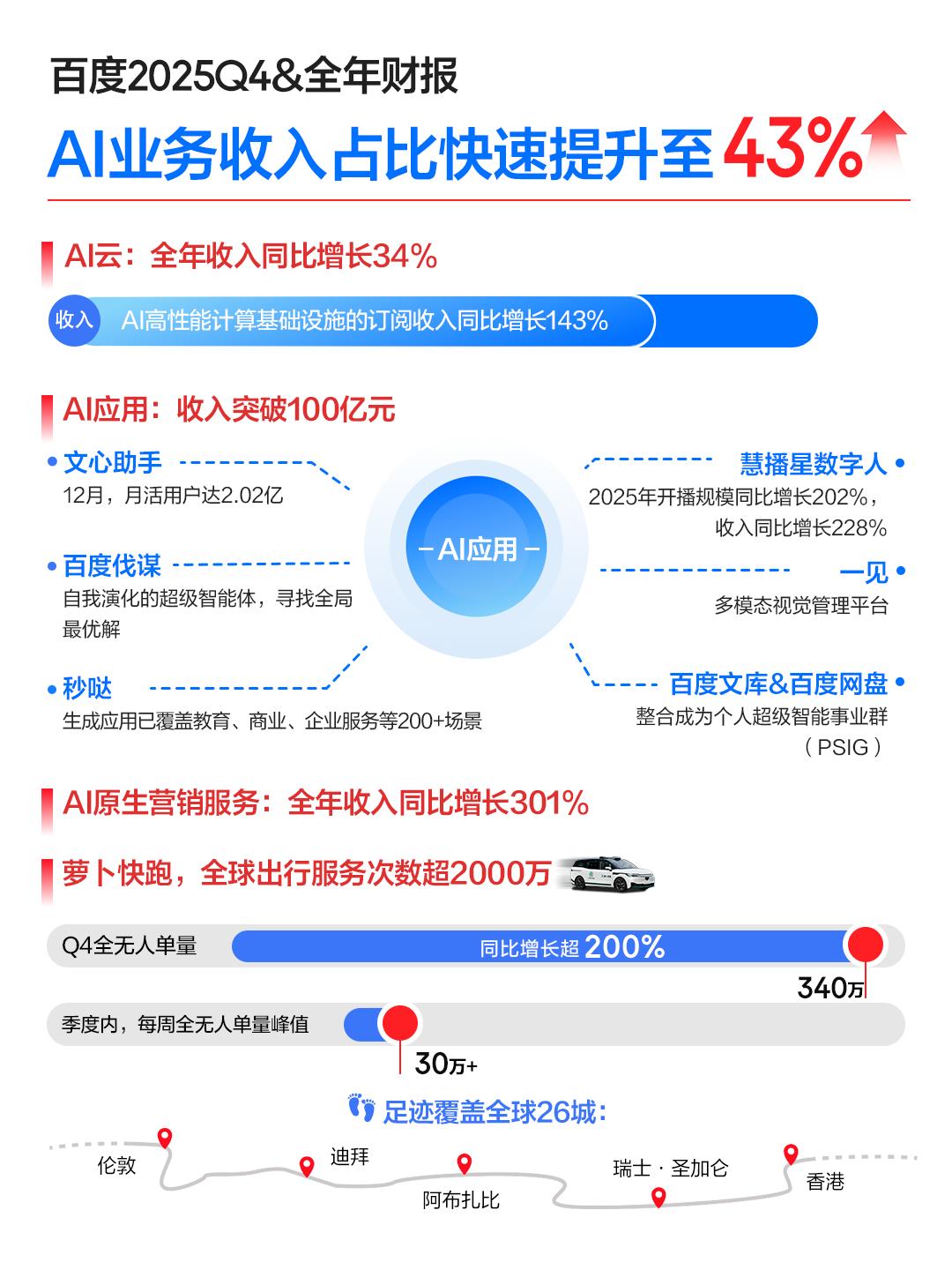
Core Insights - The article highlights the transformative impact of AI on companies like Google, Microsoft, IBM, and Oracle, with Baidu emerging as a key player in China's AI landscape, integrating AI into its core business and achieving significant revenue growth [1][5]. Group 1: Baidu's AI Business Growth - Baidu's total revenue is projected to reach 129.1 billion yuan by 2025, with AI business revenue expected to hit 40 billion yuan, indicating a strong upward trend in AI integration across its business lines [1]. - In Q4, Baidu's total revenue was 32.7 billion yuan, with AI business revenue accounting for 43% of its general business income, surpassing market expectations [1]. - The company's AI capabilities are transitioning from a "cost center" to a "profit center," validating its full-stack AI business model and showcasing its value in the internet sector [5]. Group 2: AI Implementation Strategies - Baidu has developed a comprehensive four-layer technology stack encompassing chips, cloud services, models, and intelligent agents, which addresses the challenges of AI implementation in the B2B sector [7]. - The Kunlun chip, designed specifically for AI scenarios, has successfully powered 30,000 card clusters by 2025, enabling efficient training of large models and reducing integration costs for enterprises [8]. - Baidu's intelligent cloud services have achieved the highest number and value of bids for large model projects in China, with a revised revenue growth target of 200% for AI-related income by 2026 [8]. Group 3: AI Applications and User Engagement - Baidu's AI applications are projected to generate over 10 billion yuan in revenue by 2025, reflecting user willingness to pay for genuine AI productivity [12]. - The integration of AI into existing products like search and the launch of new AI-native products have significantly increased user engagement, with monthly active users of Baidu's AI assistant growing fourfold during the Spring Festival [12]. - The "秒哒" product has lowered the barrier for AI application development, resulting in over 500,000 commercial applications across various sectors within eight months of its launch [12]. Group 4: Autonomous Driving and Global Expansion - Baidu's autonomous driving initiative, "萝卜快跑," has seen a more than 200% increase in service usage in Q4 2025, with over 300 million kilometers driven globally, demonstrating its scalability [15]. - The initiative has expanded its ecosystem to Europe and the Middle East, partnering with companies like Uber and PostBus for autonomous driving services [15][16]. Group 5: Market Valuation and Future Prospects - Baidu is experiencing a moment of value reassessment, with multiple financial institutions raising their target prices for the company, indicating confidence in its sustainable growth potential [18]. - The company plans to repurchase $5 billion in stock and distribute dividends for the first time, reflecting its strong cash flow and commitment to shareholder value [19][20]. - The upcoming launch of the new Kunlun chip series is expected to enhance Baidu's AI capabilities and market valuation, with potential estimates reaching $50 billion [23].

产业焦点 | 几十亿烧完了,春节AI大战到底谁赢了?
Sou Hu Cai Jing· 2026-02-26 08:26
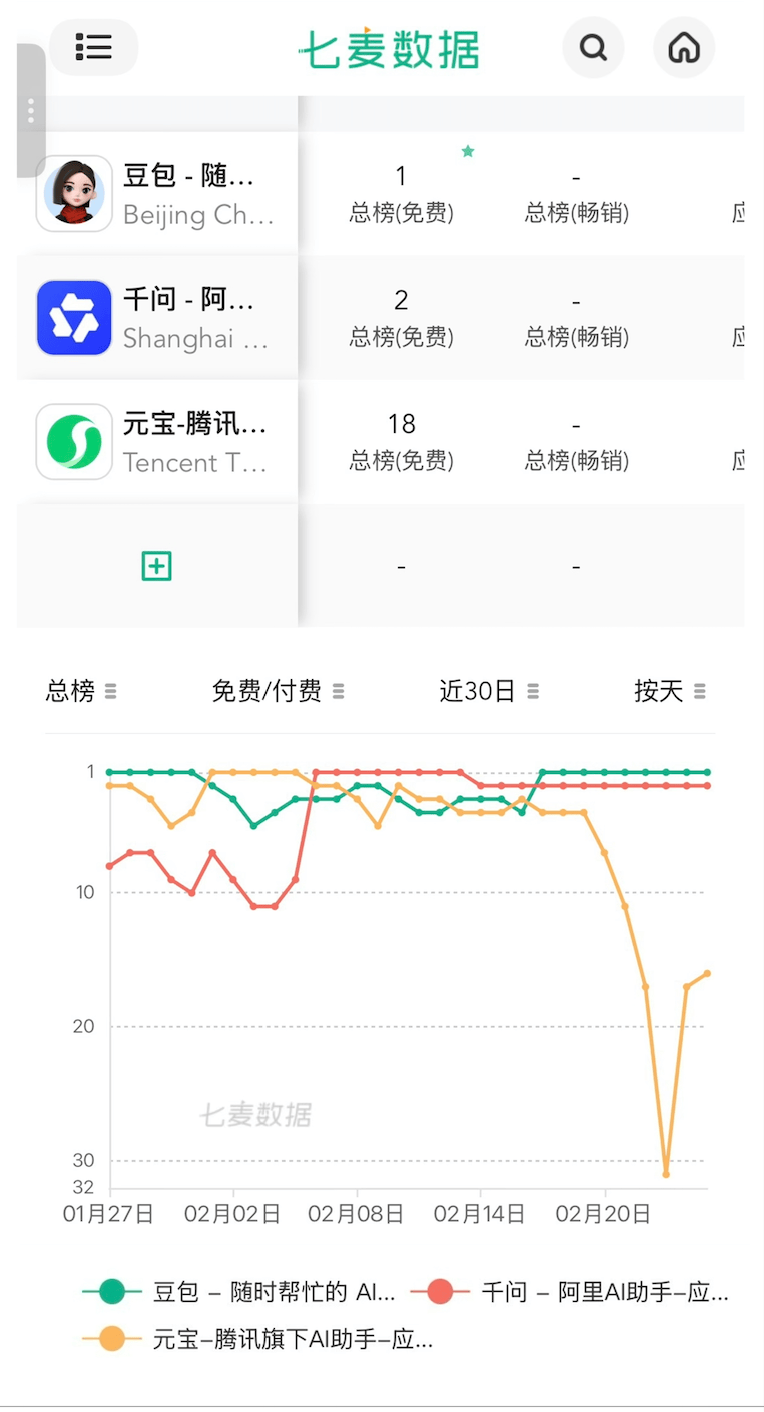
Core Insights - The competition among Chinese AI models during the Spring Festival has concluded, with ByteDance's Doubao and Alibaba's Qianwen maintaining top positions in the App Store download rankings, while Ant Group's Aifuku and Tencent's Yuanbao have dropped significantly [2][3][12] - The effectiveness of the substantial investments made to achieve these download rankings in converting users into long-term engagement remains uncertain [3][10] Group 1: Competition Overview - The "Spring Festival AI War" saw major players like Baidu, Alibaba, Tencent, and ByteDance invest billions in promotional activities, with Doubao leading the download rankings at 23% market share [6][7] - The competition was characterized by significant marketing efforts, including cash red envelope campaigns, which resulted in a dramatic increase in daily active users (DAU) for Yuanbao, reaching over 5 million after its promotional activities [7][10] - The rankings reflect a temporary success in user acquisition, but the long-term retention of these users is still in question, as many users reported decreased usage frequency post-promotion [10][12] Group 2: Market Dynamics - Analysts suggest that the current marketing strategies differ from traditional methods, focusing on building user engagement and retention rather than merely increasing downloads [11][12] - The competition has highlighted a divide between companies focusing on user experience and those relying heavily on promotional tactics, with Doubao and Qianwen establishing stronger user engagement through practical applications [12][14] - The ongoing battle for market share is seen as a critical moment for defining the future landscape of AI applications in China, with companies vying for the next major "super app" [16][18] Group 3: Future Implications - The current strategies employed by Chinese AI firms are contrasted with those in Silicon Valley, where companies are focusing on model performance and practical applications rather than aggressive user acquisition [16][18] - The long-term success of these AI models will depend on their ability to integrate into users' daily lives and provide real solutions to problems, rather than just relying on promotional tactics [13][14] - The outcome of this competition may set the stage for future developments in AI, with a potential shift towards more differentiated and specialized applications in the market [14][18]


几十亿烧完了 春节AI大战到底谁赢了?
Di Yi Cai Jing· 2026-02-25 09:42
Core Insights - The "Chinese Large Model Spring Festival War" has concluded, with ByteDance's Doubao and Alibaba's Qianwen maintaining top positions in the App Store download rankings, while Ant Group's Aifu and Tencent's Yuanbao have dropped significantly [1][4][11] - The competition reflects differing strategies between Chinese and American firms, with Chinese companies focusing on consumer traffic and app entry points, while U.S. firms are prioritizing model performance and practical applications [1][15][17] Group 1: Competition Overview - The competition began gradually without a clear starting signal, with major players like Baidu, Ant Group, and Tencent announcing significant investments in AI activities leading up to the Spring Festival [3][4] - By early February, core players intensified their efforts, with Qianwen's promotional activities leading to a tenfold increase in orders and topping the App Store free list [4][6] - The download data indicates that Doubao leads with a 23% share, while Aifu and Yuanbao lag behind with around 15% each [4][5] Group 2: User Engagement and Retention - The cash-burning strategy has shown effectiveness in user acquisition, with Yuanbao's daily active users (DAU) increasing significantly during its promotional activities [6][10] - However, the long-term retention of users remains uncertain, as many users reported decreased usage of AI applications post-promotion [9][12] - Analysts emphasize the importance of evaluating user retention rates after the promotional period to assess the true value of the products [11][12] Group 3: Market Dynamics and Future Outlook - The current competition is seen as a pivotal moment in the AI landscape, with Doubao establishing a strong brand presence and Qianwen focusing on practical applications [10][11][17] - The differing paths of Chinese and American firms highlight a focus on consumer engagement in China versus a more mature SaaS ecosystem in the U.S. [15][17] - The future of AI assistants is expected to involve differentiated competition and integration into various user scenarios, moving beyond standalone applications [13][15]
几十亿烧完了,春节AI大战到底谁赢了?
Di Yi Cai Jing· 2026-02-25 09:26
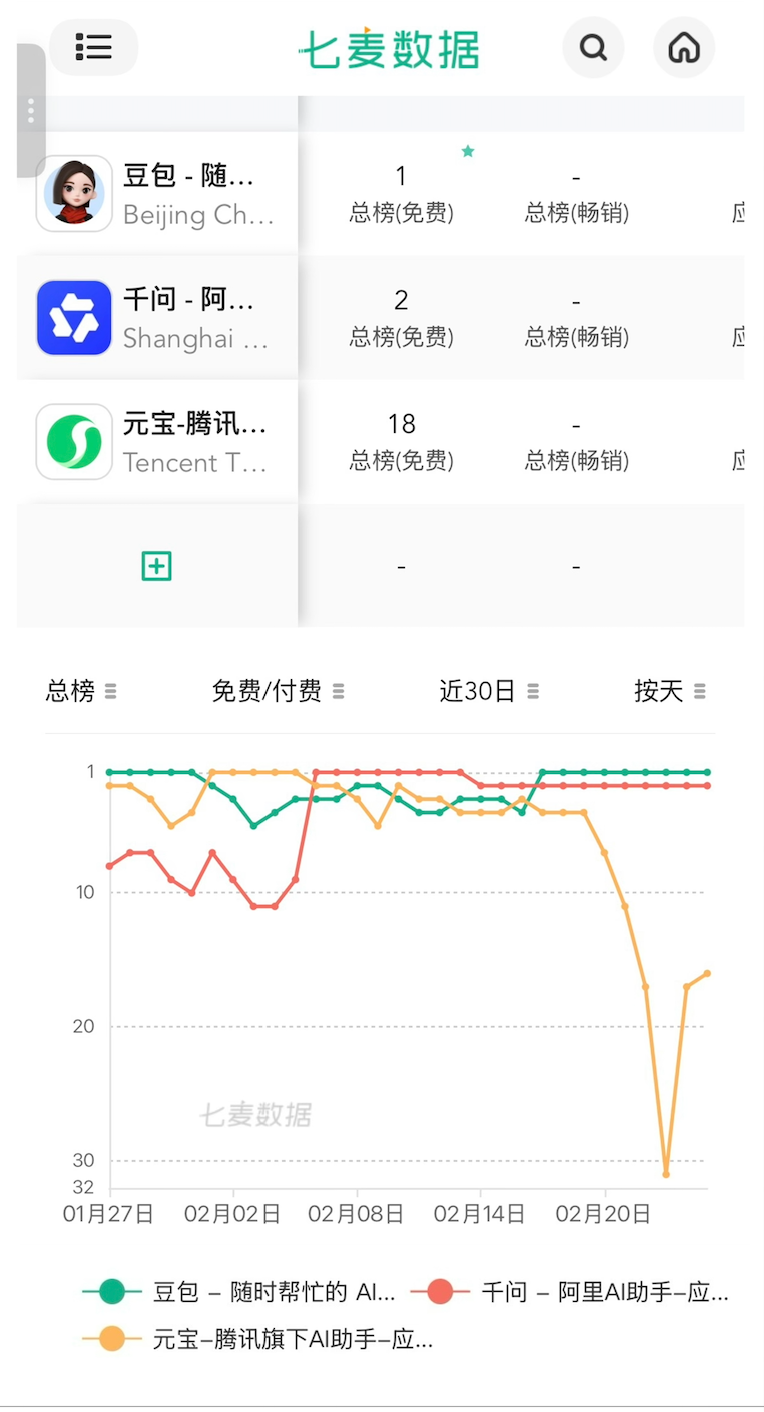
Core Insights - The competition among Chinese AI models during the Spring Festival has highlighted the struggle for market entry and user retention, with ByteDance's Doubao and Alibaba's Qianwen leading the download rankings, while Ant Group's Aifuku and Tencent's Yuanbao have fallen behind [1][4][12] - The differing strategies between Chinese and American AI companies reflect their respective stages of commercialization, with Chinese firms focusing on consumer traffic and app entry points, while U.S. firms are advancing in model performance and ecosystem development [1][16] Group 1: Competition Overview - The "Spring Festival AI Battle" saw major players like Baidu, Alibaba, Tencent, and ByteDance invest heavily in marketing, with significant cash incentives to attract users [3][4] - By February 25, Doubao maintained the top position in the App Store, while Aifuku and Yuanbao dropped significantly, indicating a failure to secure a lasting user base [1][4][12] - The competition has led to a notable increase in daily active users (DAU) for Yuanbao, which reached over 50 million after its cash giveaway campaign [6][11] Group 2: Marketing Strategies - The marketing approach of AI firms has shifted from traditional user acquisition methods to a focus on creating lasting user engagement and brand loyalty [10][12] - Analysts suggest that the effectiveness of these marketing strategies should be evaluated based on user retention rates post-campaign, rather than just initial download rankings [13][14] - The "red envelope" strategy has attracted users, but concerns remain about the sustainability of user engagement once the incentives are removed [12][14] Group 3: Product Differentiation - Doubao has established a unique position by integrating content creation capabilities and multi-modal interactions, while Qianwen focuses on e-commerce applications [14][18] - The lack of strong use cases for Yuanbao and Aifuku has resulted in lower user retention, highlighting the importance of addressing real user needs and providing distinct value propositions [12][14] - The future of AI assistants is expected to involve more integrated solutions that seamlessly fit into users' daily lives, emphasizing the need for personalized services [14][18] Group 4: Industry Trends - The current landscape indicates a divergence in strategies between Chinese and American AI companies, with the former prioritizing consumer engagement and the latter focusing on foundational model improvements and infrastructure [16][18] - The significant investments in AI infrastructure by companies like OpenAI and Google reflect a global trend towards practical applications and sustainable growth in the AI sector [16][17] - The competition for user engagement in China is seen as a critical step in defining the future of AI applications, with the potential for long-term impacts on market dynamics [18]
AI终极入口之战:字节阿里赢了,百度腾讯输了?
3 6 Ke· 2026-02-24 23:39
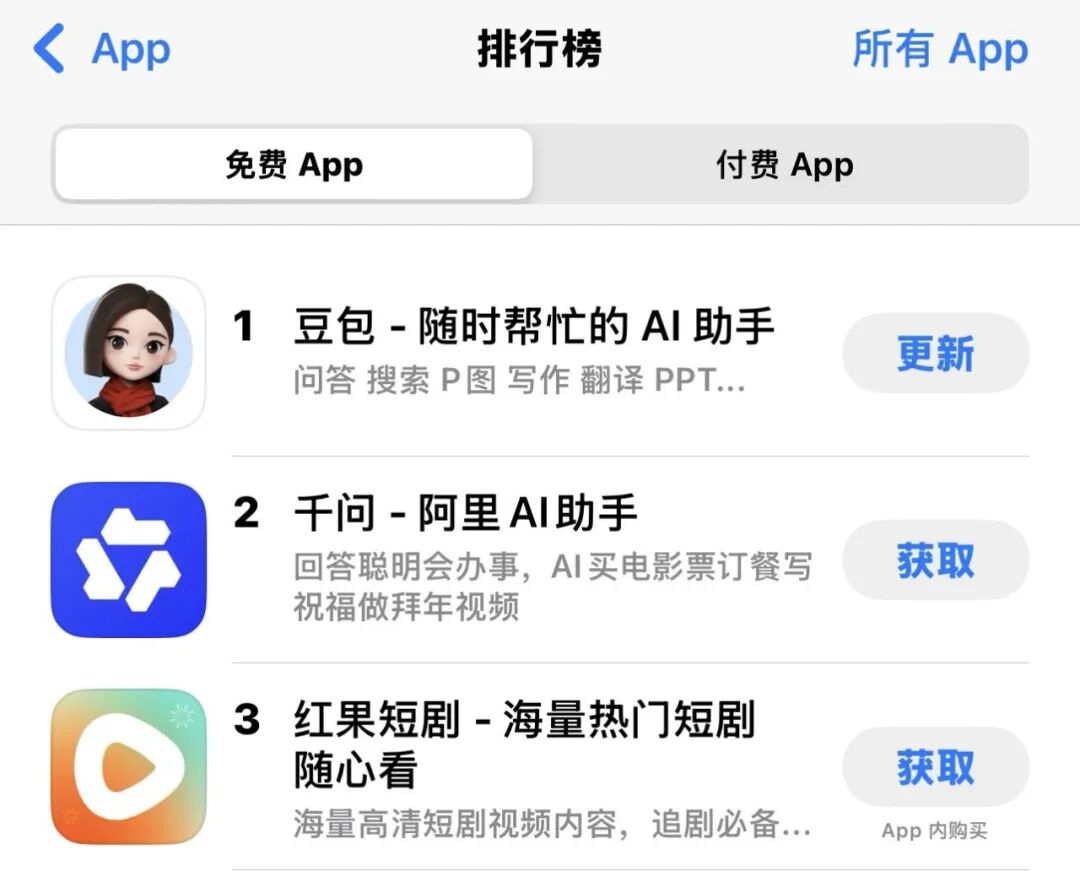
Core Insights - The competition for AI user entry points during the Chinese New Year has seen major investments exceeding 4.5 billion yuan from ByteDance, Alibaba, Baidu, and Tencent, marking a significant moment in China's AI and internet history [1][22] - The battle is not merely about acquiring traffic through financial incentives but about retaining users by integrating AI into daily life and establishing emotional connections [2][24] Group 1: Competitive Landscape - ByteDance's Doubao has successfully maintained its lead, leveraging a combination of entertainment and interaction, while Alibaba's Qianwen made significant strides but could not surpass Doubao [3][7] - Tencent's Yuanbao initially gained traction but quickly fell behind due to strategic contradictions and user retention issues, while Baidu's 500 million yuan investment did not yield the expected results [10][11][16] Group 2: Strategic Approaches - ByteDance's strategy focuses on embedding AI capabilities into high-frequency scenarios, creating emotional value by allowing users to personalize their AI interactions [5][6] - Alibaba's Qianwen has effectively integrated AI into its commercial ecosystem, enhancing user engagement through practical applications in daily services [9][21] Group 3: Challenges Faced - Tencent struggles with internal strategic conflicts, leading to a decline in user engagement with Yuanbao, which failed to provide clear value to users [13][15] - Baidu's reliance on a tool-centric approach limits its ability to compete effectively, as it lacks the ecosystem and user engagement strategies that other competitors have [16][18] Group 4: Future Directions - The competition is expected to shift from merely acquiring users through financial incentives to creating long-term value by embedding AI into everyday life [24][25] - The ultimate success will depend on how well companies can transform short-term user engagement into lasting habits and loyalty [24][27]

春节AI大战落幕,45亿砸出了什么?
Sou Hu Cai Jing· 2026-02-23 17:32
Core Insights - The 2026 Spring Festival AI battle marks a significant shift in China's AI industry from technical competition to ecological positioning, with over 4.5 billion yuan invested in this nationwide campaign [1][3][7] Group 1: Company Strategies - Tencent initiated the AI battle with a 1 billion yuan cash red envelope strategy, aiming to integrate AI into social interactions through features like "Yuanbao" [3][4] - Alibaba invested 3 billion yuan in its "Spring Festival Treat Plan," transforming red envelope activities into practical AI applications in daily life, resulting in over 1.3 billion users experiencing AI shopping for the first time [4][7] - ByteDance, as the exclusive AI cloud partner for the Spring Festival Gala, utilized its "Doubao" model to achieve 1.9 billion AI interactions, showcasing the potential of AI in content creation [6][10] Group 2: User Engagement and Market Impact - The Spring Festival saw nearly 4 million users aged 60 and above experience AI ordering for the first time, indicating a significant expansion of AI usage across demographics [7][9] - The event led to a rapid increase in user acceptance and usage of AI, with over 50% of red envelope recipients coming from lower-tier cities, marking 2026 as the year of AI popularization in China [7][8] Group 3: Technological Evolution - The emergence of video generation models, particularly ByteDance's Seedance 2.0, signifies a shift in focus from chat-based AI to video content creation, enhancing user engagement and creativity [10][11] - The advancements in video generation technology have addressed previous limitations, allowing for high-quality, controllable content creation, which is becoming essential in the AI landscape [11][12] Group 4: Industry Trends - The Spring Festival AI battle reflects a broader trend towards "scene-first" strategies, emphasizing practical applications of AI in real-life scenarios rather than mere technical specifications [9][13] - The competition is pushing companies to refine their AI offerings, focusing on local adaptation and user experience, which is crucial for long-term user retention and engagement [8][9]
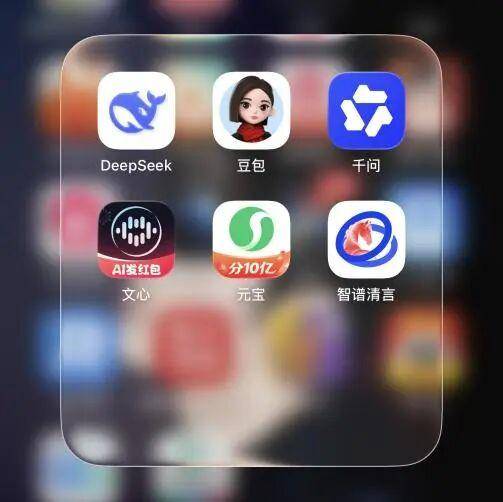
这个春节后,中国AI进入千问豆包“双王时代”
Ge Long Hui· 2026-02-16 16:47
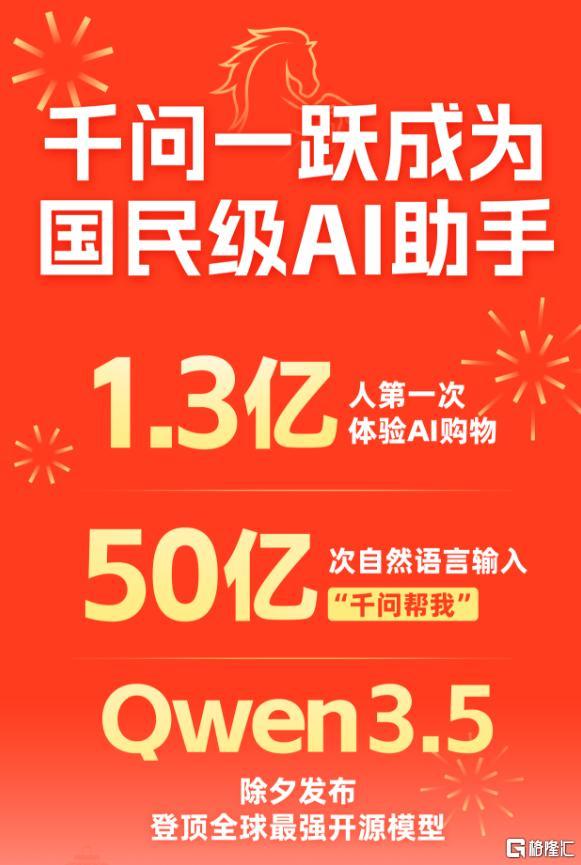
Core Insights - The 2026 Spring Festival marks a pivotal moment for China's AI industry, transitioning from technical experimentation to widespread public adoption [1][5] - Major tech companies like Alibaba and ByteDance have emerged as leaders in this competitive landscape, showcasing differentiated strategies and impressive operational metrics [1][5] Industry Overview - The Spring Festival AI competition has shifted from merely attracting users to cultivating habits and implementing practical applications, with Alibaba and ByteDance leading the way [5][6] - The competition has resulted in a dual development path for China's AI industry: Alibaba focuses on consumer-oriented applications, while ByteDance emphasizes content creation and innovation [6][18] Alibaba's Performance - Alibaba's Qwen 3.5-Plus model was released on New Year's Eve, achieving the status of the world's strongest open-source model, comparable to Gemini 3 Pro [1][8] - During the Spring Festival, over 1.3 billion AI-assisted transactions were completed, with users making 50 billion requests to the Qwen app, demonstrating its widespread adoption [1][5][12] Technological Breakthroughs - The Qwen 3.5-Plus model features a total of 397 billion parameters, with a significant performance improvement over previous models, achieving a 19-fold increase in inference throughput [10][11] - The model's API pricing is significantly lower than competitors, at 0.8 yuan per million tokens, making it more accessible for developers [10][11] Ecosystem Integration - Alibaba's extensive ecosystem, including platforms like Taobao and Alipay, enables seamless integration of AI into everyday tasks, enhancing user experience and driving rapid habit formation [11][15] - The Spring Festival saw a 372-fold increase in AI-assisted movie ticket purchases, highlighting the model's effectiveness in real-world applications [11][12] Competitive Landscape - The emergence of Alibaba and ByteDance as "dual kings" in the AI sector signifies a shift in China's AI industry towards original exploration, moving away from merely following Silicon Valley [18][19] - The competition between these two companies fosters a healthy industry environment, encouraging innovation and diverse development paths [18][19]
这个春节后,中国AI进入千问豆包“双王时代”
格隆汇APP· 2026-02-16 16:43
Core Viewpoint - The 2026 Spring Festival marks a pivotal moment for the AI industry in China, transitioning from technical experimentation to widespread public adoption, with major tech companies like Alibaba and ByteDance leading the charge through innovative strategies and significant user engagement [2][6][20]. Group 1: AI Competition Landscape - The Spring Festival AI competition has shifted from merely attracting users to cultivating habits and implementing AI in real-life scenarios, with Alibaba and ByteDance emerging as leaders [6][8]. - Tencent and Baidu launched substantial cash red envelope campaigns, with Tencent offering 1 billion yuan and Baidu 500 million yuan, to capture AI user engagement [6]. - ByteDance's Doubao achieved a daily model invocation of 63 trillion tokens, serving over 1 million enterprises and developers, while Alibaba's Qwen APP saw over 1.3 billion AI shopping transactions during the festival [7][10]. Group 2: Alibaba's AI Breakthroughs - Alibaba's Qwen 3.5-Plus model, released on New Year's Eve, is recognized as the strongest open-source model globally, outperforming competitors like Gemini 3 Pro, with an API price significantly lower at 0.8 yuan per million tokens [10][12]. - The Qwen APP's user engagement skyrocketed, achieving 73.52 million daily active users (DAU) within three months, nearing Doubao's 78.71 million DAU, demonstrating rapid growth [10][14]. - During the Spring Festival, Qwen facilitated over 1.3 billion orders, with users making 50 billion requests for assistance, showcasing its effectiveness as a practical AI assistant [7][15]. Group 3: Industry Development Insights - The competition between Alibaba and ByteDance highlights two core development directions in China's AI industry: consumer-oriented application by Alibaba and content innovation by ByteDance [8][20]. - The dual success of Alibaba and ByteDance signifies the emergence of a "dual king" era in China's AI landscape, moving from a follower to a leader position in the global AI industry [20][21]. - The integration of advanced AI technology with practical applications is essential for the realization of AI's value in everyday life, as demonstrated by Alibaba's comprehensive ecosystem supporting Qwen's capabilities [18][21].
超105亿红包,这份“马年羊毛”攻略请收好
Bei Jing Qing Nian Bao· 2026-02-16 07:10
Core Viewpoint - The 2026 Spring Festival is witnessing a significant shift in the traditional red envelope distribution, with major internet companies integrating AI into their interactive activities, leading to a total planned distribution of over 10.5 billion yuan in red envelopes and benefits during the holiday season [1][2]. Group 1: Company Initiatives - ByteDance's Doubao is the exclusive AI cloud partner for the Central Spring Festival Gala, offering interactive activities where users can participate in AI-generated blessings and quizzes to win cash prizes up to 8,888 yuan and over 100,000 tech gifts [2][3]. - Alibaba's Qianwen has launched a 3 billion yuan "Spring Festival Treat Plan," allowing users to issue commands for various services, including ordering food and travel, while also integrating AI-generated personalized blessings [3][4]. - Baidu's Wenxin Assistant is the chief AI partner for the Beijing Spring Festival Gala, providing users with opportunities to win cash prizes and engage in AI creative activities like writing couplets [3][5]. - Tencent is leveraging its WeChat ecosystem to distribute 1 billion yuan through its "Spring Festival 1 Billion Distribution" campaign, featuring multiple AI red envelope rain events on New Year's Eve [3][4]. Group 2: User Experience and Feedback - The AI red envelope activities have sparked widespread participation, with users experiencing innovative features such as AI-generated New Year photos and customized greetings, although some technical issues like loading delays were noted during peak times [4][5]. - Users reported a low but accessible return from participating in various activities, with an average cash reward of 56.89 yuan and multiple coupons for holiday shopping, indicating a user-friendly approach to engagement [5][6]. Group 3: Industry Insights - The AI red envelope campaign is seen as a new marketing strategy for internet companies, focusing on user engagement and education about AI services, with the potential to drive growth in a competitive landscape [6][7]. - Analysts suggest that the industry is transitioning from a "hundred model battle" to a "thousand model competition," emphasizing the importance of ecosystem integration and practical applications in AI development [6][7].