人机交互革命

Search documents
夸克AI眼镜,把千问大模型「戴」在眼前
雷峰网· 2025-12-01 00:38
Core Viewpoint - The article discusses the emergence of AI glasses as the next significant technological interface following smartphones, highlighting the potential for a human-computer interaction revolution driven by advancements in hardware and ecosystem integration [2][20]. Group 1: Industry Overview - The AI glasses industry has historically struggled with the "impossible triangle" of battery life, performance, and comfort, leading to products that are often seen as niche rather than practical tools [3]. - Despite a projected 64.2% year-on-year increase in global smart glasses shipments to 4.065 million units by mid-2025, few products can be worn all day due to common issues with weight, battery life, and display quality [3][4]. Group 2: Product Innovation - The Quark AI glasses utilize a "dual-chip dual-system" design, combining high-performance Qualcomm chips for complex AI tasks with low-power chips for lightweight tasks, effectively creating a "dual-engine" system [3]. - Key features include ultra-thin frames (7.5mm) and high brightness (4000 nits), enabling clear visibility even in bright outdoor conditions, along with a unique dual-battery design to alleviate battery anxiety [4]. Group 3: User Experience and Interaction - The integration of five microphones and bone conduction technology ensures clear audio capture in noisy environments, significantly enhancing user experience [5]. - The AI glasses are designed to respond quickly and accurately to user needs, positioning them as potential replacements for smartphones in certain scenarios [5]. Group 4: Ecosystem Development - The Quark AI glasses are built on a differentiated ecosystem strategy, integrating seamlessly with Alibaba's core applications like navigation, payment, and travel reminders without requiring additional downloads [8][10]. - Future plans include supporting the MCP protocol to attract third-party developers, expanding the range of applications available on the device [10]. Group 5: Market Potential and Trends - The market for AI glasses is expected to grow significantly, with a 2500% increase in sales during the 2025 Double Eleven shopping festival, indicating strong consumer interest [14]. - By 2029, global shipments of smart glasses are projected to exceed 40 million units, positioning them as a major consumer electronics category after smartphones [14][16]. Group 6: Competitive Landscape - Chinese companies are gaining a competitive edge in AI glasses through innovations in AI model applications, scene implementation, and hardware advancements, forming a complete supply chain [16]. - The article emphasizes that the "iPhone moment" for AI glasses will require mature hardware, well-developed ecosystems, and a shift in user habits, with the first two conditions being met [16].

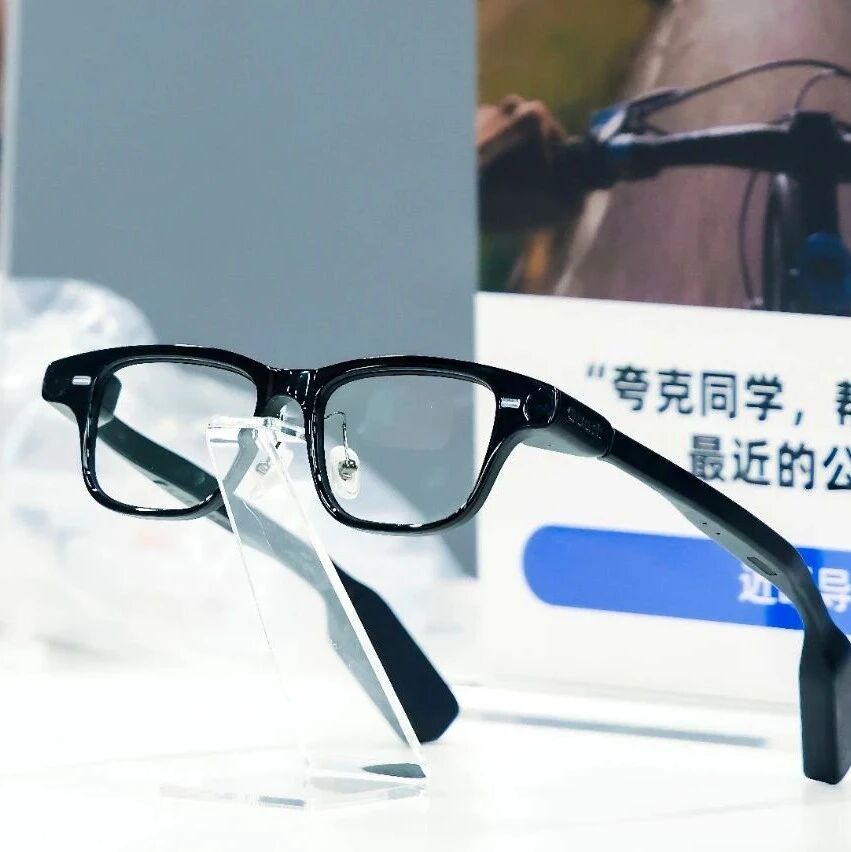
夸克眼镜交卷:到底谁是阿里AI to C“一哥”?
Bei Jing Ri Bao Ke Hu Duan· 2025-11-27 17:10
Core Viewpoint - Quark AI glasses were launched on November 27, featuring two series with six models, marking a significant step in AI consumer technology [1][3] Product Launch and Features - The Quark AI glasses S1 series includes three models with prices starting at 3,799 yuan, while the G1 series focuses on fashion and lightweight design, starting at 1,899 yuan [3] - S1 is equipped with dual flagship chips, five microphone arrays, and bone conduction technology, enabling 0.6 seconds rapid capture and 3K video recording, with 4K output after processing [3] - G1 weighs around 40 grams and shares similar hardware specifications with S1, except for the display feature [3] - The design incorporates ultra-thin frames and legs, making it 25% thinner than mainstream products, with a replaceable battery feature [3] Market Context and Competition - The AI glasses market is viewed as a challenging space, with previous attempts by companies like Google and Meta failing to gain traction [5][6] - Despite skepticism, the global smart glasses market is projected to see significant growth, with an expected shipment of 406.5 million units by mid-2025, a 64.2% increase year-on-year [7] - Chinese manufacturers are gaining ground in the global market, with predictions of over 491.5 million units shipped by 2026, marking a new phase of growth [7] Strategic Positioning - The integration of the Qianwen AI assistant with Alibaba's ecosystem is emphasized as a key advantage, enhancing user experience across various applications [9] - Industry experts express mixed feelings about Alibaba's entry into the smart glasses market, with some viewing it as a potential risk while others see it as a necessary exploration [6][10]

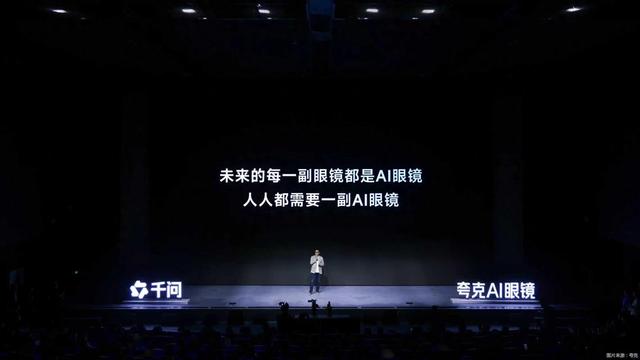
巨头鏖战AI眼镜赛道
Zheng Quan Ri Bao· 2025-11-27 15:49
Core Insights - Alibaba Group has officially launched Quark AI glasses, introducing two series (S1 and G1) with a total of six products, marking a significant move into the AI hardware sector [1] - The Quark AI glasses aim to serve as a "personal super assistant," integrating deeply with Alibaba's core applications like Alipay, Gaode Map, and Taobao, thus creating a service matrix covering various scenarios such as search, navigation, and payment [1] - The AI glasses are positioned as a revolutionary smart device in the AI era, comparable in importance to smartphones, with the ability to capture over 80% of human sensory input, which smartphones cannot achieve [1] Industry Trends - The online retail sales of AI glasses and smart wearable products have increased by 23.1%, with a staggering 2500% year-on-year growth in the smart glasses category during the Tmall "Double 11" shopping festival [2] - The rapid development of the AI glasses market is driven by three core factors: the integration of AI models with AR technology enhancing immersive experiences, policy subsidies improving product cost-effectiveness, and manufacturers accelerating multi-scenario applications through lightweight design and feature expansion [2] - Current industry innovations are focusing on three main directions: enhancing optical display quality, optimizing gesture and voice interaction, and strengthening AI capabilities to support features like audio-visual translation and AI-guided tours [2]
夸克眼镜交卷,到底谁是阿里AI to C“一哥”?
Bei Jing Shang Bao· 2025-11-27 14:32
Core Insights - Quark AI glasses were launched on November 27, featuring two series with six models, highlighting the integration of the Qianwen app, which has surpassed 10 million downloads in its first week of public testing [1][2][3] - The event emphasized the potential of AI glasses to revolutionize human-computer interaction, positioning them as essential devices comparable to smartphones [6][10] Product Details - The Quark AI glasses S1 series includes three models with prices starting at 3,799 yuan, while the G1 series focuses on fashion and lightweight design, starting at 1,899 yuan [2][3] - The S1 model features dual flagship chips, five microphone arrays, and capabilities for 3K video recording, while the G1 model weighs around 40 grams and shares similar hardware specifications without a display [4][5] Market Context - The global smart glasses market is projected to see significant growth, with an expected shipment of 406.5 million units by mid-2025, marking a 64.2% year-on-year increase [8][9] - Chinese manufacturers are gaining traction in the global market, with predictions indicating that by 2026, shipments will exceed 491.5 million units, entering a new phase of scaled growth [8][9] Competitive Landscape - The entry of major players like Alibaba into the smart glasses market has elicited mixed reactions from industry insiders, with some expressing skepticism about the viability of smart glasses as a product category [7][11] - Despite past failures of similar products from companies like Google and Meta, the industry remains optimistic about the future of AI glasses, with expectations that every pair of glasses will eventually incorporate AI technology [9][10]

爆款思维 VS 长期价值:讯飞“软硬一体”与其他AI硬件的分水岭
Jing Ji Guan Cha Wang· 2025-11-13 22:37
Core Insights - The article discusses the strategic choice of iFlytek to pursue a "long-termism" approach in AI hardware development, contrasting it with the prevalent "hit product mentality" in the industry [1][5] - iFlytek's "soft and hard integration" strategy aims to create a comprehensive technology system that deeply integrates AI capabilities into existing industrial scenarios rather than focusing solely on creating standout hardware products [1][3] AI Hardware Development - The current trend in the AI hardware sector shows a tendency to prioritize hardware over integration, with many products failing to achieve effective soft and hard collaboration [1] - iFlytek's solutions, such as the X5 smart office notebook and AI translation headset, demonstrate high accuracy rates in noisy environments, achieving 95.08%, 97.1%, and 98.69% respectively [1] Technological Innovations - iFlytek's digital assistant "Xiao Fei" showcases multi-modal interaction capabilities, enabling personalized recommendations and task completion based on conversation history [2] - Key technologies introduced include personalized memory and voice replication, allowing for high-fidelity voice recreation and a deeper understanding of user preferences [2] Market Positioning - Unlike international giants that view consumer AI hardware as the next entry point, iFlytek focuses on practical value realization by embedding AI capabilities into existing industries [3][4] - The company aims to leverage proven AI capabilities to quickly generate scale effects and commercial returns by integrating them into established scenarios like automotive, education, and healthcare [4] Industry Impact - iFlytek's AI products have already made significant inroads in education and healthcare, with the "Smart Medical Assistant" model improving diagnostic accuracy from 87% to 96% and halving medical record writing time [5] - The company's approach emphasizes the tangible realization of AI benefits across various sectors, moving beyond mere concepts to actual value delivery [5]

拿了近 6000 万美金的 AI 语音产品在 VC 圈火了,Mercor 最新估值 100 亿美金
投资实习所· 2025-06-27 05:35
Core Insights - The rapid rise of AI application startups is evident across various sectors, showcasing significant growth in both valuation and revenue AI Programming Sector - Replit's revenue surged from $10 million to $100 million in annual recurring revenue (ARR) within six months after launching its Agent feature [1] - Cursor achieved a valuation of $9 billion after raising funds, with its ARR surpassing $500 million [1] Healthcare Sector - Abridge, an AI note-taking product, saw its valuation double from $2.5 billion to $5.3 billion after raising $300 million in Series E funding, with an ARR of $117 million [1] - Abridge is utilized by over 150 major healthcare systems in the U.S. and focuses on B2B applications [1] Legal Sector - Harvey's valuation increased from $3 billion to $5 billion after completing $300 million in Series E funding, with ARR growing from $50 million to $75 million [2] - The company has expanded its workforce significantly, increasing from about 10 employees to 400 [2] AI Customer Service Sector - Decagon, an AI customer service product, raised $131 million in Series C funding, bringing its total funding to $231 million and its valuation to $1.5 billion, with an ARR of $10 million [2] Data Annotation and AI Recruitment - Mercor, an AI recruitment platform, recently completed a funding round that raised its valuation to $2 billion, achieving $1 million to $10 million in revenue within 11 months [3][7] - The company has been profitable and is focusing on data annotation services, with a significant portion of its recruitment coming from referrals [4] AI Voice Technology - A new AI voice product has shown a monthly growth rate exceeding 50%, indicating a significant evolution in human-computer interaction [4]