
人类非物质文化遗产

Search documents
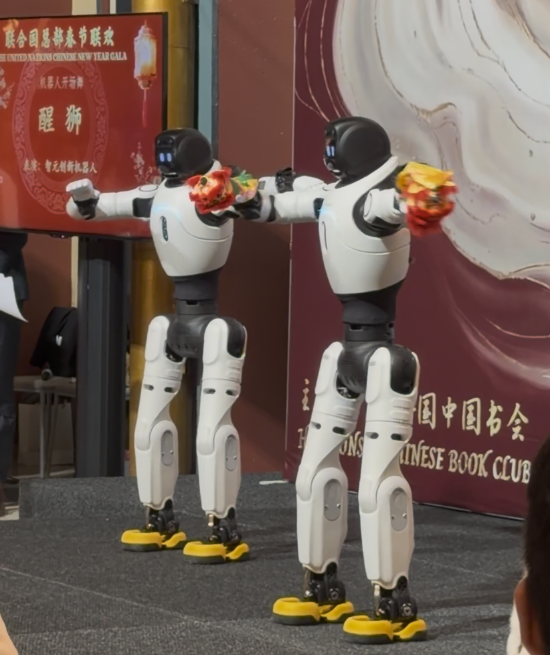
联合国总部举办春晚 机器人跳舞、武术冠军打太极
Xin Lang Cai Jing· 2026-02-14 02:59
Core Viewpoint - The Chinese New Year celebration at the United Nations headquarters highlights the significance of the festival as a cultural heritage and promotes the values of harmony and coexistence [1] Group 1: Event Overview - The Chinese New Year gala was held on February 12 at the UN headquarters in New York, attended by over 500 participants including UN officials and Chinese staff [1] - The event featured performances such as a robot dance and Tai Chi, showcasing elements of Chinese culture [1] Group 2: Cultural Significance - Chinese Permanent Representative to the UN, Fu Cong, emphasized the New Year as a grand festival of Chinese civilization and an intangible cultural heritage of humanity [1] - The UN's Economic and Social Affairs Under-Secretary-General, Li Junhua, noted the importance of reflecting on the UN's mission as it approaches its 80th anniversary in 2025 [1] Group 3: Recognition and Future - Since 2023, the Chinese New Year has been recognized as a floating holiday at the UN, and in 2024, it will be included in UNESCO's list of "Masterpieces of the Oral and Intangible Heritage of Humanity" [1]


春节:“中国年”诠释文化主体性的强大生命力
Zhong Guo Qing Nian Bao· 2026-02-01 21:33
Core Viewpoint - The Spring Festival, recognized as a UNESCO Intangible Cultural Heritage, exemplifies the vitality of Chinese cultural identity through its living traditions and practices [1] Group 1: Four Powers of Cultural Subjectivity - Value Leading Power: The Spring Festival, originating over 4,000 years ago, embodies a time philosophy and cultural values that persist through changing customs, reflecting the core pursuit of happiness [2] - Emotional Cohesion Power: The festival strengthens national and ethnic identity, with over 3 billion people participating in the Spring Festival travel rush, showcasing cultural unity across regions and communities [2] - Cultural Shaping Power: The various customs associated with the Spring Festival shape the lifestyle and temporal rhythm of Chinese people, fostering a unique cultural character and spirit [3] - Global Radiation Power: The Spring Festival promotes cultural exchange, with its customs spreading to East Asia and beyond, becoming a vital link for overseas Chinese and celebrated by about one-fifth of the global population [3] Group 2: Three Characteristics of Cultural Subjectivity - Popularity: The Spring Festival is a collective creation rooted in the lives of the people, making it widely shared and deeply ingrained in society [4] - Humanism: The festival's customs cultivate moral awareness and reflect a value system centered on virtue, harmony, and gratitude, integrating humanistic spirit into daily life [4] - Humanity: The themes of reunion and harmony resonate universally, recognized by UNESCO for their shared human values, and the festival's adaptability showcases cultural inclusivity [4] Group 3: Insights for Building Cultural Subjectivity - Emphasizing Humanism: Strengthening cultural confidence through systematic protection and innovative dissemination of the Spring Festival culture [5] - Promoting Popularity: Encouraging community-driven cultural practices and innovative transformations using modern technology to enhance cultural experiences [6] - Valuing Humanity: Fostering global dialogue through the Spring Festival, enhancing the international appeal of Chinese culture and sharing best practices in cultural governance [6]
泰柬爆发新争端,佩通坦作出一项决定
Huan Qiu Shi Bao· 2025-07-09 00:15
Group 1 - The ongoing border dispute between Thailand and Cambodia has extended into cultural conflicts, with Thailand planning to apply for the inclusion of its royal traditional attire in UNESCO's intangible cultural heritage list by 2026 [1] - Cambodia's previous application to list its wedding traditions as intangible cultural heritage has raised concerns in Thailand, particularly due to the inclusion of Thai attire images in Cambodia's application materials [1] - Cambodian cultural practitioners and officials have reacted strongly to a Thai newspaper article, viewing it as provocative and misrepresentative of the essence of intangible cultural heritage, which should foster understanding rather than conflict [1] Group 2 - Thailand's new culture minister, Petthongtan, has suspended the process of returning 20 Khmer artifacts to Cambodia, citing budget constraints and the current state of relations between the two countries [2] - Cambodia's Minister of Culture and Fine Arts, Pheng Sakhna, expressed willingness to cover the costs of returning the artifacts and urged Thailand to adhere to the agreement made last year regarding the transfer of the artifacts [2] - The 20 artifacts in question are primarily small sculptures, part of a total of 43 Khmer artifacts that were smuggled out of Cambodia, with 23 already returned in 2008 and 2015 [2]