
代位追偿

Search documents
遭遇“开门杀”,到底该谁担责? 最高法拟规定:遭遇“开门杀”,保险也要赔
Mei Ri Jing Ji Xin Wen· 2025-11-12 16:02
Core Viewpoint - The recent draft from the Supreme People's Court aims to clarify the legal responsibilities and insurance claims related to "dooring" accidents, which have been a contentious issue in traffic accident liability [1][3]. Group 1: Legal Clarifications - The draft proposes that when a vehicle passenger opens a door and causes harm to others, the liability should primarily fall on the vehicle's insurance, regardless of whether the passenger is deemed at fault [3][4]. - It specifies that insurance companies cannot deny compensation by claiming the passenger is not an insured driver, thus protecting the rights of the injured parties [4][6]. Group 2: Impact on Insurance Practices - The inclusion of "door-related" risks in the main insurance liability may lead to changes in insurance pricing, with a potential increase in base rates due to adjustments in actuarial models [5][6]. - Insurers may focus on monitoring high-risk groups, such as ride-hailing services, and implement differentiated pricing strategies [6][7]. - The draft also suggests that insurers will need to enhance their claims processes and recovery mechanisms to ensure timely compensation and effective recourse against negligent parties [6][7].
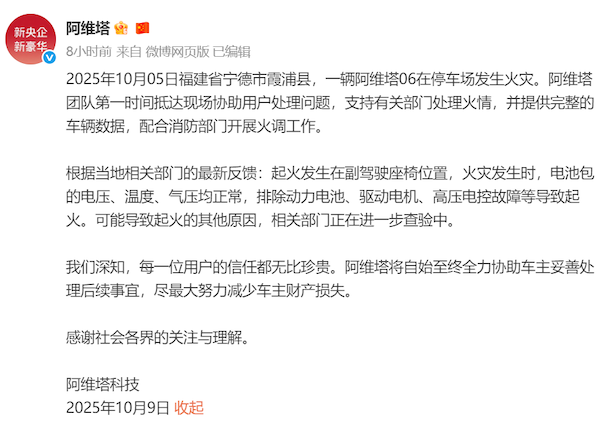
阿维塔 一把火烧出百万账单 谁来买单?
Di Yi Cai Jing· 2025-10-09 16:19
Core Viewpoint - The incident involving the Avita 06 vehicle catching fire, which subsequently ignited seven other vehicles, has raised significant public concern regarding liability and compensation, with estimates of damages exceeding one million yuan [1][5]. Group 1: Incident Details - The fire reportedly started at the front passenger seat, with the vehicle's battery parameters being normal at the time of the incident, leading authorities to classify it as an "external fire" [2][4]. - The vehicle in question was purchased on August 28, 2025, and had only been driven 1,066 kilometers before the fire occurred [1]. Group 2: Liability and Responsibility - Determining liability is complex, as it hinges on identifying the initial ignition point, which could either be a manufacturing defect or the result of the owner's actions [2][4]. - Legal experts indicate that if the fire is attributed to a product defect, both the manufacturer and seller could be held jointly liable for damages [5][6]. Group 3: Compensation Mechanisms - Compensation for damages will likely involve the vehicle owner's insurance, specifically commercial third-party liability insurance, which would cover damages to affected vehicles [5][6]. - In cases where the fire is deemed the owner's fault, manufacturers may still offer symbolic compensation to maintain customer satisfaction, although this amount is typically low [5][6]. Group 4: Recommendations for Affected Parties - Affected vehicle owners should secure comprehensive evidence, including a fire cause identification report from the fire department, as this will be crucial for any compensation claims [7]. - It is advised to maintain open communication with responsible parties and their insurance companies, and to consider legal action if negotiations fail [6][8].

网店卖假货怠于赔偿,合作推广方“假一赔三”后能追偿吗?
Ren Min Wang· 2025-09-03 00:30
Core Viewpoint - A well-known live streamer was found to be selling counterfeit goods, leading to a legal dispute between the talent agency and the partnered online store regarding compensation for consumers [1][2]. Group 1: Legal Proceedings - The Shanghai Huangpu District People's Court ruled that the online store must pay the talent agency over 720,000 yuan in compensation, along with other fees and penalties [1][3]. - The talent agency had compensated consumers based on a "triple compensation" standard after determining the goods were counterfeit through a third-party inspection [1][2]. - The court found that the evidence provided by the talent agency, including inspection reports and consumer feedback, was sufficient to establish that the goods sold were not genuine [2]. Group 2: Financial Implications - The total compensation awarded to the talent agency includes a basic service fee of 21,000 yuan, over 10,000 yuan in inspection fees, and a penalty of 100,000 yuan for breach of contract [3]. - The talent agency's decision to compensate consumers was deemed legally justified, as they had a legitimate interest in protecting their reputation and avoiding further legal repercussions [4]. Group 3: Regulatory Context - The case highlights the responsibilities of online retailers in ensuring the authenticity of products sold and the legal ramifications of selling counterfeit goods [4]. - The ruling reinforces the rights of third parties to seek compensation when they have a legitimate interest in the fulfillment of a debt, as outlined in the Civil Code of the People's Republic of China [4].