代际认知差异

Search documents
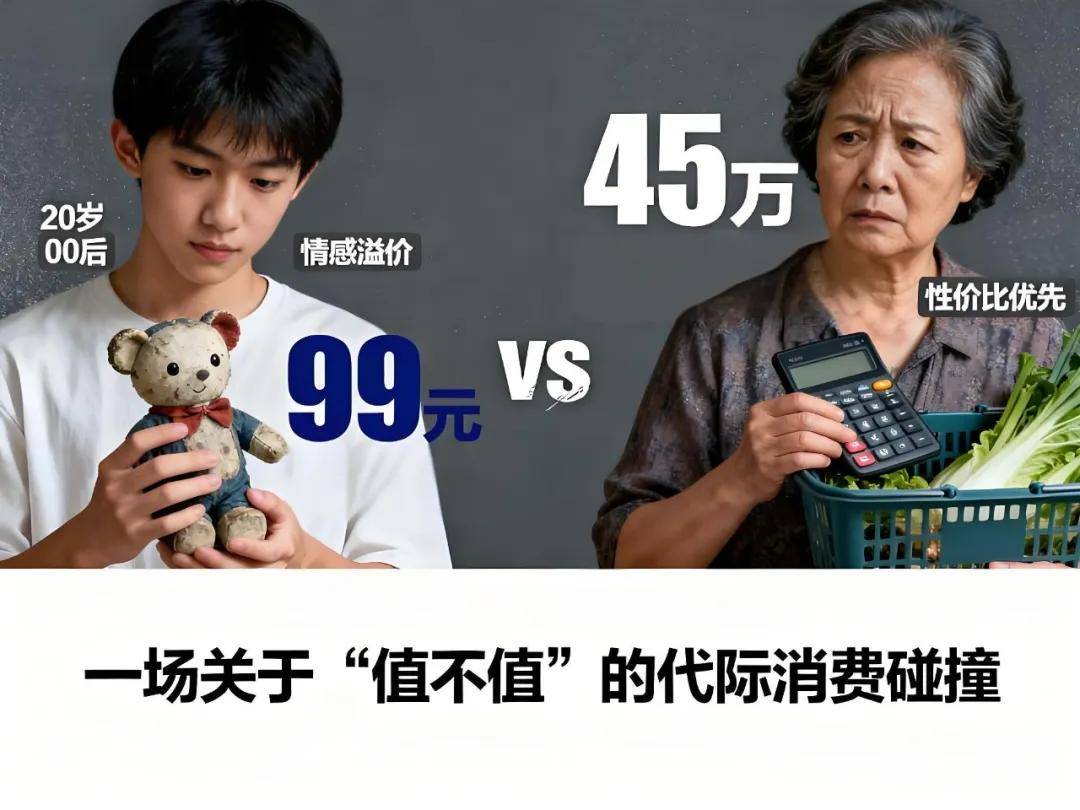
99元玩偶炒至45万:00后的情感消费vs父母的实用主义
Sou Hu Cai Jing· 2025-10-10 15:32
Core Insights - The article discusses the significant generational gap in understanding consumer behavior between the post-2000 generation (00s) and their parents, highlighting how 72% of young people define themselves through professional insights, while only 23.7% of parents truly understand their consumption motivations [2][4]. Group 1: Consumer Behavior - The 00s generation, growing up in a relatively affluent internet era, prioritizes emotional value and social recognition over practicality and cost-effectiveness, which are more valued by their parents who experienced scarcity [4][8]. - A notable incident involving the Labubu toy illustrates the extreme consumer behavior of the 00s, where a toy priced at 99 yuan was resold for as much as 4,523 yuan, reflecting a 45-fold markup [6][26]. - The 00s are willing to pay a premium for products that provide emotional connections and social status, viewing items not just as goods but as "passports" into specific social circles [8][14]. Group 2: Communication and Understanding - The generational gap in understanding is further emphasized by the communication challenges that arise from differing value systems, where parents often struggle to comprehend the emotional significance of purchases made by their children [10][24]. - The "Silk Gourd Soup" meme exemplifies the widespread communication issues stemming from these cognitive differences, resonating with many as it reflects the deeper disconnect in understanding between generations [10][11]. - The article suggests that these differences can serve as opportunities for mutual learning and growth, as both generations can benefit from understanding each other's perspectives [15][29]. Group 3: Career Choices - A survey indicates that only 27.2% of recent graduates are willing to pursue careers similar to their parents, with a significant portion expressing a desire for independence in their career paths, reflecting a shift in values and aspirations [13][14]. - This trend highlights a broader societal phenomenon where higher education levels correlate with a decreased acceptance of traditional career paths established by previous generations [13][14]. Group 4: Emotional and Rational Consumption - The 00s exhibit a complex consumption psychology, balancing rational spending on essentials while indulging in emotional purchases, demonstrating a nuanced understanding of value that transcends mere price [14][20]. - Their approach to spending is characterized by a blend of frugality and willingness to invest in emotional experiences, indicating a sophisticated consumer mindset that challenges traditional views of value [14][20]. Group 5: Future Perspectives - The article concludes that the future of intergenerational understanding should not be marked by conflict but by mutual respect and coexistence, as both generations navigate their cognitive frameworks [22][29]. - It emphasizes the importance of recognizing cognitive limitations and the potential for growth through open dialogue and understanding, which can lead to a more harmonious relationship between generations [24][25].

泡泡玛特,怎么这么难学
3 6 Ke· 2025-06-04 03:54
Core Viewpoint - Pop Mart has gained significant popularity overseas, evidenced by a recent incident in the UK where a large-scale brawl occurred over the limited edition Labubu toy, leading to the company's decision to halt sales in the UK [1]. Group 1: Company Performance and Market Reaction - Pop Mart's stock price surged, reaching a historical high of 235.6 HKD on June 3, with a market capitalization exceeding 310 billion HKD, reflecting a year-to-date increase of over 160% [3][4]. - Despite the stock's impressive performance, many retail investors express skepticism, believing it to be another bubble, while institutional investors have largely missed out on this capital feast [4][5]. Group 2: Investment Strategies and Challenges - Institutional investors have struggled to adapt to the changing consumer landscape, often entering and exiting positions at inopportune times, leading to significant losses [6][7]. - The traditional investment mindset, focused on established metrics like brand strength and cash flow, has hindered many fund managers from recognizing the potential of Pop Mart's innovative business model [8][12]. Group 3: New Consumer Trends and Future Outlook - Pop Mart's success is attributed to its unique IP creation model, which has allowed it to generate significant revenue from overseas markets, with international sales projected to reach 30% by mid-2024 [9][10]. - The company has effectively tapped into the emotional and identity-driven consumption trends of the Z generation, which is expected to control 27% of global disposable income by 2025 [15][16]. - The shift in consumer preferences towards emotional fulfillment and collectible items indicates a broader transformation in the consumption landscape, challenging traditional investment paradigms [17]. Group 4: Market Dynamics and Risks - The concentrated ownership structure of Pop Mart, with the top 25 shareholders holding over 85% of shares, raises concerns about stock price volatility and market sensitivity to liquidity [16]. - Despite potential risks, the transition in consumption investment logic is seen as inevitable, with other brands also demonstrating the power of new consumer trends [17].