以文化赋能经济社会发展

Search documents
[学习手记]以文化“一池春水”赋能经济“万顷碧波”
Xin Lang Cai Jing· 2026-02-18 22:23
Group 1 - The core viewpoint emphasizes the integration of culture with commerce, tourism, and sports, highlighting that cultural leadership is essential for the success of these sectors [1][4] - The development of modern service industries and the utilization of rich cultural resources are seen as vital for promoting economic growth [1][3] - The cultural sector is projected to see a profit increase of 6.5% by 2025, with per capita spending on education and cultural entertainment rising by 9.4% [3] Group 2 - Cultural initiatives are driving new consumption patterns and economic benefits, as seen with the success of cultural products and events like the film "Nezha" [2][3] - The fusion of culture with tourism and sports is revitalizing urban economies and contributing to rural development, showcasing the potential of cultural investments [4][5] - The promotion of a unique financial culture rooted in Chinese values is expected to enhance the ethical framework of the market economy [6][7] Group 3 - The ongoing exploration of "humanistic economics" aims to deepen the integration of culture into economic policies, fostering sustainable growth [7][8] - The cultural sector is recognized as a significant driver of economic vitality, with the potential to unlock new opportunities and enhance overall economic performance [1][2]
学习手记 | 以文化“一池春水”赋能经济“万顷碧波”
Xin Hua She· 2026-02-18 08:30
Group 1 - The core idea emphasizes the integration of culture with various sectors such as commerce, tourism, and sports, highlighting that cultural leadership is essential for meaningful fusion [2][3] - The relationship between culture and economy is dialectical, where culture is fundamentally influenced by economic conditions, yet economic development relies on cultural support [3][4] - The development of cultural markets and new consumption models is a clear directive from leadership, aiming to stimulate economic growth through cultural initiatives [4][5] Group 2 - Cultural initiatives are driving new consumption potentials, with significant growth in cultural enterprise profits projected at 6.5% by 2025, and per capita spending on education and cultural entertainment expected to rise by 9.4% [5] - The integration of culture with tourism and sports is enhancing urban economic vitality and providing investment opportunities, showcasing the benefits of cross-sector collaboration [6][7] - The concept of "Cultural +" is emerging as a solution for cross-industry integration, indicating a shift towards a more holistic approach to economic development [7][9] Group 3 - The importance of cultural values in shaping modern financial practices is highlighted, with a focus on integrity and ethical behavior in the market economy [9][10] - The ongoing exploration of "humanistic economics" is seen as a critical component in implementing proactive cultural economic policies, aiming for high-quality economic development [10][11]
学习手记丨以文化“一池春水”赋能经济“万顷碧波”
Xin Hua Wang· 2026-02-18 08:20
Core Viewpoint - The integration of culture with commerce, tourism, and sports is essential for economic development, as cultural resources are increasingly recognized as a driving force for economic vitality [2][3][4]. Group 1: Cultural Impact on Economy - Cultural elements are becoming pivotal in stimulating new consumption potentials, with a focus on developing various cultural market entities and new consumption models [5]. - By 2025, profits from large-scale cultural enterprises are projected to increase by 6.5%, while per capita spending on education and cultural entertainment is expected to rise by 9.4% [6]. - The cultural sector is not only enhancing the consumer market but also significantly upgrading the structure of resident consumption [6]. Group 2: Cross-Industry Integration - The fusion of culture with tourism is invigorating urban economies and attracting investments, as seen in popular destinations like "Erbin" and "Aletai" [7]. - The combination of culture and sports is creating new economic opportunities, contributing to rural revitalization and enhancing community wealth [7]. - The "cultural+" approach is continuously yielding new solutions for cross-industry integration, enhancing both economic and cultural foundations for future growth [8]. Group 3: Cultural Values in Business - The principles of honesty, integrity, and innovation are being emphasized as essential components of modern business culture, reflecting a shift towards a more ethical market economy [9]. - The integration of traditional Chinese cultural values into modern financial practices is being highlighted as a means to cultivate a robust commercial civilization [10]. Group 4: Future Outlook - The ongoing exploration of "humanistic economics" is expected to deepen, with cultural policies being actively implemented to support economic growth [11]. - The infusion of cultural elements into the economy is anticipated to generate significant momentum for high-quality development, steering the economy towards broader horizons [11].


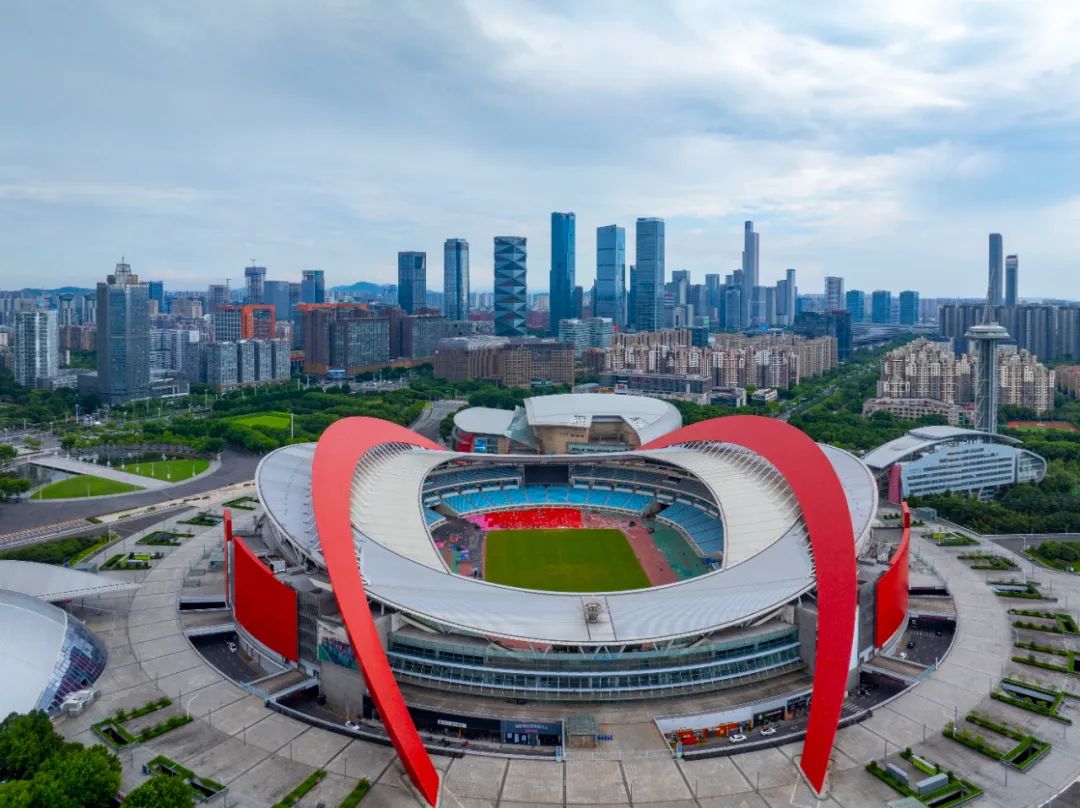
南京奥体中心:是赛事主场,更是“全民客厅”
Nan Jing Ri Bao· 2025-07-02 02:10
Core Viewpoint - The Nanjing Olympic Sports Center has evolved from a traditional sports venue into a multifunctional community hub, referred to as the "people's living room," enhancing the city's cultural and economic vitality through sports and events [10][21][34]. Group 1: Development of Nanjing Olympic Sports Center - The Nanjing Olympic Sports Center was established in response to the 2002 National Games, symbolizing the city's modernization and urban development [5][7]. - The center has become a significant urban landmark, integrating sports with cultural events, thus transforming the local community's engagement with contemporary life [8][12]. Group 2: Transition to a Multifunctional Venue - The center has shifted from being merely a "competition arena" to a "community living room," focusing on diverse functions such as fitness, cultural activities, and sports commercialization [13][21]. - In 2019, the center's sports training revenue surpassed fitness income, indicating a successful transition in its operational model [13]. Group 3: Impact of "Su Super League" - The "Su Super League" has emerged as a cultural phenomenon, attracting over 500,000 spectators and generating significant online engagement, with over 8 billion views on Douyin [3][24]. - The league has stimulated local tourism and commerce, with a 48% increase in external visitors and a 15% rise in intercity tourism spending during its matches [24][25]. Group 4: Future Directions and Innovations - The center aims to further integrate sports, culture, and tourism, creating a synergistic effect that enhances the city's economic growth [27][31]. - Innovations in event management and community engagement are essential for transforming event attendance into broader economic benefits for the city [30][32].