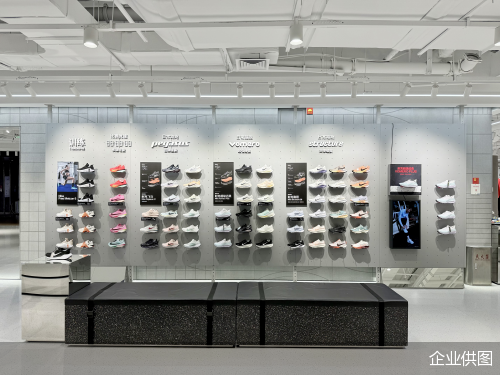
以运动为引领(Sport Offense)战略

Search documents
耐克大中华区CEO换人:董炜即将卸任,从业25年的“新帅”接任
Sou Hu Cai Jing· 2026-01-22 06:15
Core Viewpoint - Nike is undergoing significant leadership changes in the Greater China region, with Angela Dong stepping down and Cathy Sparks appointed as the new Vice President and General Manager, reflecting a strategic shift amidst challenging market conditions [1][2][3]. Leadership Changes - Angela Dong will officially resign on March 31, after over 20 years with Nike, during which she played a crucial role in the company's engagement with the Chinese market [1]. - Cathy Sparks, who has 25 years of experience at Nike, will take over as the new leader for the Greater China region, although she has limited experience in this specific market [2]. Financial Performance - Nike's financial results for the second quarter of fiscal year 2026 showed revenues of $12.427 billion, a 1% year-over-year increase, but a 32% decline in net profit to $792 million [3]. - The Greater China region reported revenues of $1.423 billion, a 17% decrease year-over-year, with a 49% drop in EBIT, indicating significant performance challenges [3]. Strategic Initiatives - Nike is committed to optimizing operations in China, viewing it as a market with long-term potential, and plans to accelerate actions under the 'Win Now' strategy, which includes team restructuring and product optimization [4]. - The company aims to enhance its connection with consumers and innovate around athlete-centered products as part of its strategic vision moving forward [4].



耐克大中华区CEO换人:利润缩水49%,外方“新帅”接任
Guan Cha Zhe Wang· 2026-01-21 12:14
Core Insights - Nike announced the resignation of Angela Dong, the current head of Greater China, effective March 31, with Cathy Sparks appointed as the new Vice President and General Manager for the region [1][2] Group 1: Leadership Changes - Angela Dong has been with Nike since 2005 and has held several key leadership positions in Greater China, contributing significantly to the brand's engagement in the region [1] - Cathy Sparks, who has 25 years of experience at Nike, previously served as Vice President and General Manager for the Asia Pacific and Latin America region, and is expected to deepen consumer connections in Greater China [2] - Other leadership changes include Crissy taking over as interim Vice President and General Manager for APLA, and César Garcia replacing Carl Grebert as Vice President and General Manager for EMEA [2] Group 2: Financial Performance - Nike's financial results for Q2 of fiscal year 2026 showed revenues of $12.427 billion, a 1% year-over-year increase, but a 32% decline in net profit to $792 million [3] - The Greater China region reported revenues of $1.423 billion, a 17% year-over-year decline, with a 49% drop in EBIT [3] - Nike's total inventory was $7.7 billion, down 3% year-over-year, indicating challenges in market performance [3] Group 3: Strategic Initiatives - Nike is undergoing organizational changes to enhance product innovation and market responsiveness, as part of its 'Win Now' strategy [3][4] - The company remains optimistic about the long-term potential of the Chinese market and is committed to optimizing operations to adapt to market changes [3]

耐克大中华区CEO董炜将卸任
Sou Hu Cai Jing· 2026-01-21 06:30
Group 1: Leadership Changes - Angela Dong, the current head of Nike Greater China, will officially step down on March 31, with Cathy Sparks appointed as the new Vice President and General Manager for the region [2] - Cathy Sparks has been with Nike for 25 years, starting her career in retail at the Niketown store in Portland and holding significant leadership roles in various global markets [2] - Other executive changes include Crissy taking over as interim Vice President and General Manager for the APLA region, and César Garcia replacing Carl Grebert as Vice President and General Manager for EMEA [2] Group 2: Financial Performance - Nike's financial performance has faced challenges, particularly in the Chinese market, with Q2 revenue for fiscal year 2026 reported at $12.427 billion, a 1% year-over-year increase [3] - Gross margin decreased by 300 basis points to 40.6%, primarily due to higher tariffs in North America [3] - Net profit fell by 32% to $792 million, with earnings per share at $0.53 [3] - Revenue in the Greater China region decreased by 13%, with EBIT declining by 35%, marking the largest drop among all markets [3] Group 3: Strategic Initiatives - Nike's President and CEO Elliott Hill stated that the recovery process is entering a critical phase, with confidence in initiatives aimed at long-term growth and profitability [3] - The "Win Now" strategy will continue to accelerate actions in fiscal year 2026, focusing on team restructuring, strengthening partnerships, optimizing product mix, and enhancing competitive positioning in the market [3] - Under Hill's leadership, Nike is shifting focus from direct-to-consumer channels back to wholesale, restructuring to concentrate on sports, and reducing discount promotions to improve gross margins [3]
耐克第二季度财报:从库存修复到节奏调整
Mei Ri Jing Ji Xin Wen· 2025-12-23 01:52
Core Insights - Nike reported Q2 FY2026 revenue of $12.4 billion, exceeding analyst expectations, with direct sales at $4.6 billion and wholesale sales at $7.5 billion, reflecting an 8% year-over-year growth [1] - The company's inventory assets decreased to $7.7 billion, down 3% year-over-year, indicating significant progress in inventory management [1][4] - Nike's Greater China revenue reached $1.423 billion, with inventory decreasing in double digits year-over-year, highlighting ongoing challenges in that market [1] Financial Performance - Nike's total revenue for the quarter was $12.4 billion, surpassing analyst forecasts [1] - Direct business revenue was $4.6 billion, while wholesale revenue was $7.5 billion, both contributing to an overall 8% growth [1] - Inventory assets decreased by 3% year-over-year, marking a continuous decline over several quarters [4] Strategic Focus - Nike emphasized its commitment to long-term strategic execution rather than aggressive promotions, focusing on inventory management and channel adjustments to reshape market fundamentals [1] - The company is transitioning from short-term inventory reduction to long-term proactive restructuring [3] - Nike's CEO highlighted the importance of the "Sport Offense" strategy, which aims to center innovation around athletes and enhance brand growth and profitability [1][6] Market Recovery - Different regions are recovering at varying paces, with North America experiencing a 9% revenue growth and wholesale business growing over 20% [4] - Nike's inventory optimization is synchronized with overall organizational efficiency and retail system adjustments, leading to a stable growth model [4] Organizational Changes - Nike has restructured its management to enhance decision-making efficiency, allowing key regional leaders to report directly to the global CEO [5] - This reduction in hierarchy is expected to facilitate quicker responses to market changes, particularly in the Greater China region [5] Brand Positioning - Nike's focus on sports has strengthened its brand influence, as evidenced by its performance in recent marathons, where its athletes achieved top placements [6][7] - The company is leveraging local insights to create relatable marketing narratives, enhancing its connection with younger consumers [8] Innovation and Product Development - Nike is restructuring its innovation framework by integrating its Nike, Jordan, and Converse brands into a unified "athlete-centric" innovation engine [9] - The company is launching new products in various categories, including running and basketball, with a focus on performance and market-specific needs [10] - Upcoming innovations include the Mind 001 and Mind 002 shoes, which apply neuroscience principles to enhance athletic performance [11]
耐克公布第二季度财报,符合预期,加速调整步伐
Bei Jing Shang Bao· 2025-12-19 06:03
Core Insights - Nike reported Q2 FY2026 revenue of $12.4 billion, with inventory assets at $7.7 billion, a 3% decrease year-over-year, indicating a return to healthier levels [1] - The Greater China region generated $1.423 billion in revenue, with inventory decreasing in double digits year-over-year [1] - The financial results reflect ongoing inventory optimization, growth in wholesale business, and further recovery in the North American market [1][2] Wholesale Business Growth - The growth in wholesale business is attributed to the restructuring of dealer and partner channels, with wholesale revenue reaching $7.5 billion, an 8% year-over-year increase [1] - Innovative product offerings and optimized retail displays have been well-received by dealers, contributing to a more than 20% year-over-year growth in Nike's running business [1] North American Market Performance - The North American market continues to show strong performance, with wholesale business growth exceeding 20% and improved inventory conditions [2] - Analysts predict a sustained increase in order volume for Q1 FY2026, with further growth expected in Q2 FY2026 due to the upcoming World Cup [2] Focus on Greater China Market - Greater China remains a strategic priority, with management adjustments made to enhance decision-making efficiency, allowing for quicker feedback from the market to global strategies [3] - The CFO emphasized the importance of strengthening brand differentiation through sports and innovation, integrating online and offline channels [3] Retail and Inventory Optimization - Nike is simultaneously advancing inventory structure optimization and retail system upgrades, with inventory in Greater China decreasing in double digits and the number of inventory items down by 20% [4][6] - A systematic upgrade of key stores in major cities has led to improved customer traffic, conversion rates, and same-store sales growth [4] Brand Differentiation and Product Innovation - Nike is focusing on core sports narratives to enhance brand differentiation, moving away from short-term marketing strategies [7] - New product launches in running, basketball, and soccer are aimed at reinforcing Nike's competitive edge in professional sports [7] Localized Brand Narrative - Nike is enhancing localized brand storytelling to deepen connections with consumers, particularly in China, where narratives centered around local athletes have resonated well [8][10] - The brand's engagement during events like the National Games and Shanghai Marathon has integrated professional support with community participation [10] Strategic Long-term Vision - Nike is not rushing for immediate results but is maintaining a steady pace of investment and adjustment to build momentum [12] - The effectiveness of the "Win Now" strategy is expected to be validated over time as the company rebuilds its growth foundation [12]