
优化区域经济布局

Search documents
优化区域经济布局 推进区域协调发展
Xin Lang Cai Jing· 2025-12-31 04:30
Core Viewpoint - The article emphasizes the importance of optimizing regional economic layout as a crucial strategy for addressing unbalanced development, promoting high-quality growth, and achieving common prosperity in China [1] Group 1: Reality Logic of Optimizing Regional Economic Layout - Optimizing regional economic layout is a significant measure to facilitate domestic circulation and construct a new development pattern, especially in the context of global changes [2] - It is a strategic choice to adapt to the new technological revolution and enhance innovation capabilities, particularly in underdeveloped regions [2] - The optimization is necessary to address changes in resource factors and better coordinate economic, social development, and population resources [2] Group 2: Requirements for Optimizing Regional Economic Layout - The optimization process must balance the relationship between government and market, ensuring effective market operation while enhancing government roles [4] - It is essential to manage the relationship between overall strategies and key focuses, promoting systematic progress while concentrating efforts on priority areas [4] - The balance between efficiency and fairness is crucial, aiming to improve efficiency while ensuring social equity [4] Group 3: Focus on Key Areas for Implementation - Implementing major regional strategies is vital for accelerating high-quality development, with a focus on enhancing collaboration in the Beijing-Tianjin-Hebei region and the Yangtze River Delta [5] - Promoting regional interconnected development requires breaking down barriers and facilitating the free flow of resources, supported by infrastructure improvements [6] - The optimization of land space development reflects a shift towards more balanced and sustainable growth, necessitating strict adherence to spatial planning [7]
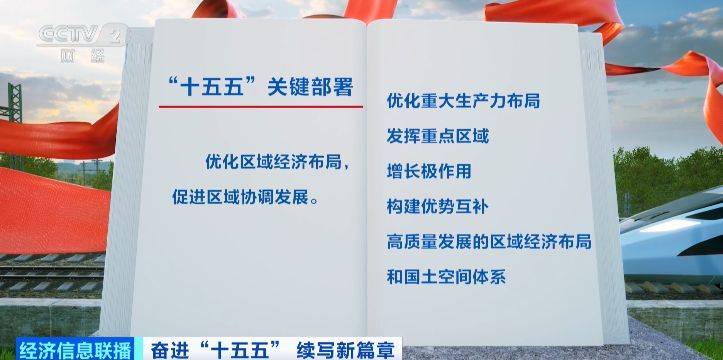
“十五五”关键部署:优化区域经济布局 促进区域协调发展
Sou Hu Cai Jing· 2025-10-27 14:43
Group 1 - The core viewpoint emphasizes that promoting regional coordinated development is essential for achieving high-quality growth and advancing Chinese-style modernization [1] - The "14th Five-Year Plan" suggests optimizing regional economic layout and promoting coordinated regional development [1] Group 2 - The strategy aims to leverage the combined effects of regional coordinated development, major regional strategies, principal functional area strategies, and new urbanization strategies to optimize the layout of major productive forces [3] - It highlights the importance of enhancing regional development coordination, promoting regional interconnected development, and optimizing the spatial development pattern of the territory [3] - The initiative also focuses on advancing people-centered new urbanization and strengthening marine development and protection [3]

二十届四中全会公报解读:“十五五”的20个关键词
Yong Xing Zheng Quan· 2025-10-27 06:53
Overall Insights - The 20th Central Committee's Fourth Plenary Session approved the "Suggestions" for the 15th Five-Year Plan, highlighting the need for strategic investment opportunities during this period[1] - Key focus areas include maintaining economic stability, enhancing domestic demand, and promoting high-quality development[3] Key Themes - The "Four Advantages" emphasize China's strong economic foundation, large market, complete industrial system, and rich talent resources, which are crucial for technological and industrial advancements[11] - The "Seven Major Goals" for the 15th Five-Year Plan include significant improvements in high-quality development, technological self-reliance, and social welfare[16] - By 2035, the goal is to achieve a per capita GDP of $22,443 or $21,295, depending on annual growth rates of 5.0% or 4.5% respectively, reflecting a 26.7% increase from 2019[17] Investment and Risk Considerations - Investment strategies should focus on the implications of the 20 keywords from the plan, which are expected to create strategic investment opportunities[42] - Risks include potential technological disruptions, challenges in industrial upgrades, geopolitical conflicts, and intensified international strategic competition[43][44]