传统饮食文化

Search documents
古籍新书·2025年冬季|中华传统饮食语汇通释
Xin Lang Cai Jing· 2026-02-13 11:07
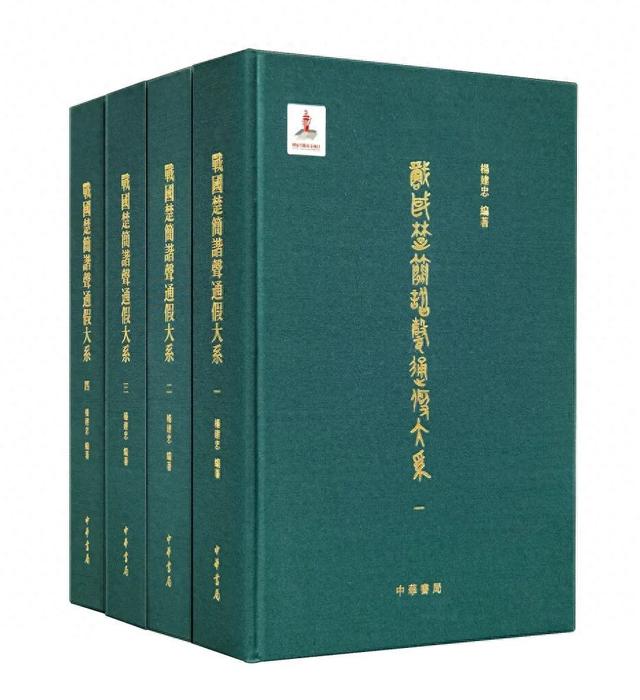
《战国楚简谐声通假大系》(全四册) 杨建忠 编著,中华书局 本书系统整理了2022年底之前公布的战国楚简中的谐声字,收5102个字头(不含同一字头下的异体 字),1345个声符及其谐声系列(其中单字209个)、4236个谐声字(不含同一字头下的异体谐声 字)。书中构建了一个断代的、分域的谐声、通假系统,以此系统为框架,将战国楚简谐声字悉数收纳 其中,并与战国其他系属文字横向比较,对系统了解和把握战国文字字形、音韵,以及战国时期汉字汉 语的发展变化,具有重要的作用。 《中华医藏·第三编·温病卷》(全五十册) 《中华医藏》编委会 编,李鸿涛 杨继红 主编,国家图书馆出版社 《中华医藏·第三编·温病卷》,由中国中医科学院中医药信息研究所古籍资源研究室主任李鸿涛、山西 中医药大学研究生学院院长杨继红主编,收录温病代表性典籍93部,包括通论、瘟疫、疟疾、痢疾、痧 症、霍乱、鼠疫等多个类别。如明代吴又可《温疫论》,提出"戾气"病因说,标志着温病学登上历史舞 台;清代戴天章《广瘟疫论》、杨璇《伤寒瘟疫条辨》、刘奎《松峰说疫》《瘟疫论类编》等继承发扬 其说,形成温病学派。此外还有《疟疾论》《痢疾论》《痧胀玉衡书》《随息居重订 ...

年糕的记忆
Xin Lang Cai Jing· 2026-02-01 17:15
转自:衢州日报 沈庆文 (来源:衢州日报) 年糕的制作,其实很费时费力,要经过选米、浸泡、磨粉、蒸煮、捶打、切段定型等工序。第一次看到 制作年糕,是在初中寒假。二中的邻居发小同学一家是上海人,喜欢吃糖炒或糖拌年糕,但上世纪70年 代,年糕需凭票在春节期间供应,数量有限,去粮店晚了还无货。也不知他母亲怎么打听到龚家埠头有 年糕加工点,就买来糯米,让我们送去加工。龚家埠头当时是农村,在现今西安门大桥往西区方向右边 桥下。我们从二中步行至此,被告知要两三天后来取成品年糕。第三天下午两人带着原先装糯米的布袋 再去,场面很热闹,室外泥地上,许多人围观几位加工人员抡起木槌在三四个石臼里捶打年糕,一下一 下地反复用力击打,衢州人叫这事为"锵年糕"。 等到我们取年糕时,天早已暗了下来。尴尬的是,加工人员看我们提着布袋,说这怎么装得下。他们很 善良,借给我们一只箩筐和一根扁担,说你们抬回去吧,明天还回来就是了。不记得我们带去了多少斤 糯米,但做年糕要充些粳米,要加水磨浆之类,成形的年糕肯定比原先带去的糯米要多得多,足有半箩 筐。教书的父母辈可能不懂这些,我们初中生更是不懂。 更有意思的是返回二中的事。那时教师宿舍在校园内,不像 ...
研判2025!中国粉丝行业市场政策、产业链、发展现状、竞争格局及发展趋势分析:海外市场持续火爆[图]
Chan Ye Xin Xi Wang· 2025-05-09 01:32
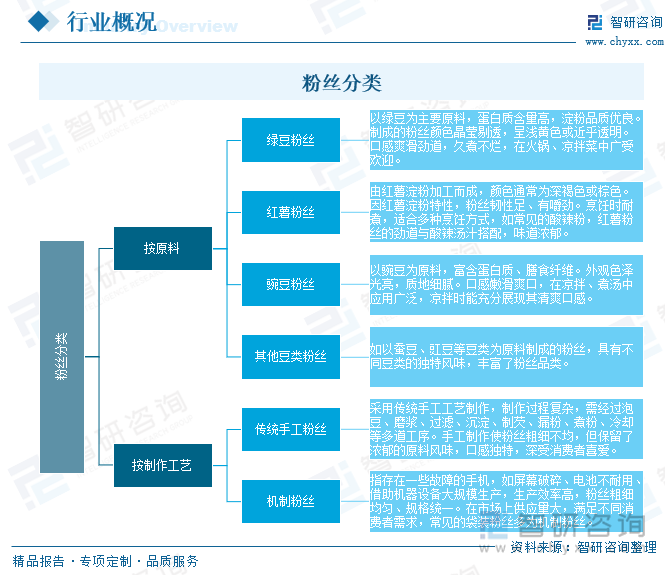
Overview - Vermicelli is a traditional food in China and Asia, primarily produced from legumes and tubers, with over 95% of production concentrated in China due to natural conditions [1][12] - In 2024, China's vermicelli production is projected to reach 1.5557 million tons, with a demand of 1.4403 million tons and a market size of 21.749 billion yuan, averaging 15.10 yuan per kilogram [12][14] Market Policy - The Chinese government has implemented various policies to ensure food safety and promote the healthy development of the vermicelli market, including guidelines for traditional food production and food safety management [5][7] Industry Chain - The upstream of the vermicelli industry includes suppliers of raw materials like peas, mung beans, and sweet potatoes, as well as food additives and production equipment [8] - The downstream market consists of both household and restaurant consumers, with household consumption accounting for approximately 46.47% and restaurant consumption for 53.53% [10] Development Status - The vermicelli industry has a long history in China, with production methods evolving through various stages, including collective production and globalization [3] - The industry faces challenges such as small-scale production and low technological advancement, with over 90% of related enterprises having registered capital under 1 million yuan [16][18] Competitive Landscape - Major companies in the industry include Yantai Shuangta Food Co., Ltd., which is the largest producer and has received multiple quality awards, and Yantai Sanjia Vermicelli Co., Ltd., which has a global marketing network [18][20] Development Trends - Future trends indicate a shift towards healthier vermicelli options, with an emphasis on low-sugar, low-sodium, and additive-free products made from natural ingredients [22]