低估值高股息白马龙头

Search documents
国补高基数下12月社零同增0.9%
HTSC· 2026-01-20 02:02
Investment Rating - The report maintains a "Buy" rating for the consumer discretionary sector, highlighting structural investment opportunities [5][10]. Core Insights - The report indicates that in December, the total retail sales of consumer goods increased by 0.9% year-on-year to 4.5 trillion yuan, with a month-on-month decline of 0.4 percentage points, primarily due to high base effects from durable goods like automobiles and home appliances [7][9]. - The report emphasizes the importance of the new round of trade-in policies for 2026, which focus on core home appliance categories and expand into new categories like smart glasses and products for the elderly, supporting demand in these segments [7]. - The report suggests that consumer sentiment remains strong, particularly in sectors like emotional consumption, technology consumption, and undervalued high-dividend stocks, recommending a focus on domestic brands and global brand expansion [10]. Summary by Sections Retail Sales Performance - In December, retail sales of food and beverages grew by 2.2% and 0.7% respectively, with urban and rural retail sales increasing by 0.7% and 1.7% year-on-year [8]. - Online retail sales of physical goods in December increased by 0.8% year-on-year, with a total annual growth of 5.2%, accounting for 26.1% of total retail sales [8]. Consumer Categories - The report notes a structural differentiation in consumer categories, with home appliances, building materials, and furniture experiencing declines of 18.7%, 11.8%, and 2.2% respectively due to high base effects and trade-in policy impacts [9]. - Conversely, communication equipment saw a significant increase of 20.9% year-on-year, while emotional and self-care products like sports and entertainment goods and cosmetics grew by 9.0% and 8.8% respectively [9]. Investment Recommendations - The report identifies four main investment themes: 1. Rise of domestic brands and global brand expansion, recommending companies like Pop Mart, Shangmei, and Anta Sports [10]. 2. Technology consumption empowered by AI, recommending companies like Midea Group and Haier Smart Home [10]. 3. Emotional consumption, recommending companies like Gu Ming and Yum China [10]. 4. Undervalued high-dividend blue-chip leaders, recommending companies like Li Ning and Shenzhou International [10]. Company-Specific Insights - For Smoore International (6969 HK), the report forecasts a revenue of 10.21 billion yuan for Q1-3 2025, with a year-on-year growth of 21.8%, and maintains a "Buy" rating with a target price of 27.00 HKD [48]. - For Juzhibio (2367 HK), the report highlights the approval of a new collagen product, projecting significant sales potential and maintaining a "Buy" rating with a target price of 85.00 HKD [49]. - For Pop Mart (9992 HK), the report notes a revenue increase of 245-250% in Q3 2025, driven by strong performance in both domestic and international markets, maintaining a "Buy" rating with an updated target price of 410 HKD [51].




券商晨会精华 | 消费领域建议关注国货崛起、AI+消费等结构性机会
智通财经网· 2025-12-17 00:37
Market Overview - The market experienced fluctuations with all three major indices opening lower and closing down. The Shanghai Composite Index fell by 1.11%, the Shenzhen Component Index by 1.51%, and the ChiNext Index by 2.1% [1] - The total trading volume in the Shanghai and Shenzhen markets was 1.72 trillion yuan, a decrease of 49.3 billion yuan compared to the previous trading day [1] Sector Performance - Sectors such as retail, education, dairy, and diversified finance saw the largest gains, while precious metals and film industry sectors faced the most significant declines [1] Consumer Sector Insights - Huatai Securities highlighted structural opportunities in the consumer sector, focusing on the rise of domestic brands, AI-driven consumption, emotional consumption, and undervalued high-dividend blue-chip stocks [2] - According to the National Bureau of Statistics, the total retail sales of consumer goods in November increased by 1.3% year-on-year to approximately 4.4 trillion yuan, with a deceleration of 1.6 percentage points compared to the previous month [2] - The growth in retail sales, excluding automobiles, was 2.5% year-on-year, indicating a moderate recovery in domestic consumption [2] Real Estate Market Analysis - CITIC Construction Investment reported a 17.3% year-on-year decline in national commercial housing sales area for November, although the decline was 1.5 percentage points less than in October [3] - There is ongoing downward pressure on housing prices, with a continuous decline in second-hand residential prices across 70 major cities from September to November [3] - The Central Economic Work Conference emphasized the need to stabilize the real estate market, indicating a clear policy direction to support the sector [3] Banking Sector Outlook - China International Capital Corporation (CICC) expressed optimism regarding the absolute and relative returns of bank stocks, noting that banks have entered a phase of high-quality development [4] - The report indicated that a few listed banks have recorded double-digit profit growth in the past couple of years, with high-dividend investments becoming a primary focus [4] - The outlook for bank stocks is supported by demand for allocation, with the high-dividend characteristic of bank stocks increasingly recognized in the market [4]



新消费概念股普涨 茶百道(02555)涨5.76% 机构料明年促消费政策持续发力有望激发供需潜力
Xin Lang Cai Jing· 2025-12-12 04:16
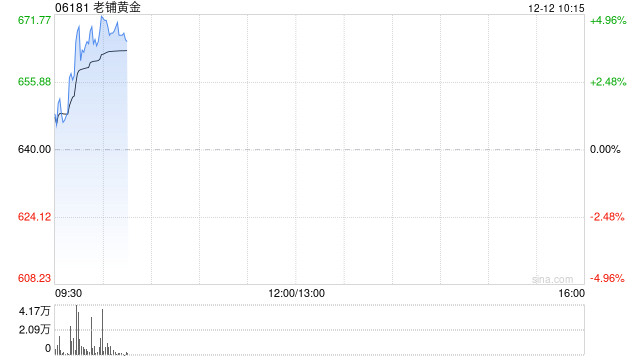
Core Viewpoint - New consumption concept stocks are experiencing a broad increase, indicating a positive market sentiment and potential growth in the sector [1][2] Stock Performance - Notable stock increases include: - Cha Bai Dao (02555) up by 5.76% - Guo Quan (02517) up by 4.50% - Lao Pu Gold (06181) up by 4.14% - Miniso (09896) up by 3.00% - Hu Shang A Yi (02589) up by 2.84% - Juzi Biotechnology (02367) up by 2.97% [1][2] Industry Outlook - According to Huatai Securities, the differentiation between new and old consumption will continue into 2025, driven by changes in "people, goods, and venues" and technological advancements [1][2] - The report anticipates that consumer policies will stimulate supply and demand potential, leading to a steady recovery in domestic demand and continued industry differentiation in 2026 [1][2] Investment Focus - The report suggests focusing on four main investment themes: 1. Rise of domestic brands: Attention on潮玩 (trendy toys), beauty and personal care, and gold jewelry brands competing in both domestic and international markets [1][2] 2. Technology-enabled consumption: Emphasis on the rapid increase in smart product penetration rates due to technological and product innovation [1][2] 3. Emotional consumption: Monitoring growth potential in service consumption, ready-to-drink beverages, pets, and new tobacco products [1][2] 4. Undervalued high-dividend blue-chip leaders: Focus on opportunities for marginal recovery while balancing risk and reward [1][2]
港股新消费概念股反弹 老铺黄金涨超4% 促消费政策持续发力有望激发供需潜力
Xin Lang Cai Jing· 2025-12-12 02:15
Group 1 - The core viewpoint of the news is that the Hong Kong stock market's new consumption concept stocks have mostly rebounded, with significant gains observed in several companies [1][5] - Notable stock performances include Lao Pu Gold, Cha Bai Dao, and Mao Ge Ping, each rising over 4%, while Miniso increased by over 3%, and Mi Xue Group, Blu-ray, and Juzi Bio rose over 2% [1][5] Group 2 - Huatai Securities released a research report projecting that consumer promotion policies will continue to stimulate supply and demand potential, leading to a steady recovery in domestic demand [3][7] - The report highlights four main investment themes: 1) The rise of domestic brands focusing on trendy toys, beauty care, and gold jewelry, competing in both domestic and international markets; 2) Technology consumption empowered by AI, emphasizing the rapid increase in smart product penetration due to technological and product innovation; 3) Emotional consumption, with ongoing supply and demand changes, focusing on service consumption, ready-to-drink beverages, pets, and new tobacco products; 4) Undervalued high-dividend blue-chip leaders, which offer a balanced approach and opportunities for marginal recovery [3][7]