低碳供热

Search documents
瑞纳智能:公司自研磁悬浮热泵机组可适配数据中心余热工况
Ge Long Hui· 2025-12-29 07:12
Core Viewpoint - The company emphasizes that the recovery of waste heat from data centers, in conjunction with urban heating networks, will be a key component of low-carbon heating systems in cities [1] Group 1: Company Developments - The company has disclosed that its self-developed high-efficiency intelligent magnetic levitation heat pump units are specifically designed for medium to large centralized heating scenarios [1] - The technology developed by the company allows the magnetic levitation heat pump units to be compatible with the waste heat conditions of data centers [1]
华晨宝马地热能供热项目投入运营
Liao Ning Ri Bao· 2025-11-03 01:09
Core Insights - The geothermal energy project launched by BMW Brilliance aims to provide 100% fossil-free heating for its powertrain factory and sixth-generation battery center, marking a significant step towards low-carbon transformation and clean heating solutions in northern industrial regions [1][2] Group 1: Project Overview - The geothermal project utilizes innovative technology to harness deep geothermal energy, implementing a closed-loop system that extracts heat from 2,900 meters underground without depleting water resources [1] - The project involves drilling 28 medium-deep geothermal wells, covering a heating area of approximately 580,000 square meters, and is expected to reduce carbon emissions by 18,000 tons annually [1] Group 2: Strategic Importance - This initiative is part of BMW Group's broader strategy to build a diverse renewable energy matrix, including deep geothermal energy, wind power collaboration, and hydrogen commercialization [2] - The energy transition represented by this project aims to lower the carbon footprint of products from the source, enhancing the responsible electric mobility experience for consumers [2]



华晨宝马动力总成工厂地热能系统正式投入运营
Yang Shi Wang· 2025-10-31 10:14
Core Insights - BMW Group has launched a geothermal energy project in Shenyang, marking a significant milestone in its global energy strategy aimed at reducing the carbon footprint of its new generation vehicles and enhancing its green competitiveness in the Chinese market [1][3] Group 1: Project Overview - The geothermal project utilizes 100% non-fossil energy for heating, facilitating a low-carbon transformation in production and providing a replicable model for clean heating in northern industrial regions [3] - The project is a collaboration with local partners, including China Huaneng Group and Wanjiang New Energy Co., Ltd., and aims to leverage Shenyang's abundant geothermal resources to create an energy-efficient and environmentally friendly benchmark project [3][5] Group 2: Technical Details - The project employs downhole heat exchange technology, reaching a depth of 2,900 meters, which is equivalent to stacking nearly 10 Eiffel Towers, to collect geothermal energy while protecting local water and soil [5] - A total of 28 medium-deep geothermal wells will be drilled, covering a heating area of approximately 580,000 square meters, with an expected annual reduction in carbon emissions of 18,000 tons, equivalent to the emissions from a car circling the Earth 3,000 times [5]

低碳供热成本疏导难题待解
中国能源报· 2025-09-22 04:03
Core Viewpoint - The core pathway for achieving low-carbon transformation in the heating sector in China is the large-scale application of low-carbon heating technologies [1][3]. Group 1: Current State of Low-Carbon Heating - Carbon emissions from residential heating in urban and rural areas account for nearly 60% of total building operation emissions [3]. - The scale of low-carbon heating in China has been growing, with technologies such as solar, biomass, geothermal, heat pumps, and industrial waste heat being widely applied in northern regions [5]. - By the end of 2023, the total heating area in northern China reached 24.5 billion square meters, with clean heating covering 18.6 billion square meters, reflecting a growth of over 43% in clean heating area from 2017 to 2023, and an increase in clean heating rate from approximately 60% to 76% [5]. Group 2: Pricing Mechanism Challenges - The average unit cost of low-carbon heating is significantly higher than traditional heating methods, which exacerbates the profitability pressure on heating companies and hinders their willingness to upgrade technologies and scale applications [3][6]. - The current pricing mechanism for urban heating is government-regulated, following a "permitted cost + reasonable return" principle, which can lead to operational losses for heating companies if prices do not adequately cover costs [6][8]. - The report highlights that the cost of different heating technologies varies widely, with nuclear heating being the lowest at 27.6 yuan/GJ, while hydrogen heating is the highest at 430.94 yuan/GJ, indicating significant disparities in resource utilization and operational costs [6]. Group 3: Commercialization and Operational Challenges - The existing pricing structure includes cross-subsidization from industrial to residential heating, which, while beneficial for low-income households, places operational pressure on heating companies [8][9]. - The current pricing mechanism does not adequately reflect the initial investment costs and environmental benefits of low-carbon heating technologies, leading to challenges in commercial viability and sustainable profit models [8][9]. Group 4: Recommendations for Improvement - The report suggests developing long-term low-carbon heating plans (10-20 years) that align with national energy strategies and urban development, focusing on renewable energy utilization and energy efficiency [10][11]. - It recommends targeted subsidy policies for different low-carbon heating technologies based on their price sensitivity to fuel and electricity costs, as well as initial investment impacts [11][12]. - Establishing a real-time cost monitoring system for low-carbon heating and adjusting pricing based on cost fluctuations is also advised to ensure that heating prices accurately reflect operational costs [12].
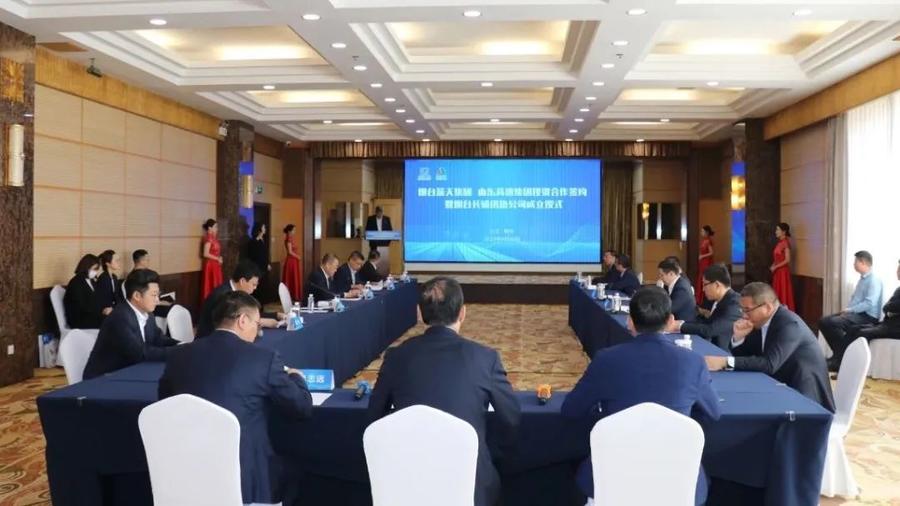
烟台蓝天涉足市区清洁供暖,新成立供热公司,覆盖区域和面积披露
Qi Lu Wan Bao Wang· 2025-04-29 13:32
Core Viewpoint - The Yantai Long-distance Heating Pipeline Project, with a total investment of 4.35 billion yuan and a planned length of 84.8 km, has officially commenced, marking a significant step towards clean heating and low-carbon supply in Yantai [1][3]. Group 1: Project Overview - The project aims to promote "clean heating and low-carbon supply" in Yantai, serving as a key livelihood initiative for the city [3]. - It will deliver clean energy to downstream heating companies, addressing the current heating source capacity shortage in urban areas [3]. - Upon completion, the project will cover a heating area of 46.4 million square meters across four districts, reducing carbon dioxide emissions by over one million tons annually [3]. Group 2: Collaboration and Implementation - The project was initiated rapidly, with the establishment of the Yantai Long-distance Heating Company occurring just two weeks after receiving the task from the municipal government [3]. - Shandong High-speed Group has been introduced as a strategic partner, contributing to investment, financing, and project management [3][5]. - Both companies aim to leverage their strengths to accelerate project planning, research, and approval processes, ensuring timely implementation [5].