体制内消费

Search documents
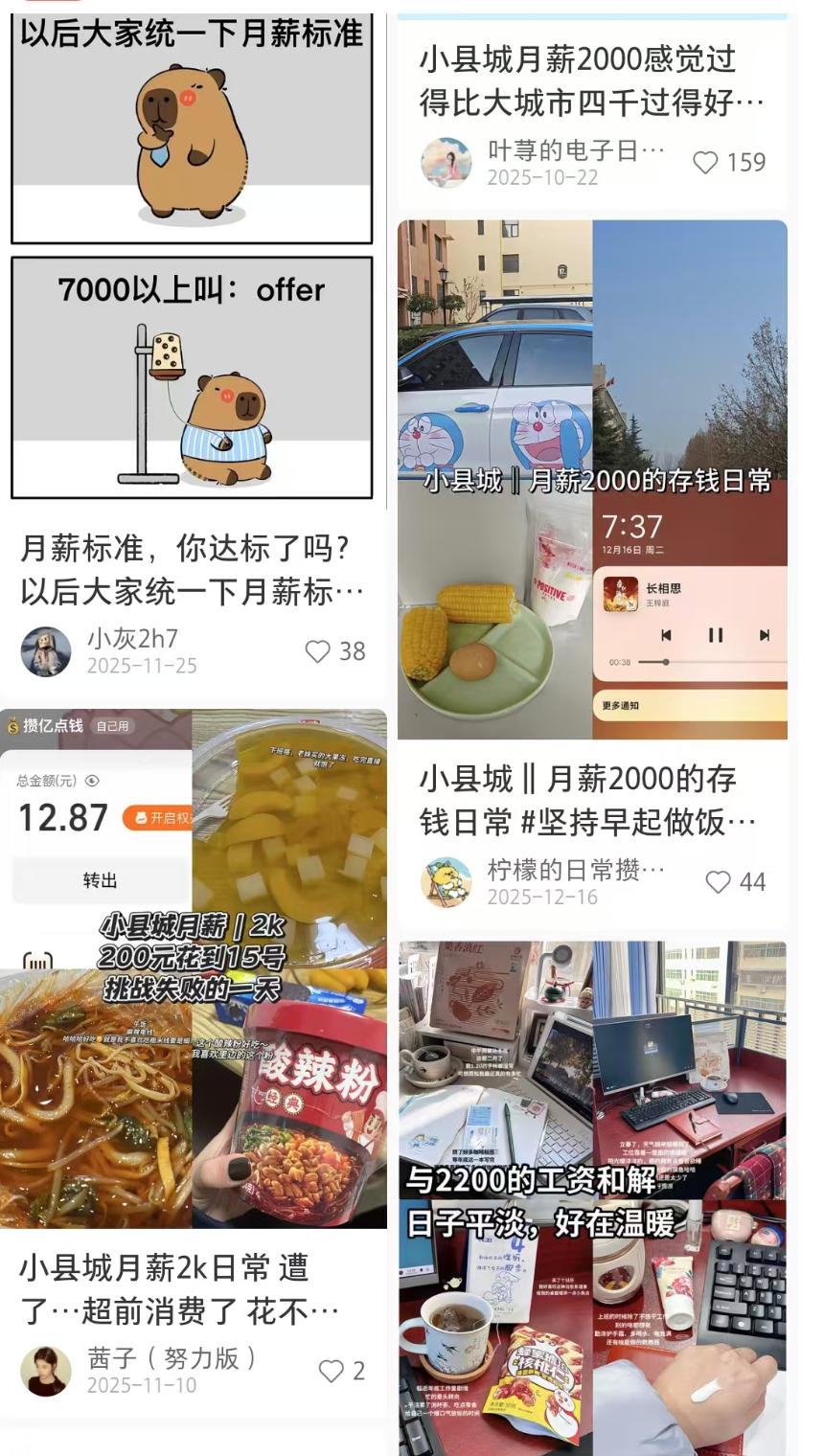
在县城,「月薪三千」属于高工资
36氪· 2026-03-02 13:50
Core Insights - The article emphasizes the importance of understanding county-level cities in China, as they represent the living conditions and economic realities of the majority of the population, which is often overlooked by those living in first and second-tier cities [5][7][8]. Group 1: Economic Conditions in County Cities - By the end of 2025, China's urban population is projected to reach 953 million, with an urbanization rate of 67.89%, indicating that over two-thirds of the population lives in towns, primarily in lesser-known third and fourth-tier cities [5]. - In many county cities, the average disposable income is below 36,000 yuan, with monthly salaries often around 3,000 yuan, which is considered a competitive income in these areas [11][15]. - Job opportunities in county cities often reflect outdated salary structures, with positions such as cashiers and security guards earning between 1,800 to 2,500 yuan per month [13][15]. Group 2: Social Dynamics and Consumer Behavior - The article discusses how the perception of income differs between urban and county settings, where a salary of 3,000 yuan can signify a promotion in a county but is viewed as low income in larger cities [12][20]. - The cost of living in county cities is significantly lower, allowing residents to manage on lower incomes compared to their urban counterparts, where 2,000 yuan may not suffice for basic living expenses [19][20]. - The article highlights the psychological aspects of spending, where individuals in stable jobs (especially in the public sector) feel more secure in their financial situations, leading to more confident spending behaviors [34][37]. Group 3: The Role of Government Jobs - Government jobs in county cities provide significant economic advantages, with salaries often exceeding 4,000 yuan per month, which is substantially higher than the average income in these areas [31]. - The article illustrates how obtaining a government position can enhance one's social standing and marriage prospects, as it is seen as a ticket to a more stable and prosperous life [32][33]. - The dual-income structure of families where both partners work in government positions creates a buffer against economic uncertainties, contributing to a more relaxed lifestyle [53]. Group 4: Consumer Market Dynamics - The consumer market in county cities is characterized by a clear structure, where government employees are the primary consumers, while the larger population remains cautious about spending due to economic uncertainties [60]. - New brands entering county markets often face challenges; those with lower price points succeed, while those attempting to replicate urban quality standards may struggle to survive [59][60]. - Understanding the distinct consumer behavior and economic conditions in county cities is crucial for businesses aiming to penetrate these markets effectively [61].


在县城,“月薪三千”属于高工资
3 6 Ke· 2026-02-26 03:54
Core Insights - The article highlights the significance of understanding county-level cities in China, where the majority of the population resides, to grasp the broader social and economic dynamics of the country [1][2]. Population and Urbanization - By the end of 2025, China's urban resident population is projected to reach 953 million, with an urbanization rate of 67.89%, potentially nearing 68.7% under broader definitions [1]. - A significant portion of this urban population lives in lesser-known third and fourth-tier cities rather than major metropolitan areas like Beijing and Shanghai [1]. Income and Employment - Monthly salaries of around 2,000 yuan are common in county-level cities, contrasting sharply with perceptions from first and second-tier cities where higher incomes are the norm [3][4]. - Many residents in these counties earn less than 36,000 yuan annually, with average monthly incomes often below 3,000 yuan [3][6]. - A salary of 3,000 yuan in these counties can signify a competitive advantage over many local jobs, often requiring higher skills or longer work experience [7]. Cost of Living and Spending Behavior - The cost of living in county-level cities is significantly lower, allowing residents to manage on lower incomes compared to urban centers [12][14]. - The perception of money and spending differs greatly; in counties, a monthly income of 2,000 yuan can sustain basic living expenses, while in larger cities, it may be insufficient [14][22]. - The article discusses how individuals in county-level cities often prioritize essential spending over luxury, influenced by their financial security and income stability [25][28]. Employment in the Public Sector - Employment in the public sector is highly valued in county-level cities, providing job security and higher income compared to private sector jobs [18][19]. - The article illustrates how obtaining a public sector job can significantly enhance an individual's economic status and social standing within the community [21]. Consumer Behavior and Market Dynamics - The consumer market in county-level cities is characterized by a dual structure, where public sector employees are the primary consumers, while private sector workers exhibit more cautious spending habits [35][38]. - New brands entering these markets often face challenges; those with lower price points succeed, while those attempting to replicate urban consumption patterns may struggle [38][39].