
体育外卖

Search documents
当“体育外卖”敲开家门
Xin Lang Cai Jing· 2026-02-09 06:55
Core Insights - The rise of "sports delivery" services is transforming the way sports training is accessed, allowing for on-demand coaching at home or nearby locations, which is likened to ordering food delivery [1][2][3] Group 1: Service Model - The "sports delivery" model allows parents and young individuals to book various sports lessons through mobile applications, significantly reducing time and spatial costs associated with traditional training [2][3] - Coaches provide personalized training sessions at convenient locations, enhancing the integration of sports into daily life [2][3] - The service includes a tailored training plan for each child, making the process transparent and providing parents with a clear framework for practice [3] Group 2: Market Demand and Pricing - There is a growing demand for diverse sports training options, with parents seeking measurable outcomes from their children's training, such as improved performance metrics [3][4] - Pricing varies based on the complexity of the sport, with basic classes costing between 80 to 150 yuan per session, while specialized training can range from 200 to 400 yuan [3][4] Group 3: Flexibility and Consumer Behavior - The flexibility of the "sports delivery" service allows parents to book sessions on a per-use basis, accommodating the fragmented schedules of working families [4][5] - Consumers prefer the pay-per-session model over traditional prepaid packages, which often lead to concerns about value and service delivery [5] Group 4: Impact on Coaches and Institutions - The shift to "sports delivery" has diversified income sources for coaches and small institutions, enhancing their financial stability and operational sustainability [5] - Coaches report increased earnings and greater autonomy in their schedules compared to traditional training settings [5] Group 5: Industry Challenges - The rapid growth of "sports delivery" services highlights the need for standardized quality and service protocols, as variations in coach qualifications and teaching methods can affect consumer trust [6] - Establishing industry norms and certifications is essential to ensure consistent service quality and to address the challenges posed by the diverse skill levels of coaches [6]
当运动教学送上门
Xin Lang Cai Jing· 2025-12-21 19:38
Group 1 - The core idea of the article revolves around the emerging demand for personalized sports training services, particularly through home visits, which reflects a shift in consumer behavior towards convenience and on-demand services [3][4]. - The company has identified a growing market for various training needs, including fitness assessments, prenatal recovery, and corporate team-building, indicating a diversification of service offerings beyond traditional in-gym classes [3][4]. - The challenges faced by the company include high commuting costs for trainers and customer perceptions regarding pricing for home services, which complicates the profitability of such offerings [3][4]. Group 2 - The concept of "sports delivery" is highlighted as a means to make sports training more accessible and tailored to individual needs, breaking away from the traditional fixed schedule and location model [4]. - The company is exploring partnerships with communities to establish "delivery points" for services, aiming to enhance the reach and convenience of sports training [4]. - The ultimate goal of the industry is to encourage more people to engage in physical activity, emphasizing the importance of making sports training as accessible as food delivery services [4].

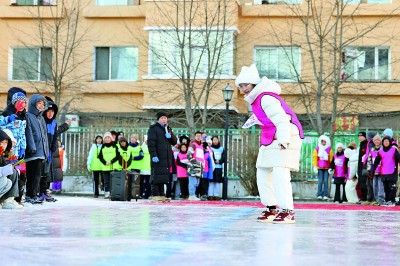
“体育外卖” 热度如何持久
Xin Hua She· 2025-10-29 22:11
Core Insights - The rise of "sports delivery" services is creating a new fitness model and entrepreneurial opportunities in the market [1] - The integration of sports training and the "door-to-door economy" is driving the popularity of these services [1] - The industry faces challenges such as low entry barriers and lack of regulatory standards [1] Industry Overview - "Sports delivery" services allow personalized sports training to be conducted in various locations, including community parks and private homes [1] - The youth sports training market is showing significant potential for growth, supported by increased consumer acceptance of home service models [1] - The model provides sports professionals with new revenue streams while offering families convenient access to fitness services [1] Challenges and Regulatory Needs - The industry is still in its early development stages, with no established regulations or standards [1] - There is a need for enhanced oversight, the establishment of entry requirements, and the creation of standards to ensure service quality and consumer safety [1]
课后“体育外卖”悄然兴起 教练上门授课受家长青睐
Zhong Guo Xin Wen Wang· 2025-10-22 03:33
Core Viewpoint - The "sports takeaway" model, which involves coaches providing on-site training for children, is gaining popularity among parents in Chengdu, driven by increased emphasis on children's physical education and the growing demand for personalized sports training [1][3][4]. Group 1: Industry Growth - The "sports takeaway" industry has experienced rapid growth since the implementation of the "double reduction" policy, which has heightened parental awareness of children's sports education [3]. - A local sports training team expanded from just a couple of coaches in 2020 to over 30 coaches currently, serving around 600 students and over 1,000 local youths annually [3][4]. Group 2: Training Structure - The training programs are segmented by age groups: early childhood focuses on fun and interest, elementary school emphasizes meeting physical fitness standards, and middle school targets specific exam requirements [3]. - Additional specialized courses are offered, including comprehensive physical training, posture correction, height enhancement, and weight loss, catering to diverse family needs [3][4]. Group 3: Safety and Regulation - Safety measures include purchasing accident insurance for students, rigorous qualification checks for coaches, and pre-class safety assessments of training venues [3][4]. - Legal compliance is crucial, as coaches must hold specific certifications to avoid penalties, and parents are advised to verify coach qualifications and ensure safe training environments [5]. Group 4: Future Directions - The industry is expected to move towards greater professionalization and standardization, with a need for clearer regulations regarding coach qualifications [4]. - Future services may become more specialized, potentially including family sports consulting and precise services like posture correction and sports rehabilitation [4]. - The integration of technology, such as wearable devices, is anticipated to enhance training efficiency and provide objective performance data [4].
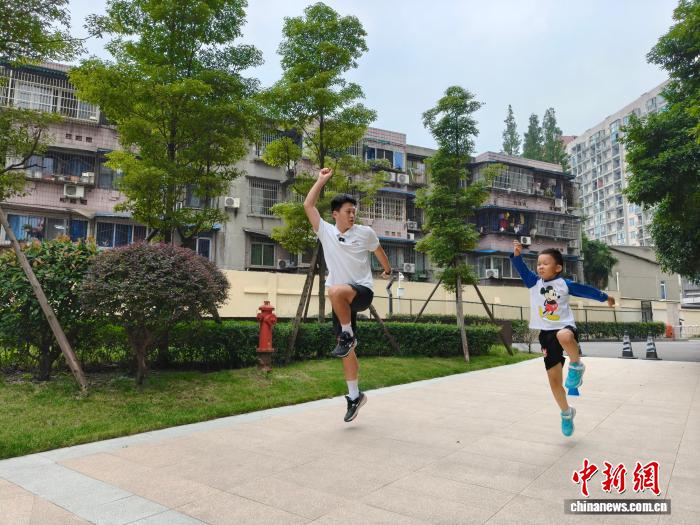
杭州21岁小伙月入两万元!这种新型“外卖”火了!
Huan Qiu Wang· 2025-10-04 06:20
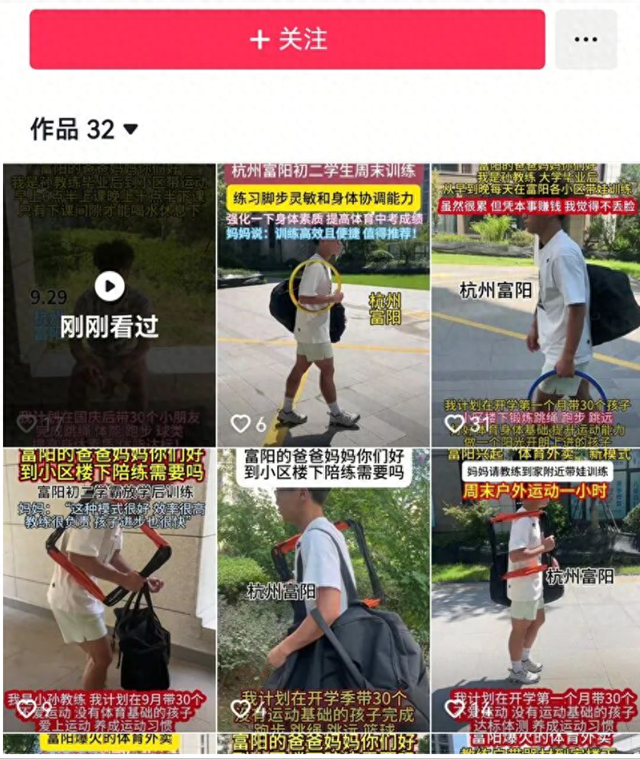
Core Viewpoint - The emergence of "sports delivery" services in Hangzhou is gaining popularity among parents, providing personalized sports training at home, which addresses the challenges of transporting children to sports facilities and meets their specific fitness needs [1][11]. Group 1: Industry Overview - The "sports delivery" model involves coaches bringing equipment to designated areas for personalized training, including fitness training and preparation for physical exams [1]. - As of now, there are 52,300 registered sports education training companies in China, with a 7.7% year-on-year increase in registrations for 2024 [10]. Group 2: Coach Insights - A coach named Sun Ke, who recently graduated from university, has successfully transitioned to providing home sports training, earning over 10,000 yuan monthly, with potential peaks of 20,000 yuan [3][8]. - Sun Ke's approach includes using social media platforms for advertising, which has led to a steady influx of students [4][8]. Group 3: Parent Perspectives - Parents appreciate the convenience of "sports delivery," as it saves time and allows them to supervise their children from home [11]. - The cost of home training is perceived as reasonable, with prices ranging from 100 to 300 yuan per hour, depending on the coach's qualifications and experience [13][14]. Group 4: Market Challenges - Despite the growth, there are concerns regarding the quality and safety of the services, as many coaches operate independently without standardized qualifications [14]. - Parents are advised to verify coaches' credentials and ensure clear communication regarding training goals and safety measures [14].
北京日报社区小板报 | 本周后期“雷暴哮喘”注意防护
Bei Jing Ri Bao Ke Hu Duan· 2025-09-11 00:12
Weather and Health Advisory - The weather forecast indicates light fog or mist during the day with rain in the western and northern regions, and a maximum temperature of 29°C [1] - There is a warning for "thunderstorm asthma" due to high pollen levels, with pollen concentration in Beijing reaching the highest level for 15 consecutive days [3] Vaccination and Health Measures - Beijing has officially started the flu vaccination program on September 10, targeting specific groups including seniors aged 60 and above, students, and frontline workers [5] - The city is also conducting inspections on electric bicycles to address issues related to speed limit modifications and illegal modifications, with potential penalties for involved stores [7] Events and Cultural Developments - The 2025 China International Service Trade Fair opened at Shougang Park, attracting over 107,800 visitors on its first day [11] - The upcoming opening of the Qunfang Comprehensive Transportation Hub is expected to provide a venue for outdoor events, including lawn weddings [13] - The reopening of Longfu Temple on September 17 aims to attract a younger audience with diverse cultural offerings [17]

这个暑期,“体育外卖”有点儿火
Zhong Guo Qing Nian Bao· 2025-08-13 22:30
Core Viewpoint - The rise of "sports delivery" services is transforming youth sports training, allowing coaches to provide lessons directly at students' homes, addressing the needs of busy parents and enhancing training frequency and effectiveness [1][2][3]. Group 1: Market Demand and Trends - The demand for convenient sports training is driven by parents' concerns over children's health issues such as obesity and poor physical fitness, leading to a preference for home-based training solutions [2][3]. - Recent policy changes in various regions have increased the importance of physical fitness assessments in school curricula, prompting parents to seek regular training for their children [2][3]. - The "sports delivery" model is appealing to young trainers due to its flexibility and higher income potential compared to traditional sports venues [3][4]. Group 2: Business Model and Operations - Companies in the "sports delivery" sector benefit from a light asset model, avoiding the heavy investments associated with physical venues, thus allowing for broader geographic coverage [3][4]. - Pricing strategies for "sports delivery" courses are generally lower than traditional venues, with significant discounts for group classes, making them attractive to parents [4][5]. - The operational flexibility allows trainers to adapt to various environments, utilizing local parks and community spaces for lessons, which enhances the training experience [6][7]. Group 3: Quality Control and Regulation - The industry faces challenges in maintaining quality control, with companies implementing measures such as random inspections and establishing communication channels between parents and trainers [11][12]. - There is a growing emphasis on the qualifications and experience of trainers, with platforms requiring thorough vetting processes to ensure safety and quality in training [10][11]. - Industry experts advocate for a comprehensive regulatory framework to oversee "sports delivery" services, ensuring standards for training quality, safety, and instructor qualifications [10][11].

“跑楼小孩”貌似小赢实则多输
Bei Jing Shang Bao· 2025-08-04 15:57
Core Viewpoint - The emergence of minors acting as "last-mile couriers" in Shenzhen's Huaqiangbei area raises significant safety and legal concerns despite appearing to provide benefits for all parties involved [1][2][3]. Group 1: Industry Dynamics - Minors, primarily aged 10-14, are taking on delivery tasks for a fee of 1-2 yuan per order, filling a gap for delivery workers facing time constraints due to complex building layouts [1]. - The arrangement seems mutually beneficial, allowing children to earn pocket money while helping delivery workers improve efficiency [1]. Group 2: Safety and Legal Concerns - The safety risks associated with minors delivering food are substantial, as they must navigate busy streets and compete for orders, which can lead to physical and mental stress [2][3]. - Legal implications arise from the involvement of minors in potentially dangerous activities, as per China's Minor Protection Law, which prohibits organizing minors for activities that may endanger their safety [2]. - The lack of a formal agreement or legal framework for this practice creates a void in consumer rights protection, complicating accountability in cases of delivery issues [2]. Group 3: Social Implications - The initiative, while aimed at teaching children about work and responsibility, risks prioritizing profit over their safety and well-being [3]. - The blurred lines of responsibility and insufficient regulatory oversight highlight the need for a more structured approach to ensure the safety and legality of such practices involving minors [3].
【西街观察】“跑楼小孩”,貌似“小赢”实则“多输”
Bei Jing Shang Bao· 2025-08-04 14:30
Core Viewpoint - The emergence of minors acting as "last-mile" delivery agents in Shenzhen's Huaqiangbei area raises significant safety and legal concerns despite appearing to benefit all parties involved [1][2][3] Group 1: Industry Dynamics - Minors, primarily aged 10-14, are taking on delivery tasks for a fee of 1-2 yuan per order, providing a low-cost alternative for delivery personnel facing time constraints due to complex building layouts [1] - The practice allows children to earn pocket money while gaining physical exercise and understanding the value of work, as many parents operate nearby businesses [1][3] Group 2: Safety and Legal Concerns - The safety risks associated with minors delivering food are substantial, as they must navigate busy streets and compete for orders, which can lead to physical and mental stress [2][3] - Legal implications arise from the potential violation of the Minor Protection Law, which prohibits organizing minors for activities that may endanger their safety, highlighting the lack of clear legal frameworks governing this practice [2][3] - The absence of a formal agreement or legal protection for consumers raises questions about accountability in cases of delivery errors or accidents involving minors [2]