信号处理

Search documents
大模型的第一性原理:(二)信号处理篇
机器之心· 2026-01-30 08:49
Core Viewpoint - The article discusses the transformation of natural language processing problems into signal processing problems through semantic vectorization, emphasizing the importance of token embedding in large models and its connection to signal processing and information theory [2][32]. Semantic Embedding / Vectorization - The concept of using vectors to model semantics dates back to Luhn's 1953 paper, but significant breakthroughs were achieved in 2013 by Mikolov and others, who successfully trained neural network models to convert tokens into semantic vectors [6][9]. - The ideal semantic vectorization has not been fully realized, but the inner product of semantic vectors can represent semantic relevance at the token level [7][11]. - The semantic vector space can be modeled as a probability-inner product space, balancing complexity and effectiveness by using a unit sphere to define the space [8][10]. Optimal Semantic Vectorization - The optimal semantic encoding is closely related to downstream tasks, with the goal of predicting the next token. The semantic encoder should maximize the conditional mutual information between the next token and the current sequence [13][14]. - The article highlights that existing methods like Contrastive Predictive Coding (CPC) optimize the upper bound of the semantic encoder but may not achieve the optimal solution [15][19]. Transformer as a Nonlinear Time-Varying Vector Autoregressive Time Series - The Transformer model is identified as a self-regressive large language model that predicts the next token based on the input token sequence and previously generated tokens [21][30]. - The attention mechanism in Transformers can be mathematically expressed as a nonlinear time-varying vector autoregressive time series, which is crucial for predicting the next token [22][24]. Signal Processing and Information Theory - The article establishes a relationship between signal processing and information theory, noting that signal processing implements information theory principles in specific computational architectures [32][33]. - The transition from BIT in the information age to TOKEN in the AI era is proposed as a way to apply Shannon's information theory to the mathematical principles behind large models [36].


合肥工业大学浙江实践团:跨越象牙塔与产业之间的“鸿沟”
Zhong Guo Qing Nian Bao· 2025-08-04 13:12
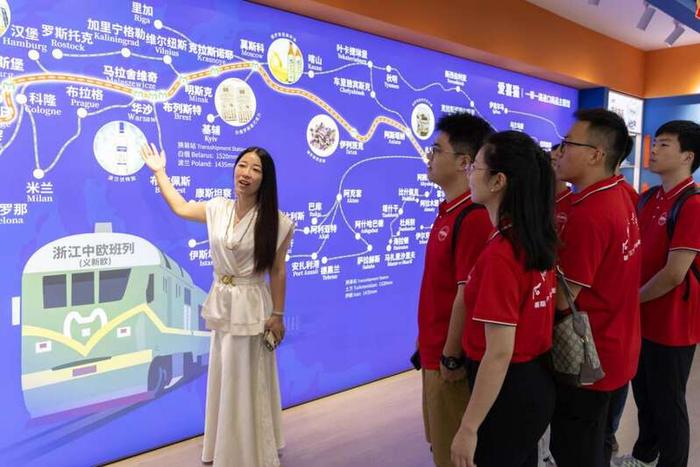
Group 1 - The practice team from Hefei University of Technology engaged in social practice in Hangzhou and Yiwu, bridging the gap between academia and industry [1] - At Silan Microelectronics, students observed an automated production line that captures nanometer-level parameter fluctuations, highlighting the importance of "closed-loop control" and "signal processing" in ensuring product quality [1] - At Hikvision's exhibition hall, students experienced advanced applications such as millimeter-wave radar and infrared thermal imaging, emphasizing the integration of application and system architecture design as key problem-solving skills [1] - In Yiwu's international trade city, a virtual anchor in an "AI digital person live broadcast room" showcased products, supported by robust data processing and user behavior analysis technologies, demonstrating the relevance of signal processing and pattern recognition in cross-border e-commerce [1] Group 2 - The practice experience was described as a profound lesson, revealing the capabilities of frontline enterprises and the potential for personal development [1]
辛顿、杨立昆等 AI 先驱都源自信号处理——对话 IEEE 首位华人主席、美国双院院士刘国瑞 | 万有引力
AI科技大本营· 2025-06-04 05:42
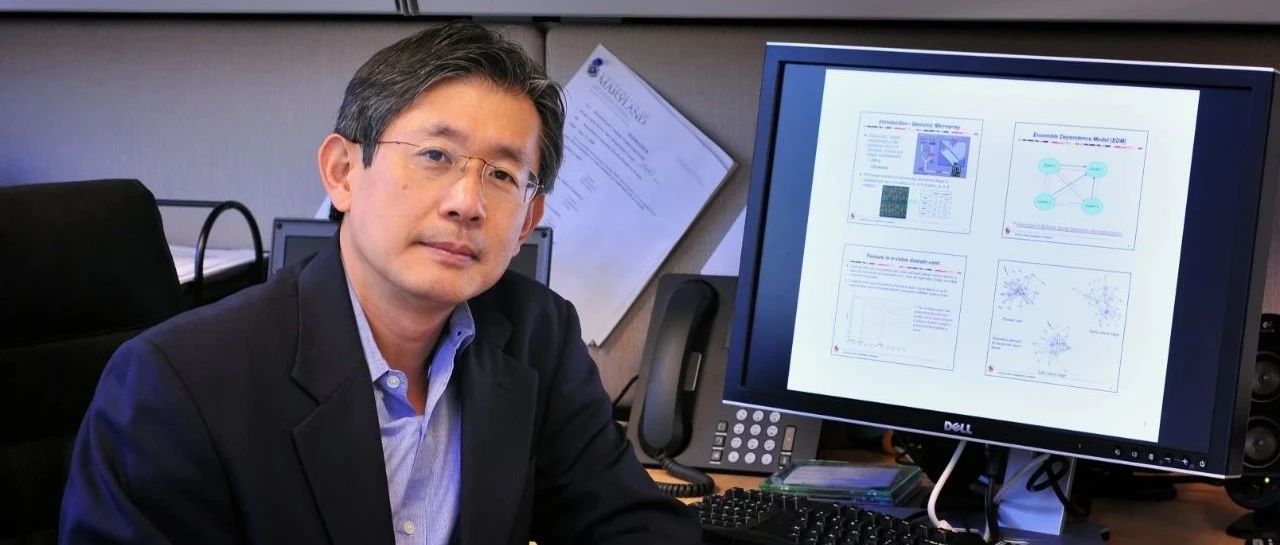
Core Viewpoint - The article highlights the journey and achievements of K. J. Ray Liu, emphasizing his contributions to the field of wireless sensing and AI, as well as his philosophy of pursuing dreams and maintaining one's original intentions in life and career [2][15][40]. Group 1: Personal Journey - K. J. Ray Liu was born in Taiwan and showed early interest in communication and signal processing, which became his lifelong profession [2][4]. - He faced challenges during his academic journey, including a difficult transition to studying in the U.S. and overcoming biases as a Chinese scholar [5][6]. - Liu became the first Asian president of IEEE in 2022, implementing significant reforms during his tenure [6][9]. Group 2: Contributions to Education - Liu has mentored over 70 doctoral and postdoctoral students, many of whom have achieved notable success in academia and industry [11][30]. - His teaching philosophy emphasizes the importance of independent thinking and problem discovery among students, rather than merely solving assigned problems [31][32]. Group 3: Transition to Industry - Liu retired from academia to pursue entrepreneurship in wireless AI, believing that practical applications require real-world data and environments [39][40]. - His company, Origin Wireless, focuses on utilizing wireless signals for environmental sensing, which has significant implications for health monitoring and safety [41][42]. Group 4: Vision for Wireless AI - Wireless AI aims to leverage ubiquitous wireless signals to perceive and understand human activities and health conditions without the need for wearable devices [41][42]. - The technology has already been deployed in various regions for remote monitoring, demonstrating its potential to save lives and improve health outcomes [42].