模式识别

Search documents
CEO为什么会陷入认知困境
3 6 Ke· 2026-01-23 04:28
Core Insights - The article emphasizes the importance of self-awareness and understanding one's limitations in decision-making, highlighting that successful decision-makers accept uncertainty rather than seeking absolute certainty [1][5][10]. Group 1: Self-Awareness and Decision-Making - Self-awareness is crucial for effective decision-making, with different levels of self-recognition indicating varying degrees of awareness [5]. - Many leaders may overestimate their ability to predict trends due to a lack of self-awareness, often relying on pattern recognition based on past experiences [5][10]. - The concept of "pattern recognition" is discussed, where experienced individuals believe they can predict future outcomes based on past events, but this can lead to flawed decision-making [5][7]. Group 2: Expertise and Intuition - Expertise is defined as the ability to perform better than others in specific tasks, requiring extensive practice and feedback [6]. - The distinction between experienced individuals and true experts is highlighted, with experts possessing predictive models that experienced individuals may lack [6]. - Intuition can be effective in stable environments with clear causal relationships, but it may fail in complex and evolving situations [7][8]. Group 3: Risks of Overconfidence - Successful past experiences do not guarantee the ability to replicate success in new areas, as leaders may fall into the trap of overconfidence [7][10]. - The article provides an example of a company that experienced rapid growth but ultimately faced collapse due to the leader's overconfidence in applying past successes to new ventures [10][11]. - Leaders often struggle to apply external perspectives to their own situations, leading to poor decision-making [12]. Group 4: Self-Perception and Reality - The article discusses the challenges of self-perception, noting that individuals often have distorted views of themselves and their impact on others [13]. - The pursuit of self-knowledge is framed as practical, suggesting that understanding oneself can lead to a more fulfilling and efficient life [13][14]. - The need for different perspectives to solve problems is emphasized, as repeating the same thought patterns leads to the same outcomes [14].

THPX信号源:如何利用AI量化模型优化XAGBTC交易信号
Sou Hu Cai Jing· 2025-12-27 18:03
Core Insights - THPX signal source leverages advanced AI quantitative models to enhance decision-making for investors in the digital market, particularly focusing on the XAGBTC combination (silver and Bitcoin value correlation) [1][8] - The integration of AI significantly improves signal quality and efficiency, providing more reliable operational guidance in volatile markets [1][6] Group 1: AI Integration and Functionality - THPX signal source aims to assist users in navigating complex market environments by generating real-time signals based on data-driven analysis [2] - Traditional methods often rely on manual rules, which can lead to signal inaccuracies; the introduction of AI models marks a qualitative leap by processing vast historical data to identify hidden patterns and key triggers [2][4] - AI employs advanced pattern recognition techniques to analyze real-time information flows, enhancing the reliability of signals by identifying previously overlooked nonlinear relationships [4] Group 2: Risk Management and Efficiency - The AI model incorporates risk control mechanisms that automatically assess potential volatility ranges for each signal, helping users identify weaknesses and avoid anomalies [4] - The processing efficiency of AI reduces uncertainties caused by data delays, enabling the system to generate updates in milliseconds, ensuring timely access to cutting-edge guidance [4] Group 3: User Benefits and Market Adaptation - Post-AI optimization, the accuracy of signals from THPX has significantly increased, translating to improved decision-making efficiency for users in rapidly changing environments [6] - The self-learning capability of the AI model allows it to continuously improve from new data, keeping the signal system at the forefront of technology [6] - Users report enhanced stability and market adaptability, particularly in the volatile XAGBTC combination, with feedback indicating reduced pressure and optimized decision-making [6][8] Group 4: Future Prospects - The integration of AI quantitative models in THPX signal source represents a significant advancement in market analysis tools, showcasing broad application prospects [8] - Future developments may include the incorporation of natural language processing to handle more complex social media or news data, further deepening the inclusivity and forward-looking value of signals [8] - The ongoing evolution driven by AI technology is expected to expand the optimization boundaries of THPX, aiding users in navigating the evolving market landscape for sustained value growth [8]


诺奖得主萨金特港大最新演讲:AI的突破本质上是经济学的数百年进化(万字实录)
Sou Hu Cai Jing· 2025-12-01 14:41
Core Insights - The core discussion revolves around how AI is fundamentally changing the basic rules of economic operation, particularly in the context of uncertainty in the global economy [2][3]. Group 1: AI's Nature and Economic Impact - AI is currently more focused on "fitting" data rather than "understanding" it, highlighting a significant gap between machine learning and economics [4]. - The mathematical foundation of AI is rooted in economics and dynamic decision theory, indicating a long-term convergence of knowledge across disciplines [5]. - AI is reshaping the distribution of labor, capital, and market structures, acting as a transformative force in income distribution and competition [6][8]. Group 2: Historical Context and Methodological Differences - The historical evolution of scientific thought, from Ptolemy to Newton, illustrates the difference between descriptive models (curve fitting) and structural models (mechanism explanation) [11][14]. - AI's development is not a new phenomenon but rather an extension of mathematical and economic research into human decision-making [8][12]. - The distinction between fitting models and structural models is crucial, as many regression models merely fit relationships without explaining underlying mechanisms [14]. Group 3: Labor Market Dynamics - AI tends to complement high-skilled labor while substituting low-skilled labor, leading to a structural shift in labor market dynamics [15][28]. - The ongoing technological changes are resulting in a decline in labor's share of income while increasing capital's share [8][15]. Group 4: Education and Skill Development - The impact of AI on education is significant, with concerns that students may rely too heavily on AI tools, potentially undermining their learning [27][28]. - There is a call for a focus on foundational skills in mathematics and statistics, which are essential for understanding economic principles and decision-making [25][30].

汉王科技10月16日获融资买入577.17万元,融资余额2.43亿元
Xin Lang Cai Jing· 2025-10-17 01:30
Core Insights - Hanwang Technology experienced a stock decline of 1.53% on October 16, with a trading volume of 90.08 million yuan [1] - The company reported a financing buy-in of 5.77 million yuan and a financing repayment of 11.44 million yuan on the same day, resulting in a net financing outflow of 5.66 million yuan [1] - As of October 16, the total financing and securities lending balance for Hanwang Technology was 243 million yuan, representing 4.30% of its market capitalization [1] Financing Overview - On October 16, Hanwang Technology had a financing buy-in of 5.77 million yuan, with a current financing balance of 243 million yuan, which is above the 70th percentile of the past year [1] - The company had no securities lending activity on October 16, with a securities lending balance of 0 yuan, indicating a high level of inactivity in this area [1] Business Performance - As of June 30, Hanwang Technology had 56,100 shareholders, a decrease of 10.72% from the previous period, while the average number of circulating shares per shareholder increased by 12.01% to 3,700 shares [2] - For the first half of 2025, Hanwang Technology reported a revenue of 813 million yuan, reflecting a year-on-year growth of 13.81%, but the net profit attributable to shareholders was a loss of 56.73 million yuan, a decrease of 11.66% year-on-year [2] Shareholder Composition - As of June 30, 2025, the largest circulating shareholder was Hong Kong Central Clearing Limited, holding 21.75 million shares, an increase of 1.77 million shares from the previous period [2] - Dachen Zhongzheng 360 Internet+ Index A (002236) was noted as a new shareholder, holding 664,900 shares, ranking as the tenth largest circulating shareholder [2]

零营收!估值 90 亿美金独角兽 - Prediction Markets 炸裂硅谷
创业邦· 2025-10-08 01:08
Group 1 - The core concept of Prediction Market is its potential to reshape how people acquire truth and price the future, leveraging user growth and a vast Total Addressable Market (TAM) [9][11][28] - Prediction Markets are gaining traction in various sectors beyond politics, allowing bets on events like Tesla's earnings and Federal Reserve interest rate changes, indicating a broadening of their application [14][18] - The rise of Prediction Markets is driven by multiple factors, including the decline of mainstream media credibility and the increasing desire for tools that provide closer access to truth [28][25] Group 2 - The technology investment landscape focuses on identifying high-speed and sustainable growth, often found in disruptive companies that challenge the status quo [8][12] - Successful new entities in the market typically exhibit three characteristics: self-sustaining growth engines, vast TAM, and favorable timing and conditions [13][23] - The current market dynamics show that Prediction Markets are experiencing significant growth, with Kalshi's trading volume reaching a run rate of nearly $40 billion, indicating a shift towards mainstream acceptance [18][20] Group 3 - Prediction Markets differ from traditional sports betting by covering a wider range of events and being regulated at the federal level, allowing for broader participation [26][21] - The valuation of Polymarket is approximately $9 billion, while Kalshi is valued at around $5 billion, highlighting the competitive landscape between decentralized and centralized platforms [22] - The introduction of features like the Parlay function by Kalshi has the potential to disrupt existing sports betting markets, as evidenced by the immediate impact on competitor stock prices [27][30] Group 4 - The future of Prediction Markets is envisioned as a new generation of knowledge platforms, transcending traditional betting to become a marketplace for information [31][32] - The integration of Prediction Markets into mainstream financial platforms, such as Robinhood, enhances their visibility and user engagement, further solidifying their market position [20][18]

零营收!估值 90 亿美金独角兽 - Prediction Markets 炸裂硅谷
投资实习所· 2025-10-06 04:12
Group 1 - The core viewpoint of the article emphasizes the rapid growth and potential of Prediction Markets, particularly in the context of the upcoming 2024 U.S. elections, highlighting their ability to provide real-time insights into public sentiment and event probabilities [2][10][29] - Altimeter Capital, a leading tech investment fund, has recognized the disruptive potential of Prediction Markets, which are gaining traction in Silicon Valley and beyond, with significant valuations for platforms like Polymarket and Kalshi [2][16][21] - The article outlines the characteristics of successful disruptive companies, noting that Prediction Markets exhibit user growth, a vast total addressable market (TAM), and alignment with current social and regulatory trends [6][7][12] Group 2 - Prediction Markets are defined as platforms where users can bet on the outcomes of various events, with prices reflecting the market consensus on probabilities, thus providing a more accurate gauge than traditional polls [8][9] - The rise of Prediction Markets is attributed to several factors, including the decline of mainstream media trust, the desire for tools that reveal truth, and the increasing participation of retail investors in the market [25][22] - The article compares Prediction Markets to traditional sports betting, highlighting their broader scope, regulatory advantages, and innovative pricing mechanisms that enhance user engagement [26][29] Group 3 - The article discusses the differences between Polymarket and Kalshi, noting their distinct approaches to market structure and regulatory compliance, with Polymarket being more decentralized and Kalshi focusing on compliance and partnerships with established platforms like Robinhood [21][24] - It highlights the significant growth in trading volumes for Prediction Markets, with Kalshi experiencing an 80% quarter-over-quarter increase, indicating a shift towards mainstream acceptance [16][20] - The introduction of new features, such as the Parlay function by Kalshi, is seen as a strategic move to compete with established sports betting platforms, further blurring the lines between different types of betting and trading [27][28]

汉王科技9月17日获融资买入4069.87万元,融资余额2.56亿元
Xin Lang Cai Jing· 2025-09-18 01:29
Core Viewpoint - Hanwang Technology's stock performance and financial metrics indicate a mixed outlook, with a slight increase in stock price but a decline in net profit, suggesting potential challenges ahead for the company [1][2]. Financing Summary - On September 17, Hanwang Technology's financing buy-in amounted to 40.70 million yuan, with a net buy of 9.55 million yuan, indicating strong investor interest [1]. - The total financing balance reached 256 million yuan, representing 4.18% of the circulating market value, which is above the 80th percentile of the past year, indicating a high level of financing activity [1]. - No shares were sold or repaid in the securities lending market on the same day, with a balance of 0 shares, suggesting a lack of short-selling interest [1]. Business Performance Summary - As of June 30, Hanwang Technology reported a revenue of 813 million yuan for the first half of 2025, reflecting a year-on-year growth of 13.81% [2]. - The company experienced a net loss of 56.73 million yuan, a decrease of 11.66% compared to the previous period, indicating profitability challenges [2]. - The main revenue sources for Hanwang Technology include intelligent interaction products (58.89%), AI terminals (28.70%), and multimodal big data services (10.89%) [1]. Shareholder Information - The number of shareholders decreased by 10.72% to 56,100, while the average number of circulating shares per person increased by 12.01% to 3,700 shares [2]. - The largest shareholder, Hong Kong Central Clearing Limited, increased its holdings by 1.77 million shares, totaling 21.75 million shares [2].
生于1984年,汪萌任合肥工业大学校长
券商中国· 2025-09-05 04:30
Core Viewpoint - The article discusses the appointment of Wang Meng as the new president and deputy secretary of the Party Committee of Hefei University of Technology, replacing Zheng Lei, who has taken a new position as the director of the Jiangxi Provincial Education Department [1][3]. Group 1: Appointment Details - Wang Meng, born in December 1984, is a professor and doctoral supervisor, with both bachelor's and doctoral degrees from the University of Science and Technology of China [1][3]. - Zheng Lei, the former president, was born in January 1975 and served as the president of Hefei University of Technology since July 2022 before his recent appointment [1][3]. Group 2: Wang Meng's Background - Wang Meng joined Hefei University of Technology in August 2011 and has held various positions, including the dean of the School of Computer and Information and the School of Software [2][3]. - He became a member of the university's Party Committee and vice president in July 2023, making him one of the youngest deans when he was appointed in 2017 [3]. Group 3: Research and Achievements - Wang Meng's research focuses on artificial intelligence, pattern recognition, and multimedia information processing, and he has received funding from the National Outstanding Youth Science Fund [3]. - He has led over 20 projects, including national key research and development projects and natural science fund projects, and has received several prestigious awards [3]. Group 4: University Overview - Hefei University of Technology is a key national university directly under the Ministry of Education, co-built by the Ministry of Education, the Ministry of Industry and Information Technology, and the Anhui Provincial Government [3]. - The university has been recognized as a key construction university under the "211 Project" since 2005 and entered the "Double First Class" initiative in 2017 [3].
合肥工业大学浙江实践团:跨越象牙塔与产业之间的“鸿沟”
Zhong Guo Qing Nian Bao· 2025-08-04 13:12
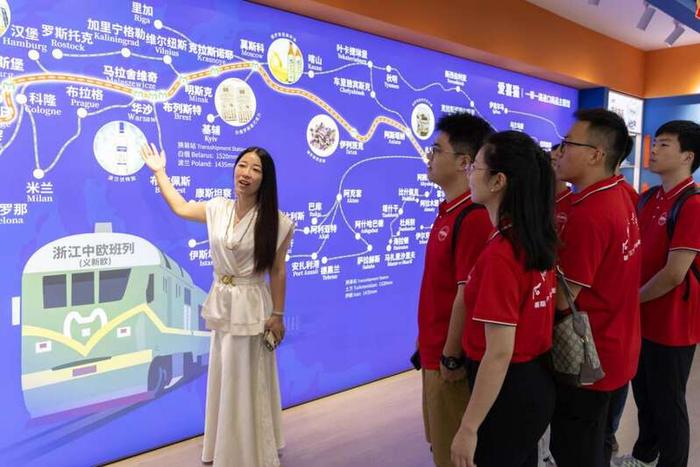
Group 1 - The practice team from Hefei University of Technology engaged in social practice in Hangzhou and Yiwu, bridging the gap between academia and industry [1] - At Silan Microelectronics, students observed an automated production line that captures nanometer-level parameter fluctuations, highlighting the importance of "closed-loop control" and "signal processing" in ensuring product quality [1] - At Hikvision's exhibition hall, students experienced advanced applications such as millimeter-wave radar and infrared thermal imaging, emphasizing the integration of application and system architecture design as key problem-solving skills [1] - In Yiwu's international trade city, a virtual anchor in an "AI digital person live broadcast room" showcased products, supported by robust data processing and user behavior analysis technologies, demonstrating the relevance of signal processing and pattern recognition in cross-border e-commerce [1] Group 2 - The practice experience was described as a profound lesson, revealing the capabilities of frontline enterprises and the potential for personal development [1]
中国科协年会举办具身智能机器人、模式识别与人工智能等专题论坛
Huan Qiu Wang Zi Xun· 2025-07-09 14:32
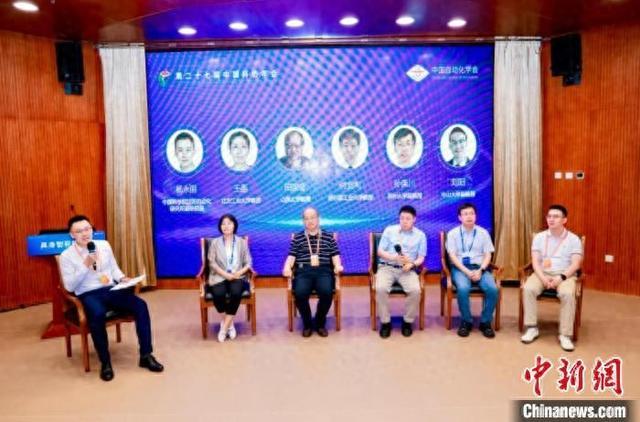
Group 1: Core Insights - The 27th Annual Meeting of the China Association for Science and Technology featured three prominent forums focusing on "Embodied Intelligent Robots," "Frontiers in Pattern Recognition and Artificial Intelligence," and "Complex Systems Control and Decision-Making in the Intelligent Era" [1][3][6] Group 2: Embodied Intelligent Robots Forum - The forum on "Embodied Intelligent Robots" discussed the autonomy and intelligent evolution of these robots, with experts from various fields such as AI, robotics, and control theory participating [3][4] - Key topics included transformative applications in intelligent manufacturing, smart healthcare, autonomous driving, and home services [3][4] - The forum emphasized the challenges and breakthroughs in enabling autonomous effective actions in complex dynamic environments, highlighting the core role of embodied intelligent robots in driving industrial transformation [3][4] Group 3: Pattern Recognition and AI Forum - The "Pattern Recognition and Artificial Intelligence" forum facilitated discussions on the development directions in these fields, aiming to foster new productive forces and interdisciplinary integration [6] - Notable reports covered topics such as embodied intelligent robots, 3D/4D content creation, and visual perception in unmanned systems [6] - The roundtable discussions focused on new trends and challenges in multimodal large models and generative AI, addressing the transformation of research paradigms and talent cultivation in the field [6] Group 4: Complex Systems Control and Decision-Making Forum - The forum on "Complex Systems Control and Decision-Making in the Intelligent Era" brought together experts to explore the latest research and technological breakthroughs in intelligent control and high-end equipment [8] - Key presentations included advancements in edge intelligence applications and guidance, navigation, and control technologies for space vehicles [8] - The forum aimed to provide academic support and insights for building China's core competitiveness in the intelligent era and fostering new productive forces [8]