修复居民家庭资产负债表

Search documents
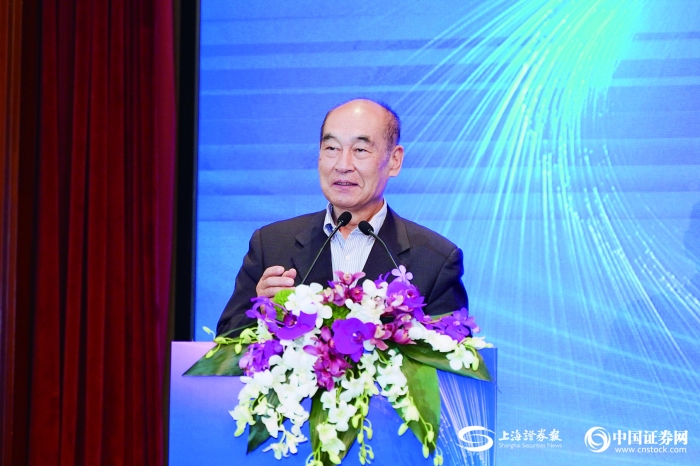
全国社保基金理事会原副理事长王忠民:“十五五”居民财富管理面临重构 修复资产负债表与拥抱AI资产成关键
Sou Hu Cai Jing· 2025-12-15 00:30
Core Viewpoint - The upcoming "Fifteen Five" period will be crucial for repairing household balance sheets and embracing new wealth forms represented by AI assets, following a decade of structural reconfiguration in Chinese household asset-liability statements during the "Thirteenth Five" to "Fourteenth Five" periods [1][20]. Group 1: Household Asset-Liability Structure - Over the past decade, Chinese households have faced three significant shocks: a downward trend in risk-free interest rates, a correction in real estate assets which constituted about 70% of household wealth, and challenges in traditional financial product supply due to market volatility [20][21]. - The policy direction is now focused on repairing household balance sheets, with measures from the central economic work conference and relevant ministries forming a "combination punch" to support capital markets and alleviate household burdens [21][22]. Group 2: Asset Management Industry Responsibilities - The asset management industry is expected to play a vital role in providing resilient financial products that meet the new demands of the era, emphasizing the need for enhanced professional capabilities [21][22]. - The industry must adopt multi-asset and multi-strategy approaches to navigate economic cycles and smooth out volatility, which is essential for large professional institutions [21][22]. Group 3: Future Wealth Management Trends - The "Fifteen Five" period will see a shift in wealth growth logic from reliance on single asset appreciation to a focus on overall health and dynamic optimization of asset-liability statements [23][24]. - AI is anticipated to create new asset classes, with personal data becoming a new source of wealth, necessitating the establishment of compliant mechanisms for valuation and custody [22][23]. - Long-term funds, such as pensions, should actively invest in AI and other new productive assets, allowing residents to share in the dividends of the era through long-term investments [23][24].

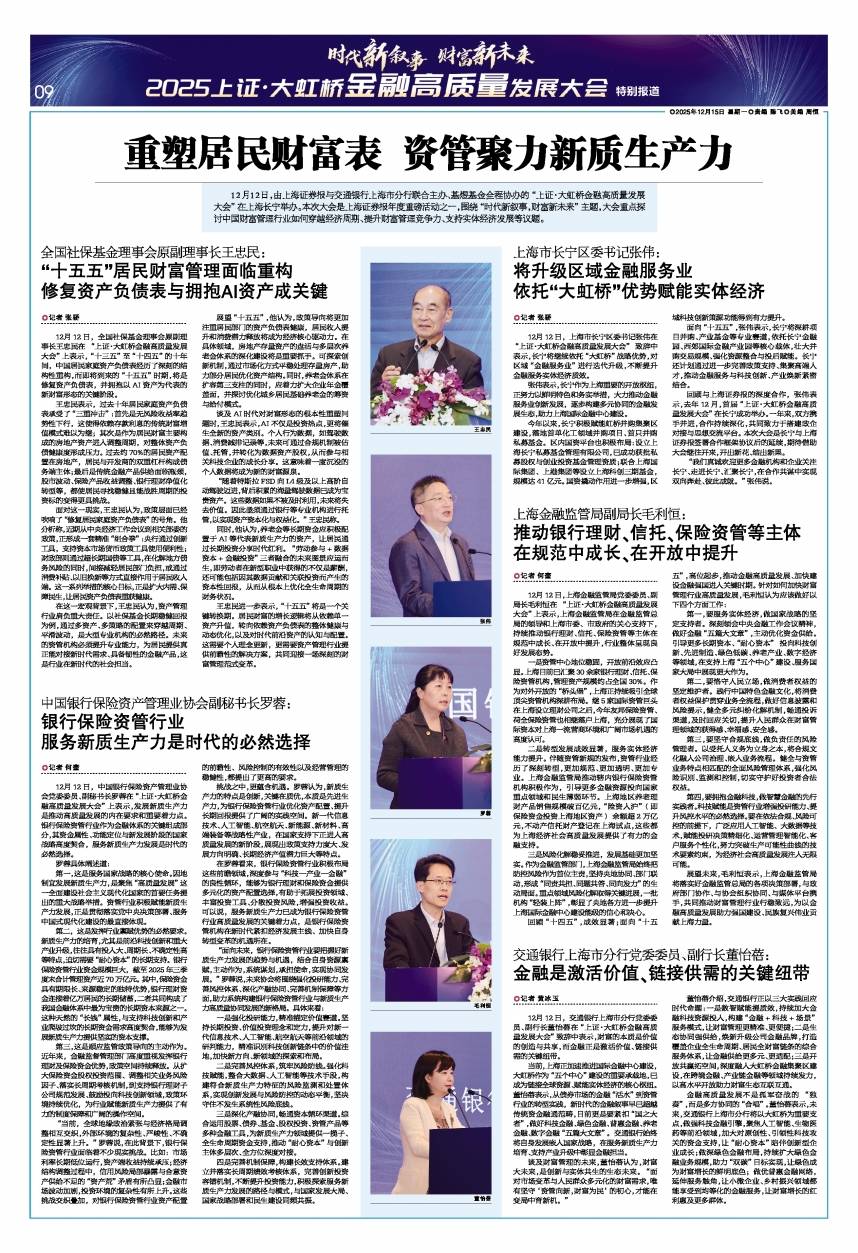
全国社保基金理事会原副理事长王忠民:“十五五”居民财富管理面临重构修复资产负债表与拥抱AI资产成关键
Shang Hai Zheng Quan Bao· 2025-12-14 19:43
Core Viewpoint - The upcoming "15th Five-Year Plan" period will be crucial for repairing household balance sheets and embracing new wealth forms represented by AI assets [2][3]. Group 1: Household Balance Sheet Challenges - Over the past decade, Chinese household balance sheets have undergone significant structural changes due to three main shocks: declining risk-free interest rates, adjustments in the real estate market, and bottlenecks in traditional financial product supply [2]. - Approximately 70% of household assets are allocated in real estate, creating dual leverage between residents and developers, which pressures overall asset health [2]. Group 2: Policy Responses - Recent policies from the central government aim to repair household balance sheets, including innovative monetary tools from the central bank and fiscal measures like long-term bonds to alleviate local debt risks [3]. - These measures are designed to expand domestic demand and safeguard livelihoods, ultimately restoring the health of household balance sheets [3]. Group 3: Asset Management Industry Responsibilities - The asset management industry is tasked with providing resilient financial products that meet the new demands of the era, utilizing multi-asset and multi-strategy allocations to navigate market cycles [4]. - The focus will shift towards enhancing the health of household balance sheets, with an emphasis on increasing household income and releasing consumption potential as core economic drivers [4]. Group 4: Future Wealth Management Trends - The revitalization of existing real estate assets and the deepening of a multi-tiered pension system will be key areas of focus [4]. - The integration of AI into wealth management will create new asset classes, with personal behavior data potentially being valued and converted into data asset equity [5]. - Long-term funds, such as pensions, should actively invest in AI and other new productive assets, allowing residents to share in the benefits of long-term investments [5]. Group 5: Paradigm Shift in Wealth Growth Logic - The logic of wealth growth will transition from relying on single asset appreciation to focusing on the overall health and dynamic optimization of balance sheets, as well as recognizing and allocating towards cutting-edge assets [5]. - This shift necessitates a change in personal investment philosophies and the provision of forward-looking solutions by the asset management industry to adapt to a profound transformation in wealth management paradigms [5].