
AI资产

Search documents
Alphabet资本支出计划翻倍引市场担忧,股价承压
Jing Ji Guan Cha Wang· 2026-02-11 21:06
Core Viewpoint - Alphabet (GOOGL.OQ) announced that its capital expenditure is expected to double to between $175 billion and $185 billion by 2026, significantly exceeding analyst expectations, which has raised concerns about its return prospects and pressured its stock price [1] Stock Performance - Following the capital expenditure announcement, Alphabet's stock price experienced a significant drop in pre-market trading on February 5, although the decline narrowed later in the day, resulting in a net decrease [2] - This volatility coincided with a broader sell-off in technology stocks, with chipmaker AMD plummeting 17% and Palantir falling 12%, indicating market anxiety over the high valuations of AI assets [2] Institutional Perspectives - Kim Forrest, Chief Investment Officer at Bokeh Capital Partners, noted that Alphabet's stock decline reflects market concerns over the high prices of popular stocks, suggesting a need for a "reset" [3] - This perspective aligns with the trend of investors shifting from growth stocks to value stocks, focusing on the uncertainty surrounding capital expenditure returns [3]
海外策略周报:地缘问题延续促使全球多数市场震荡较多-20260131
HUAXI Securities· 2026-01-31 12:54
Global Market Overview - The report indicates that global markets experienced significant fluctuations due to ongoing geopolitical issues in various regions, particularly affecting the US and European markets [1][2] - The technology sector in the US stock market showed considerable volatility, with high valuations contributing to potential mid-term correction pressures [1][11] - The report highlights that the S&P 500 Shiller PE ratio reached 40.81, indicating a prolonged period above 40, suggesting overvaluation concerns [1][11] US Market Performance - The S&P 500 index increased by 0.34% this week, while the Nasdaq and Dow Jones indices decreased by 0.17% and 0.42%, respectively [2][11] - The energy sector within the S&P 500 saw the largest increase of 3.88%, while the healthcare sector experienced the most significant decline of 1.73% [11] - The TAMAMA technology index maintains a PE ratio of 35.94, with the Philadelphia Semiconductor index rising to 47.83, nearing the 50 mark, indicating high valuations in the tech sector [1][11] Hong Kong Market Performance - The Hang Seng Index, Hang Seng China Enterprises Index, and Hang Seng Hong Kong Chinese Enterprises Index all saw increases of 2.38%, 1.71%, and 3.59%, respectively, while the Hang Seng Technology Index fell by 1.38% [23][27] - The report notes significant sectoral divergence within the Hong Kong market, with the energy sector rising by 7.44% and healthcare declining by 2.72% [27][29] - Structural opportunities are anticipated in resilient assets with favorable industry trends, despite the overall market's mixed performance [1][36] Economic Data - The report mentions that the US core PPI year-on-year growth rate for December 2025 was 3.3%, up from the previous 3.1% [2][37] - Japan's consumer confidence index for January 2026 was reported at 37.7, an increase from 37.1, indicating improved consumer sentiment [37][39] - The Eurozone's GDP growth rate for Q4 2025 was stable at 0.3%, matching the previous value, reflecting steady economic conditions [37][39]
海外策略周报:日本央行加息,亚太市场股指回调较多-20251220
HUAXI Securities· 2025-12-20 11:44
Group 1: Global Market Overview - The Bank of Japan announced an interest rate hike, leading to increased volatility in global markets[1] - The S&P 500 Shiller PE ratio remains high at 40.15, indicating potential for further correction in U.S. tech stocks[1] - Major European indices like DAX and CAC40 are expected to experience further fluctuations due to high price-to-book ratios[1] Group 2: U.S. Market Performance - The S&P 500 index increased by 0.1%, while the Nasdaq rose by 0.48% this week[2] - The Dow Jones Industrial Average fell by 0.67% during the same period[2] - The technology sector remains overvalued, with the TAMAMA technology index PE at 36.54 and the Philadelphia Semiconductor index at 42.28[1] Group 3: Asian Market Insights - The Nikkei 225 index saw a significant decline of 2.61% this week, with expectations of further corrections due to high valuations[2] - The Hang Seng Index and related indices experienced declines of 1.1% to 2.39% this week, indicating market pressure[2] - Emerging markets like the Korean Composite Index and others are likely to face volatility due to economic fundamentals and valuation concerns[1] Group 4: Economic Indicators - Japan's CPI growth rate for November was 2.9%, down from 3% previously, indicating a potential easing of inflationary pressures[4] - The U.S. and Japan's monetary policies are diverging, contributing to market uncertainties[1] - Global geopolitical risks and unexpected economic growth could pose additional threats to market stability[5]
全国社保基金理事会原副理事长王忠民:“十五五”居民财富管理面临重构 修复资产负债表与拥抱AI资产成关键
Sou Hu Cai Jing· 2025-12-15 00:30
Core Viewpoint - The upcoming "Fifteen Five" period will be crucial for repairing household balance sheets and embracing new wealth forms represented by AI assets, following a decade of structural reconfiguration in Chinese household asset-liability statements during the "Thirteenth Five" to "Fourteenth Five" periods [1][20]. Group 1: Household Asset-Liability Structure - Over the past decade, Chinese households have faced three significant shocks: a downward trend in risk-free interest rates, a correction in real estate assets which constituted about 70% of household wealth, and challenges in traditional financial product supply due to market volatility [20][21]. - The policy direction is now focused on repairing household balance sheets, with measures from the central economic work conference and relevant ministries forming a "combination punch" to support capital markets and alleviate household burdens [21][22]. Group 2: Asset Management Industry Responsibilities - The asset management industry is expected to play a vital role in providing resilient financial products that meet the new demands of the era, emphasizing the need for enhanced professional capabilities [21][22]. - The industry must adopt multi-asset and multi-strategy approaches to navigate economic cycles and smooth out volatility, which is essential for large professional institutions [21][22]. Group 3: Future Wealth Management Trends - The "Fifteen Five" period will see a shift in wealth growth logic from reliance on single asset appreciation to a focus on overall health and dynamic optimization of asset-liability statements [23][24]. - AI is anticipated to create new asset classes, with personal data becoming a new source of wealth, necessitating the establishment of compliant mechanisms for valuation and custody [22][23]. - Long-term funds, such as pensions, should actively invest in AI and other new productive assets, allowing residents to share in the dividends of the era through long-term investments [23][24].

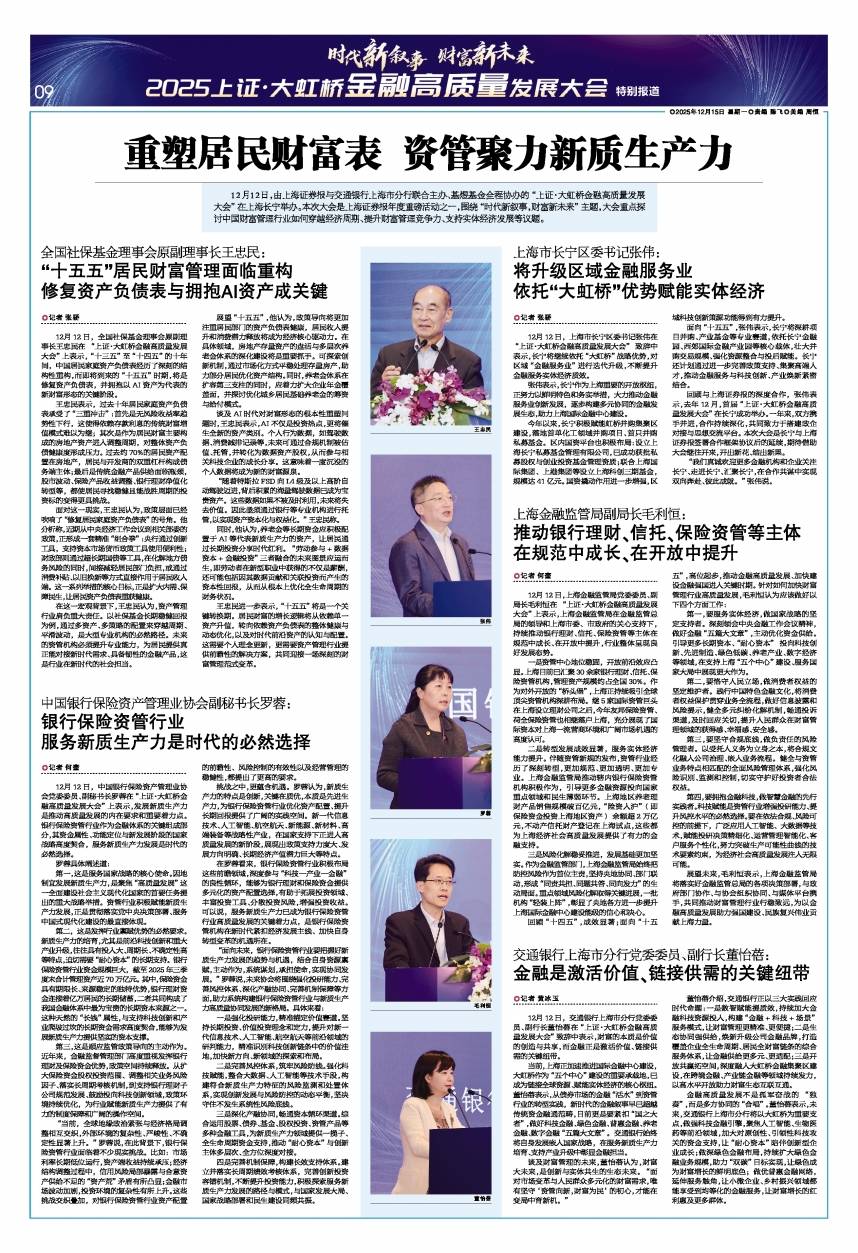
全国社保基金理事会原副理事长王忠民:“十五五”居民财富管理面临重构修复资产负债表与拥抱AI资产成关键
Shang Hai Zheng Quan Bao· 2025-12-14 19:43
Core Viewpoint - The upcoming "15th Five-Year Plan" period will be crucial for repairing household balance sheets and embracing new wealth forms represented by AI assets [2][3]. Group 1: Household Balance Sheet Challenges - Over the past decade, Chinese household balance sheets have undergone significant structural changes due to three main shocks: declining risk-free interest rates, adjustments in the real estate market, and bottlenecks in traditional financial product supply [2]. - Approximately 70% of household assets are allocated in real estate, creating dual leverage between residents and developers, which pressures overall asset health [2]. Group 2: Policy Responses - Recent policies from the central government aim to repair household balance sheets, including innovative monetary tools from the central bank and fiscal measures like long-term bonds to alleviate local debt risks [3]. - These measures are designed to expand domestic demand and safeguard livelihoods, ultimately restoring the health of household balance sheets [3]. Group 3: Asset Management Industry Responsibilities - The asset management industry is tasked with providing resilient financial products that meet the new demands of the era, utilizing multi-asset and multi-strategy allocations to navigate market cycles [4]. - The focus will shift towards enhancing the health of household balance sheets, with an emphasis on increasing household income and releasing consumption potential as core economic drivers [4]. Group 4: Future Wealth Management Trends - The revitalization of existing real estate assets and the deepening of a multi-tiered pension system will be key areas of focus [4]. - The integration of AI into wealth management will create new asset classes, with personal behavior data potentially being valued and converted into data asset equity [5]. - Long-term funds, such as pensions, should actively invest in AI and other new productive assets, allowing residents to share in the benefits of long-term investments [5]. Group 5: Paradigm Shift in Wealth Growth Logic - The logic of wealth growth will transition from relying on single asset appreciation to focusing on the overall health and dynamic optimization of balance sheets, as well as recognizing and allocating towards cutting-edge assets [5]. - This shift necessitates a change in personal investment philosophies and the provision of forward-looking solutions by the asset management industry to adapt to a profound transformation in wealth management paradigms [5].
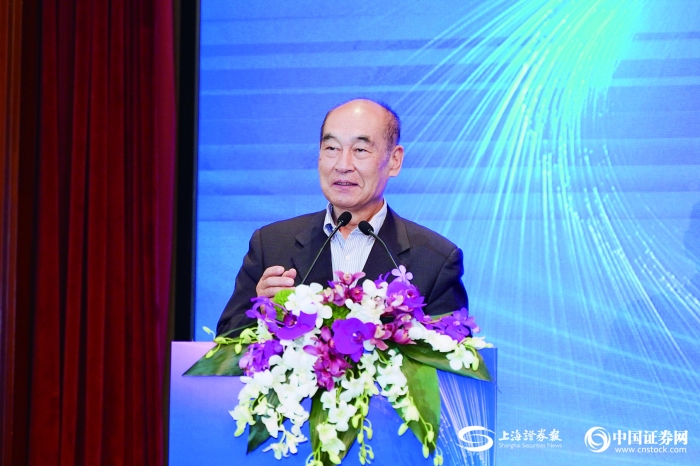
全国社保基金理事会原副理事长王忠民:“十五五”时期居民财富管理面临重构 修复资产负债表与拥抱AI资产成关键
Sou Hu Cai Jing· 2025-12-14 08:24
Core Viewpoint - The upcoming "15th Five-Year Plan" period is seen as a critical transition phase for wealth management in China, shifting from reliance on single asset appreciation to a focus on overall health and dynamic optimization of asset-liability balance, alongside recognition and allocation of frontier assets [1][6] Group 1: Changes in Household Asset-Liability Structure - Over the past decade, Chinese households have faced "threefold shocks" impacting their asset-liability balance: declining risk-free interest rates, adjustments in the real estate market, and bottlenecks in traditional financial product supply [3][4] - Approximately 70% of household assets are allocated in real estate, creating dual leverage risks for both residents and developers [3] Group 2: Policy Responses and Asset Management Industry Responsibilities - Recent policies from the central government aim to repair household asset-liability balances, with measures including innovative monetary tools and fiscal strategies to alleviate local debt risks and enhance household income [4] - The asset management industry is urged to enhance its professional capabilities to provide resilient financial products that meet the evolving needs of residents [4][6] Group 3: Future Directions and Innovations - The focus on household asset-liability health will drive economic growth, with real estate asset revitalization and the development of a multi-tiered pension system as key areas of focus [5] - The emergence of AI as a new asset class is highlighted, with personal data potentially being valued and converted into data asset equity, allowing individuals to share in the growth of related technology companies [5][6] - Long-term funds, such as pensions, should actively invest in AI and other new productive assets to enable residents to benefit from long-term investments [6]

风险偏好走低,股指震荡回调
Bao Cheng Qi Huo· 2025-11-21 11:04
1. Report Industry Investment Rating - No relevant content provided 2. Core Viewpoints of the Report - On November 21, 2025, all stock indices declined significantly, showing weakness throughout the day. The total trading volume of the Shanghai, Shenzhen, and Beijing stock markets was 1.9836 trillion yuan, an increase of 261 billion yuan from the previous day. The main reasons for this correction were the weakening marginal drive of domestic policy incentives and the risk transmission from overseas stock markets. After entering November, the incremental policy signals weakened, and there was little need for further policy tightening this year, leading to a short - term decline in the policy expectations driving the stock market up. Overseas, the statements of Fed officials were inconsistent, and the expectation of interest rate cuts was uncertain. Coupled with the bubble risk in AI assets where investment and returns were difficult to match, US stock AI assets led by NVIDIA significantly corrected, putting pressure on domestic technology stocks under risk transmission. In general, with the weakening of positive drives and the increasing of negative factors, the profit - taking sentiment in the stock market rose, triggering a short - term correction of the stock indices. Attention should be paid to the risk of over - decline caused by the concentrated release of market pessimism. In the medium and long term, the positive policy expectations and the trend of continuous capital inflow remained unchanged. After short - term shock consolidation, the stock indices were not pessimistic in the long term. In general, the short - term market game intensified, and the stock indices mainly fluctuated within a range in the short term. For options, considering the medium - and long - term upward trend of the stock indices, a bull spread strategy could be adopted after a significant correction of the stock indices [3]. 3. Summary According to Relevant Catalogs 3.1 Option Indicators - On November 21, 2025, the 50ETF fell 1.74% to close at 3.101; the 300ETF (Shanghai Stock Exchange) fell 2.40% to close at 4.564; the 300ETF (Shenzhen Stock Exchange) fell 2.34% to close at 4.713; the CSI 300 Index fell 2.44% to close at 4453.61; the CSI 1000 Index fell 3.72% to close at 7067.70; the 500ETF (Shanghai Stock Exchange) fell 3.46% to close at 6.922; the 500ETF (Shenzhen Stock Exchange) fell 3.42% to close at 2.767; the GEM ETF fell 4.03% to close at 2.904; the Shenzhen 100ETF fell 2.71% to close at 3.272; the SSE 50 Index fell 1.74% to close at 2955.85; the STAR 50ETF fell 3.22% to close at 1.35; the E Fund STAR 50ETF fell 3.25% to close at 1.31 [5]. - The trading volume PCR and position PCR of various options changed compared with the previous trading day. For example, the trading volume PCR of SSE 50ETF options was 102.19 (previous trading day: 93.94), and the position PCR was 78.37 (previous trading day: 87.28) [6]. - The implied volatility of at - the - money options in December 2025 and the 30 - trading - day historical volatility of the underlying assets of various options were provided. For example, the implied volatility of at - the - money SSE 50ETF options in December 2025 was 12.63%, and the 30 - trading - day historical volatility of the underlying asset was 12.66% [7]. 3.2 Related Charts - **SSE 50ETF Options**: Charts included the SSE 50ETF trend, option volatility, trading volume PCR, position PCR, implied volatility curve, and at - the - money implied volatility of different tenors [9][11][13][17]. - **SSE 300ETF Options**: Charts covered the SSE 300ETF trend, option volatility, trading volume PCR, position PCR, implied volatility curve, and at - the - money implied volatility of different tenors [20][22][24][30]. - **SZSE 300ETF Options**: Charts involved the SZSE 300ETF trend, option volatility, trading volume PCR, position PCR, implied volatility curve, and at - the - money implied volatility of different tenors [33][35][37][41]. - **CSI 300 Index Options**: Charts included the CSI 300 Index trend, option volatility, trading volume PCR, position PCR, implied volatility curve, and at - the - money implied volatility of different tenors [45][47][49][55]. - **CSI 1000 Index Options**: Charts covered the CSI 1000 Index trend, option volatility, trading volume PCR, position PCR, implied volatility curve, and at - the - money implied volatility of different tenors [58][61][63][69]. - **SSE 500ETF Options**: Charts involved the SSE 500ETF trend, option volatility, trading volume PCR, position PCR, implied volatility curve, and at - the - money implied volatility of different tenors [72][74][76][82]. - **SZSE 500ETF Options**: Charts included the SZSE 500ETF trend, option volatility, trading volume PCR, position PCR, implied volatility curve, and at - the - money implied volatility of different tenors [85][89][93][96]. - **GEM ETF Options**: Charts covered the GEM ETF trend, option volatility, trading volume PCR, position PCR, implied volatility curve, and at - the - money implied volatility of different tenors [99][101][103][108]. - **Shenzhen 100ETF Options**: Charts involved the Shenzhen 100ETF trend, option volatility, trading volume PCR, position PCR, implied volatility curve, and at - the - money implied volatility of different tenors [109][110][112][118]. - **SSE 50 Index Options**: Charts included the SSE 50 Index trend, option volatility, trading volume PCR, position PCR, implied volatility curve, and at - the - money implied volatility of different tenors [121][124][126][133]. - **STAR 50ETF Options**: Charts covered the STAR 50ETF trend, option volatility, trading volume PCR, position PCR, implied volatility curve, and at - the - money implied volatility of different tenors [136][138][140][144]. - **E Fund STAR 50ETF Options**: Charts involved the E Fund STAR 50ETF trend, option volatility, trading volume PCR, position PCR, implied volatility curve, and at - the - money implied volatility of different tenors [147][149].