
债务刹车机制

Search documents
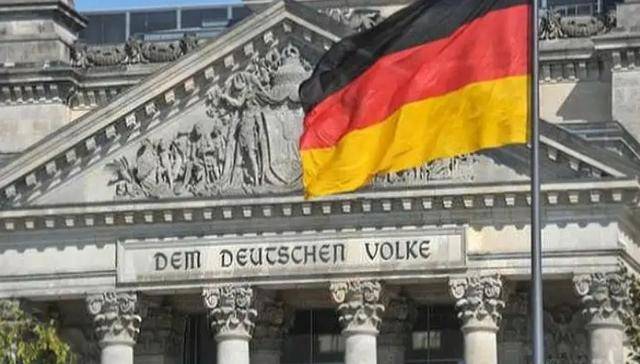
德央行预计德国经济将逐步复苏 2026年将增长0.6%
Sou Hu Cai Jing· 2025-12-19 13:37
Core Viewpoint - The Deutsche Bundesbank forecasts a gradual recovery of the German economy by 2026 after years of economic stagnation, driven by increased government spending and a rebound in exports starting in the second quarter of 2026 [2] Economic Growth Projections - The Bundesbank predicts that Germany's GDP will grow by 0.6% in 2026, 1.3% in 2027, and 1.1% in 2028, after seasonal adjustments [2] - The bank emphasizes that expansionary fiscal policies will boost the economy in the short term but have limited effects on long-term productive capacity, necessitating structural reforms [2] Fiscal Policy and Debt - Increased spending on defense and infrastructure is expected to raise the deficit and debt levels, with the fiscal deficit rate projected to reach 4.8% by 2028 [2] - The Bundesbank reiterates the need to improve the debt brake mechanism and gradually reduce the deficit starting in 2030, along with decreasing defense-related debt [2]

欧洲生死困境!极右翼嚣张放话,要么被制度拦下,要么被现实打脸
Sou Hu Cai Jing· 2025-11-24 10:14
Core Insights - The article highlights the contrasting political dynamics in the Netherlands and Finland, showcasing the rise of right-wing populism and its implications for public policy and societal tensions [1][5][15] Group 1: Political Dynamics - In the Netherlands, right-wing leader Geert Wilders' party is gaining popularity by simplifying complex issues like housing shortages into a narrative blaming immigration, resonating with stressed locals [1][5] - In Finland, the right-wing populist Finns Party has successfully shifted the blame for economic troubles onto external factors, gaining significant electoral support [1][6] Group 2: Public Response - The youth in Venlo, Netherlands, expressed their discontent with the political narrative by tearing down Wilders' campaign posters, indicating a rejection of the blame placed on immigrants [3] - The political isolation of Wilders' party, despite leading in polls, reflects the resilience of the Dutch democratic system, which prevents extreme parties from easily forming coalitions [5] Group 3: Economic Policies - Finland's right-wing coalition has implemented austerity measures, including public spending cuts and tax reductions for the wealthy, which have led to economic recession and criticism from leftist parties [6][14] - The left-wing coalition in Finland proposes investing in public services, particularly in healthcare and education, as a means to stimulate economic growth and improve living conditions [14][15] Group 4: Community Initiatives - In Venlo, a repurposed abandoned monastery project serves as an experimental space for community dialogue, shifting from emotional conflict to rational discussions about resource allocation [10][12] - Local governments in the Netherlands are adopting inclusive planning policies to ensure affordable housing is part of market-driven projects, addressing housing shortages while maintaining community diversity [12] Group 5: Future Perspectives - The article suggests that the real hope for addressing the disconnect between citizens' experiences and governmental narratives lies in the emergence of third spaces that connect emotional responses with rational governance [8][15]
欧洲经济前景:现在是转折点?
Refinitiv路孚特· 2025-10-13 06:03
Core Viewpoint - The European Central Bank (ECB) is signaling a slowdown in monetary easing amid complex challenges including deflationary pressures, geopolitical uncertainties, and structural issues, particularly in Germany [2][4]. Group 1: ECB Monetary Policy and Economic Outlook - On June 5, 2025, the ECB decided to lower the deposit rate by 25 basis points to 2%, indicating the end of the monetary easing cycle [3]. - The inflation rate in May 2025 was 1.9%, influenced by multiple factors, despite stable import levels and a significant decline in exports [3]. - The ECB has revised its inflation forecasts down by 0.3 percentage points for 2025 and 2026, with expected inflation rates of 2% and 1.6% respectively [8]. - The ECB's economic growth forecasts remain unchanged, predicting real GDP growth of 0.9% in 2025, 1.1% in 2026, and 1.3% in 2027 [8]. Group 2: Germany's Economic Challenges and Policy Changes - Germany's GDP contracted by 0.3% in Q2 2025, primarily due to reduced exports to the U.S., with the economy facing two consecutive years of recession [10]. - Structural issues, geopolitical factors, and a decline in exports to China due to its GDP slowdown are significant contributors to Germany's economic challenges [10]. - Germany plans to increase defense spending to 3.5% of GDP by 2029 and has allocated €500 billion for infrastructure modernization [12][13]. - The "debt brake" mechanism, which limits structural deficits, has been a key factor in maintaining fiscal discipline, resulting in a 16% reduction in debt-to-GDP ratio over 15 years [10][12]. Group 3: Investment Initiatives and Economic Fragmentation - A private sector initiative called "Made for Germany" aims to invest a total of €631 billion in Germany by 2028, supported by a new tax reduction policy [14]. - Despite global trade negotiations and geopolitical challenges leading to economic fragmentation, the ECB is expected to significantly reduce its intervention in economic activities in the coming months [14].

欧洲央行执委施纳贝尔:国放宽债务刹车机制释放的资金需明智使用以促进增长,同时应辅以结构性改革。
news flash· 2025-05-20 06:46
Core Viewpoint - The European Central Bank Executive Board member Schnabel emphasizes that the funds released from the relaxation of debt brake mechanisms should be used wisely to promote growth, accompanied by structural reforms [1] Group 1 - The relaxation of debt brake mechanisms is intended to provide additional financial resources [1] - There is a call for the prudent use of these funds to ensure they effectively contribute to economic growth [1] - Structural reforms are necessary to complement the financial measures for sustainable growth [1]