
光纤涨价

Search documents
未知机构:ZX航空航天每日一call坚定看好烽火通信260303我们-20260304
未知机构· 2026-03-04 02:45
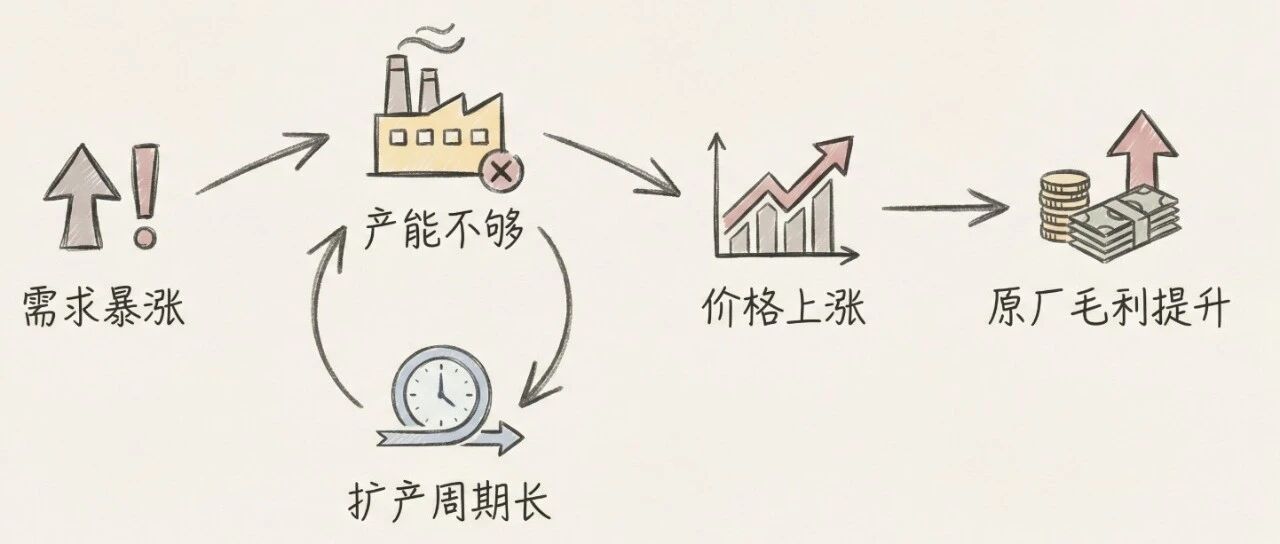
Summary of Conference Call on YF Communication (260303) Industry Overview - The focus of the call was on the optical fiber industry, specifically regarding YF Communication and its market dynamics. Key Points 1. **Optical Fiber Price Increase Exceeds Expectations** - Current prices for optical fibers are reaching new highs almost daily, with operator procurement facing pressure from ceiling prices. It is anticipated that the price increase may continue into next year due to: - **Demand Side**: Unexpected changes in demand from drones have led to a significant increase in demand for 657A2 fibers, which in turn is squeezing the production capacity of 652D single-mode fibers [1][2]. - **Supply Side**: Expansion of production capacity typically requires around 18 months [2]. 2. **Company's Optical Fiber Performance** - YF Communication is experiencing both volume and price increases: - The company can achieve profitability at a price point of 20 yuan per core kilometer for 652D fibers, while current market prices for scattered fibers are approaching 70 yuan per core kilometer. The price increase is expected to translate into profits for the company [2]. - The company's optical fiber rod production capacity is projected to increase to over 3,000 tons within the year, positioning it as the second-largest in the domestic market [2]. 3. **Inter-Satellite Laser Developments** - As previously validated across the industry chain, significant changes are expected in the inter-satellite laser landscape for future civilian applications, particularly in the GW/yangxin satellite constellation. YF Communication and HW are identified as the core companies in this evolving market [2].

LPU液冷/TIM2材料市场空间、涨价的光纤
傅里叶的猫· 2026-03-02 14:57
Group 1: Liquid Cooling and TIM Materials - The article discusses the transition from air cooling to liquid cooling in the context of LPU and TIM2 materials, highlighting that LPU was initially thought to be air-cooled but is now recognized for its cold plate solution and value [2][3] - The article emphasizes the opportunity for mainland manufacturers in the liquid cooling market due to insufficient capacity from Taiwanese manufacturers during the GB era, with companies like Cooler Master outsourcing cold plate production to domestic firms [3] - TIM2 material, specifically liquid metal indium, is noted for its superior thermal conductivity but requires gold plating on copper surfaces to prevent corrosion, indicating a shift in material requirements for high-performance GPUs like Rubin [3][4] Group 2: Market Potential for TIM2 - The estimated price for TIM2 material is around $120 per unit, with expectations of a price drop to approximately $100 as production scales up, indicating a significant market opportunity [6] - With an anticipated shipment of 2.9 million Rubin GPUs this year, the market potential for TIM2 is projected to be around 2 billion RMB, with further growth expected in the coming years as shipments increase [7][8] Group 3: Fiber Optics Market Dynamics - The article outlines the recent price increases in fiber optics driven by a surge in demand, particularly from North American data centers and global intelligent computing centers, which require significantly more fiber than traditional data centers [10] - Supply constraints are exacerbated by the long expansion cycle for core raw materials and cautious expansion by manufacturers following previous price wars, limiting the ability to meet rising demand [10] - External factors, such as increased tariffs on Chinese fiber optic manufacturers by the U.S., have further complicated the supply chain and increased production costs, contributing to higher product prices [10] Group 4: Related Companies in Fiber Optics - The article lists several domestic companies involved in the fiber optics sector, including Tongding Interconnection, Yangtze Optical Fibre and Cable, Etern, Hengtong, and Zhongtian, indicating potential investment opportunities in this growing market [13]

未知机构:光纤0211将军赶路不追野兔1海外光纤到底涨不涨价-20260213
未知机构· 2026-02-13 02:50
Summary of Conference Call Notes Industry Overview - The discussion primarily revolves around the optical fiber industry, specifically focusing on pricing trends and supply dynamics in North America and Asia [1][2]. Key Points 1. **Pricing Trends for Optical Fiber** - Prices for overseas optical fibers have increased, but not for standard fibers. The North American G.652.D fibers are under long-term contracts, and due to the BEAD Act, Corning is locked into agreements with operators. Corning indicated that while high-end products will see price increases, they will not be as significant as those in the domestic market, where prices are already several times higher [1]. 2. **Supply of Optical Fiber** - Corning's CEO stated that the global supply of standard optical fibers is sufficient to meet demand. Current capacity expansions are focused on new high-density optical fiber cables and connection products, which provide better optical performance in about half the space and significantly reduce installation costs. This indicates a structural shortage in fiber capacity, particularly for G.657.A2 fibers, suggesting a need for domestic outsourcing or suppliers [1]. 3. **Anti-Dumping Measures by South Korea** - South Korea has imposed anti-dumping sanctions on single-mode optical fibers, specifically targeting G.652.D. The sanctions are not expected to impact the market significantly as South Korea does not have a shortage of these fibers, and the trade volume with China is minimal [2]. 4. **North American DCI Trends** - There is a strong recommendation for leadership to pay close attention to the trends in North American Data Center Interconnect (DCI), with this year being a pivotal year for growth. Companies such as GLW, CIEN, and NOK are emerging from this trend, alongside domestic players like YOFC and DKL [2]. 5. **Recommended Companies for Investment** - The top recommended companies in the optical fiber sector include Changfei, Hengtong, and TeFa. Other companies like Zhongtian, Fenghuo, and Hangdian are also noted as good options, although their investment logic may differ [2]. Additional Important Information - The discussion highlights the competitive landscape and the need for strategic positioning in the optical fiber market, particularly in light of regulatory changes and technological advancements [1][2].