克隆技术

Search documents
永生梦碎!克隆不能无限续命:小鼠连续克隆58代后,基因突变的积累最终导致生命崩溃
生物世界· 2026-03-28 03:50
Core Viewpoint - The research conducted by Yoshinori Nakagawa and his team demonstrates that continuous cloning in mammals is not sustainable due to the accumulation of genetic mutations over generations, ultimately leading to the termination of the cloned lineage [4][3]. Group 1: Cloning Experiment Overview - The cloning experiment initiated in 2005 involved using somatic cells from a female mouse to create successive generations of cloned mice through nuclear transfer, resulting in a total of 58 generations and over 30,000 cloning attempts [9][7]. - Initially, the cloning success rate improved, reaching 15.5% by the 26th generation, but began to decline significantly after the 27th generation, dropping to 0.6% by the 57th generation, with all 58th generation clones dying shortly after birth [7][9]. Group 2: Genetic Mutations and Their Impact - Despite appearing normal in weight and lifespan, the cloned mice accumulated harmful genetic mutations, with an average of 69 single nucleotide mutations and 1.4 small insertions/deletions per generation from the 1st to the 57th generation [11][10]. - Large chromosomal structural variations, such as complete loss of an X chromosome and significant deletions or translocations, were also observed, particularly during the decline in cloning success rates [11][10]. Group 3: Sexual Reproduction as a Solution - The study found that the cloned mice could successfully reproduce through sexual reproduction, although the number of offspring was significantly reduced to an average of 2-3 compared to the normal 10 [13][12]. - Subsequent generations born from these sexual reproductions showed a recovery in offspring numbers and normal placental sizes, indicating that sexual reproduction acts as a "proofreading system" to eliminate accumulated genetic errors [13][12]. Group 4: Implications for Cloning Technology - The research highlights the evolutionary necessity of sexual reproduction in mammals, which helps eliminate harmful mutations and maintain genetic diversity, contrasting with the limitations of cloning [15][16]. - The findings suggest that while cloning can serve as an emergency measure for preserving genetic material, it cannot replace natural reproduction for sustaining healthy populations, especially in conservation efforts for endangered species [16][15].


青藏高原首例克隆濒危牛健康成长
Xin Hua Wang· 2025-12-07 03:00
Core Viewpoint - The cloning of the rare Zhangmu cattle in Tibet represents a significant step in the conservation of this endangered breed, which has seen its population increase from 19 to 37 due to advanced cloning techniques and protective measures [1][2]. Group 1: Cloning and Conservation Efforts - The Zhangmu cattle, a unique genetic resource in Tibet, was confirmed to have only 19 individuals during the 2021 national livestock genetic resource survey, indicating a critically endangered status [1]. - In May 2023, the first cloned Zhangmu calf was successfully born at the Tibet Animal Disease Prevention and Control Center, marking a pioneering effort in high-altitude cloning [1]. - The cloned calf is under 24-hour monitoring, showing stable physiological indicators, strong appetite, and good growth, with plans for breeding trials to support population recovery [1]. Group 2: Population Growth - The population of Zhangmu cattle has increased from 19 to 37 due to breakthroughs in cloning technology and coordinated conservation measures [2].
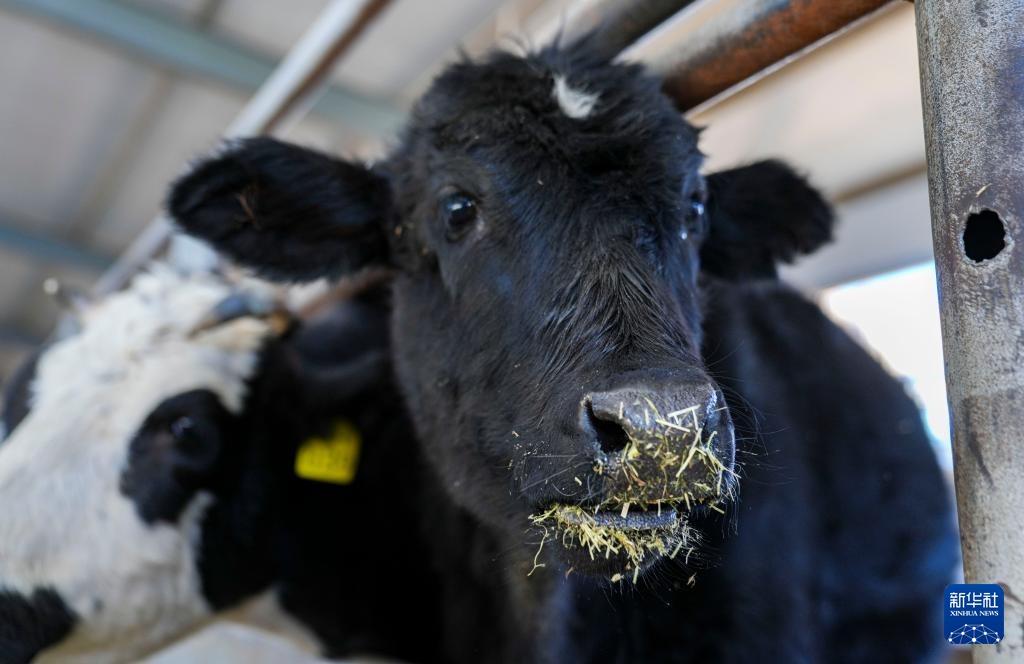
俄罗斯成功培育两头克隆牛
Yang Shi Xin Wen Ke Hu Duan· 2025-11-17 13:27
Core Viewpoint - The successful cultivation of two cloned cows in Russia's Krasnodar region marks a significant advancement in cloning technology, overcoming common challenges associated with cloning large animals [1] Group 1: Cloning Achievement - Two cloned cows named Mirka and Iskorka have been successfully cultivated, with one of them having a normal weight [1] - The cloned calves weigh 32.5 kilograms and 56 kilograms respectively, showcasing the success of the research team in addressing issues related to fetal size during the cloning process [1] Group 2: Scientific Insights - The research team corrected embryonic development issues, successfully tackling the common problem of large fetal size in cloned animals [1] - There is currently no clear scientific explanation for the phenomenon of oversized fetuses during the cloning process, as noted by a researcher from Moscow State University [1]
彭博:中国突破动物实验界限,赢得全球生物技术竞赛
彭博· 2025-10-30 01:56
Investment Rating - The report indicates a positive outlook for the biotechnology industry in China, particularly in the field of gene editing and transgenic animals, suggesting significant growth potential [7][10][18]. Core Insights - China is positioning itself as a global leader in biotechnology by pushing the boundaries of animal experimentation, which has traditionally been dominated by the US and Europe [5][7][18]. - The market for transgenic animals in biomedical research is expected to reach $15 billion by 2024, reflecting a doubling in size over the past decade [10][12]. - The Chinese government has invested approximately $3 billion in the biotechnology sector in 2023, with projections indicating that sales of cell and gene therapies will grow from $300 million last year to $2 billion by 2033 [7][10]. Summary by Sections Regulatory Environment - Unlike the US and Europe, China has a relatively lenient regulatory framework regarding animal experimentation, which facilitates research and development in gene editing [18][19]. - The lack of comprehensive animal welfare laws in China allows for more extensive use of large animals in research, which is becoming increasingly difficult in Western countries due to ethical concerns [18][19]. Market Dynamics - The global market for transgenic animal models has seen significant growth, with estimates suggesting it will reach $15 billion by 2024, driven by advancements in gene editing technologies [10][12]. - Chinese companies such as SineuGene are at the forefront of developing gene-edited animal models for various diseases, including autism and ALS [5][10][24]. Scientific Advancements - The development of SNUG01, a gene therapy derived from pigs, has been approved for human trials, potentially benefiting 90% of ALS patients [4][5]. - Chinese scientists have successfully created genetically modified monkeys and dogs to study complex human diseases, marking a significant advancement in biomedical research [7][19]. Competitive Landscape - The report highlights that China is rapidly advancing in biotechnology, with significant government support and a growing number of research centers dedicated to gene editing and transgenic animal breeding [7][10][18]. - The ability to clone and genetically modify large animals positions China uniquely in the global biotechnology race, as it seeks to reduce reliance on foreign pharmaceutical companies [7][19].
我国科学家成功克隆牦牛
news flash· 2025-07-11 12:50
Core Insights - The first cloned yak was born at the Tibet (Dangxiong) Golden Silk Yak Breeding Base, weighing 33.5 kilograms [1] - This achievement is a collaborative effort between Zhejiang University and the Tibet Autonomous Region Plateau Biological Research Institute [1] Summary by Categories Company - The cloning project is led by a team from Zhejiang University, indicating a significant advancement in biotechnology and animal breeding [1] - The collaboration with the Tibet Autonomous Region Plateau Biological Research Institute highlights the integration of academic research with practical applications in agriculture [1] Industry - The successful birth of a cloned yak represents a milestone in the livestock industry, particularly in enhancing yak breeding techniques [1] - This development may have implications for the future of animal husbandry and genetic research in high-altitude environments [1]
从说谎到经济学,少年们的跨界提问 | Knock Knock 世界
声动活泼· 2025-06-15 01:02
Core Viewpoint - The article discusses various societal issues and questions raised by children, including the differences in regulations around sugar consumption compared to smoking and drinking, the economic challenges faced by local businesses, and the disparity in farmers' incomes between different countries [2][4][5]. Group 1: Economic Concerns - The article highlights the closure of local businesses, such as clothing stores and libraries, indicating a challenging economic environment [4]. - It raises questions about the income disparity among farmers, particularly comparing the earnings of farmers in China to those in the United States, despite advancements in agricultural technology [5]. Group 2: Regulatory and Policy Questions - The article questions the rationale behind regulations that prevent children from smoking and drinking but do not restrict sugar consumption, prompting a discussion on legislative approaches [3]. - It also explores the implications of political decisions made by figures like Trump, particularly regarding international students and the simplicity of policy-making in the U.S. [3][4]. Group 3: Scientific and Market Insights - The article touches on the volatility of gold prices, suggesting that fluctuations can be attributed to various factors beyond just the intrinsic value of gold [5]. - It introduces the concept of Bitcoin, questioning its purpose and role in the current economic landscape [5]. Group 4: Podcast Promotion - The article promotes the "Knock Knock World" podcast, which aims to engage young audiences with global news and insights, providing details on its release schedule and availability on various platforms [6].

从说谎到经济学,少年们的跨界提问 | Knock Knock 世界
声动活泼· 2025-06-14 08:46
Group 1 - The podcast "Knock Knock World" is a collaboration between "Sounding Alive" and "One Tenth," aimed at unlocking global fresh news for young audiences [6] - The first season of "Knock Knock World" is scheduled to run from March 25, 2025, to March 24, 2026, with a price of 365 yuan [7] - The podcast updates every Monday, Wednesday, and Friday at 6:00 AM, with each episode lasting 10 minutes [6] Group 2 - The podcast is available on major audio platforms, including Apple Podcast, Himalaya, NetEase Cloud Music, and QQ Music, and can be purchased via the Xiaoyuzhou App [8]