
全球多极化格局

Search documents
特朗普抢夺格陵兰,俄罗斯“乐坏了”!美欧同盟裂痕已难修补
Sou Hu Cai Jing· 2026-01-23 11:36
最近格陵兰岛的风波看似有了缓和迹象,特朗普取消关税威胁还和北约搭好了协议框架,欧洲不少国家松了口气。 有人在幕后既没下场交锋,也没发表强硬声明,却靠着精准操盘收割了所有战略红利,这个隐形赢家是谁?他们又靠什么不动声色就达成了长期目标? 他一边调侃要是美国再不行动,格陵兰岛说不定会公投加入俄罗斯,一边还"贴心"支招,说拿下这座岛屿能让特朗普名垂青史。 这番操作看似是玩笑,实则是精准的舆论狙击,既消解了美欧博弈的严肃性,又狠狠戳中了双方的信任软肋。 要知道,美欧同盟本就靠着相互信任维系,这种高级别的讽刺,比直接谴责更能放大彼此的猜忌,让欧洲的愤怒和美国的强硬都显得格外滑稽。 和梅德韦杰夫的高调形成鲜明对比的,是克里姆林宫的极致克制。 面对美方所谓消除俄罗斯对格陵兰岛威胁的言论,发言人佩斯科夫没有提出抗议,也没有发出警告,只淡淡回应说听到了令人担忧的言论,正在分析。 更耐人寻味的是,当记者进一步追问时,他还话里有话地表示,要是特朗普真能实现目标,那绝对是名垂青史的壮举。 这种一热一冷的配合,堪称大国博弈的精妙手法,俄方就像高明的推手,既点燃了美欧矛盾的火苗,又始终置身事外,避免引火烧身。 而随着局势发展,俄方的布局 ...

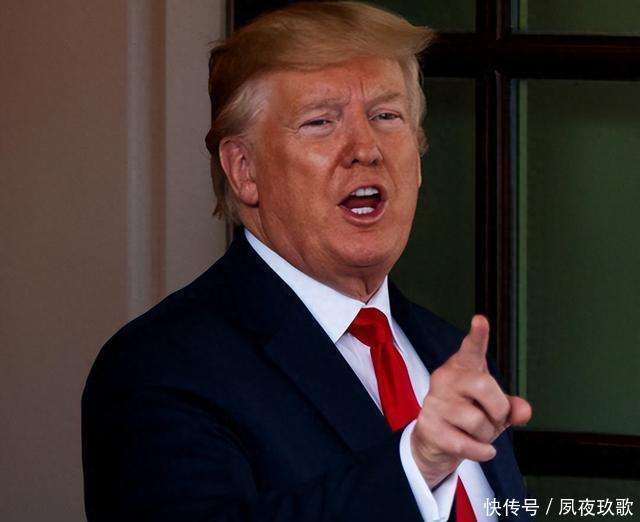
天不生你特朗普,霸权万古如长夜!特朗普要把美国带成老二?
Sou Hu Cai Jing· 2025-11-26 07:09
Group 1 - The article discusses the potential decline of U.S. hegemony and the implications of Trump's actions on global order [1] - Trump's previous plans to increase tariffs on Chinese goods have lost their effectiveness, leading to a significant drop in trade between the U.S. and China [3] - The shift of China's soybean purchases from the U.S. to Brazil and Russia poses a serious threat to Trump's support in key agricultural states [3] Group 2 - The political stalemate in the U.S. government highlights the limitations of Trump's influence, with potential losses in the Senate and House jeopardizing his political future [5] - Trump's threats in the trade war have diminished in effectiveness, especially as China employs strategic countermeasures, including leveraging rare earth resources [5] - The article suggests that Trump may need to seek dialogue with China, as his usual strategy of pressure followed by negotiation is no longer effective [6] Group 3 - Trump's political maneuvers appear desperate, as he faces challenges in maintaining his political image and influence [8] - The article notes that Trump's actions could inadvertently weaken U.S. military intervention capabilities abroad due to escalating domestic conflicts [8] - The potential for U.S. military involvement in Gaza raises concerns about regional stability and the reaction from Arab nations [12] Group 4 - The article highlights the irony that Trump's continued presidency may accelerate the relative decline of U.S. hegemony, contributing to a multipolar global order [10] - The changing dynamics in the Middle East, particularly regarding the two-state solution, reflect a significant shift in U.S. foreign policy under Trump [10] - The influence of domestic Jewish lobbying groups on U.S. foreign policy remains a powerful factor in the ongoing conflict in the Middle East [12][14]
十年国债ETF(511260)昨日净流入超1.0亿,跨季资金宽松支撑利率下行
Sou Hu Cai Jing· 2025-07-10 01:57
Group 1 - The 30-year government bond ETFs, specifically Bosera 30-Year Government Bond Index ETF and Pengyang 30-Year Government Bond ETF, showed strong performance with daily increases of 0.84% and 0.79% respectively on July 8, 2025 [1] - The central bank did not publish the usual government bond trading operations in June 2025, following its first-ever bond trading operation in August 2024, where it net purchased bonds worth 100 billion yuan [1] - The first quarter monetary policy report indicated that the central bank paused government bond purchases due to a supply-demand imbalance in the bond market [1] Group 2 - Global political and economic order is rapidly restructuring in 2025, with the "Trump 2.0" policy becoming a key variable, leading to increased trade barriers and geopolitical conflicts, which heighten global economic uncertainty and slow growth [1] - China is expected to achieve an annual economic growth rate of approximately 5% through structural reforms in response to external shocks [1] - The domestic demand shortage, low price levels, and external uncertainties are providing support for the bond market, but limited room for further fundamental gains is anticipated due to stable economic growth [1] Group 3 - Under the policy framework of "proactive fiscal policy + moderate monetary easing," there is a likelihood of a 10-15 basis point interest rate cut in the fourth quarter, which may drive down the interest rate center [1] - The bond market is expected to maintain volatility, with a higher probability of strengthening in the fourth quarter [1] Group 4 - The 10-Year Government Bond ETF tracks the 10-Year Government Bond Index, which primarily selects fixed-rate government bonds with a remaining term close to 10 years listed on the Shanghai Stock Exchange, reflecting the overall performance of China's long-term government bond market [2] - The index does not involve specific industry or style allocations, and the issuer is typically the Ministry of Finance of China, aimed at providing investors with a benchmark tool for measuring the long-term government bond market [2]