全球战略格局重塑

Search documents
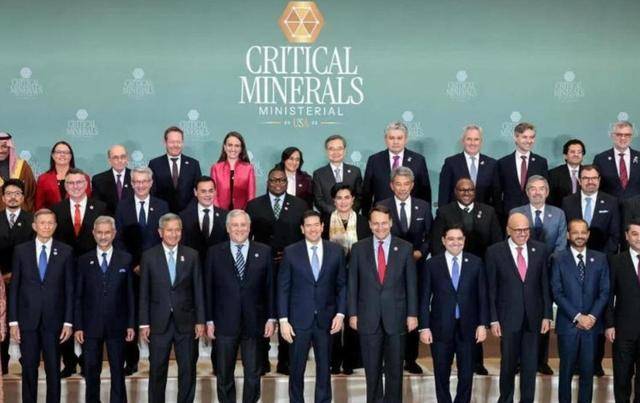
特朗普刚挂断中方电话,转头拉拢54国成立“关键矿产联盟”,直指中国稀土!
Sou Hu Cai Jing· 2026-02-06 16:17
Core Viewpoint - The establishment of the "Rare Earth Alliance" by the U.S. with 54 countries aims to exclude China under the guise of cooperation, indicating a strategic shift in global supply chains and resource competition [1][3]. Group 1: U.S. Strategy - The U.S. is focusing on "decoupling from China" as a key aspect of its supply chain strategy, particularly in critical minerals like rare earths, lithium, and cobalt, to create a more favorable environment for domestic companies [1][3]. - The U.S. is employing a dual strategy of communication management and strategic alliances to gradually weaken China's industrial base without provoking direct conflict [3][5]. - The creation of a "preferential trade zone" and price floor by the U.S. may not attract sufficient investment or participation, especially from developing countries with reservations about U.S. intentions [3][5]. Group 2: China's Response - China is expected to enhance its technological capabilities and market demand in the rare earth sector, maintaining its dominant position in refining technology and production capacity [5][7]. - The Chinese government emphasizes the importance of an open and inclusive international trade environment, opposing the "small circle" rules that disrupt global economic order, thereby positioning the U.S. as a disruptor [5][8]. - China aims to strengthen cooperative relationships with non-allied countries to ensure its critical role in global supply chains, promoting the idea of "open cooperation" to create mutual benefits [7][8].


13.5万俄兵即将入伍!中朝支援成关键,中国能源进口受美威胁
Sou Hu Cai Jing· 2025-10-02 08:08
Core Insights - Russia's recent mobilization of 135,000 young recruits is a significant move amidst escalating tensions, particularly following the U.S. decision to allow Ukraine to use long-range missiles against Russian territory [1][11] - The situation indicates a complex geopolitical landscape where Russia is seeking support from China and North Korea to bolster its military capabilities and sustain its war efforts [4][6][11] Military Mobilization - The Kremlin's mobilization is not merely routine but reflects a response to heightened threats, particularly from U.S. military support to Ukraine [1][11] - Russia's current defense capabilities are insufficient to fully counter the combined pressure from the U.S. and Ukraine, leading to a search for new strategic partnerships [3][11] Strategic Partnerships - Russia is increasingly relying on China for logistical and financial support, including the opening of a new trade route that reduces transportation time and risks of Western interception [4][11] - The collaboration extends to military technology, with Russia willing to share critical defense technologies with China, indicating a deepening strategic alliance [4][11] North Korea's Role - North Korea's military support, including the provision of artillery and rockets, is crucial for Russia to alleviate ammunition shortages on the battlefield [6][11] - The partnership with North Korea complements Russia's strategy of leveraging its nuclear capabilities while relying on external support for conventional military needs [6][11] Geopolitical Implications - The ongoing conflict transcends the Russia-Ukraine war, impacting global strategic dynamics and China's energy security [13] - China faces the challenge of maintaining energy imports from Russia while navigating potential U.S. sanctions and the risk of being drawn into the conflict [10][11][13] Future Outlook - The evolving situation suggests a looming larger confrontation, with Russia counting on support from China and North Korea to endure current challenges while the U.S. aims to weaken Russia through support for Ukraine [11][13] - The balance of power and international order may be significantly affected by these developments, with long-lasting implications for global relations [13]