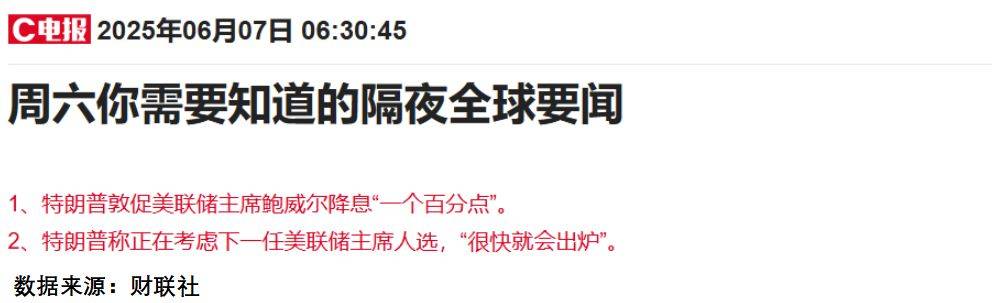
全球放水

Search documents
白银回调!热门LOF突发停牌?资金关注有色!有色50ETF(159652)近20日强势吸金超14亿!2025业绩亮眼,北方稀土、中孚实业净利翻倍!
Sou Hu Cai Jing· 2026-01-22 02:29
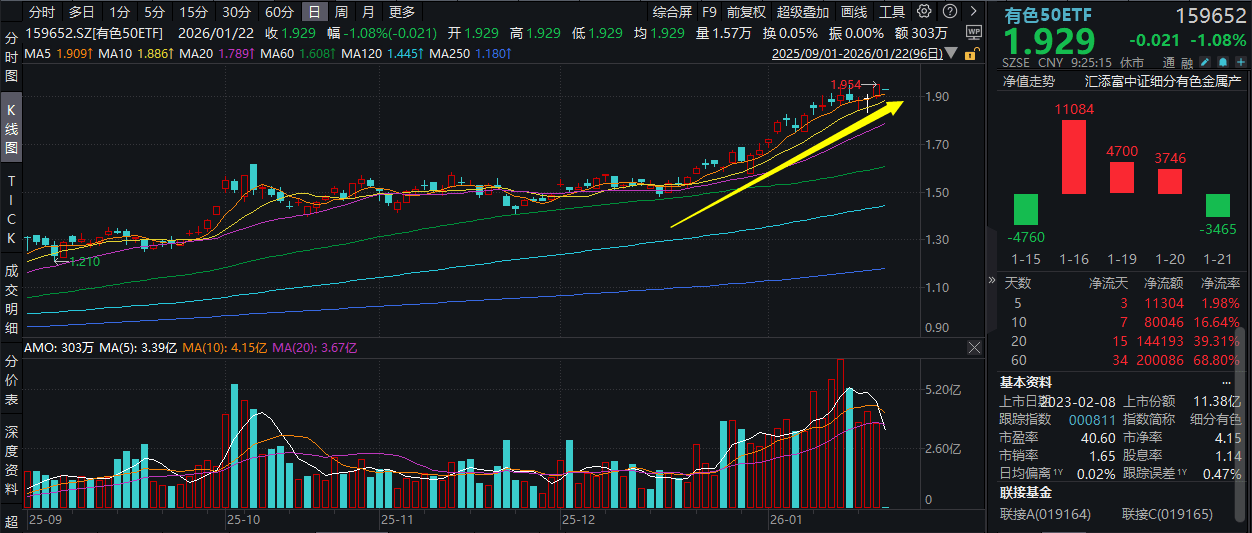
Group 1 - International precious metals futures closed mixed, with COMEX gold futures rising by 1.48% and COMEX silver futures falling by 1.78% [1] - The non-ferrous sector benefits from the combination of "global monetary easing, rigid supply, and new demand," leading to increased interest in the "higher gold and copper content" Non-ferrous 50 ETF (159652), which has attracted over 1.4 billion yuan in the last 20 trading days, bringing its total scale to over 6 billion yuan [1][4] Group 2 - A Danish pension fund plans to liquidate its U.S. Treasury holdings by the end of the month due to concerns over credit risk associated with U.S. policies, which has led to increased interest in gold as a safe-haven asset [3] - The non-ferrous metal sector is expected to see strong performance in 2025, with companies in the Non-ferrous 50 ETF (159652) projecting collective earnings growth, including a 120%-142% increase for Northern Rare Earth [4] Group 3 - The non-ferrous industry is expected to maintain high prosperity in 2026-2027 due to a combination of recovery cycles and supply constraints, with copper and aluminum prices anticipated to improve [5] - Global electrolytic copper supply is expected to remain limited in 2026, with demand driven by U.S. stockpiling and grid construction, potentially leading to a shift from surplus to shortage [6] Group 4 - Aluminum prices have been gradually increasing since the second half of 2025, with expectations of a supply growth rate of only 1.7% in 2026, resulting in a projected shortfall of over 800,000 tons [9] - Energy metals like lithium are expected to see improved supply-demand dynamics in 2026-2027, with prices likely to rise due to increased demand from energy storage batteries [12] Group 5 - The Non-ferrous 50 ETF (159652) is positioned to benefit from a comprehensive layout across various metal sectors, including gold, copper, aluminum, lithium, and rare earths, capitalizing on the super cycle of non-ferrous metals [13] - The ETF has a leading copper content of 34% and gold content of 12%, with a high concentration of top holdings at 38% [15] Group 6 - The Non-ferrous 50 ETF (159652) has shown superior performance since 2022, with a cumulative return leading its peers and a lower maximum drawdown, indicating a better investment experience [17] - The index's growth has been driven by earnings rather than valuation expansion, with a current P/E ratio of 26.27, down 52% from five years ago, suggesting a favorable valuation [18]






美联储宫斗白热化!A股将迎世纪机遇
Sou Hu Cai Jing· 2025-06-09 13:11
Group 1 - The core viewpoint is that the potential change in leadership at the Federal Reserve, driven by recent comments from a prominent figure, could lead to significant shifts in monetary policy, particularly a possible interest rate cut [1][2] - The current economic indicators in the U.S. show declining inflation, slowing economic growth, and rising unemployment, which typically would prompt the Federal Reserve to lower interest rates to stimulate the economy [2] - The Federal Reserve's reluctance to cut rates may be influenced by broader financial strategies aimed at limiting monetary policy flexibility in other economies, particularly emerging markets like China [2] Group 2 - If the Federal Reserve does change leadership and accelerates interest rate cuts, it could trigger a wave of global liquidity, benefiting stock markets, especially in A-shares, which are currently undervalued [2] - A potential influx of foreign capital into Chinese assets could lead to significant upward momentum in the market, but rapid sector rotations may pose challenges for retail investors [2][5] - Retail investors often fall victim to herd behavior, leading to poor investment decisions based on market trends rather than data-driven analysis [2][5] Group 3 - Understanding institutional trading behavior is crucial for navigating the upcoming global liquidity surge, as institutional movements can significantly influence stock prices [5] - Quantitative data can serve as a tool to reveal market truths, helping investors identify when institutions are actively trading or withdrawing from positions [5][7] - Key indicators such as institutional inventory data and short covering signals can provide insights into market dynamics, allowing investors to avoid common pitfalls associated with emotional trading [7][9] Group 4 - In light of the potential global changes, investors are encouraged to adopt a data-driven approach to investment decisions, utilizing quantitative data to mitigate emotional biases [9][11] - The upcoming global liquidity wave presents more opportunities than risks for A-shares, emphasizing the importance of objective data in decision-making processes [11]