全球流动性杀

Search documents
又见暴跌,这波全球流动性杀什么时候结束?
Sou Hu Cai Jing· 2025-11-21 09:59
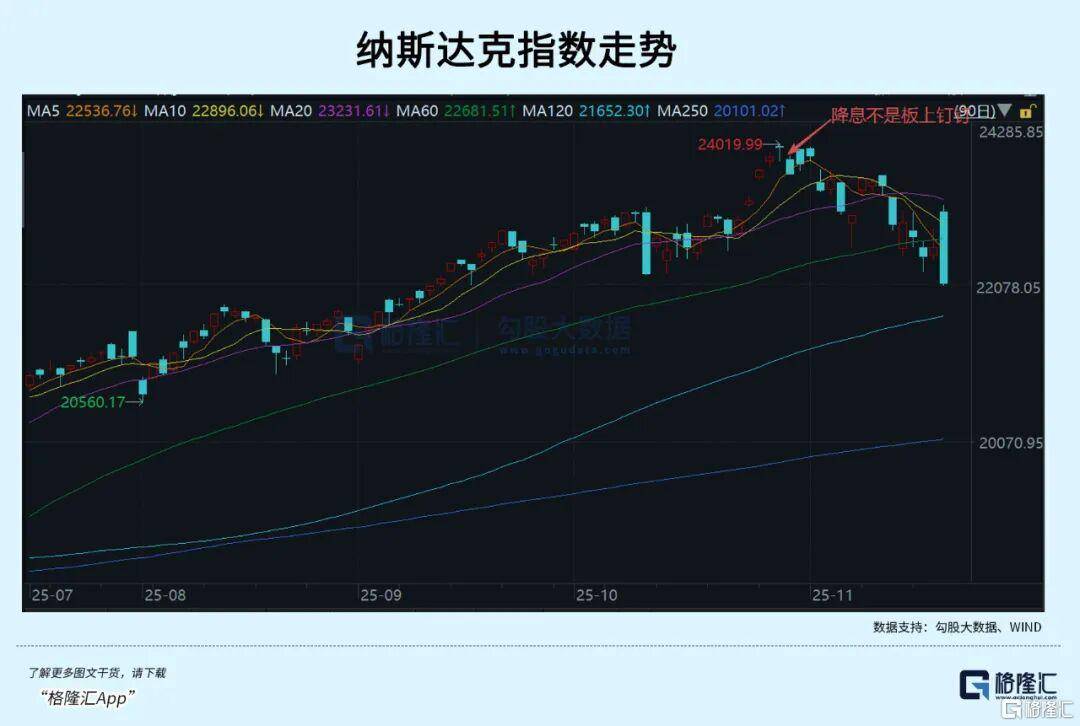
Core Viewpoint - The current global liquidity crisis is primarily driven by the U.S. government shutdown and the Federal Reserve's uncertain monetary policy, leading to widespread declines in various asset classes, including stocks, gold, and cryptocurrencies, while the U.S. dollar index rises above 100 [1][2][7]. Group 1: Causes of Global Liquidity Crisis - The liquidity crisis began with the U.S. government shutdown, which prevented the flow of funds into the market, causing short-term borrowing rates to spike [2][4]. - The Federal Reserve's meeting on October 30 further exacerbated the situation, as Chairman Powell indicated uncertainty regarding future interest rate cuts, which led to a loss of market confidence [2][6]. - The failure of the U.S. Senate to pass a funding bill on November 4 intensified market fears, resulting in a significant sell-off across various asset classes [4][5]. Group 2: Market Reactions and Implications - Following the government shutdown's resolution, the market initially rebounded; however, the lack of timely economic data and increasing divisions among Federal Reserve officials created further uncertainty [6][7]. - The announcement that the October non-farm payroll data would not be released until December contributed to a decline in the probability of interest rate cuts, with the likelihood dropping to 32% [7][9]. - The market's focus has shifted back to liquidity concerns, with the potential for a more severe downturn if economic data continues to show weakness [10][11]. Group 3: Future Outlook - The liquidity crisis is expected to end around mid-December, coinciding with the release of significant economic data, including employment reports, which are anticipated to be poor due to the government shutdown's impact [12][15]. - The Federal Reserve is likely to halt its balance sheet reduction by December 1, which may lead to a resumption of asset purchases if economic conditions worsen [13][14]. - The recovery of global liquidity could prompt investment opportunities across various markets, including U.S. stocks, A-shares, and Hong Kong stocks, depending on the timing and nature of the economic data released [16].

又见暴跌,这波全球流动性杀什么时候结束?
格隆汇APP· 2025-11-21 09:32
Core Viewpoint - The article discusses the global liquidity crisis impacting stock markets, particularly highlighting the correlation between the U.S. and A-shares, emphasizing that the current downturn is a global phenomenon rather than a localized issue [2][3]. Group 1: Global Liquidity Crisis - The current global liquidity crisis is characterized by simultaneous declines in stocks, gold, and cryptocurrencies, while the U.S. dollar index has risen above 100 [2]. - This liquidity crisis is not as severe as a global recession, which would lead to prolonged declines in markets [3]. - The liquidity crisis originated from the U.S. government shutdown, which prevented funds from circulating in the market, causing short-term interest rates to spike [5]. Group 2: Federal Reserve's Role - The Federal Reserve's recent meetings have introduced uncertainty regarding future interest rate cuts, with the probability of a rate cut in December dropping to 32% after the announcement of delayed economic data releases [12]. - The Fed's decision to stop selling government bonds and potentially restart balance sheet expansion is anticipated to occur around December 1 [21]. - The upcoming December 10 meeting is expected to result in no interest rate cuts, which could stabilize the current liquidity crisis [24]. Group 3: Market Reactions and Future Outlook - Following the government shutdown, the market initially rebounded but did not see a restoration of liquidity, leading to increased uncertainty among investors [11]. - The article suggests that the liquidity crisis may end around mid-December when a series of economic data releases are expected, which could indicate economic weakness [24]. - The potential recovery of global liquidity could lead to investment opportunities in various markets, including U.S., A-shares, and Hong Kong stocks, depending on the market's response to the economic data [25].