
全球物流枢纽

Search documents
沙特,用红海港口群缓解霍尔木兹危机
财联社· 2026-03-11 05:46
Core Viewpoint - The geopolitical tension in the Middle East, particularly Iran's blockade of the Strait of Hormuz, is driving Saudi Arabia to enhance its port and shipping capabilities along the Gulf coast, aiming to establish itself as a new global trade hub [1]. Group 1: Port Developments - The Saudi Ports Authority (Mawani) has announced the addition of two international shipping routes at Jeddah Port in collaboration with shipping giants Maersk and Hapag-Lloyd, each with a capacity of approximately 17,000 TEU, significantly improving operational efficiency and maritime connectivity [3]. - Jeddah Port, covering an area of about 12.5 square kilometers, has an annual cargo throughput exceeding 130 million tons, accounting for approximately 75% of Saudi maritime trade [6]. Group 2: Strategic Adjustments - Saudi Aramco has shifted part of its crude oil exports to Yanbu Port on the Red Sea, leveraging the integrated port network operated by the Saudi Ports Authority, which is crucial for stable transportation of oil and essential goods [4]. - The Red Sea shipping network extends to strategic hubs in the western and eastern Mediterranean, enhancing the flexibility of intercontinental cargo transport [5]. Group 3: Infrastructure Investments - The Saudi Ports Authority has invested over 27 billion SAR (approximately 7.2 billion USD) to upgrade major port infrastructures and establish 20 comprehensive global logistics zones [6]. - The development of a pipeline with a daily capacity of 5 million barrels, which can be increased to 7 million barrels in emergencies, is a key project aimed at reducing dependence on the Strait of Hormuz [7][8]. Group 4: Future Opportunities - The growing focus on Red Sea ports may benefit Saudi Arabia's non-oil trade, with the potential for increased container and cargo throughput if the Red Sea is viewed as a safer trade corridor [9]. - As Saudi Arabia enhances its port infrastructure and extends its road and rail networks, it is expected to transition from a destination market to a core transit point in the regional logistics system [10].


全球贸易“颠簸”,中国港口却在“刷新”记录
Jin Tou Wang· 2026-01-19 12:24
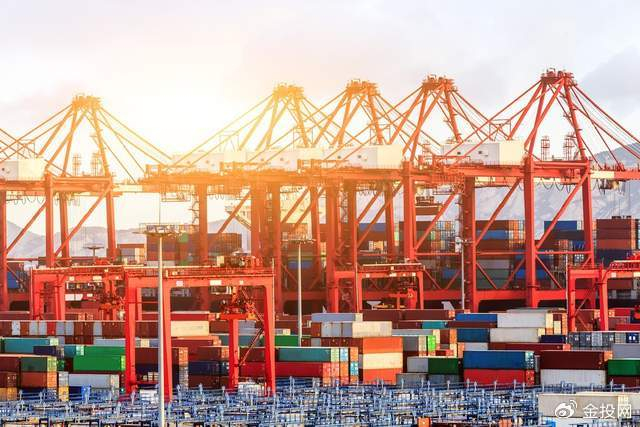
Core Insights - China's major ports have shown significant growth in container throughput, with a year-on-year increase of 9.5% in the first 11 months of 2025, reaching 320 million TEUs, contributing to a record trade surplus of $1.19 trillion for the year [1][3] Group 1: Port Performance - Shanghai Port's container throughput exceeded 50 million TEUs in the first 11 months of 2025, surpassing the total for 2024 and likely setting a new annual record [3] - Ningbo-Zhoushan Port's container throughput surpassed 40 million TEUs by early December, making it the third port globally to reach this milestone after Shanghai and Singapore [3] - China's total export value for 2025 is projected to grow by 5.5% year-on-year, reaching $3.77 trillion, indicating strong export performance despite a shift towards a consumption-driven growth model [3] Group 2: Investment and Expansion - China is heavily investing in port expansion, with Qingdao Port Authority announcing a total investment of 77 billion yuan for 15 projects, including the construction of two new terminals by 2029 [5] - The rationale behind continued expansion amidst global trade uncertainties is to address the imbalance in container transport demand, which is growing faster than traditional bulk transport [5] - Port consolidation is a trend, with Shandong Province successfully integrating seven ports into a unified Shandong Port Group, increasing total throughput from 1.32 billion tons in 2019 to over 1.9 billion tons by 2025 [5] Group 3: Future Goals - China's next objective is to establish itself as a global logistics hub, with plans to develop world-class port clusters, each achieving throughput levels of over 100 million tons or 10 million TEUs, equipped with digital and green technologies [5][6] - The stability and resilience of foreign trade and ports continue to play a crucial role in supporting China's economic vitality and its connection to the global market [6]
钱凯港之外:秘鲁国家港口计划的宏伟蓝图
Shang Wu Bu Wang Zhan· 2025-10-29 16:03
Core Insights - Peru is implementing a grand national strategy to establish itself as a logistics hub connecting the Pacific and Atlantic in South America [1] - The strategy has attracted capital from 18 countries, including China and the United States, leveraging its deep-water coastline and modern port network [1] - The success of this strategy is evidenced by the significant increase in container handling at Callao Port, with over 600,000 TEUs coming from neighboring countries like Chile [1] Investment and Infrastructure - The modern port network includes key nodes such as Chancay, Callao, Paita, and Matarani, which are supported by substantial investments and market-driven pricing [1] - Chancay Port features a deep-water facility with a berth depth of 17.8 meters, enhancing its competitive edge [1] - The opening of the Chancay-Shanghai route has led to a notable increase in bilateral trade, with trade volume exceeding $559 million in the first quarter of 2025, marking a 56.9% growth [1] Future Goals and Challenges - Peru aims to achieve a throughput target of 10 million TEUs by 2035, which requires addressing logistical connectivity issues such as inland roads and railways [1] - The goal is to connect the efficient port network with a network of 25 free trade agreements covering 90% of global GDP, establishing a new global logistics coordinate across two oceans [1]
阿提哈德铁路巩固阿联酋全球物流枢纽地位
Shang Wu Bu Wang Zhan· 2025-10-11 05:32
Core Insights - The Etihad Rail project is expected to enhance the UAE's position as a global logistics hub and a key player in international trade [1] - The project aims to facilitate trade by efficiently connecting national ports, industrial zones, and free zones [1] - The railway will span approximately 900 kilometers, linking 11 cities from the western border at Al Sila to the eastern coast at Fujairah, significantly improving accessibility and alleviating road traffic congestion [1] - Each train is projected to carry up to 400 passengers, with an expected annual passenger volume of 36.5 million by 2030 [1]