全球科研合作

Search documents
跨国数据分析机构报告:全球科研合作重心转向中国
Huan Qiu Shi Bao· 2025-12-08 22:57
Core Viewpoint - A recent study indicates that the center of global scientific collaboration is shifting towards China, with significant growth in partnerships with European countries and emerging regions like Southeast Asia, the Middle East, and Africa [1][2]. Group 1: Research Findings - The study, based on 25 years of international collaboration data from Clarivate's Web of Science database, shows that China's scientific output has more than doubled in the past decade, surpassing the U.S. in research paper production by 2020 [1]. - China is expected to lead in citation counts as well, while the U.S. has seen stagnation in both the quantity and quality of published papers, failing to recover from declines during the COVID-19 pandemic [1]. - The report highlights a significant decrease in U.S. research output and citation rates, which began to accelerate around 2018, indicating a long-term trend of decline [2]. Group 2: U.S.-China Collaboration Dynamics - U.S.-China scientific collaboration has stagnated since 2019, which has historically been a crucial component of the U.S.'s overall citation influence [2]. - Factors contributing to this decline include U.S. government policies that cut research funding, limit international student numbers, and target key research areas like vaccines and climate change [2]. - Experts warn that barriers set in the name of "national security" and economic competitiveness could harm the global scientific community, moving away from a previously collaborative environment [2].
《自然》援引科睿唯安分析认为——中国科研影响力与日俱增
Ke Ji Ri Bao· 2025-12-08 10:03
Core Insights - China's scientific research influence is rapidly increasing, reshaping the global scientific landscape, as highlighted by the analysis from Clarivate Analytics based on 25 years of citation data from the Web of Science database [1] - The United States is experiencing a gradual decline in its traditional position as a research powerhouse and collaboration center due to various policies that have negatively impacted its research environment [1] - Over the past decade, China's domestic research output has doubled, making it the largest producer of academic papers globally by 2020, with expectations to lead in citation metrics as well [1] Group 1 - The collaboration between China and Europe in scientific research is strengthening, while the collaboration between China and the U.S. has slowed down since 2019 due to restrictions on academic exchanges and China's focus on enhancing its own research capabilities [2] - The overall global research collaboration is on the rise, with high-impact research increasingly stemming from multilateral cooperation [1][2] - The decline in U.S. research output and citation influence has been ongoing for several years, exacerbated by the pandemic, with a notable decrease in citation impact observed since 2018 [1] Group 2 - Experts suggest that the global research collaboration network is undergoing a restructuring, influenced by the adjustments in U.S.-China relations, with China aiming to build a multipolar scientific system while enhancing its domestic capabilities [2] - The shift in the dynamics of international scientific collaboration may hinder the open exchange of information, particularly if the U.S. imposes further restrictions under the guise of national security and economic competitiveness [2]
细胞出版社2024中国年度论文奖重磅公布:十年见证中国科研前进之路!
生物世界· 2025-11-19 04:04
Core Insights - The article highlights the significant growth of Chinese researchers' publications in Cell Press journals over the past decade, showcasing advancements in originality, systematic approaches, and openness in Chinese scientific research [2][48]. - In 2024, the total number of research papers published by Chinese institutions in Cell Press journals reached a record high of 2,446, marking a 17.6% increase from the previous year and nearly quadrupling the output from 2020 [3][14]. Publication Growth - The number of papers published in the life sciences field by Chinese scholars was the highest in 2024, totaling 860 papers, with the medical field showing the most notable growth, increasing by 138 papers [6]. - The journal Cell Reports Medicine saw the number of Chinese papers surpass 100 for the first time, while materials science and interdisciplinary fields also experienced steady growth, reaching 554 and 394 papers, respectively [6]. Journal Performance - In 2024, 18 hybrid journals under Cell Press reported growth in the number of Chinese publications, with Joule and Device in materials science showing the highest increases of 32 and 31 papers, respectively [7]. - The medical journal Med saw a remarkable increase, with a total of 32 papers published, reflecting a 2.5-fold increase from the previous year [7]. Open Access Trends - The proportion of papers published in open access (OA) format by Chinese scientists in Cell Press journals approached three-quarters of all Chinese publications, totaling 1,761 papers, which is a 13% increase from the previous year [10]. - The number of OA papers published in hybrid journals rose from 69 to 119, marking a 72.5% increase, indicating a growing commitment to open access among Chinese researchers [11]. Annual Paper Awards - The 2024 Cell Press Annual Paper Awards recognized 50 outstanding papers across five fields, with an additional 25 papers voted as the most popular by the public [14]. Research Institution Landscape - In 2024, the number of Chinese institutions publishing in Cell Press journals exceeded 300 for the first time, with a notable increase of 40 institutions from the previous year [32]. - Sun Yat-sen University led in publication volume with 113 papers, followed by Shanghai Jiao Tong University and Zhejiang University with 106 and 105 papers, respectively [32]. Regional and International Collaboration - Beijing remained the leading region for publications with 442 papers, followed by Guangdong and Shanghai [38]. - The number of countries and regions collaborating with Chinese scholars reached 76, reflecting a 20.6% increase, with the United States being the most frequent collaborator [43][47].


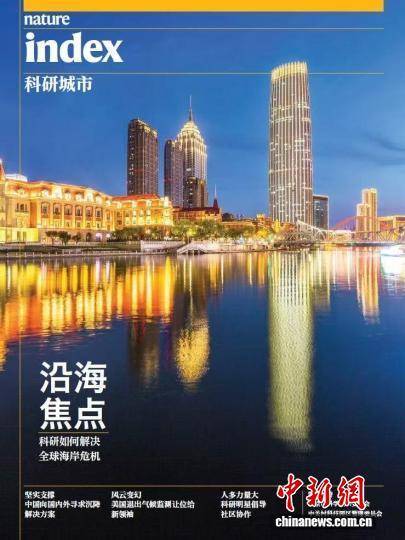
中国首次占据全球十强科研城市一半以上席位
Sou Hu Cai Jing· 2025-11-16 17:46
Core Insights - The 2024 Nature Index highlights that Chinese cities now occupy more than half of the top ten global research cities, increasing from five to six cities compared to 2023 [1][2] - Beijing retains its position as the top research city globally since 2016, followed by Shanghai, with Nanjing, Guangzhou, Wuhan, and Hangzhou also making the list [1][2] Summary by Categories Research City Rankings - In 2024, the top ten research cities include six from China: Beijing, Shanghai, Nanjing, Guangzhou, Wuhan, and Hangzhou, alongside New York, Boston, San Francisco, and Baltimore-Washington [1][2] - Guangzhou improved its ranking from eighth to sixth, surpassing the San Francisco Bay Area, while Wuhan and Hangzhou also saw upward movements [2] Research Output Growth - Beijing's research output increased by over 9% from 2023 to 2024, while Shanghai's output grew nearly 20% [2] - The report indicates significant improvements in research performance among Chinese cities, particularly in chemistry, physical sciences, and earth and environmental sciences [2] Subject Area Performance - Chinese cities dominate the rankings in chemistry, physical sciences, and earth and environmental sciences, with Beijing leading in all three fields [2] - In biological sciences, New York and Boston rank first and second, with Beijing in third place, while in health sciences, which was newly included in the index, Beijing ranks sixth [2] Challenges and Global Collaboration - The report also addresses the issue of land subsidence faced by rapidly expanding coastal megacities, particularly in the context of rising sea levels [3] - It emphasizes the potential for innovative solutions to challenges like land subsidence through global research collaboration [5]